The Fungicide Application: Timing, Types, and When Professional Treatment Is Needed
Maintaining a lush, disease-free lawn is one of the most rewarding aspects of homeownership. Yet even the healthiest turf can fall victim to fungal infections when conditions turn favorable for pathogens. Fungicide application stands as a proven, science-backed solution that protects your investment and keeps your yard looking its best year-round.
Protect Your Lawn with Professional Fungicide Application – Call Now
When applied correctly, fungicides do far more than treat visible problems—they interrupt disease cycles before damage occurs. This comprehensive guide explains disease management strategies, the critical differences between preventative and curative fungicides, precise application timing based on real disease lifecycles, and exactly when professional treatment becomes the smartest, most effective choice.
Rest assured: with the right knowledge and expert support, you can safeguard your lawn without guesswork or wasted effort.
Understanding Lawn Diseases and Why Fungicide Matters
Fungal pathogens thrive in warm, humid environments, poor air circulation, and stressed turf. Common culprits include brown patch, dollar spot, pythium blight, and rust. These organisms spread rapidly through spores carried by wind, water, or equipment, often turning beautiful green expanses into patchy, discolored eyesores within days.
Early disease management is essential. Left unchecked, fungi weaken root systems, reduce drought tolerance, and invite secondary pests. Fungicide application acts as both shield and remedy, targeting the fungi directly while preserving beneficial soil microbes when used responsibly.
Homeowners often spot the first signs—circular brown spots, silvery threads, or yellowing blades—only after the infection has taken hold. That’s why understanding the disease lifecycle (spore germination → mycelial growth → new spore production) empowers smarter decisions and prevents costly repeat treatments.
Preventative vs. Curative Fungicides: Knowing the Difference
Not all fungicides work the same way. The two primary categories serve distinct purposes:
- Preventative fungicides form a protective barrier on leaf surfaces and in the soil before infection begins. They inhibit spore germination and are ideal for high-risk seasons.
- Curative fungicides penetrate plant tissue to stop active infections, destroying existing fungal growth and halting further spread.
Bold results come from choosing the right category at the right moment. Preventative products are generally more cost-effective and require lower application rates, while curative options deliver faster visible recovery but demand precise timing.
Key takeaway: Combining both approaches—preventative early, curative only when necessary—delivers the strongest, longest-lasting protection without over-reliance on chemicals.
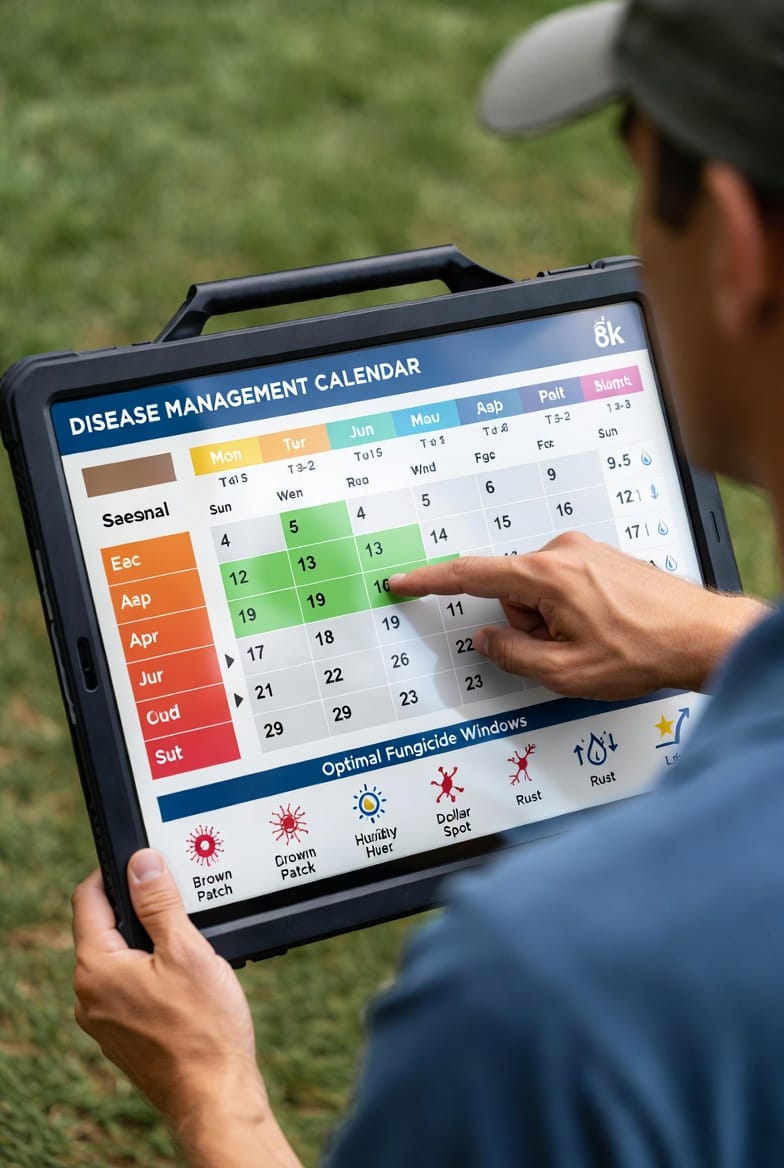
Application Timing: Aligning with Disease Lifecycles for Maximum Impact
Timing is everything in fungicide application. Each disease follows its own environmental triggers, and missing the optimal window reduces effectiveness dramatically.
Here’s how professionals align treatments with lifecycles:
- Spring applications (soil temperatures 55–65 °F) target early spore activity for diseases like dollar spot and brown patch.
- Early summer (rising humidity and night temperatures above 70 °F) protects against pythium and leaf spot.
- Late summer to early fall prevents carry-over infections that overwinter in thatch and soil.
- Winter dormant sprays (in milder climates) reduce spring outbreaks by eliminating residual fungal structures.
Environmental cues—soil temperature, leaf wetness duration, and humidity—guide precise schedules far better than calendar dates alone. Local weather patterns and microclimates on your property further refine the timing.
Consistent monitoring and data-driven decisions ensure every drop of fungicide works at peak efficiency, saving time, money, and turf.
Types of Fungicides: Selecting the Best Tool for Your Lawn
Modern fungicides fall into several effective classes:
- Contact fungicides remain on the leaf surface, creating an immediate barrier.
- Systemic fungicides are absorbed and translocated throughout the plant, offering longer protection.
- Broad-spectrum products target multiple pathogens at once.
- Narrow-spectrum options focus on specific fungi with minimal impact on beneficial organisms.
Rotation of chemical classes prevents resistance development—a critical best practice that keeps treatments effective for years.
Professionals also consider formulation: liquid suspensions, granular products, or water-soluble packets each suit different equipment and lawn sizes. The right type, matched to your specific disease pressure and turf variety, ensures both safety and superior results.
Signs That Professional Fungicide Treatment Is Needed
While small, localized issues can sometimes be managed at home, certain situations clearly call for professional intervention:
- Large-scale outbreaks covering more than 20 % of the lawn
- Recurring infections despite proper DIY efforts
- Presence of hard-to-identify or aggressive pathogens
- Sloped or hard-to-reach areas that prevent even coverage
- Restricted-use products required for stubborn diseases
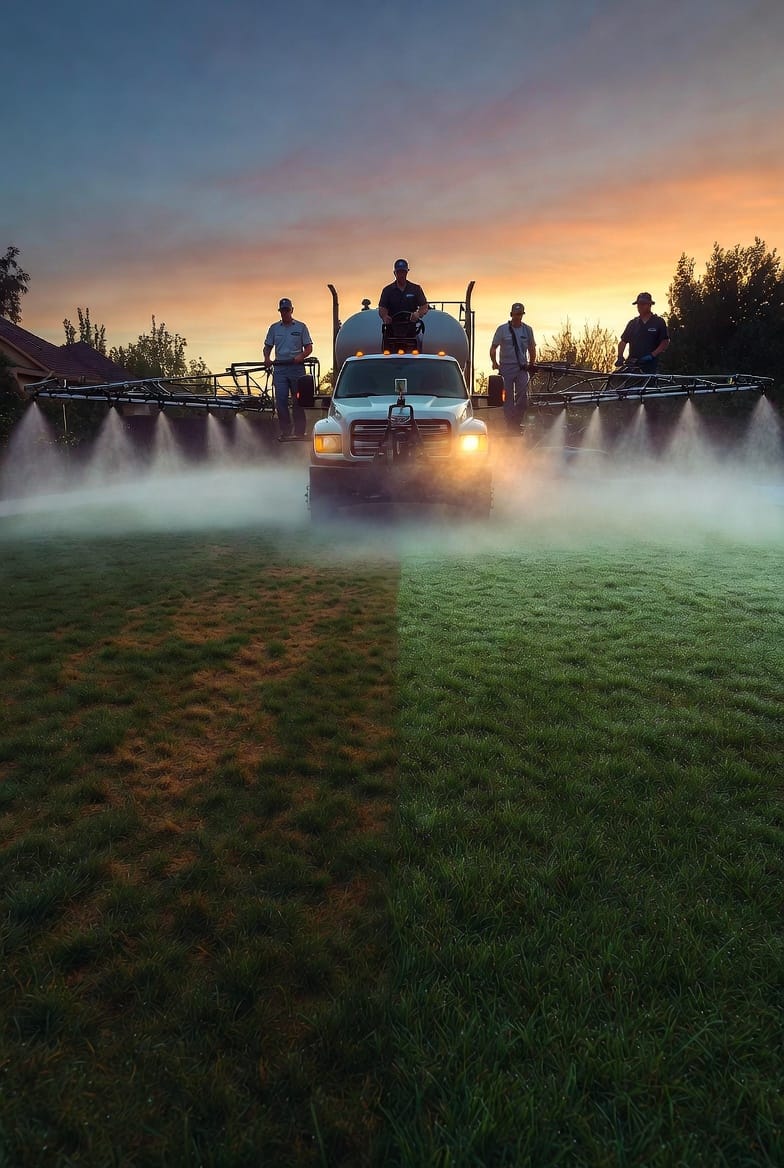
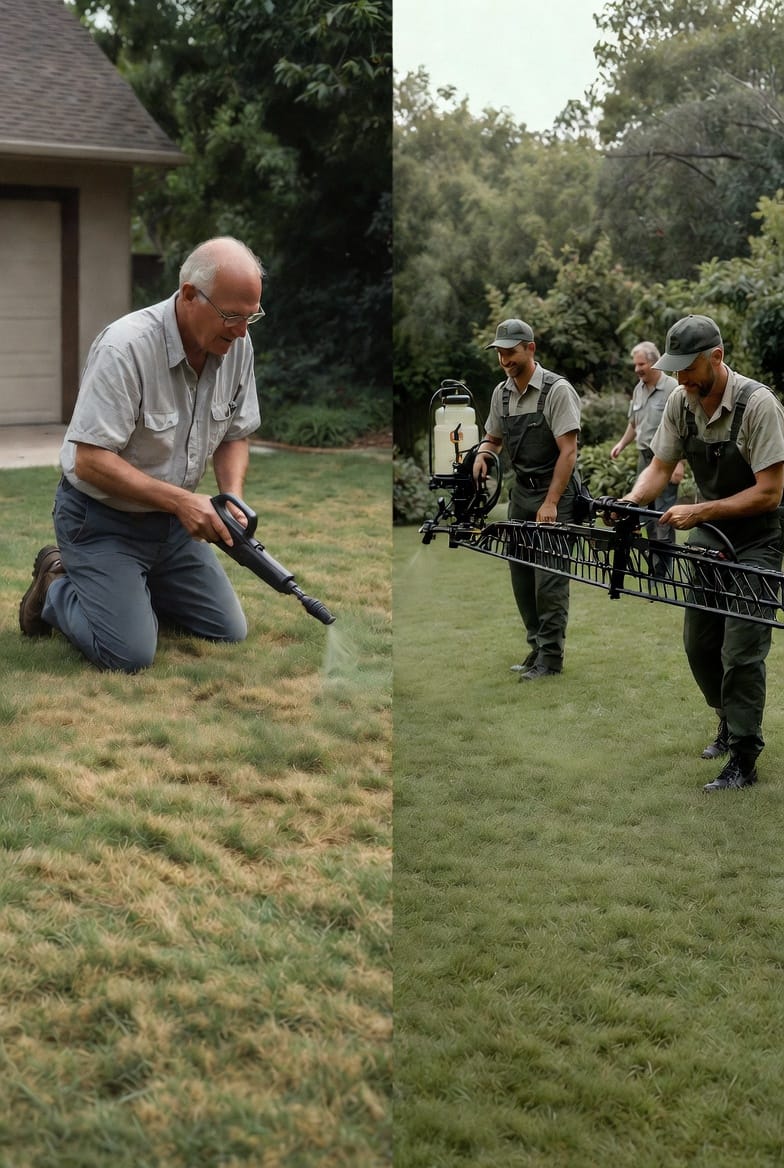
Professional equipment—boom sprayers, high-pressure systems, and calibrated spreaders—delivers uniform distribution that handheld devices simply cannot match. Commercial-grade formulations often contain higher active ingredients and advanced adjuvants that improve penetration and rain-fastness.
When you see persistent thinning, rapid spread after rain, or multiple disease types appearing simultaneously, expert assessment and treatment become the most reliable path to recovery.
The Professional Advantage: Equipment, Expertise, and Peace of Mind
Professional lawn care teams bring more than just stronger products. They offer:
- Advanced calibration ensuring every square inch receives the exact rate needed
- Weather-optimized scheduling that maximizes uptake and minimizes drift
- Integrated disease management plans combining fungicides with cultural practices like aeration and proper mowing
- Environmental stewardship through targeted applications that reduce runoff and protect pollinators
Homeowners gain reassuring results without the stress of diagnosing, purchasing, mixing, and applying chemicals themselves. The cost of professional service is quickly offset by faster recovery, fewer repeat treatments, and a visibly superior lawn.
Best Practices for Safe and Effective Fungicide Use
Whether preventative or curative, success depends on following label instructions, wearing proper protective gear, and avoiding applications during high winds or imminent heavy rain. Watering lightly afterward (when label directs) helps move systemic products into the plant without washing them away.
Integrated lawn care—proper fertilization, mowing at the correct height, and improving drainage—amplifies fungicide performance and reduces future disease pressure.
Stop Lawn Disease Before It Spreads
Your lawn deserves proactive, expert care that delivers lasting results. Don’t wait for brown patches to take over.
Our certified technicians are ready to assess your property, recommend the precise fungicide application strategy your lawn needs, and restore the healthy, vibrant turf you’ve worked hard to achieve.
Restore Your Healthy Lawn – Call for Expert Fungicide Application