The Freeze Damage Prevention: Protecting Pipes Before Winter Hits
Winter brings cozy evenings by the fire and crisp mornings, but it also carries a hidden threat that can turn your home into a costly disaster zone in hours. Frozen pipes are more than an inconvenience – they are a leading cause of water damage that can flood basements, ruin drywall, and leave families scrambling for emergency repairs. The good news? You do not have to wait for the first hard freeze to act. With smart, proactive freeze damage prevention, you can shield your plumbing system long before temperatures drop.
Protect Your Pipes Before Winter – Call Now!
At our water damage restoration and prevention service, we have helped thousands of homeowners across the country avoid the heartbreak and expense of burst pipes. This comprehensive guide walks you through every proven step to protect pipes before winter hits. From proper pipe insulation to strategic heat management and full property winterization, these measures deliver peace of mind and lasting protection. Follow them confidently, and you will keep your home safe, dry, and worry-free all season long.
Why Proactive Freeze Damage Prevention Matters
Frozen pipes expand when water inside turns to ice, exerting up to 2,000 pounds of pressure per square inch on pipe walls. One small crack can release hundreds of gallons of water in minutes. The resulting water damage often spreads faster than most homeowners realize, affecting floors, ceilings, and personal belongings.
The reassuring truth is that nearly all frozen pipe incidents are preventable. By taking action now – weeks or even months before the first frost – you eliminate the risk entirely. Our authoritative approach focuses on four pillars: pipe insulation, supplemental heating, smart water flow habits, and complete system winterization. Each method works together to create multiple layers of defense that keep water moving and pipes warm.
Identifying Vulnerable Pipe Locations
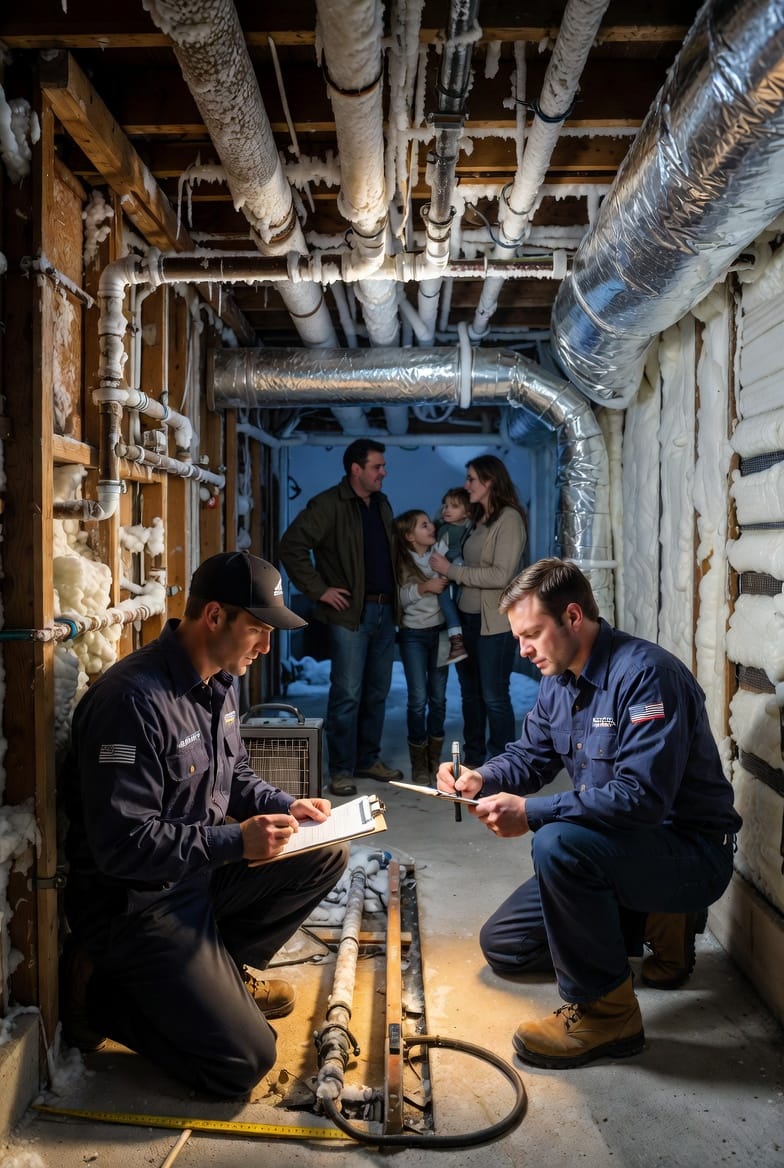
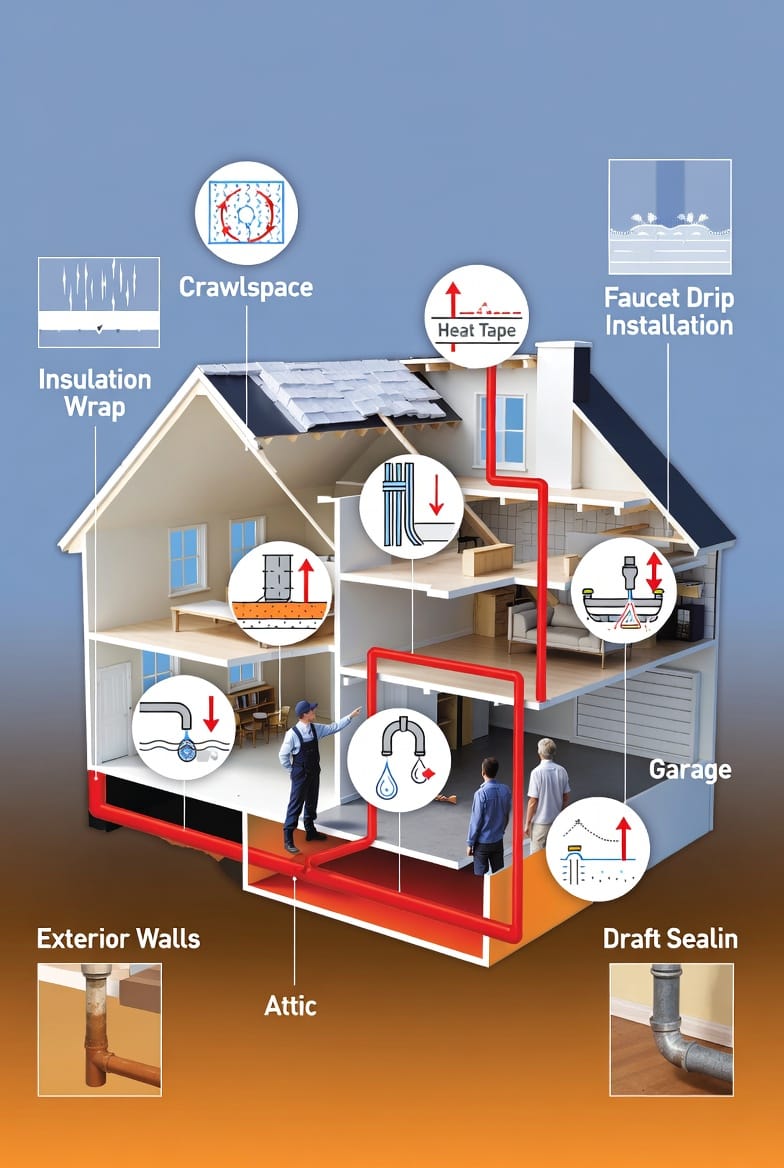
Before you begin any protection work, know exactly where your pipes are most at risk. Exposed pipes in unheated crawlspaces, attics, garages, and exterior walls are the primary targets. Basements with poor insulation and outdoor spigots also demand attention.
Key risk areas include:
- Crawlspaces and basements where cold air settles
- Exterior walls lacking sufficient insulation
- Attics and rooflines exposed to wind chill
- Garage and utility rooms with frequent temperature swings
- Irrigation lines and hose bibs left connected
A quick walkthrough of your property with a flashlight and thermometer will reveal every spot that needs immediate focus.
Essential Steps to Insulate Your Pipes
Pipe insulation is the foundation of freeze damage prevention. High-quality foam pipe sleeves or fiberglass wraps create a thermal barrier that keeps water above freezing even when outside temperatures plunge.
Follow these professional-recommended steps for maximum effectiveness:
- Measure and cut insulation sleeves to fit snugly around every exposed pipe section.
- Secure seams with foil tape or zip ties to eliminate gaps.
- Pay special attention to elbows, joints, and areas near exterior walls.
- For pipes in extremely cold zones, layer insulation with additional vapor barrier wrap.
Choosing the right material matters. Closed-cell foam offers superior moisture resistance and R-value, making it ideal for crawlspaces and attics. Installation takes just a few hours yet delivers years of reliable protection. When you complete this step correctly, you dramatically reduce heat loss and keep internal water temperatures stable.
Using Heat Tape for Extra Protection
In areas where pipe insulation alone may not suffice, heat tape (also called heat cable) provides active warmth. This self-regulating electric tape wraps around pipes and activates automatically when temperatures approach freezing.
Installation is straightforward and safe when done properly:
- Select UL-listed, self-regulating heat tape designed for plumbing.
- Apply it in a spiral pattern or straight run along the pipe length.
- Cover the tape with insulation to trap and distribute heat efficiently.
- Plug into a GFCI-protected outlet and test the system before winter.
Heat tape is especially valuable for pipes near garage doors, in unheated pump houses, or along north-facing walls. Our service teams often combine heat tape with pipe insulation for ultimate layered defense – a combination that has prevented countless emergencies.
The Simple Power of Allowing Faucets to Drip
When the forecast calls for sub-freezing nights, the easiest proactive step is letting faucets drip. A slow, steady drip keeps water moving inside the pipes, preventing ice from forming.
Best practices for the drip method:
- Choose the farthest faucet on each supply line.
- Set the drip to the width of a pencil lead – just enough to keep flow constant.
- Leave both hot and cold lines slightly open on exterior-facing fixtures.
- Remember to close faucets and check for leaks once temperatures rise.
This low-cost habit has protected homes for generations. It uses minimal water while delivering reliable results. Combine it with pipe insulation and heat tape for complete overnight security.
Proper Winterization of Irrigation Systems
Outdoor irrigation lines are often overlooked until it is too late. Freezing water inside buried or above-ground sprinkler pipes can cause expensive cracks and leaks come spring.
Complete irrigation winterization includes:
- Shut off the main water supply to the system.
- Open all drain valves and use compressed air to blow out residual water.
- Disconnect and drain garden hoses completely.
- Store hose reels indoors or in a protected area.
- Insulate or remove backflow preventers if required by local codes.
Homes with automatic sprinkler systems benefit from professional blow-out service performed by licensed technicians. This single service step eliminates one of the most common sources of water damage after a hard freeze.
Preparing Vacation Homes and Seasonal Properties
If you own a vacation home, cabin, or rental property that sits empty during winter months, freeze damage prevention becomes even more critical. Unoccupied homes lack daily monitoring, so proactive measures must be foolproof.
Complete vacation home winterization checklist:
- Turn the thermostat to at least 55°F and never lower it.
- Open cabinet doors under sinks to allow warm air circulation.
- Shut off and drain the main water supply line.
- Add non-toxic antifreeze to all drain traps and toilet bowls.
- Disconnect all appliances that use water (ice makers, washing machines).
- Schedule a final professional inspection before departure.
These steps ensure your investment stays protected even when you are miles away. Many homeowners who follow this protocol return to find their property exactly as they left it – warm, dry, and undamaged.
Additional Smart Habits and Long-Term Protections
Beyond the core methods, several supporting actions strengthen your overall defense:
- Seal drafts around windows, doors, and pipe penetrations with weatherstripping and caulk.
- Insulate attic access points and knee walls to maintain consistent indoor temperatures.
- Keep garage doors closed as much as possible during cold snaps.
- Consider smart home sensors that alert you to sudden temperature drops.
- Schedule annual plumbing inspections with a trusted service provider.
These habits create a comprehensive shield that works even during unexpected cold fronts.
When to Call the Professionals for Expert Assistance
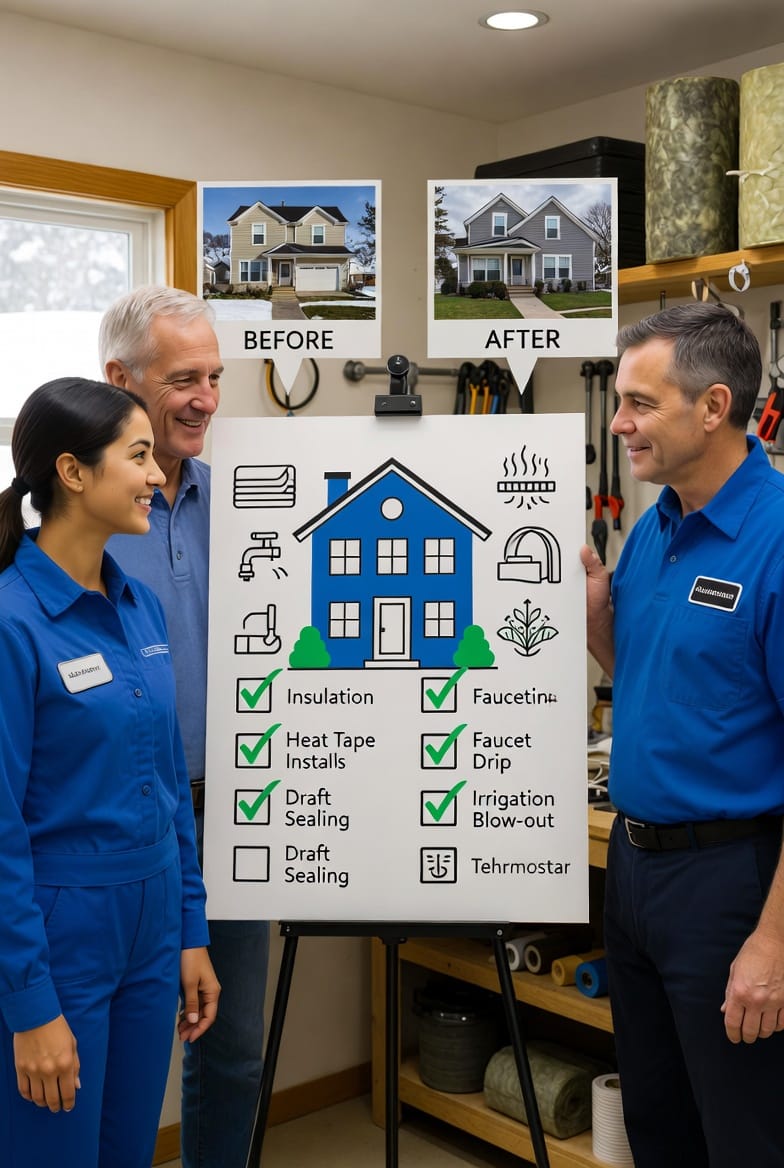
While many freeze damage prevention tasks are DIY-friendly, certain situations call for professional expertise. Complex crawlspaces, multi-story homes, or properties with extensive irrigation systems benefit from the trained eye of licensed technicians. Our team arrives equipped with specialized tools, high-grade materials, and decades of experience to ensure every pipe receives the precise protection it needs.
We handle everything from full-home pipe insulation upgrades to complete heat tape installations and thorough irrigation winterization. One call delivers peace of mind and eliminates guesswork.
Prevent Frozen Pipes Before They Burst
You now have a complete, actionable plan to protect pipes before winter hits. By implementing pipe insulation, heat tape, strategic dripping, and full winterization, you safeguard your home against frozen pipes and the devastating water damage they can cause.
Take action today. The small investment of time and materials now will save you thousands in repairs later.
Prevent frozen pipes before they burst. Our experienced team is ready to help you secure your home for the season ahead.
Get Professional Pipe Insulation & Winterization Today