The Engine of Your Bathroom: Why Proper Ventilation is the Most Critical (and Overlooked) Remodel Element
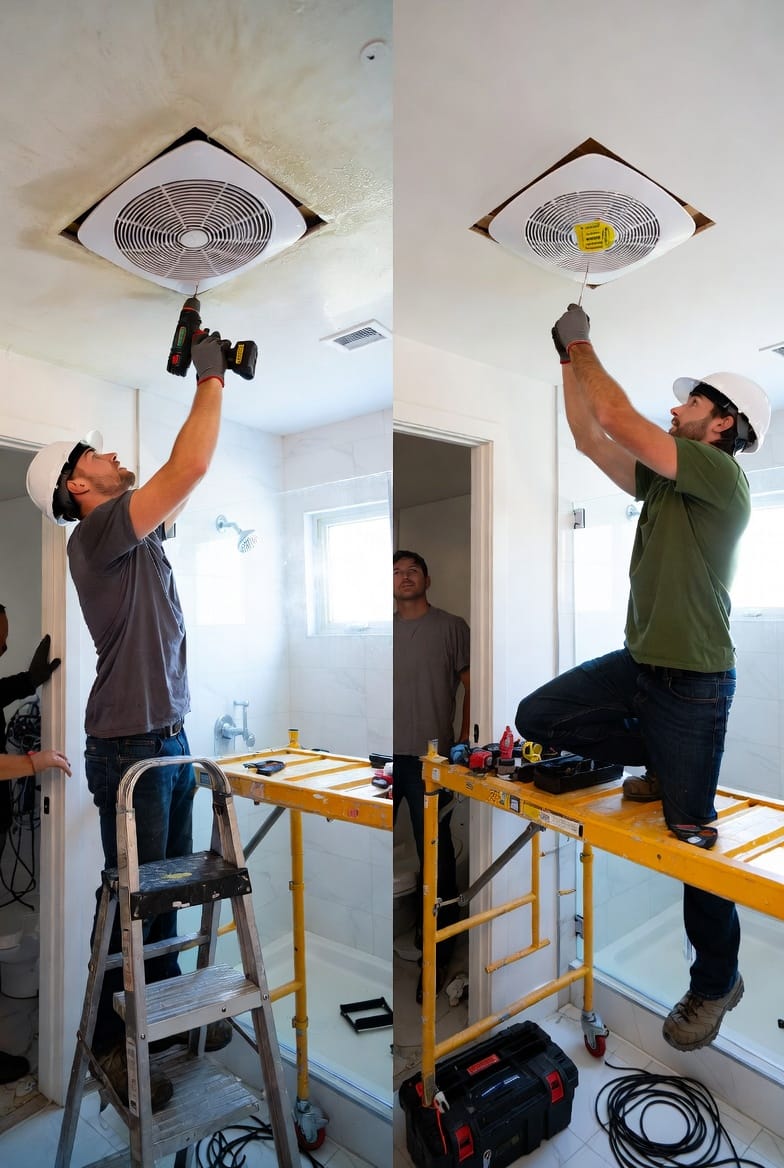
When embarking on a bathroom remodel, homeowners often get swept up in the excitement of selecting stunning tiles, elegant fixtures, and luxurious vanities. These aesthetic choices undoubtedly enhance the visual appeal of your space. However, beneath the surface glamour lies a far more essential component that determines the longevity and health of your bathroom: proper ventilation. In this comprehensive guide, we'll explore why the exhaust fan should be prioritized over even the most exquisite tile selections. We'll delve into calculating the right CFM (cubic feet per minute) for your room size, the critical need for direct ducting to the outside, and advanced features like humidity sensors and continuous low-speed operation. By the end, you'll understand how mastering moisture control can prevent costly issues and create a bathroom that stands the test of time.
Design Out Moisture for Good – Schedule Your Consultation
Rest assured, with the right knowledge and professional guidance, you can design a bathroom that's not only beautiful but also resilient against humidity's hidden threats. Let's break it down step by step.
Understanding the Hidden Dangers of Poor Ventilation
Bathrooms are inherently moist environments, thanks to showers, baths, and daily routines that generate steam and humidity. Without adequate ventilation, this moisture lingers, leading to a host of problems that can undermine your entire remodel investment.
- Mold and Mildew Growth: Excess humidity creates the perfect breeding ground for mold, which can spread rapidly on walls, grout, and ceilings. Not only does this compromise air quality, but it also poses health risks like respiratory issues.
- Structural Damage: Prolonged exposure to moisture can warp wood, corrode metal fixtures, and deteriorate drywall, resulting in expensive repairs down the line.
- Odor Buildup and Reduced Comfort: Stale air and lingering smells make your bathroom less inviting, defeating the purpose of your remodel.
- Energy Inefficiency: Poor ventilation forces your HVAC system to work harder, increasing utility bills.
The good news? A well-chosen exhaust fan acts as the engine of your bathroom, efficiently removing humid air and preventing these issues. It's more vital than tile choice because while tiles provide surface beauty, ventilation preserves the integrity of the entire space. Tiles might crack or fade over time, but unchecked moisture can destroy the foundation beneath them.
Why the Exhaust Fan Trumps Tile Selection
Tiles are often the star of bathroom design discussions – their colors, patterns, and materials can transform a mundane space into a spa-like retreat. Yet, without proper ventilation, even the most premium porcelain or ceramic tiles won't last. Moisture seeps into grout lines, causing discoloration, cracking, and eventual failure. In contrast, a high-quality exhaust fan ensures that your tiles remain pristine by controlling the environment around them.
Consider this: A beautiful tile installation might cost thousands, but if mold develops due to inadequate airflow, you'll face remediation costs that could exceed your initial investment. Ventilation isn't glamorous, but it's the unsung hero that protects your aesthetic choices. As experts in bathroom remodeling, we emphasize that investing in a robust fan system yields long-term savings and peace of mind. It's reassuring to know that with the right setup, your bathroom can remain fresh and functional for decades.
Calculating the Necessary CFM for Your Bathroom
Selecting the right exhaust fan starts with understanding CFM, or cubic feet per minute – a measure of how much air the fan can move. The goal is to achieve at least eight air changes per hour in your bathroom to effectively combat moisture.
To calculate the required CFM:
- Measure Your Bathroom's Volume: Multiply the length, width, and height of the room in feet. For example, a 10x8x8 foot bathroom has a volume of 640 cubic feet.
- Determine Air Changes Needed: For standard bathrooms, aim for 8 air changes per hour. Divide the volume by 60 (minutes in an hour) and multiply by 8. So, for 640 cubic feet: (640 / 60) x 8 = approximately 85 CFM.
- Adjust for Features: If your bathroom includes a steam shower or jetted tub, increase the CFM by 20-50% to handle higher humidity levels.
- Factor in Duct Length: Longer ducts reduce efficiency, so add 10-20 CFM if your run exceeds 10 feet.
Always round up to the nearest available fan rating. For instance, if calculations yield 85 CFM, opt for a 90 or 100 CFM model. This authoritative approach ensures your ventilation system is tailored precisely to your space, providing optimal moisture control without overworking the fan.
The Imperative of Direct Ducting to the Outside
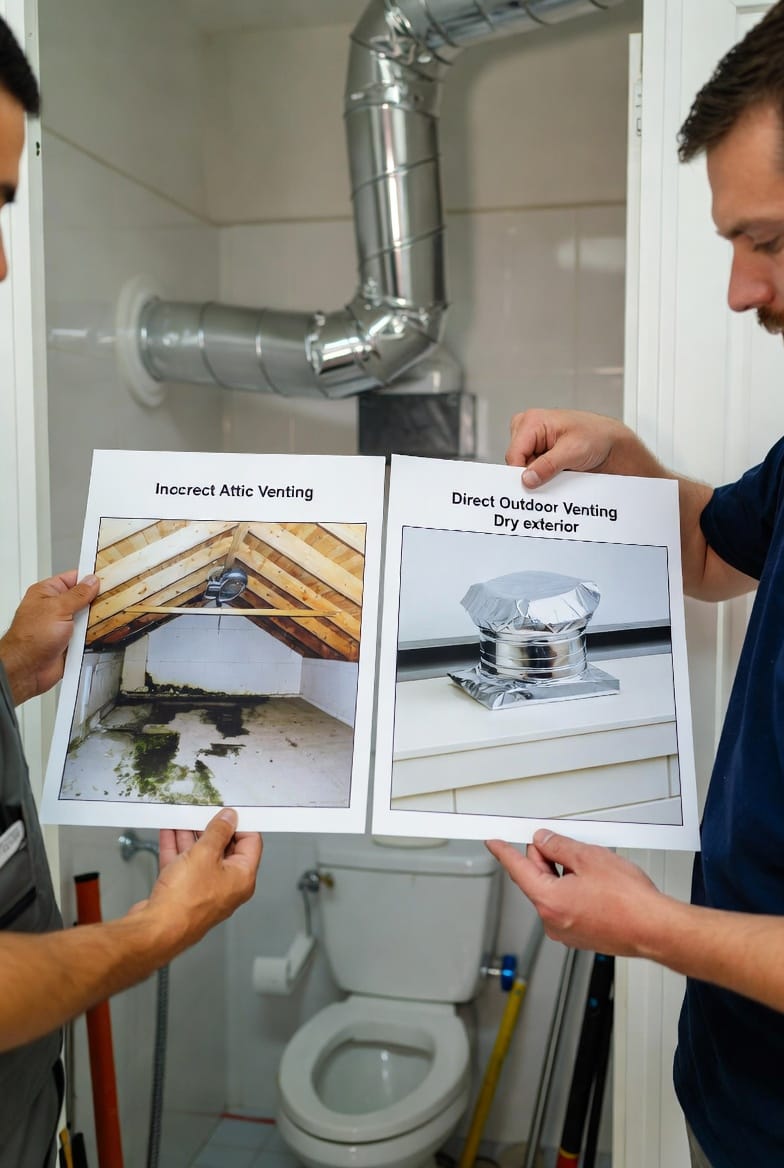
One of the most common mistakes in bathroom ventilation is venting the exhaust into the attic or another indoor space. This might seem convenient, but it simply relocates moisture, leading to attic mold, insulation degradation, and even roof damage.
Instead, always insist on direct ducting to the outside. Here's why and how:
- Prevents Moisture Recirculation: Ducting outdoors expels humid air completely from your home, reducing overall humidity levels.
- Complies with Building Codes: Most regulations require exterior venting to ensure safety and efficiency.
- Enhances Fan Performance: Smooth, insulated ducts (preferably 4-6 inches in diameter) minimize resistance, allowing the fan to operate at peak CFM.
Installation tips include using rigid metal ducts over flexible ones for better airflow, sealing all joints with foil tape, and installing a backdraft damper to prevent outdoor air infiltration. By ducting directly outside, you're not just ventilating your bathroom – you're safeguarding your entire home. It's a straightforward step that our remodeling team handles with precision, giving you confidence in a job well done.
Advanced Features for Superior Moisture Control
Modern exhaust fans go beyond basic operation, incorporating smart features that automate moisture control for effortless protection.
- Humidity Sensors: These detect rising moisture levels and activate the fan automatically, running until humidity drops below 60%. Ideal for forgetful households, they prevent unnecessary energy use while ensuring timely ventilation.
- Continuous Low-Speed Operation: Fans with this mode run quietly at a low CFM (e.g., 30-50) around the clock, providing baseline air circulation. They ramp up during high-moisture events, like showers, for comprehensive control.
- Timers and Motion Sensors: Timers allow the fan to run for a set period post-use, while motion sensors activate on entry, adding convenience.
- Quiet Operation (Sones Rating): Look for fans under 1.0 sones for whisper-quiet performance, ensuring ventilation doesn't disrupt your daily life.
Integrating these features transforms your exhaust fan into an intelligent guardian against moisture. In our experience, clients who choose sensor-equipped models report fewer issues and greater satisfaction with their remodels.
Integrating Ventilation into Your Overall Remodel Plan
A successful bathroom remodel weaves ventilation into every aspect of design. Position the fan centrally over the shower or tub for maximum efficiency. Coordinate with lighting by opting for fan-light combos that blend seamlessly into the ceiling. Ensure electrical wiring supports the fan's requirements, and consider energy-efficient models certified by ENERGY STAR for sustainability.
Don't overlook maintenance: Clean grilles regularly, inspect ducts annually, and replace fans every 10-15 years. By prioritizing ventilation from the start, you create a harmonious space where form and function coexist.

Common Myths and Misconceptions Debunked
Myth: "Opening a window is enough for ventilation." Reality: Windows often fail in cold or humid climates, and they don't remove air as efficiently as a fan.
Myth: "Louder fans are more powerful." Reality: Sones measure noise, not power; quiet fans can deliver high CFM.
Myth: "Ventilation is only for large bathrooms." Reality: Even small powder rooms benefit from proper airflow to prevent odors and moisture.
Armed with facts, you can make informed decisions that elevate your remodel.
Cost Considerations and ROI
Investing in a quality exhaust fan and proper installation typically ranges from $200-$600, a fraction of total remodel costs. The ROI? Avoided repairs from moisture damage can save thousands, plus improved home value and health benefits. It's an authoritative choice for savvy homeowners.
Choosing the Right Professional Help
While DIY is tempting, professional installation ensures compliance and optimal performance. Our team specializes in bathroom remodeling with a focus on ventilation systems, guaranteeing results that last.
In conclusion, treat your exhaust fan as the engine driving your bathroom's success. By calculating precise CFM, ducting directly outside, and incorporating smart features, you'll master moisture control and protect your investment.
Ventilation First, Beauty Follows – Call Our Remodeling Team