The Drought-Tolerant Lawn: Grass Alternatives for Water-Wise Landscapes

In an era of increasing water restrictions and rising utility costs, homeowners across the country are discovering the power of drought-tolerant lawns and grass alternatives that deliver lush beauty without the constant thirst of traditional turf. Sustainable landscaping isn’t just a trend—it’s a smart, responsible choice that protects your landscape, your wallet, and the environment. At our lawn care service, we’ve helped thousands transition to water-wise solutions that stay green even when rainfall is scarce. Whether you’re dealing with drought-prone summers or simply want to reduce maintenance, fine fescues, buffalo grass, clover, creeping thyme, and sedges offer proven, beautiful options that thrive with far less water.
Switch to a Water-Wise Lawn – Call for Expert Help
This comprehensive guide explores these drought-tolerant grass alternatives in detail. You’ll learn their unique benefits, exactly how to establish them, and the simple care routines that keep them looking spectacular year after year. By the end, you’ll feel confident that a vibrant, eco-friendly lawn is not only possible—it’s easier than you think. Let’s dive into the world of water-wise landscapes and unlock the secret to greener living with less watering.
Why Traditional Lawns Struggle in Today’s Climate
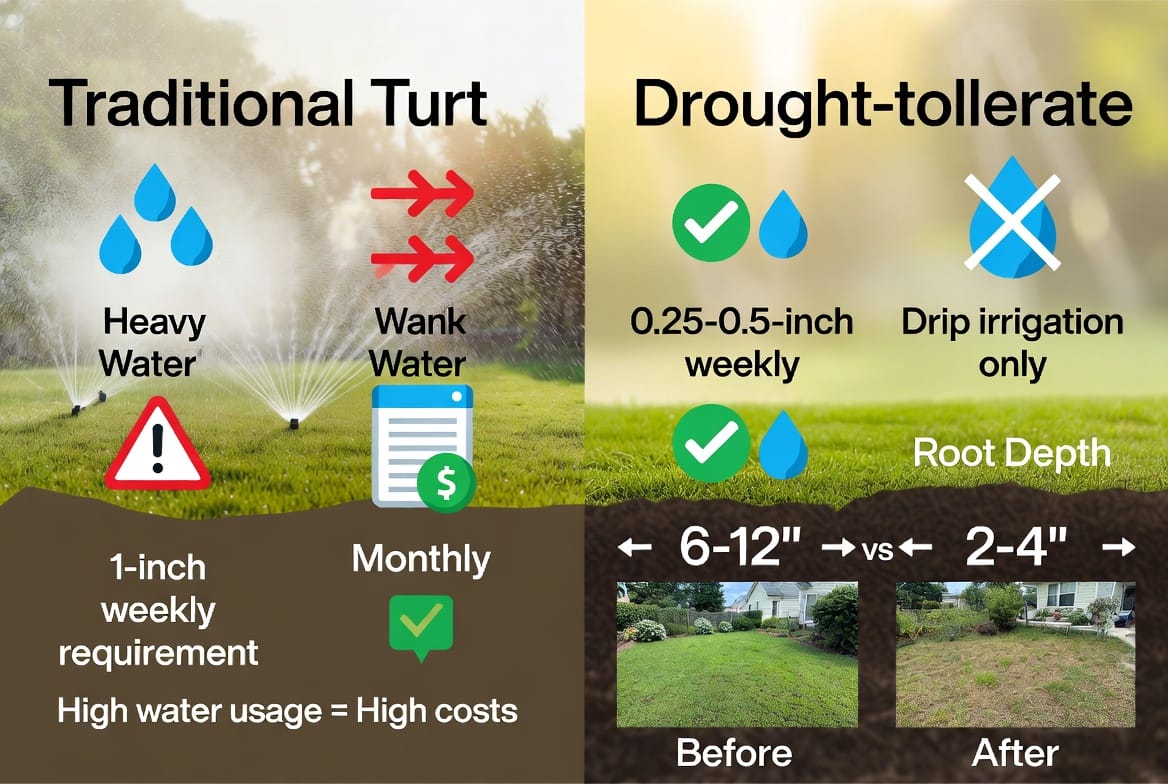
Conventional Kentucky bluegrass or perennial ryegrass lawns demand up to 1 inch of water per week during peak summer heat. That adds up fast—often thousands of gallons per month per yard. With water scarcity becoming a nationwide concern and many municipalities imposing strict limits, these high-maintenance lawns can quickly become expensive and stressful to maintain.
Drought-tolerant lawns solve this problem elegantly. They use 50–75% less water once established, resist heat and foot traffic better, and still provide the soft, green carpet you love. The best part? These alternatives are hardy, pest-resistant, and support local pollinators, turning your yard into a thriving ecosystem. Homeowners who switch report lower bills, fewer weeds, and more time to enjoy their outdoor space instead of babysitting sprinklers.
The Clear Advantages of Switching to Drought-Tolerant Options
Choosing grass alternatives for water-wise landscapes delivers immediate and long-term rewards. First, you’ll slash your water usage dramatically—often by half or more—while maintaining a lush appearance. Second, these plants develop deep root systems that make them naturally resilient to drought, reducing the need for supplemental irrigation after the first season.
Third, many options improve soil health. Clover, for instance, naturally fixes nitrogen, eliminating the need for synthetic fertilizers. You’ll also enjoy reduced mowing frequency, lower fuel or equipment costs, and fewer chemical applications. Most importantly, these sustainable choices give you peace of mind: your lawn will look beautiful even during the driest months, protecting your property value and neighborhood appeal.
Bold key benefit: Every transition we guide creates a landscape that works with nature instead of fighting it—delivering beauty you can rely on season after season.
Exploring the Best Drought-Tolerant Grass Alternatives
Several outstanding options stand out for sustainable landscaping. Each has distinct strengths, making it easy to match the right plant to your soil, sun exposure, and lifestyle.
Fine Fescues: Shade-Tolerant and Ultra-Efficient
Fine fescues are among the most versatile drought-tolerant grasses available. Their fine, needle-like blades create a soft, carpet-like texture that feels luxurious underfoot. These grasses excel in shaded areas where traditional turf struggles, requiring only 0.5 to 0.75 inches of water per week once established.
Establishment tips: Prepare the soil by removing existing turf and loosening the top 6 inches. Sow seed at 5–7 pounds per 1,000 square feet in early spring or fall. Keep the area consistently moist for the first 2–3 weeks until germination, then gradually reduce watering.
Care routine: Mow at 3–4 inches to encourage deep roots. Fertilize lightly in spring with an organic product. Because fine fescues grow slowly, you’ll mow only every 10–14 days in peak season. They tolerate cold winters beautifully and resist many common lawn diseases, giving you reliable performance with minimal effort.
Homeowners love how fine fescues blend seamlessly into mixed landscapes while cutting water bills significantly. Their natural disease resistance means fewer treatments and a healthier yard for kids and pets.
Buffalo Grass: The Native Powerhouse
Buffalo grass is a true North American native that thrives in hot, dry conditions with almost legendary toughness. Once established, it needs just 0.25 inches of water per week—sometimes less—making it ideal for water-wise landscapes in the Great Plains and beyond.
Establishment tips: Start with plugs or seed in late spring when soil temperatures reach 60°F. Space plugs 12 inches apart for faster coverage. Water lightly but frequently for the first month, then taper off completely. Buffalo grass spreads naturally via stolons, filling in beautifully over time.
Care routine: Mow only when it reaches 4–6 inches, typically just 4–6 times per season. Leave clippings to return nutrients to the soil. This low-maintenance grass naturally stays shorter than traditional varieties, reducing your workload while providing a soft, gray-green hue that turns tan in extreme drought yet bounces back quickly with any rain.
Its deep root system (up to 6 feet) makes buffalo grass exceptionally drought-resistant and excellent at preventing soil erosion. It’s also highly tolerant of poor soils where other grasses fail.
Ground Covers That Work Wonders: Clover, Creeping Thyme, and Sedges
When you want even lower maintenance, ground covers deliver stunning results. White clover is a nitrogen-fixing superstar that stays green through dry spells and attracts beneficial pollinators. Sow it at 2–4 pounds per 1,000 square feet after soil preparation. It needs almost no mowing and thrives in full sun to partial shade.
Creeping thyme adds fragrant beauty with tiny purple flowers and aromatic foliage. Plant from plugs spaced 6–12 inches apart in well-drained soil. Once established, it requires virtually no supplemental water and tolerates light foot traffic—perfect for pathways or between pavers.
Sedges offer graceful, grass-like texture with exceptional shade tolerance and low water needs. Varieties like Pennsylvania sedge form dense mats that suppress weeds naturally. Plant divisions in spring, water weekly for the first season, then enjoy hands-off beauty.
These ground covers can be mixed with grasses for a textured, multi-species lawn that looks intentional and professional while requiring dramatically less resources.

How to Successfully Establish Your New Drought-Tolerant Lawn
Transitioning is straightforward when you follow these proven steps. First, test your soil pH and nutrients. Most alternatives prefer slightly acidic to neutral conditions. Remove old turf completely using solarization or professional removal to eliminate competition.
Next, amend the soil with compost to improve drainage and structure. Seed, plug, or sod at the recommended rates during the optimal season for your chosen plant. Water consistently but lightly during establishment—never let the top inch of soil dry out completely for the first 4–6 weeks.
Once roots take hold, reduce watering gradually. Within one full growing season, your new drought-tolerant lawn will be fully self-sufficient in most climates.
Ongoing Maintenance Tips for Lasting Success
Maintenance is refreshingly simple. Mow higher and less frequently to promote deep roots. Use organic fertilizers sparingly—most alternatives need far less than traditional turf. Monitor for any bare spots and overseed as needed, but expect minimal weed pressure once established.
Aerate annually if soil compaction occurs, and top-dress with compost every spring. These small habits keep your water-wise landscape looking pristine with minimal time investment.
Designing a Beautiful Water-Wise Landscape
Incorporate pathways, mulch borders, and native perennials to create an integrated design that enhances curb appeal. Group plants with similar water needs together for efficient irrigation. Add rain barrels or smart controllers if you want extra insurance during extreme dry spells.
The result is a yard that looks intentional, modern, and inviting while supporting local wildlife.
Ready to Go Green with Less Water?
Switching to a drought-tolerant lawn is one of the smartest landscaping decisions you can make. You’ll enjoy a beautiful, resilient yard that saves water, reduces costs, and requires far less work. Our expert team specializes in these sustainable solutions and can tailor the perfect mix for your property.
Go green with less water. Let us help you create the water-wise landscape of your dreams—lush, low-maintenance, and built to last.
Get a Lush Low-Maintenance Lawn – Call Now