The Debris Estimation Game: Using Online Calculators and Volume Formulas to Budget Your Project Waste

Accurately estimating construction and renovation debris is essential for successful project waste management. Whether tackling a kitchen remodel, bathroom demo, or full home addition, misjudging the volume can lead to unexpected expenses or delays. By mastering simple volume formulas and reliable online tools, you gain control over costs and ensure the right dumpster size for your needs.
Need a Dumpster Fast? Call Us Right Now!
This guide provides practical math tools, step-by-step instructions, and industry insights to help homeowners and contractors budget confidently. With the correct debris estimation, you'll avoid overpaying for oversized containers or scrambling for additional rentals. Professional dumpster rental services emphasize early planning for efficient, stress-free cleanup.
Why Accurate Debris Estimation Matters
Underestimating waste volume often forces last-minute adjustments, inflating costs through multiple hauls or premium rush fees. Overestimating ties up budget in unused capacity and may violate local weight restrictions.
Key risks include:
- Weight limits exceeded – Heavy materials like concrete can max out a dumpster before reaching full volume
- Permit violations – Improper sizing may breach municipal rules
- Project delays – Waiting for extra dumpsters disrupts timelines
- Environmental impact – Inefficient hauling increases fuel consumption
Conversely, precise calculations promote safety, compliance, and peace of mind. Experienced teams routinely use these methods to streamline operations and deliver reliable service.
Mastering Manual Volume Calculations
The foundational formula for estimating debris volume is straightforward: measure the pile's length × width × height in feet, then divide by 27 to convert cubic feet to cubic yards.
Volume (cubic yards) = (Length × Width × Height) / 27
For irregular piles, approximate the shape as a rectangular prism using average dimensions or break into sections. Always add 10-20% buffer for loose packing and irregular shapes.
Calculating for Common Materials
Dirt and soil: Loose fill swells significantly. A 20 ft × 15 ft × 3 ft excavation pile equals 900 cubic feet → 900 / 27 ≈ 33.3 cubic yards. Factor in 20-30% swell for loose dirt, pushing recommendation toward a 40-yard dumpster.
Concrete and masonry: Dense and heavy. A 12 ft × 10 ft × 0.5 ft slab yields 60 cubic feet → 60 / 27 ≈ 2.2 cubic yards. Note weight: one cubic yard of concrete weighs approximately 2 tons, so consult dumpster weight limits (typically 2-4 tons for 10-20 yard units).
Dimensional lumber and wood debris: Lighter but bulky. For a stack of 2x4s measuring 8 ft × 6 ft × 4 ft: 192 cubic feet → 192 / 27 ≈ 7.1 cubic yards. Add extra space for protruding nails and irregular cuts.
Tips for accuracy:
- Measure at the widest points
- Average multiple height readings
- Account for compaction potential during loading
- Photograph the pile for reference
These hands-on techniques empower DIYers while professionals refine them with experience.
Leveraging Online Debris Calculators
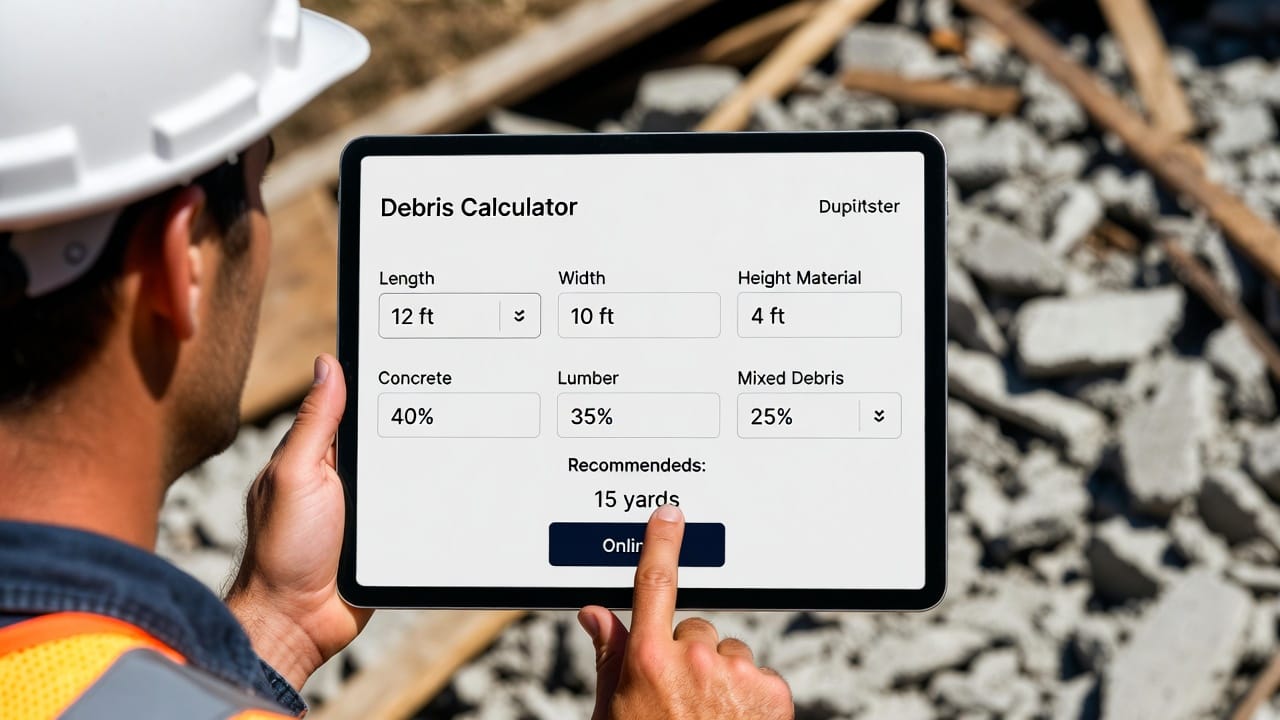
Online calculators streamline the process, incorporating material densities, waste types, and local regulations automatically.
Step-by-step guide to using an online calculator:
- Visit a trusted dumpster rental provider's tool
- Select project type (demo, remodel, construction)
- Input dimensions of debris area or pile
- Choose predominant materials (concrete, dirt, lumber, mixed)
- Adjust for compaction or special items (appliances, hazardous waste)
- Review recommended cubic yards and corresponding container sizes
- Generate cost estimate including delivery, pickup, and tonnage fees
These tools often factor real-time pricing and availability. For example, entering a 500 sq ft room gut with mixed debris typically suggests a 20-yard roll-off for safe containment.
Advantages over manual methods:
- Built-in material weight conversions
- Instant cost projections
- Mobile-friendly for on-site use
- Updates reflecting current regulations
Always cross-check digital outputs with physical measurements for best results.
Rules of Thumb and Quick Reference Cheat Sheets
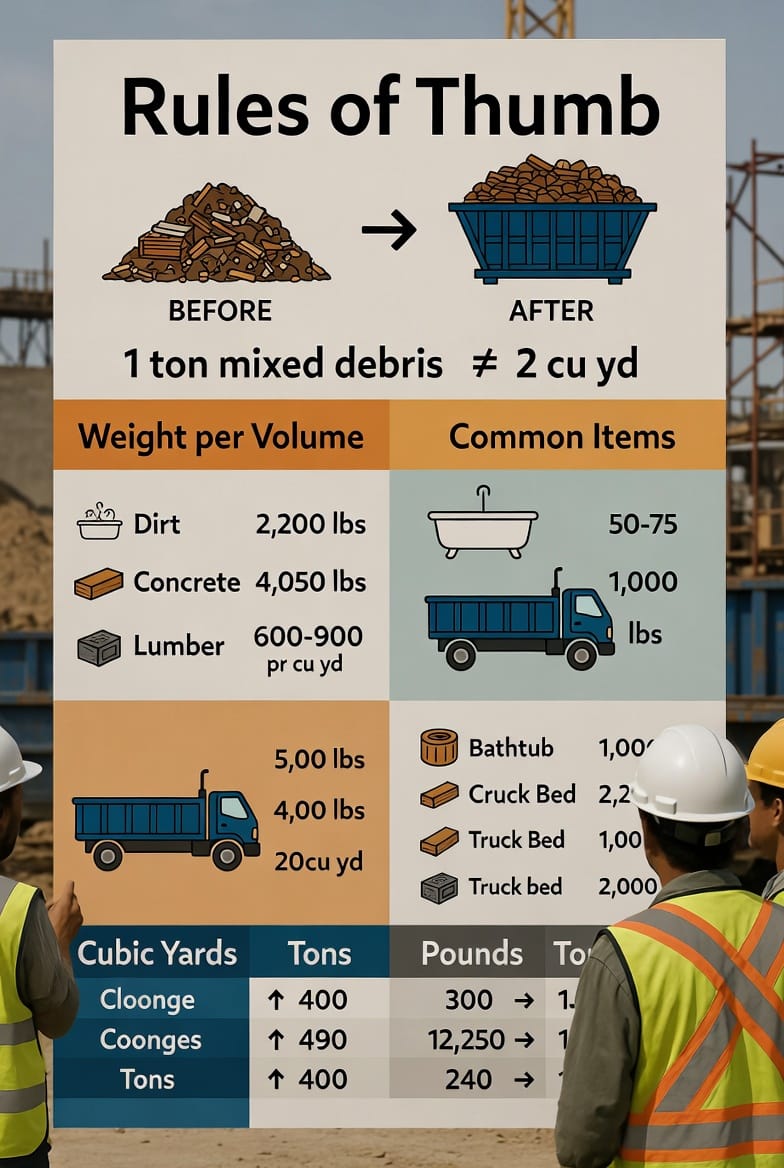
Seasoned professionals rely on proven shortcuts for rapid assessments.
Common rules of thumb:
- 1 ton of mixed construction debris ≈ 2 cubic yards
- One cubic yard of dry dirt weighs 1.2–1.5 tons
- One cubic yard of broken concrete weighs nearly 2 tons
- Standard bathtub volume ≈ 0.5 cubic yards
- Full pickup truck bed (6 ft) ≈ 1.5–2 cubic yards when loaded
- 10×12 ft room with 3 ft deep debris ≈ 4–5 cubic yards
Keep a digital or printed cheat sheet handy. These approximations shine during initial planning calls with your dumpster rental provider.
Budgeting Effectively for Project Waste
Combine volume estimates with local dumpster rental rates. Factors influencing final cost:
- Container size (10, 15, 20, 30, 40 yards)
- Rental duration (typically 7–14 days standard)
- Tonnage overage fees
- Location surcharges and permits
For a moderate kitchen remodel generating 8–12 cubic yards, budget $400–$750 depending on region and materials. Heavy concrete jobs require larger units or multiple loads to respect weight limits.
Pro tips for cost control:
- Schedule delivery just before peak debris generation
- Load heavy items first
- Communicate material types upfront
- Ask about recycling credits for clean concrete or metal
Proper planning transforms waste removal from a headache into a manageable line item.
Budget accurately for cleanup.
With these practical formulas, online calculators, and proven rules of thumb, you're equipped to play the debris estimation game successfully. Accurate forecasting safeguards your budget, timeline, and project success. Reach out to experienced dumpster rental professionals early—they provide expert guidance tailored to your specific waste profile.
Clear Your Site Today – Call for a Dumpster!