The Cigarette Beetle: Tiny Pest of Tobacco, Spices, and Books

Tiny invaders can cause outsized damage inside your home. The cigarette beetle is one such silent threat. Though small enough to fit on a fingertip, this persistent storage pest can quietly destroy tobacco products, dried herbs, spices, books, and other plant-based materials. Homeowners often discover the problem only after noticing holes in packaging, fine powder in storage areas, or unexpected damage to cherished collections.
Protect Your Spices, Tobacco & Books from Hidden Pests – Call Today
Understanding how the cigarette beetle behaves, where it hides, and how to eliminate it quickly protects your pantry, library, and stored goods. Early detection and proper action stop infestations before they spread. In many cases, professional pantry pest control provides the thorough inspection and treatment needed to resolve the issue completely and prevent recurrence.
This guide explains everything you need to know about identifying, managing, and eliminating cigarette beetles so you can safeguard your home with confidence.
What Is the Cigarette Beetle?
The cigarette beetle (Lasioderma serricorne) belongs to the family of stored-product pests. It earned its common name from its historical preference for tobacco, though it readily attacks many other dried plant materials. Adults are small, measuring about 2 to 3 millimeters in length. They have a rounded, reddish-brown body and a characteristic humped back that gives them a hunched appearance when viewed from the side.
Unlike some beetles, cigarette beetles are strong fliers. They can move between rooms or even between homes if conditions allow. Their small size lets them slip through tiny cracks in packaging, making them difficult to spot until populations grow.
Key identification features include:
- Reddish-brown to dark brown color
- Humped or rounded back profile
- Clubbed antennae
- Fine hairs covering the body
- Ability to fly when disturbed
Homeowners sometimes confuse them with drugstore beetles or flour beetles. However, the humped back and preference for tobacco and spices usually distinguish the cigarette beetle.
Behavior and Infestation Habits
Cigarette beetles are opportunistic feeders that target dry, starchy, or nicotine-containing materials. They do not bite or sting humans, but their presence contaminates food and damages valuable items. Females lay eggs directly on or near suitable food sources. Once larvae hatch, they tunnel through the material, feeding and growing while leaving behind frass (waste) and fine powder.
These pests thrive in warm, moderately humid environments. Pantries, kitchen cabinets, spice racks, tobacco storage areas, and home libraries provide ideal conditions. Infestations often begin when homeowners unknowingly bring home already-infested products from stores or when dried goods are stored for long periods without inspection.
Because they can survive on a wide range of materials, a single introduction can spread rapidly. One female can lay dozens of eggs, and multiple generations may overlap inside the same container or shelf.
Understanding the Cigarette Beetle Lifecycle
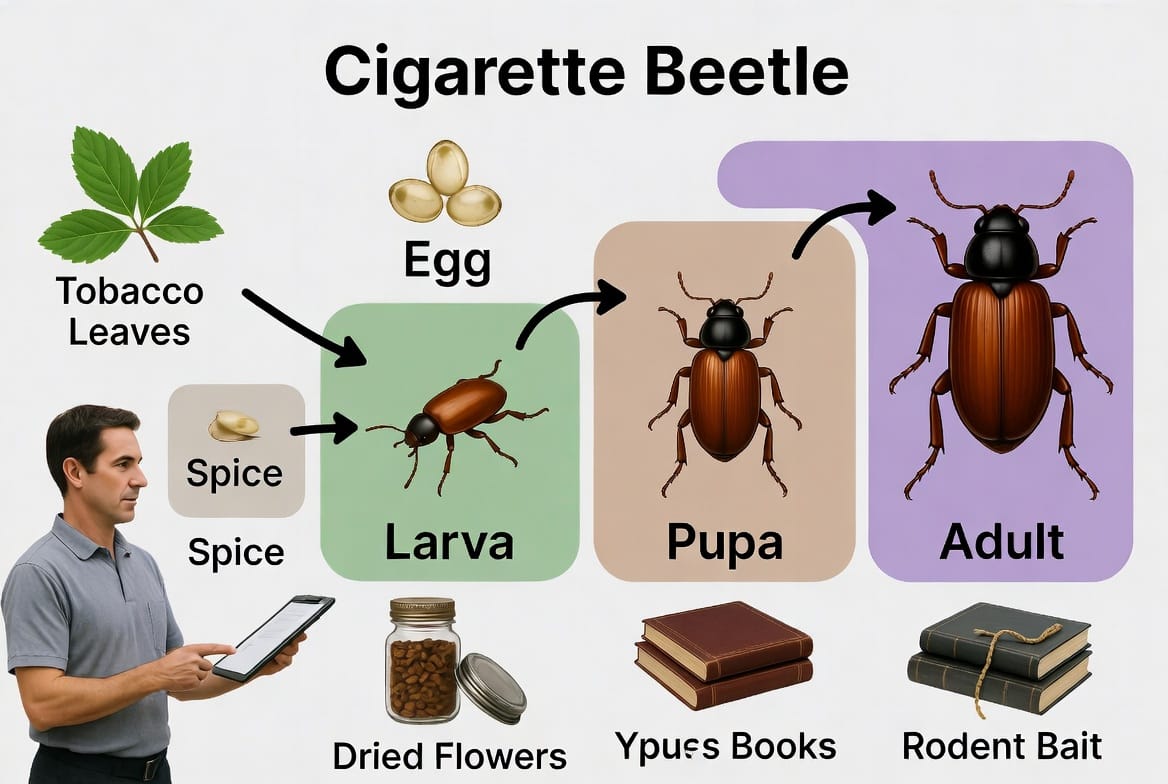
The lifecycle typically completes in 30 to 90 days depending on temperature and food availability. Warm conditions accelerate development, allowing rapid population growth. Understanding each stage helps homeowners and technicians time interventions correctly.
- Egg stage: Tiny white eggs laid on or inside food sources.
- Larval stage: Most destructive phase. Creamy-white, C-shaped larvae tunnel through materials.
- Pupal stage: Transformation occurs inside a protective cocoon or chamber within the food.
- Adult stage: Beetles emerge, mate, and begin the cycle again. Adults live several weeks and can fly to new locations.
Because all stages can exist simultaneously in a heavy infestation, comprehensive treatment is essential.
Common Signs of Cigarette Beetle Infestation
Early detection prevents widespread damage. Watch for these indicators:
- Small round holes in packaging, tobacco, or book spines
- Fine powdery dust or frass near stored items
- Live or dead small reddish-brown beetles, especially near lights at night
- Unusual musty or sweet odor from heavily infested spices or tobacco
- Damaged or hollowed-out dried herbs, flowers, or rodent bait
- Beetles appearing in multiple areas of the pantry or storage space
If you notice any of these signs, inspect all susceptible items immediately. Delaying action allows the infestation to expand into previously unaffected products.
Common Items Targeted by Cigarette Beetles

Cigarette beetles attack a surprisingly wide variety of dry goods. Common targets include:
- Tobacco products — Cigarettes, cigars, pipe tobacco, and chewing tobacco
- Spices and dried herbs — Paprika, chili powder, oregano, basil, and similar seasonings
- Dried plant materials — Potpourri, dried flowers, and decorative arrangements
- Books and paper goods — Especially older volumes with starch-based glues or paper
- Rodent bait — Some commercial baits contain grains or other attractants
- Other stored foods — Dry pet food, bird seed, and certain cereals in rare cases
Because these items are often stored long-term, infestations can remain hidden until significant damage occurs.
How to Eliminate Cigarette Beetles
Effective control combines immediate action with long-term prevention. Follow these steps for best results:
Step 1: Thorough Inspection
Remove everything from affected shelves and cabinets. Use a flashlight and magnifying glass to check corners, seams, and the undersides of shelves. Look for live beetles, larvae, and frass.
Step 2: Discard Heavily Infested Items
Any product showing clear signs of infestation should be sealed in a plastic bag and thrown away immediately. Do not attempt to salvage heavily damaged goods, as eggs and larvae may remain.
Step 3: Freeze Susceptible Items
For items you wish to save (such as valuable spices or books), place them in sealed freezer bags and freeze at 0°F (-18°C) or below for at least 72 hours. Freezing kills all life stages of the cigarette beetle without chemicals. After freezing, allow items to return to room temperature inside the sealed bag before opening.
Step 4: Deep Clean Storage Areas
Vacuum all shelves, corners, and crevices thoroughly. Wipe surfaces with a mild detergent solution. Pay special attention to cracks and gaps where eggs or larvae may hide. Empty and clean the vacuum canister outside to prevent re-infestation.
Step 5: Improve Storage Practices
Transfer remaining dry goods into airtight glass or heavy plastic containers. Label containers with dates and inspect periodically. Reduce humidity in storage areas when possible, as lower moisture levels discourage pest development.
Step 6: Monitor for Recurrence
Place sticky traps or pheromone traps designed for stored-product pests in affected areas. Check traps regularly. Continued captures indicate hidden sources that require further attention.
When Professional Pantry Pest Control Is the Smart Choice
While the steps above resolve many light infestations, certain situations benefit greatly from professional intervention:
- Large or recurring infestations
- Valuable collections (rare books, extensive spice inventories, or tobacco collections)
- Difficulty locating the source of the problem
- Concerns about using any treatment methods near food
Professional technicians bring specialized tools, experience identifying hidden sources, and safe, targeted approaches that eliminate all life stages. They also provide guidance on preventing future problems tailored to your specific home and storage habits.
Cigarette beetles are persistent but manageable. With prompt inspection, proper disposal or freezing, and thorough cleaning, most homeowners regain control quickly. When the infestation is widespread or valuable items are at risk, expert pantry pest control delivers peace of mind and lasting results.
These Tiny Pests Eat More Than Tobacco.
Do not let a small beetle compromise your stored goods or peace of mind. Professional help is available to inspect, treat, and protect your home from cigarette beetles and other pantry pests. Call today for fast, effective service tailored to your situation.
Stop Cigarette Beetle Damage in Your Pantry – Call for Help Now