The Chimney Sweep & Wildlife Guard: Why Your Chimney Needs a Professional Cap and Inspection
Chimneys are vital for safely venting smoke and combustion gases from fireplaces, wood stoves, and heating appliances. Yet an uncovered chimney top turns this functional feature into a major vulnerability for your home. Without proper protection, it becomes an open entry point for wildlife — raccoons, birds, squirrels, and even bats frequently move in, creating nests that lead to serious fire hazards, health risks, and expensive repairs.
Safe, Wildlife-Free Chimney – Call for Expert Help!
This guide combines essential chimney maintenance practices with effective wildlife exclusion strategies. We’ll explain why uncapped chimneys attract animals, how nesting materials dramatically increase the danger of chimney fires, and why a professionally installed, animal-proof chimney cap is a non-negotiable safety investment for any homeowner who uses a fireplace or wood-burning system.
Why Uncapped Chimneys Attract Wildlife
Animals view an open chimney as a perfect natural shelter: dark, protected from predators, insulated, and often warmed by residual heat rising from the home. This makes it especially appealing during fall, winter, and early spring — peak seasons for nesting and denning.
- Raccoons are among the most common and problematic intruders. Intelligent and strong climbers, they scale walls, downspouts, or overhanging branches to reach the chimney top. Once there, a mother raccoon can easily lower her kits into the flue to establish a den.
- Birds (chimney swifts, starlings, sparrows, etc.) instinctively seek vertical cavities for nesting. They drop sticks, leaves, feathers, and grass inside, quickly building bulky, flammable structures on smoke shelves or ledges.
- Squirrels haul in twigs, bark, and leaves to create warm nests, often chewing on damper mechanisms in the process.
- Bats sometimes roost in the upper flue sections during daylight hours.
Homeowners typically notice the problem through odd sounds — scratching, thumping, chirping, or fluttering — coming from the fireplace. You may also find droppings on the hearth, dark stains, debris piles, or even glimpses of animals looking down the flue.
Left unchecked, these visitors return year after year, enlarging nests and causing progressively worse damage.
How Nest Blockages Create Serious Fire Hazards
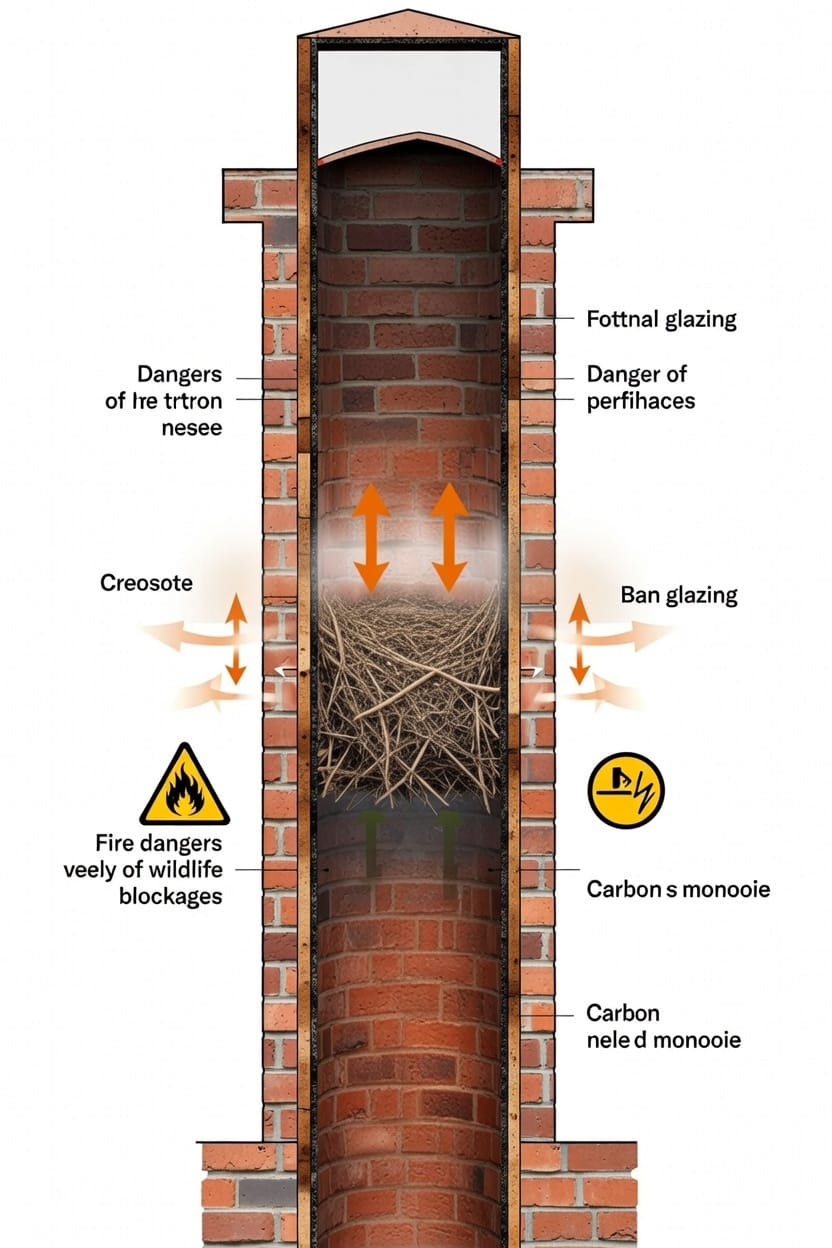
Nesting materials are extremely dry and combustible. Twigs, leaves, feathers, fur, and paper-like debris act as kindling. When you light a fire below, sparks or intense heat can ignite the nest, triggering a chimney fire.
Chimney fires burn extremely hot — frequently exceeding 2,000°F — and can:
- Crack clay flue liners or mortar joints
- Damage the metal damper
- Spread flames to the roof structure or attic
- Cause structural failure in severe cases
Even without an active fire below, a blocked flue traps heat and restricts airflow. This leads to two additional dangers:
- Carbon monoxide backup — Smoke and deadly CO gas can leak into living spaces through gaps around the damper or fireplace opening. CO poisoning is especially insidious because the gas is colorless and odorless.
- Accelerated creosote buildup — Restricted draft causes wood smoke to cool too quickly inside the flue. Condensed vapors form thick, tar-like creosote layers that are highly flammable and serve as fuel for future chimney fires.
The Foundation of Safe Chimney Care: Sweeping + Inspection
Professional chimney sweeping removes creosote, soot, and existing nest debris before they become hazardous. Technicians use rotary brushes, high-powered vacuums, and inspection cameras to clean and evaluate the entire system — from the smoke chamber and damper to the flue liner and crown.Annual inspections (or biannual for heavy wood-burning use) also reveal:
- Cracks or spalling in the chimney crown
- Damaged flashing that allows water entry
- Loose or missing bricks
- Signs of previous animal activity (claw marks, fur, old nest remnants)
Combining cleaning with wildlife-proofing stops the problem cycle. Sweeping clears current threats; inspection identifies weak points; a proper cap prevents re-entry.
Why a Professional Animal-Proof Chimney Cap Is Essential
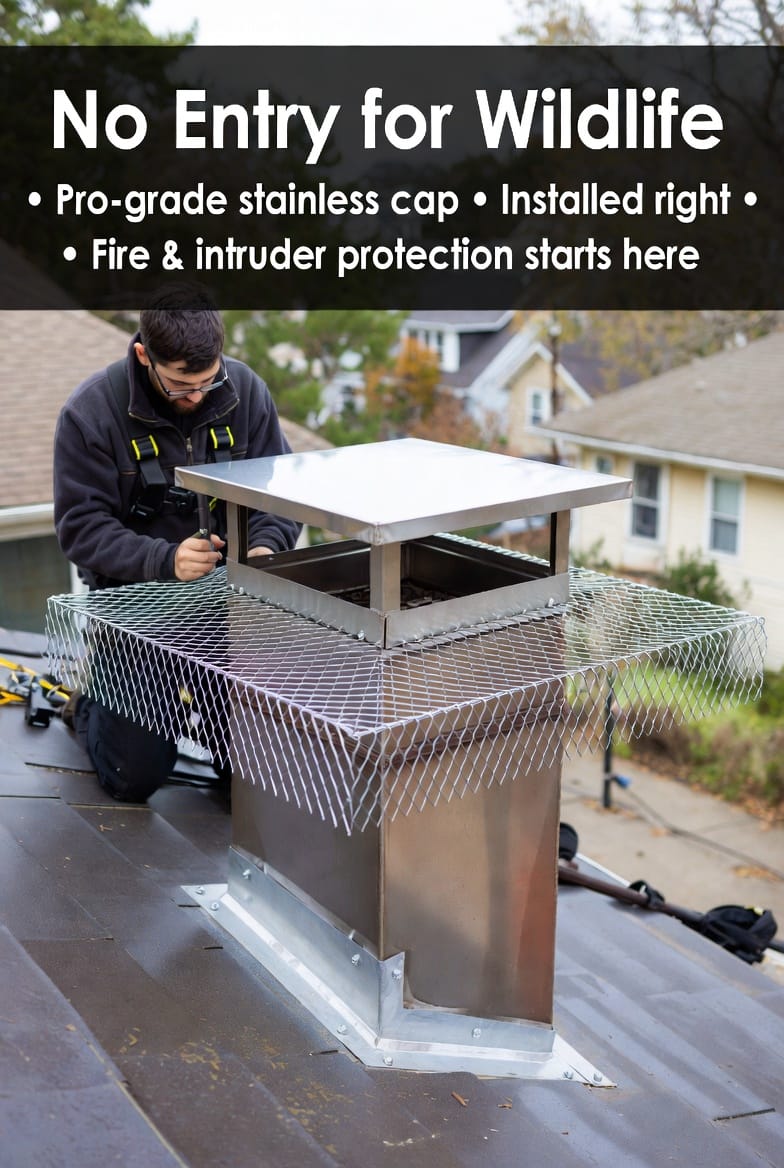
A quality chimney cap does far more than block rain. It is the primary barrier against wildlife intrusion while still allowing proper venting.
Key features of a professional-grade, animal-proof cap include:
- Heavy-gauge 304 or 316 stainless steel construction (resists rust, creosote acids, and weathering for 20+ years)
- Tight 1/4-inch or smaller stainless mesh that excludes birds, bats, squirrels, and raccoons
- Solid rain-diverting top with overhang to shed water away from the flue
- Extended skirt/base that overlaps the chimney crown edges for a secure, gap-free fit
- Bolted or mechanically fastened installation (no relying on friction-fit or weak screws)
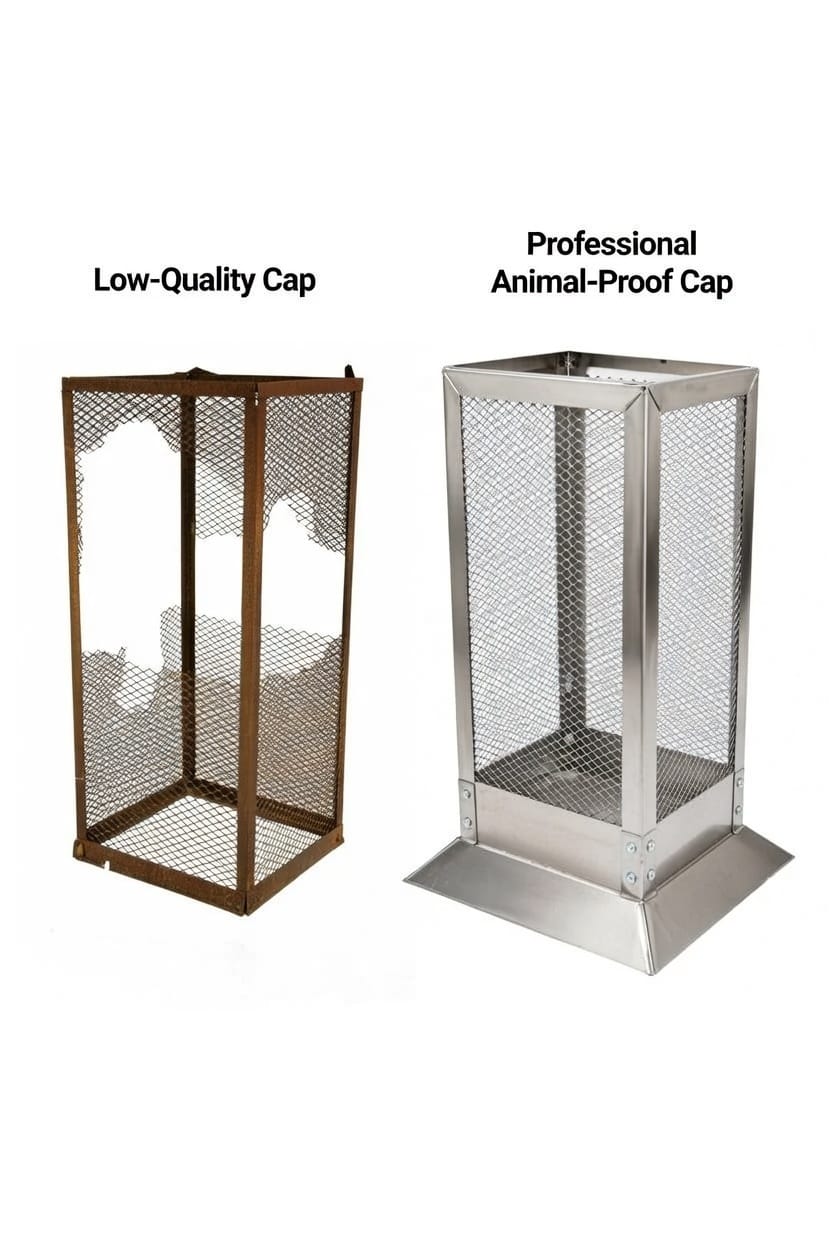
Big-box store caps — often made of thin galvanized steel or aluminum — fail quickly. Their larger mesh openings let small animals through, weak hardware loosens, and metal warps or corrodes within 2–5 years. Animals frequently tear or bypass them entirely.
Professional installation includes:
- Checking and repairing the chimney crown first
- Custom sizing for a perfect fit
- Sealing to prevent water intrusion
- Verifying that venting is not restricted
This upfront investment eliminates repeated wildlife removal calls, prevents chimney fires caused by nests, reduces creosote accumulation, minimizes downdrafts, and extends the life of your chimney system.
Final Thoughts & Next Step
An uncapped or poorly protected chimney is a double risk: it invites wildlife intrusions and dramatically increases the chance of dangerous chimney fires. Professional sweeping keeps the system clean, thorough inspections catch problems early, and a high-quality, animal-proof cap installed by experienced technicians provides year-round protection.
Don’t wait for scratching sounds, smoke spillage, or a full chimney fire to take action.
Secure your chimney from fire hazards and furry intruders.
Protect Your Home from Raccoons & Birds – Call Today!