The Beaver Dam Dilemma: Managing Flooding and Tree Damage from Nature's Engineers.
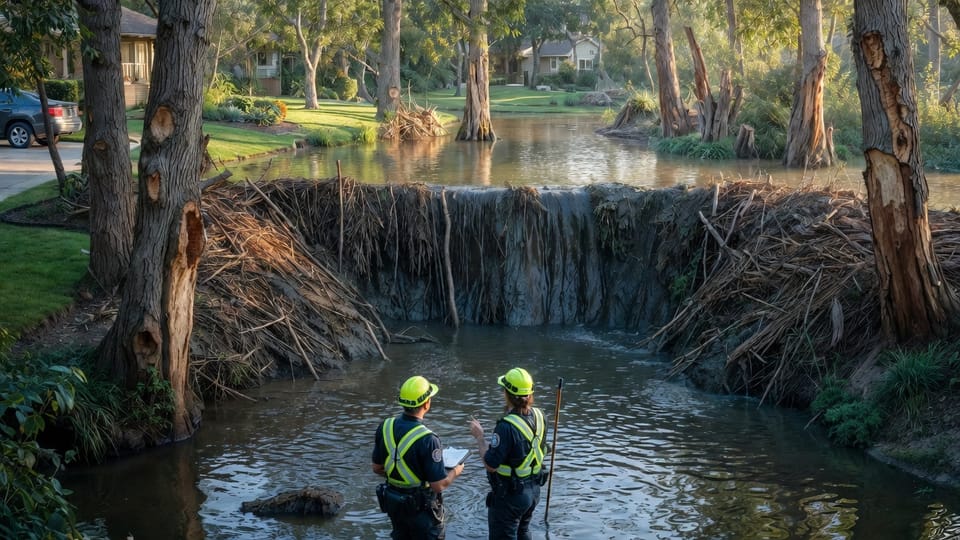
Beavers are remarkable creatures often called nature’s engineers for their ability to reshape landscapes with precision and persistence. Yet when their instinctive dam-building and tree-felling activities encroach on residential or commercial properties, homeowners face a unique wildlife challenge that demands thoughtful, effective intervention. Beaver dams can rapidly cause flooding risks, while their feeding habits lead to extensive tree damage, threatening landscaping, foundations, and even neighboring properties.
Humane Beaver Solutions Start Here – Call for Free Assessment
The good news is that humane beaver control and professional wildlife removal strategies exist to resolve these issues without harming the animals. With the right approach, property owners can protect their investments while allowing these fascinating rodents to continue their natural behaviors elsewhere. Our certified wildlife specialists have helped countless homeowners navigate the beaver dam dilemma successfully, restoring safety and peace of mind through science-based, compassionate methods.
This guide walks you through beaver behavior, the specific damages they cause, and proven humane management strategies including flow devices, tree protection, and professional trapping when necessary. Whether you’re dealing with rising water levels or disappearing trees, expert guidance ensures a long-term, responsible solution.
Understanding Beaver Behavior: Instincts That Drive the Dilemma
Beavers are large semi-aquatic rodents that thrive in family colonies typically consisting of a breeding pair and their young. They are primarily nocturnal and spend much of their time constructing and maintaining dams and lodges. Using powerful incisors, they fell trees to create the building materials needed for their structures, which serve multiple critical purposes: providing deep water for protection against predators, storing winter food caches underwater, and creating safe travel corridors between feeding areas and their lodges.
A single colony can fell dozens of trees per month and construct dams that span dozens of feet. They prefer slow-moving streams or drainage areas with ample wood sources nearby. Once a site is chosen, beavers work tirelessly to block water flow, raising the water level to the ideal depth for their needs. This engineering instinct is hardwired and highly efficient—beaver dams can last for decades if left undisturbed.
While these behaviors benefit wetland ecosystems in natural settings, they become problematic near human development. Homeowners often notice sudden water accumulation or mysterious tree loss without realizing a beaver colony has moved in upstream. Recognizing these signs early allows for proactive beaver management before minor issues escalate into costly damage. Our specialists emphasize education first, helping clients understand that beavers are not pests but simply following survival instincts that can be redirected humanely.
The Specific Damages: Flooding Risks and Tree Felling
Flooding risks represent one of the most immediate threats posed by beaver dams. By impounding water, these structures can raise water tables dramatically, leading to submerged yards, flooded basements, eroded shorelines, and even compromised septic systems. In severe cases, standing water creates mosquito breeding grounds and weakens building foundations through prolonged saturation.
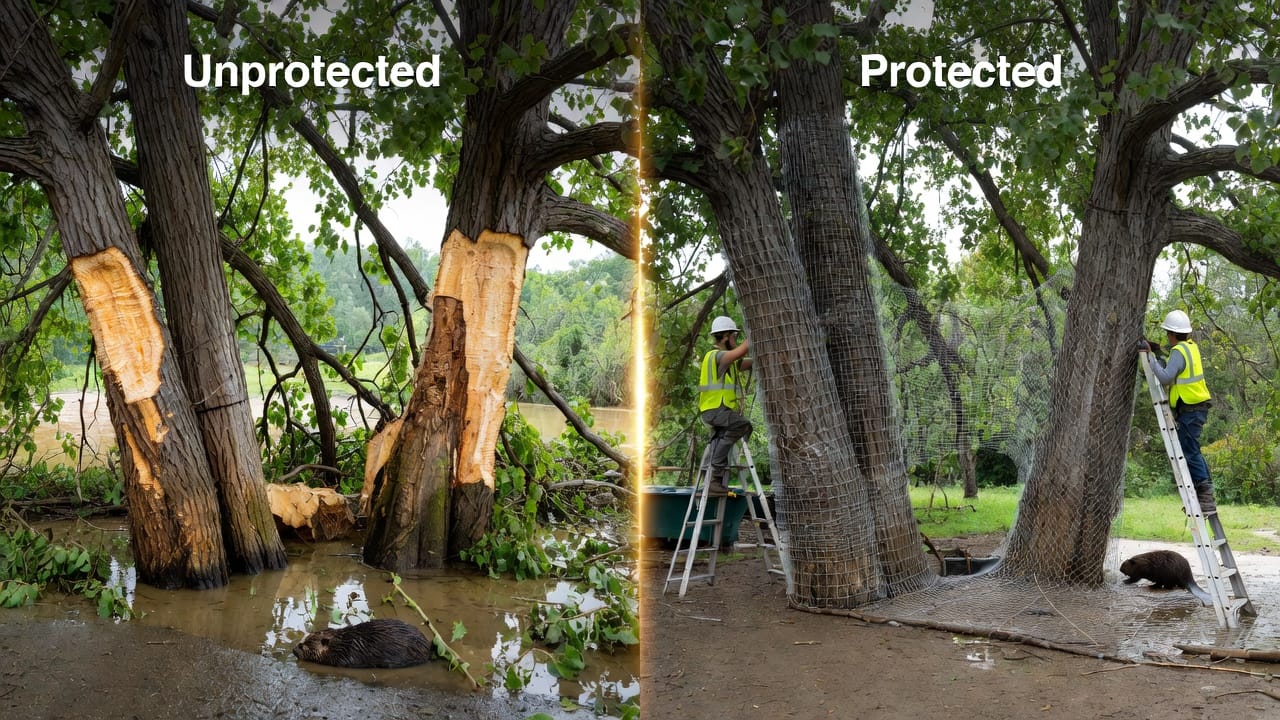
Tree damage is equally concerning. Beavers selectively target preferred species such as willow, poplar, maple, and birch, gnawing trunks until the trees topple. Valuable landscape trees, shade providers, and ornamental plantings can disappear overnight. Fallen trees may also block drainage or create hazards if they land near structures or power lines. The combination of flooding and tree loss often results in significant financial impact, including landscape replacement costs, flood cleanup, and potential insurance claims.
Many property owners initially attempt DIY solutions, but these frequently fail because they do not address the underlying beaver behavior. Temporary dam breaching, for example, prompts the animals to rebuild even stronger structures. This cycle highlights why professional wildlife removal expertise is essential for breaking the pattern safely and permanently.
Humane Management Strategy One: Flow Devices That Maintain Balance
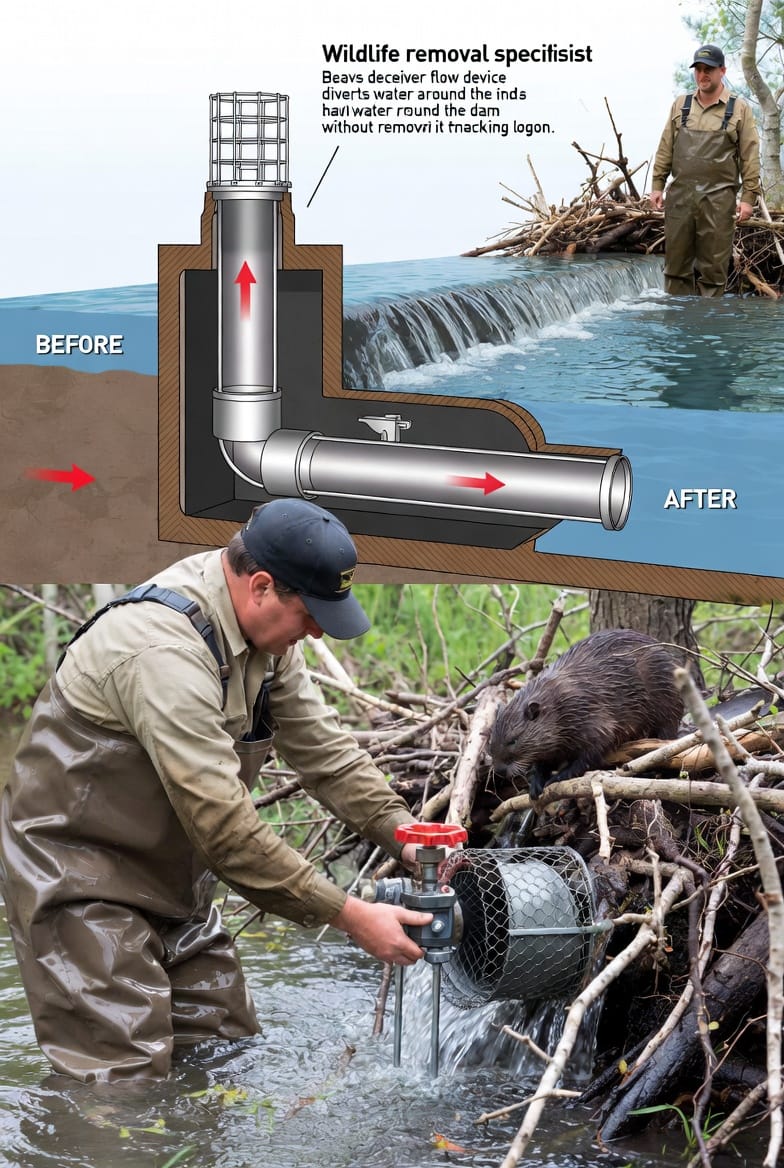
One of the most effective non-lethal solutions is the installation of beaver flow devices, commonly known as beaver deceivers. These clever systems allow water to pass through the dam at a controlled rate, preventing excessive flooding while leaving the dam itself intact. Beavers continue to maintain their structure and feel secure because water levels remain stable.
The device typically consists of a perforated pipe wrapped in heavy wire mesh, inserted through the dam and extending into the pond. A cage or intake structure prevents beavers from plugging the pipe with sticks. Once installed correctly, the flow device requires minimal maintenance and can operate for years.
Key benefits include:
- Preservation of the beaver colony in a suitable nearby habitat
- Immediate reduction of flooding risks without dam destruction
- Cost-effective long-term solution compared to repeated removal
- Compliance with wildlife protection regulations
Our wildlife specialists custom-design and install these devices based on site-specific hydrology, ensuring optimal performance. Clients frequently report dramatic improvement within days, with water levels dropping to manageable heights while the beavers remain undisturbed.
Humane Management Strategy Two: Protecting Valuable Trees with Professional Barriers
When tree damage is the primary concern, physical protection offers an excellent proactive measure. Heavy-duty wire mesh wrapping around tree trunks prevents beavers from gnawing while allowing the tree to grow naturally. The mesh must extend high enough (typically 3–4 feet) and be secured properly to withstand beaver attempts to climb or push it aside.
Professional tree protection involves:
- Selecting galvanized or stainless steel mesh of appropriate gauge
- Installing a small gap at the base to prevent girdling
- Combining with fencing or repellents for added security in high-activity zones
- Regular inspections to ensure integrity after storms or seasonal changes
This method is highly effective and visually unobtrusive when installed correctly. Trees protected early in the season often show zero additional damage, preserving both aesthetic value and property investment. Our teams demonstrate proper technique on-site, teaching homeowners how to maintain the barriers for ongoing success.
When Professional Trapping and Relocation Become Necessary
In some situations—such as persistent flooding despite flow devices or multiple colonies overwhelming available habitat—professional trapping and relocation provides the definitive solution. Licensed wildlife specialists use live traps baited with appropriate materials, ensuring minimal stress to the animals. Captured beavers are relocated to approved natural habitats far from human development, following all state and federal regulations.
This step is always a last resort after evaluating non-lethal options. Our team prioritizes animal welfare throughout the process, conducting thorough site assessments and providing post-relocation monitoring to confirm successful integration. Property owners gain lasting relief, and the beavers thrive in more suitable environments.
Why Professional Expertise Delivers the Best Results
Attempting to manage beaver activity independently can lead to unintended consequences, including legal violations, repeated damage, or unnecessary harm to wildlife. Certified wildlife removal professionals bring specialized equipment, deep knowledge of local regulations, and proven techniques that guarantee humane, effective outcomes.
Clients benefit from comprehensive service that includes initial assessment, tailored solution implementation, follow-up visits, and prevention recommendations. The authoritative approach ensures compliance, minimizes disruption, and restores property value quickly.
Preventing Future Encounters Through Smart Landscaping
Long-term prevention complements active management. Strategic planting of less-preferred tree species, maintaining open sightlines near water edges, and installing perimeter fencing around vulnerable areas all reduce attractiveness to beavers. Regular property monitoring during spring and fall—peak activity seasons—allows early detection.
Conclusion: Peaceful Coexistence Is Possible
The beaver dam dilemma does not have to result in ongoing frustration or expensive repairs. By understanding beaver behavior and applying targeted humane management strategies, property owners can effectively address flooding risks and tree damage while respecting these remarkable animals.
Our wildlife specialists stand ready to deliver customized, compassionate solutions that work. Manage beaver activity humanely and effectively.
Restore Your Yard Peacefully – Call Beaver Removal Experts