The Attic Junction Box: Proper Box Installation and Wire Connections

In the hidden spaces of your home, attic junction boxes play a critical role in maintaining safe and reliable electrical systems. These unassuming components protect wire connections from damage, prevent overheating, and ensure compliance with safety standards. Yet many homeowners overlook them until problems arise.
Secure Your Attic Wiring Today – Call Now!
Proper attic junction box installation and wire connections are essential for preventing fires and ensuring long-term peace of mind. This comprehensive guide explains everything you need to know about keeping your attic wiring secure, accessible, and fully protected.
When installed correctly, an attic junction box becomes an invisible guardian—quietly safeguarding your home while remaining easy to reach when needed. With the right techniques, you eliminate unnecessary risks and enjoy a safer living environment for years to come.
Why Attic Junction Boxes Matter in Hidden Spaces
Attics present unique challenges for electrical work. Extreme temperature swings, dust accumulation, and limited access make them prone to issues that can go unnoticed for years. Junction boxes serve as dedicated enclosures where wires can be joined safely without compromising the integrity of the circuit.
Without a proper box, connections become vulnerable to physical damage, moisture, or accidental contact. In attics, this vulnerability increases dramatically because wiring often runs through insulation or near structural elements. A correctly installed box keeps connections organized, supported, and shielded from the environment.
Safety in hidden spaces is not optional—it is the foundation of responsible homeownership. By focusing on accessible, code-compliant installations, you protect your family, your property, and your investment.
Key Requirements for Attic Junction Boxes
Industry best practices and safety standards require attic junction boxes to meet strict accessibility and visibility criteria. Here are the non-negotiable rules:
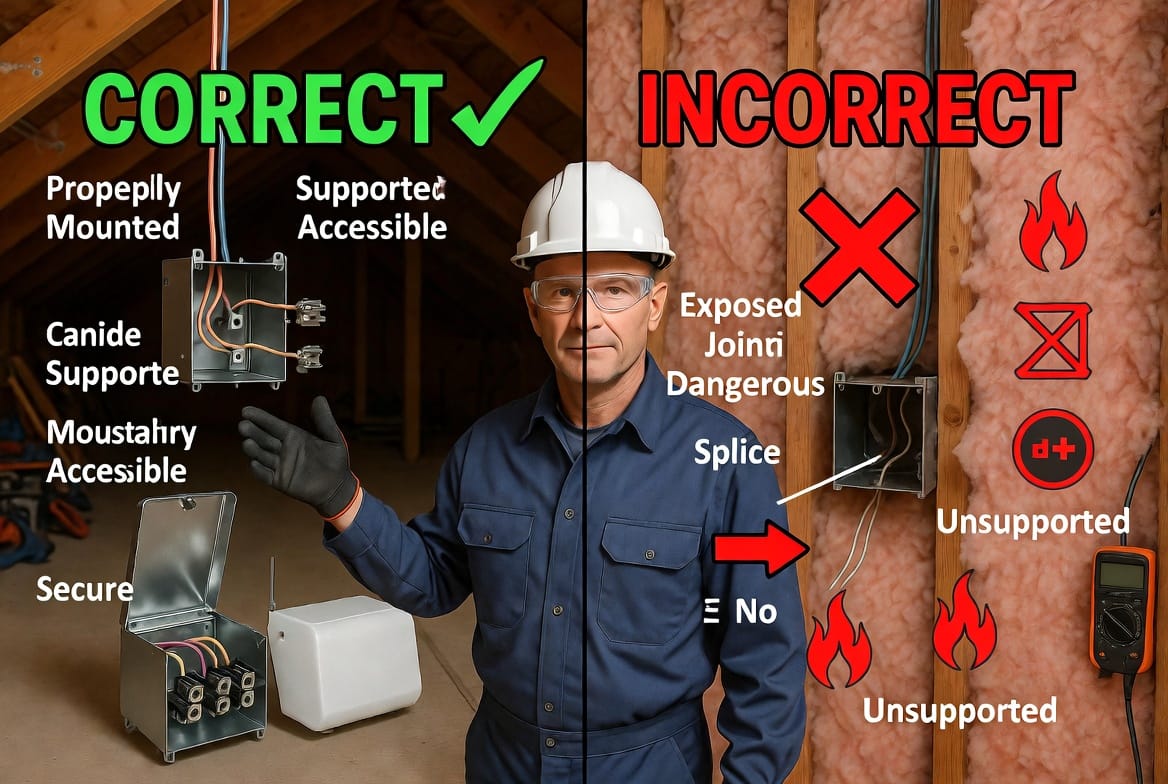
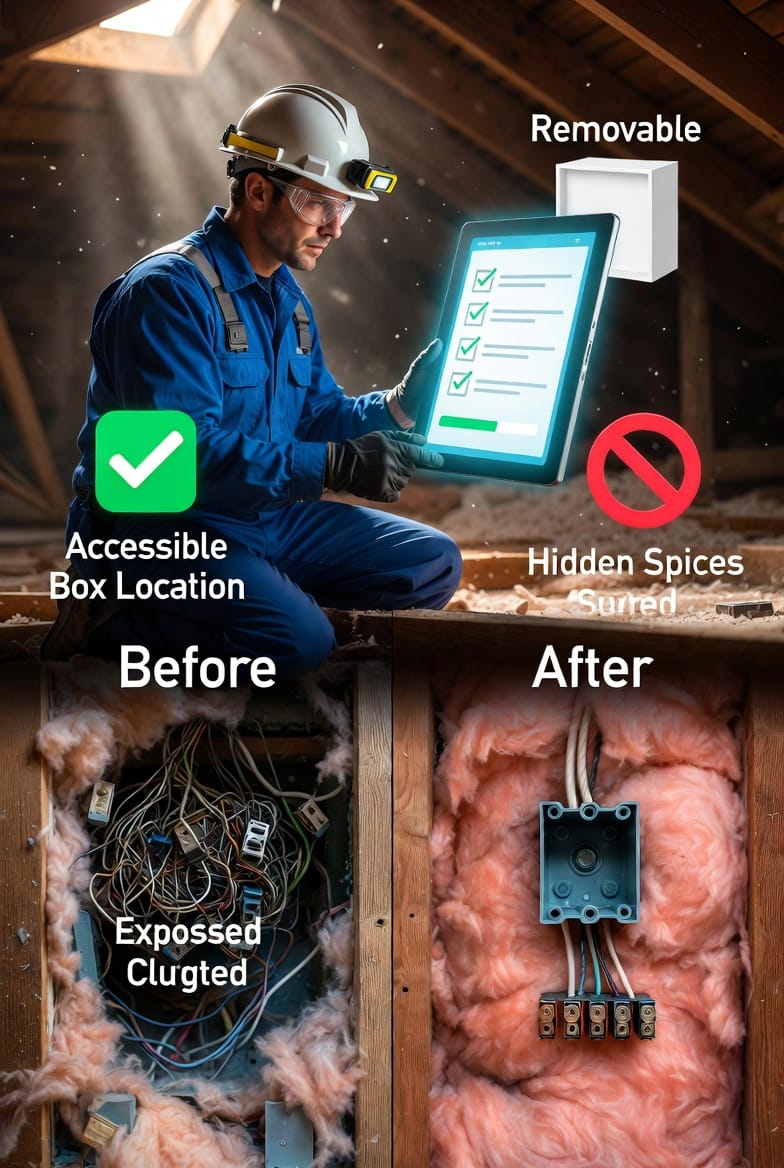
- Must be accessible – The box must allow easy reach without cutting into walls, ceilings, or floors.
- Cover must be visible – The protective cover must remain clearly visible and removable at all times.
- No buried boxes – Never conceal a junction box behind insulation, drywall, or structural materials.
- Proper wire support – All entering cables must be securely clamped and supported within 12 inches of the box.
- No hidden splices within insulation – All connections belong inside the box, never buried directly in insulation.
These requirements exist for one simple reason: hidden connections are fire hazards. When a box is buried or inaccessible, problems cannot be detected or repaired promptly.
Rest assured that following these guidelines eliminates the vast majority of attic-related electrical risks. A visible, accessible junction box transforms a potential danger into a simple maintenance point.
Step-by-Step Guide to Proper Junction Box Installation
Installing an attic junction box correctly requires attention to detail and a focus on long-term reliability. Follow these proven steps for professional results:
- Choose the right box – Select a durable metal or listed plastic box sized for the number of wires and connections it will house.
- Locate an accessible spot – Mount the box on a rafter or framing member where it remains visible from the attic access point.
- Secure the box firmly – Use appropriate screws or nails to attach it solidly, ensuring it will not shift over time.
- Route and support cables – Bring cables into the box through proper knockouts and secure them with approved clamps.
- Prepare wires carefully – Strip only the necessary insulation and avoid nicking conductors.
- Install the cover – Once connections are complete, attach the cover securely so it remains visible and protective.
Each step builds safety into the system. When performed correctly, your attic junction box installation will withstand temperature changes and daily stresses without issue. Homeowners who invest time here enjoy fewer service calls and greater confidence in their electrical system.
Mastering Safe Wire Connection Methods
Inside the junction box, the quality of wire connections determines everything. Two reliable methods stand out for attic work: wire nuts and pigtails.
Wire nuts provide a simple, secure way to join two or more wires. Strip about ¾ inch of insulation, twist the conductors together clockwise, then screw on the wire nut until it is hand-tight. Give a gentle tug to confirm the connection is solid.
Pigtails become essential when connecting multiple wires or when attaching to a device. A short length of wire (the pigtail) joins the incoming wires inside the box, then connects to the device or fixture. This technique keeps the box neat and makes future repairs straightforward.
Key safety practices for connections:
- Always match wire gauge and type
- Use only UL-listed connectors
- Never overfill the box
- Ensure no bare wire shows outside the connector
- Test each connection for tightness
These methods are straightforward yet incredibly effective when applied with care. They reduce resistance, prevent arcing, and maintain strong electrical continuity for decades.
Common Risks in Attic Electrical Work and How to Avoid Them
Hidden spaces hide more than dust. Overheating connections, rodent damage, and insulation compression can turn a simple splice into a serious hazard.
Fire hazards develop silently when connections loosen or become buried. Proper box use and visible covers allow early detection and quick fixes. Regular visual inspections—once every few years—catch issues before they escalate.
Avoid these frequent mistakes:
- Stuffing too many wires into one box
- Leaving the cover off or loose
- Running wires through insulation without protection
- Using non-rated boxes for attic conditions
By staying vigilant and following established practices, you keep these risks firmly under control.
Professional Tips for Long-Term Attic Electrical Safety
Beyond basic installation, several advanced practices elevate safety even further. Use strain-relief clamps on every cable. Label circuits inside the box for future reference. Consider surge protection at the panel to guard the entire system.
Temperature fluctuations in attics can loosen connections over time. Periodic checks by a qualified professional ensure everything remains tight and secure.
Homeowners who treat attic electrical work as an investment rather than a chore enjoy lower insurance risks, higher home value, and genuine peace of mind.
When to Call a Professional for Attic Junction Box Service
While some tasks are suitable for experienced DIYers, attic electrical work often benefits from expert eyes. If you notice flickering lights, warm outlets, unusual odors, or simply feel uncertain about existing wiring, professional inspection is the smartest choice.
Licensed electricians bring specialized tools, current code knowledge, and decades of experience to every job. They identify subtle issues that might escape even careful observation.
Warning: Hidden connections are fire hazards.
Don’t wait for problems to appear. Our team specializes in safe attic junction box installation and wire connections, delivering reliable solutions with your family’s safety as the top priority.
Protect what matters most. Schedule your inspection now and rest easy knowing your attic electrical system meets the highest standards of safety and performance.
Protect Your Home from Hidden Electrical Fires – Call Now