The Attic Condensation Problem: Identifying and Fixing Moisture from Above
Attic condensation is one of the most deceptive forms of water damage in residential homes. Unlike obvious roof leaks or basement flooding, this hidden moisture issue develops quietly above your living space, often going unnoticed until structural problems appear. Homeowners frequently discover the consequences only after wood rot, mold growth, or ceiling discoloration forces immediate action.
Protect Your Attic from Hidden Moisture – Call Today
Left unaddressed, attic condensation can compromise your home’s structural integrity, reduce energy efficiency, and create costly repair bills. The good news is that this problem is completely preventable and fixable with targeted, professional-grade solutions. Understanding how warm moist air meets a cold roof deck is the first step toward protecting your investment.
Understanding Attic Condensation
Attic condensation occurs when water vapor in the air turns back into liquid on cold surfaces inside the attic. This is not random; it follows predictable physics driven by temperature differences and air movement within your home. In winter months especially, the contrast between heated living areas below and frigid exterior temperatures above creates the perfect conditions for moisture to accumulate.
Many homeowners mistakenly believe their attic is “dry” simply because they rarely visit it. In reality, moisture from above can silently build for months or even years before visible signs emerge. This hidden issue ranks among the top preventable causes of attic water damage across all climates.
How Attic Condensation Forms
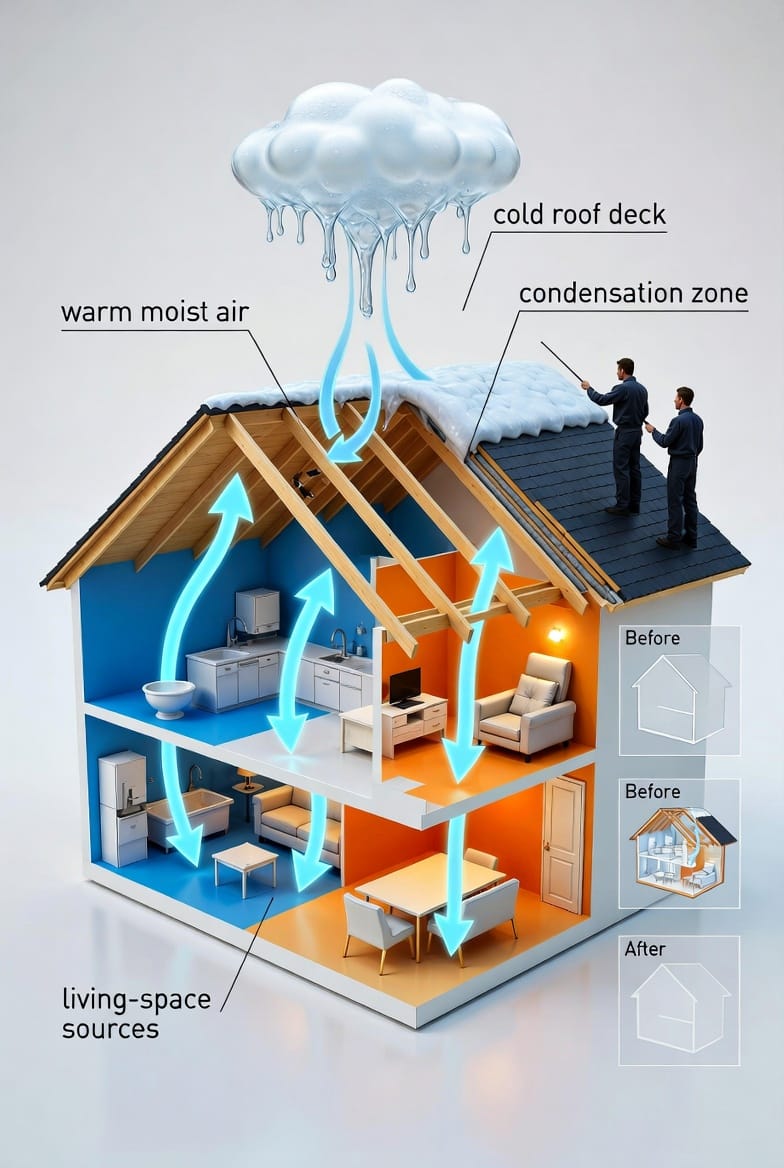
Warm, moist air naturally rises. Everyday household activities – showers, cooking, laundry, and even breathing – generate significant water vapor. Without proper barriers, this humid air migrates upward through ceiling penetrations, unsealed recessed lights, attic access hatches, and gaps around plumbing or electrical lines.
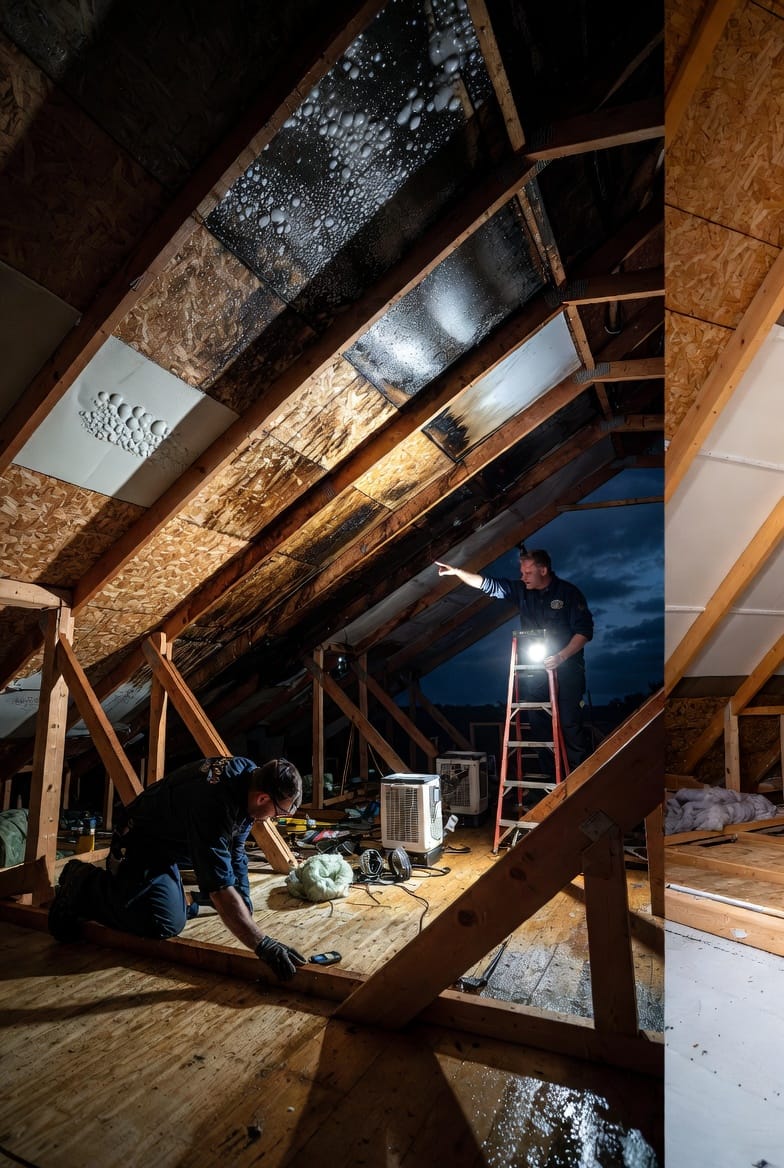
Once inside the attic, the air encounters the cold roof deck – the underside of your roof sheathing. In cold weather, the roof surface stays near or below freezing while indoor air remains 68–72°F. When warm moist air contacts this chilled surface, it rapidly cools and releases its moisture as condensation droplets. Over time, these droplets soak into wood fibers, saturate insulation, and drip onto ceilings below.
The cycle repeats nightly, creating a continuous condensation cycle that can deposit gallons of water each season. Older homes with inadequate insulation or modern energy-efficient homes with tight envelopes are equally vulnerable if ventilation and sealing have not been optimized.
Common Signs of Attic Condensation
Early detection prevents escalation. Look for these telltale indicators during routine attic inspections:
- Dark water stains or streaks on roof sheathing and rafters
- Frost or ice buildup on the underside of the roof in winter
- Musty odors drifting into living areas
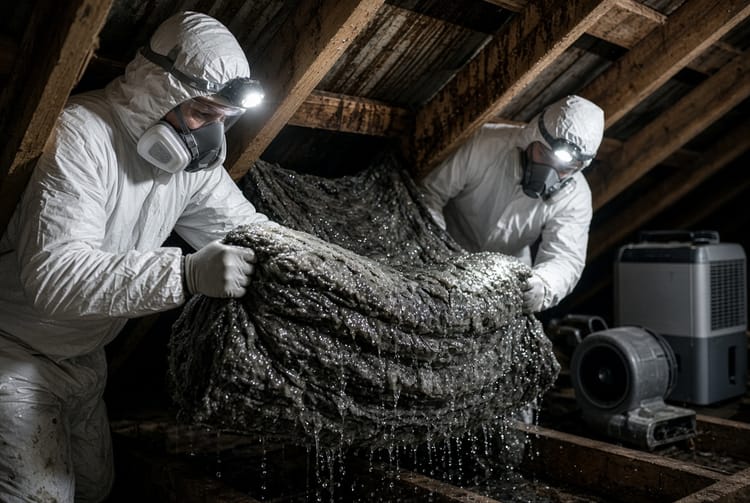
- Soggy or compressed insulation batts
- Peeling paint or bubbling drywall on upper-floor ceilings
- Visible condensation droplets on nails or metal fasteners
If you notice any of these, attic condensation is likely active. Prompt action stops the progression toward more serious water damage.
The Hidden Dangers and Damage Caused by Attic Moisture
Moisture buildup in attics creates cascading problems that extend far beyond the roofline. Wood rafters and sheathing absorb water, leading to wood rot that weakens load-bearing elements. Once rot sets in, structural repairs become extensive and expensive.
Insulation loses its R-value when wet, forcing your HVAC system to work harder and driving up energy bills by 20–30% in affected homes. Mold spores thrive in damp, dark attic environments, potentially spreading to living spaces and affecting indoor air quality.
In extreme cases, unchecked attic condensation can cause ceiling collapses or necessitate full roof deck replacement. These risks underscore why identifying and fixing moisture from above is essential for long-term home health and safety.
Identifying the Problem with Confidence
Professional assessment goes beyond visual checks. Certified technicians use moisture meters, infrared cameras, and hygrometers to map exact humidity levels and pinpoint hidden leaks. They evaluate ventilation balance, insulation condition, and air-sealing integrity in one comprehensive inspection.
DIY attempts often miss critical sources because air movement is invisible. Relying on expert diagnostics ensures you address the root cause rather than symptoms, delivering lasting protection instead of temporary fixes.
Effective Solutions for Lasting Results
Fortunately, attic condensation responds exceptionally well to proven, layered interventions. The most successful approach combines ventilation, air sealing, insulation upgrades, and strategic vapor barriers. Each element works synergistically to break the condensation cycle.
1. Superior Ventilation Strategies
Proper airflow expels moist air before it condenses. Install or upgrade continuous soffit vents paired with ridge vents to create natural convection. In larger attics, powered attic fans or solar vents provide additional moisture removal during peak humidity periods. Balanced ventilation maintains attic temperatures closer to outdoor levels, preventing the cold-surface effect.
2. Comprehensive Air Sealing
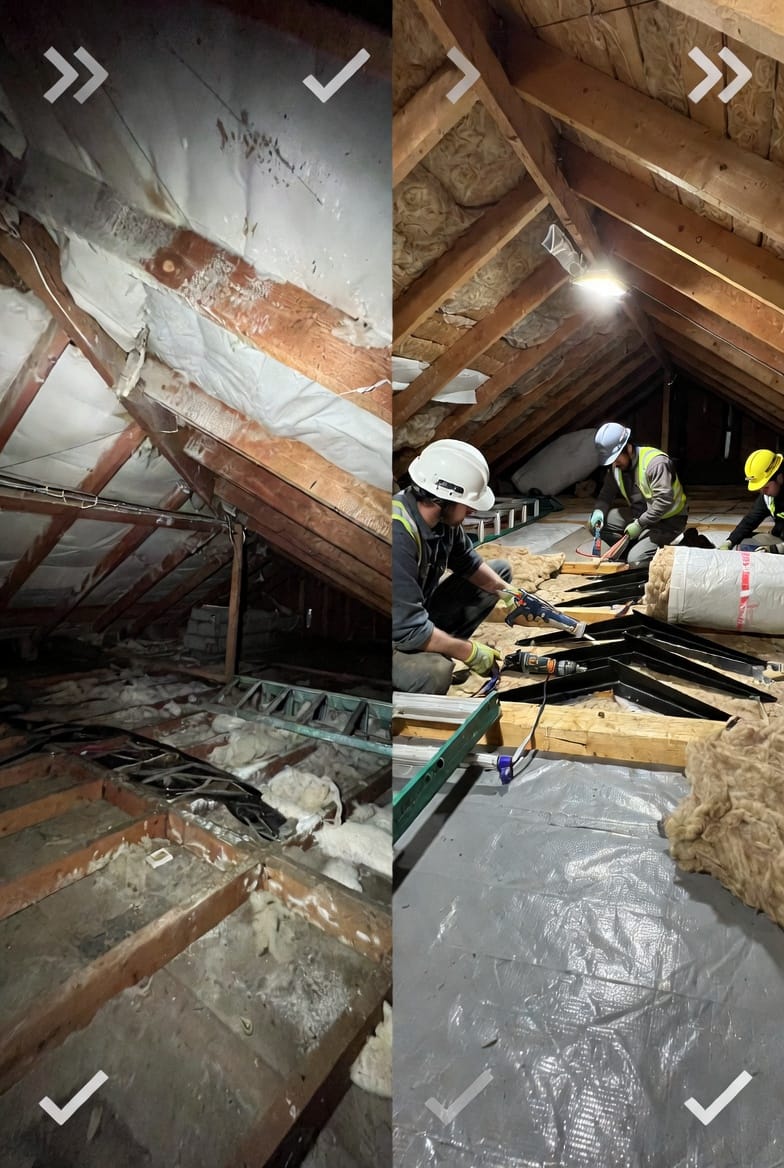
Blocking pathways is equally critical. Seal every penetration – recessed lights, plumbing vents, electrical wires, and ductwork – with expanding foam or caulk rated for attic conditions. Weatherstrip the attic access hatch and install airtight covers over can lights. These measures stop warm moist air at its source.
3. Optimal Insulation Upgrades
New insulation must breathe while resisting moisture. High-density batts or blown-in cellulose installed at proper depth (never compressed) restore thermal performance. Pairing insulation with ventilation ensures the attic stays dry and efficient year-round.
4. Strategic Vapor Barrier Installation
In climates with extreme temperature swings, a properly placed vapor barrier on the warm-in-winter side of the insulation prevents moisture migration. Professionals select the right material and location to avoid trapping humidity.
Why Professional Intervention Delivers Superior Outcomes
While some homeowners attempt DIY solutions, the complexity of balancing airflow, sealing, and insulation demands specialized knowledge and equipment. Professionals guarantee code-compliant work, provide warranties, and often identify secondary issues that DIY inspections miss.
Investing in expert service eliminates guesswork and protects against future callbacks. The peace of mind that comes from knowing your attic is truly dry and efficient is invaluable.
Prevention and Long-Term Maintenance Tips
Schedule annual attic inspections, especially after severe weather. Keep gutters clean to prevent ice dams that exacerbate condensation. Maintain bathroom and kitchen exhaust fans that vent directly outside. Monitor humidity levels indoors with a whole-house dehumidifier if needed.
Simple habits like using vented appliances and avoiding indoor drying of clothes further reduce moisture load. Consistent maintenance keeps attic condensation from returning.
Stop Attic Moisture Before It Causes Rot
Attic condensation is a silent threat, but it does not have to compromise your home. By understanding the science, recognizing early signs, and implementing professional solutions focused on ventilation, air sealing, and insulation, you protect your property’s value, safety, and comfort for years to come.
If you suspect moisture from above in your attic, act decisively. Early intervention is the most cost-effective strategy.
Secure Your Home Against Attic Condensation – Call Now