The Asbestos and Lead Awareness: Handling Hazardous Materials During Water Damage Restoration
When water damage strikes, the immediate focus is often on stopping the flow, extracting water, and drying out the space. Yet in older homes, an invisible layer of risk lies just beneath the surface. Asbestos and lead paint — two legacy materials once common in construction — can become serious hazards when disturbed by moisture. At our restoration company, we believe safety first with hazardous materials is non-negotiable. This comprehensive guide explains the risks, the science behind them, and the professional protocols that keep your family protected while restoring your property to its pre-loss condition.
Protect Your Family – Call for Expert Hazardous Material Restoration
Water damage restoration professionals who are trained and certified understand that simply removing water is not enough. When flooding or leaks affect walls, ceilings, or floors built before modern regulations, hidden asbestos-containing materials (ACMs) or lead-based paint may release fibers or dust. The good news? With the right testing, containment, and remediation, these hazards are completely manageable. Rest assured, our team follows strict industry standards to deliver safe, thorough results every time.
Why Older Homes Require Special Attention During Water Damage Events
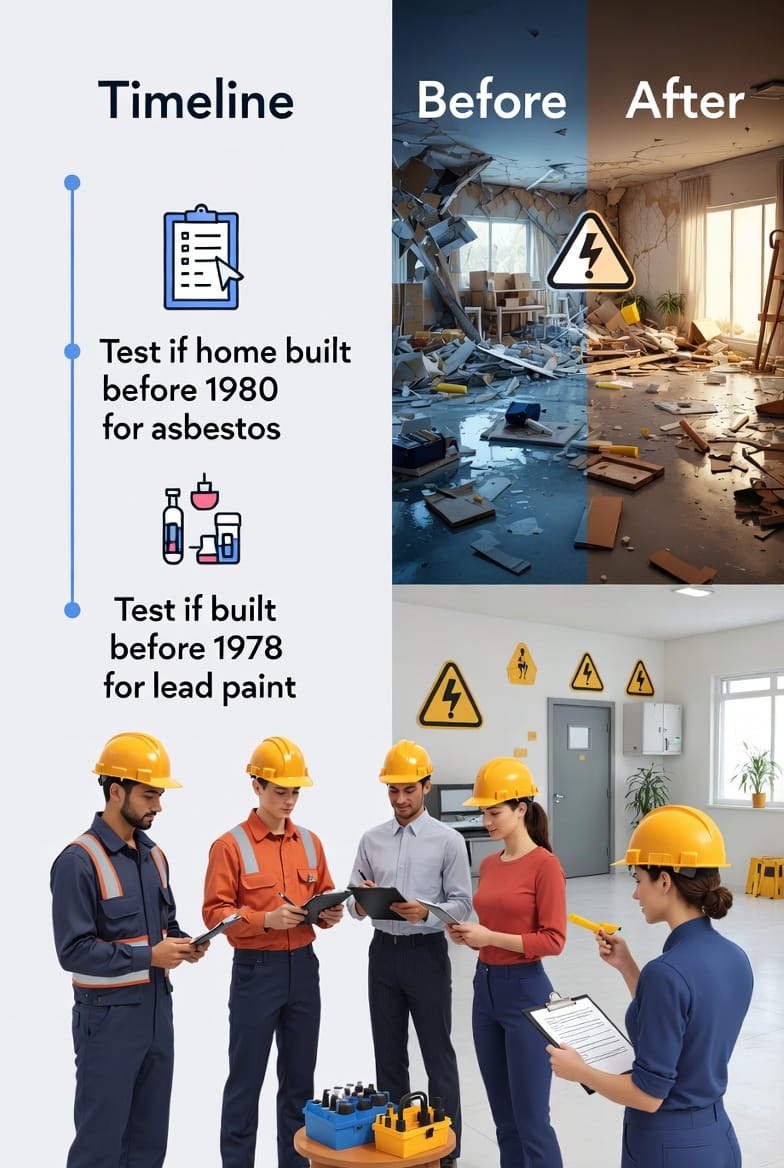
Homes constructed before 1980 frequently contain asbestos in insulation, flooring, and textured finishes. Water intrusion can saturate these materials, causing them to degrade and release microscopic fibers into the air. Similarly, properties built before 1978 often feature lead paint on walls, trim, and doors. When water softens paint layers, lead can leach into surrounding areas or become airborne dust during cleanup.
The combination of water damage and these substances creates a dual threat: structural compromise plus health exposure. Inhaling asbestos fibers over time is linked to serious respiratory conditions, while lead exposure — especially in children or pregnant individuals — can affect neurological development. That is why every water damage restoration project in older structures begins with awareness and testing, not assumptions.
Our certified technicians approach each job with authority and care. We never rush into demolition or drying until hazards are identified and controlled. This proactive stance protects occupants, workers, and the long-term integrity of your home.
Understanding Asbestos Risks in Water-Damaged Environments
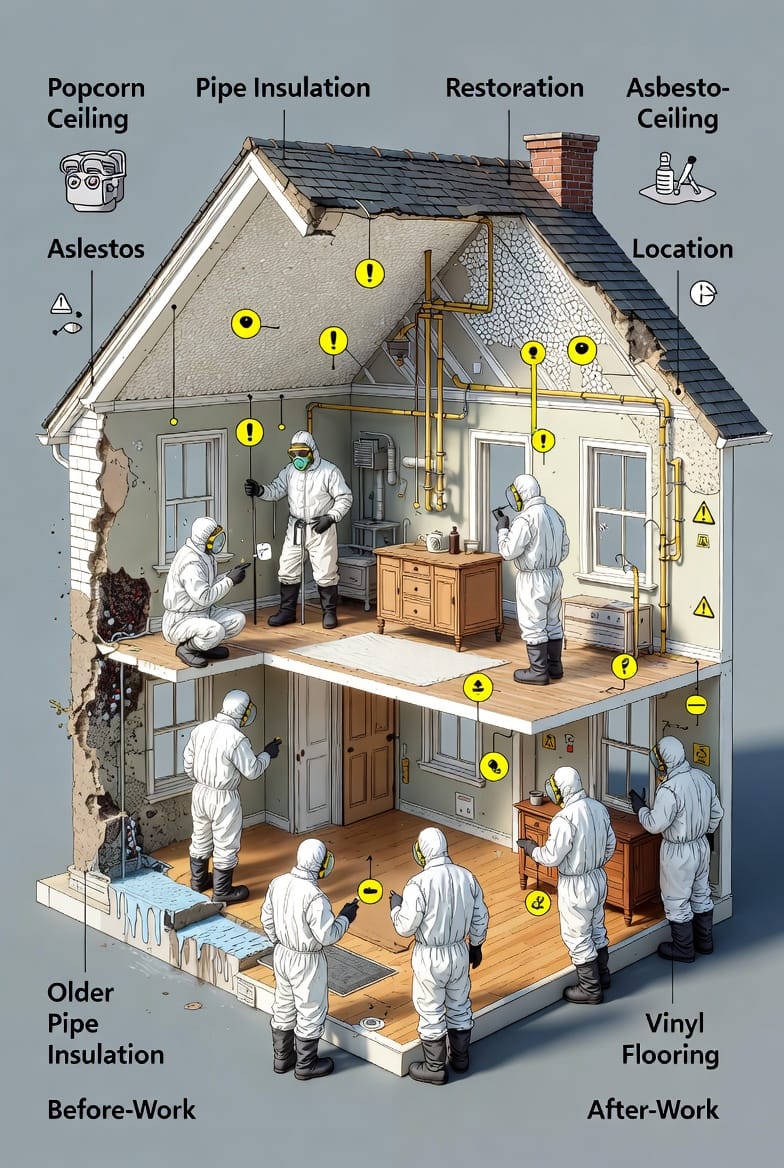
Asbestos was prized for its fire resistance and durability, making it a staple in pipe insulation, vinyl flooring, popcorn ceilings, and drywall joint compound. When water saturates these materials, the fibers can break free more easily. Wet asbestos does not immediately become harmless; instead, drying cycles can turn it friable, increasing the chance of airborne contamination.
Key warning signs that asbestos may be present include:
- Popcorn or textured ceilings in homes built prior to 1980
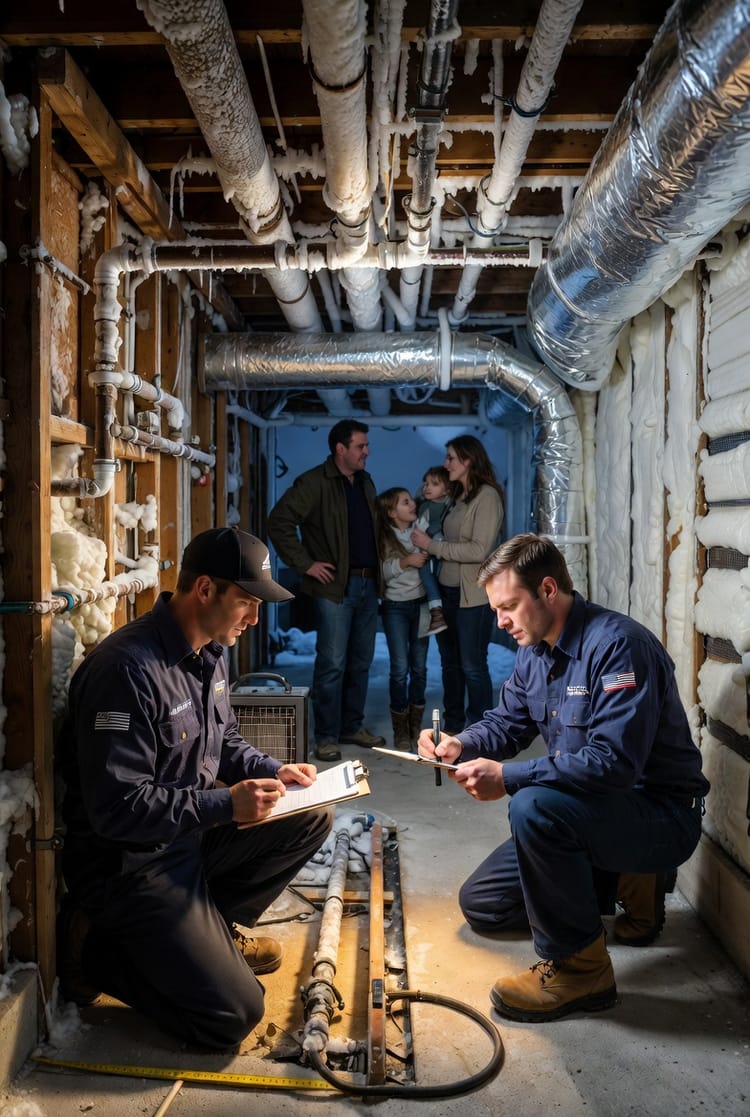
- Pipe insulation wrapped in white or gray material around basements or attics
- Vinyl sheet flooring or 9-inch tiles that feel brittle after water exposure
- Damaged drywall or plaster showing layered backing
Left unaddressed, disturbed asbestos fibers can travel through HVAC systems or settle on furniture, creating ongoing exposure risks. Professional water damage restoration teams mitigate this by performing initial air and material sampling before any disturbance begins. The process is methodical, reassuring, and designed to eliminate worry.
Bold fact: Proper containment and removal by licensed specialists render asbestos hazards inert and safe for continued occupancy. Homeowners can breathe easy knowing that certified handling turns potential danger into a controlled, documented solution.
Lead Paint Hazards Amplified by Water Intrusion
Lead paint was banned for residential use in 1978 because of its toxicity. In older homes, however, it still coats millions of surfaces. Water damage softens these layers, causing chipping, peeling, or leaching into porous materials below. The resulting dust is especially concerning because it is invisible and easily tracked throughout the home.
Children and pets are most vulnerable because they explore at floor level where lead dust settles. Even short-term exposure during a flood cleanup can elevate blood-lead levels if proper precautions are ignored.
During water damage restoration, we treat every pre-1978 property as potentially containing lead paint until testing proves otherwise. Our protocols include:
- Surface wipe sampling and XRF testing for instant results
- HEPA-filtered containment zones to prevent dust migration
- Specialized cleaning agents that bind and remove lead residues
- Post-remediation clearance testing to confirm safety
This layered approach ensures that once the water is gone, so is any associated lead risk. Families return to a home that is not only dry but also healthier than before the incident.
The Critical Importance of Professional Testing Before Remediation
Testing is the foundation of safe hazardous materials handling during water damage restoration. No reputable company begins full-scale drying or demolition without it. Certified inspectors use EPA-approved methods such as:
- Bulk material sampling for asbestos
- Air monitoring to measure fiber concentrations
- X-ray fluorescence (XRF) analyzers for lead paint thickness
- Dust wipe sampling for lead residue
Results guide every subsequent decision. If asbestos is confirmed, we implement negative-air-pressure containment and wet-removal techniques that prevent fiber release. For lead, we follow HUD guidelines for encapsulation or removal, always prioritizing minimal disruption.
Homeowners sometimes wonder whether they can test themselves. While DIY kits exist, they lack the precision, documentation, and legal protections that licensed labs and professionals provide. Our team’s testing is court-admissible and insurance-friendly, giving you peace of mind and full transparency.
Step-by-Step Safe Remediation Process for Hazardous Materials
Once testing identifies asbestos or lead, our crews execute a proven sequence that balances urgency with safety:
- Site containment – Plastic sheeting, negative air machines, and decontamination chambers isolate the work area.
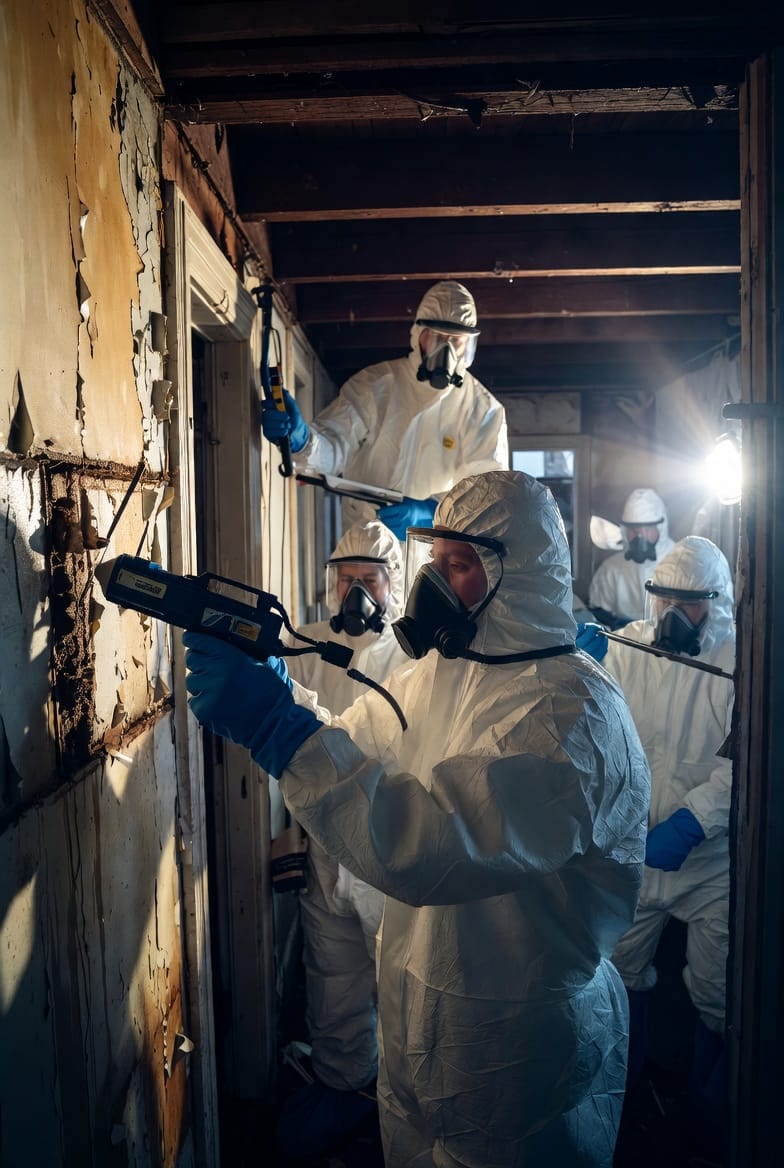
- Personal protective equipment (PPE) – Full-face respirators, Tyvek suits, and double-gloving for every technician.
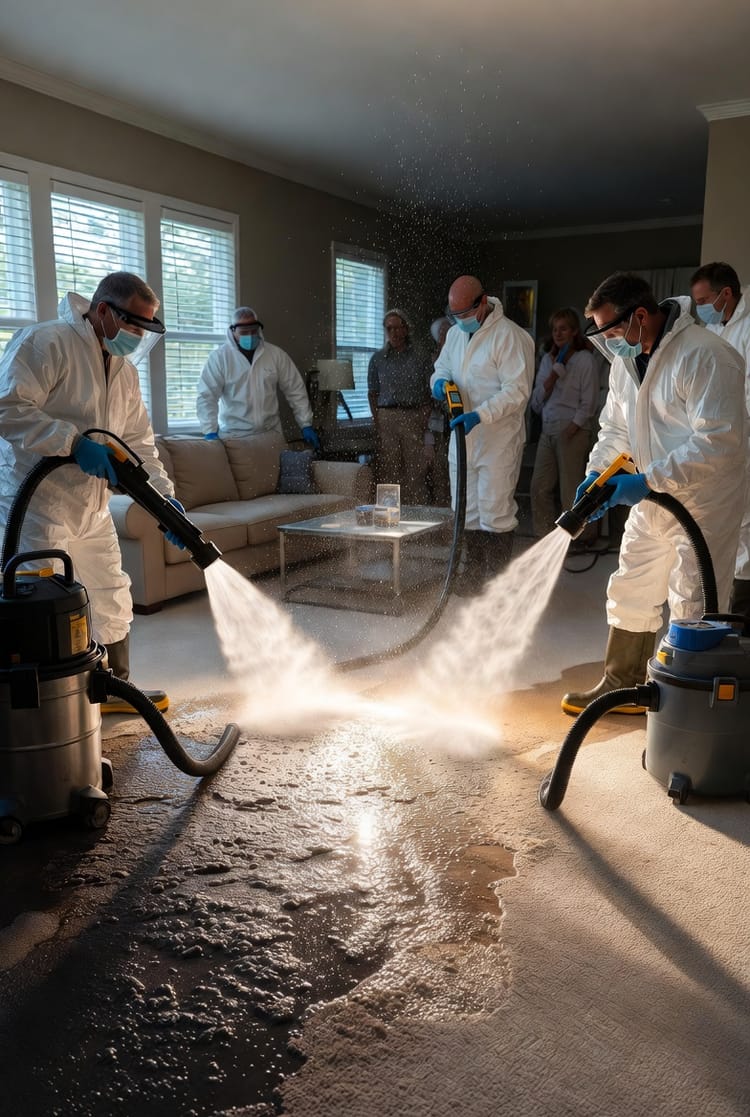
- Controlled removal – Wet methods suppress dust; specialized HEPA vacuums capture particles instantly.
- Waste handling – Double-bagged, labeled, and disposed of at approved hazardous facilities.
- Post-clean verification – Air and surface testing confirm the space meets strict clearance standards.
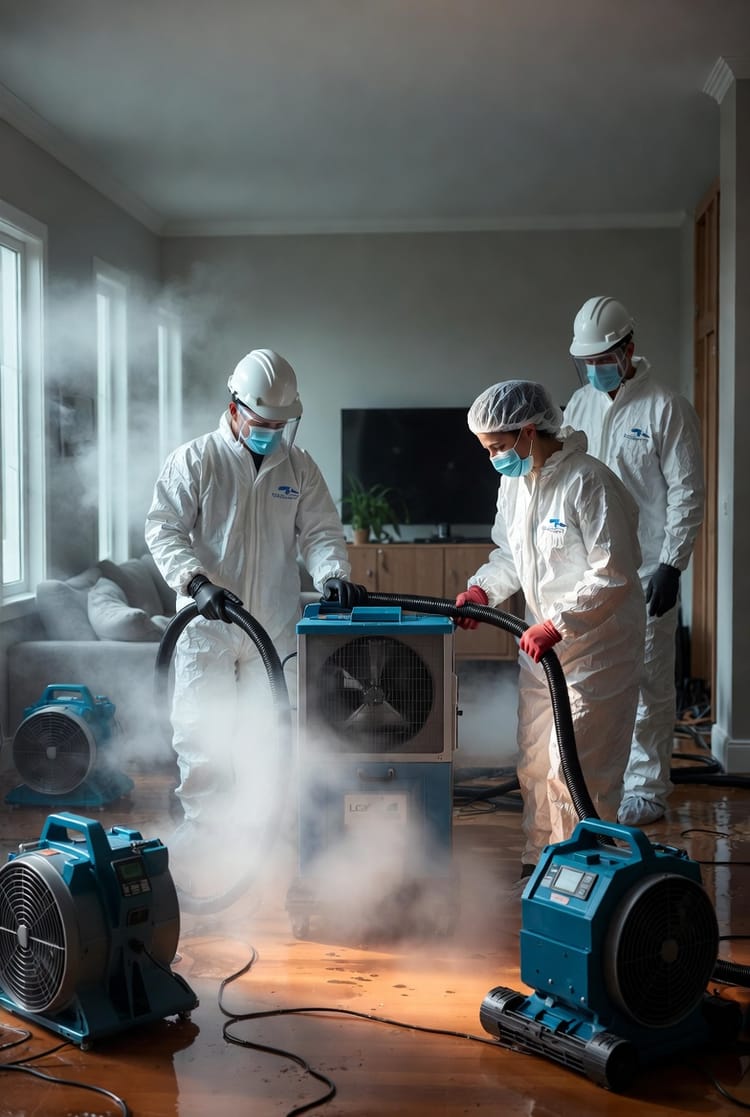
- Integration with water restoration – Drying equipment is installed only after clearance, preventing cross-contamination.
This disciplined process reassures clients that every phase is documented and safe. Families often tell us they felt supported from the first phone call through final walkthrough.
Why DIY Approaches Compromise Safety and Results
Attempting to handle water damage in older homes without professional expertise can spread asbestos fibers or lead dust throughout the living space. Untrained individuals lack containment tools, proper respirators, and disposal knowledge. The result? Higher exposure risk, potential insurance claim denials, and costly secondary cleanup.
Certified water damage restoration companies carry the proper licenses, insurance, and training required for hazardous materials. Our technicians complete annual refresher courses and maintain current EPA certifications. When you call us, you receive peace of mind backed by expertise.
Long-Term Prevention Strategies After Restoration
Once the immediate crisis is resolved, prevention becomes the priority. We recommend:
- Regular inspections of plumbing, roofs, and appliances
- Upgrading insulation with modern, asbestos-free materials
- Painting over intact lead surfaces with encapsulation products
- Maintaining proper ventilation to reduce moisture buildup
- Annual HVAC filter changes and duct cleaning
These simple steps dramatically lower the chance of future water damage triggering hazardous material concerns. Our team offers personalized prevention plans tailored to each property’s age and construction type.
Choosing Certified Professionals for Complete Peace of Mind
Not every restoration company is equipped to manage asbestos and lead safely. Look for IICRC certification, EPA lead-safe credentials, and transparent communication. At our firm, we document every step, provide before-and-after reports, and stand behind our work with guarantees.
Safety first with hazardous materials. Whether your home suffered a burst pipe, basement flood, or roof leak, our experienced crew delivers fast, thorough, and safe water damage restoration that addresses both the visible damage and the hidden dangers.
Need Safe Water Damage Cleanup? Call Our Hazmat Experts Now