The Anatomy of a Fall: The Rigging Physics Behind Safe, Controlled Tree Removal in Tight Spaces
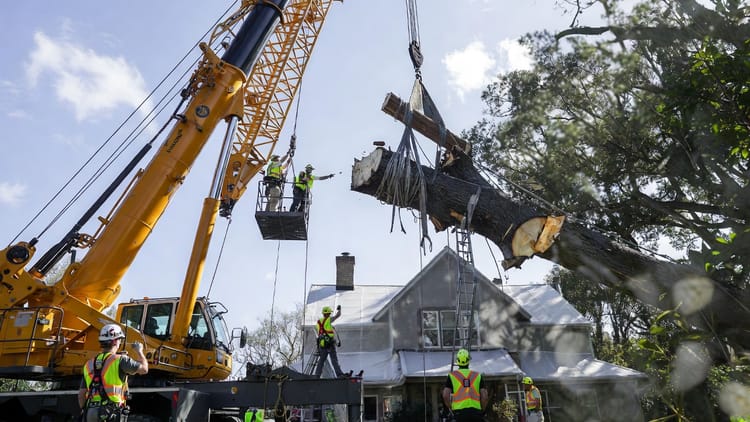
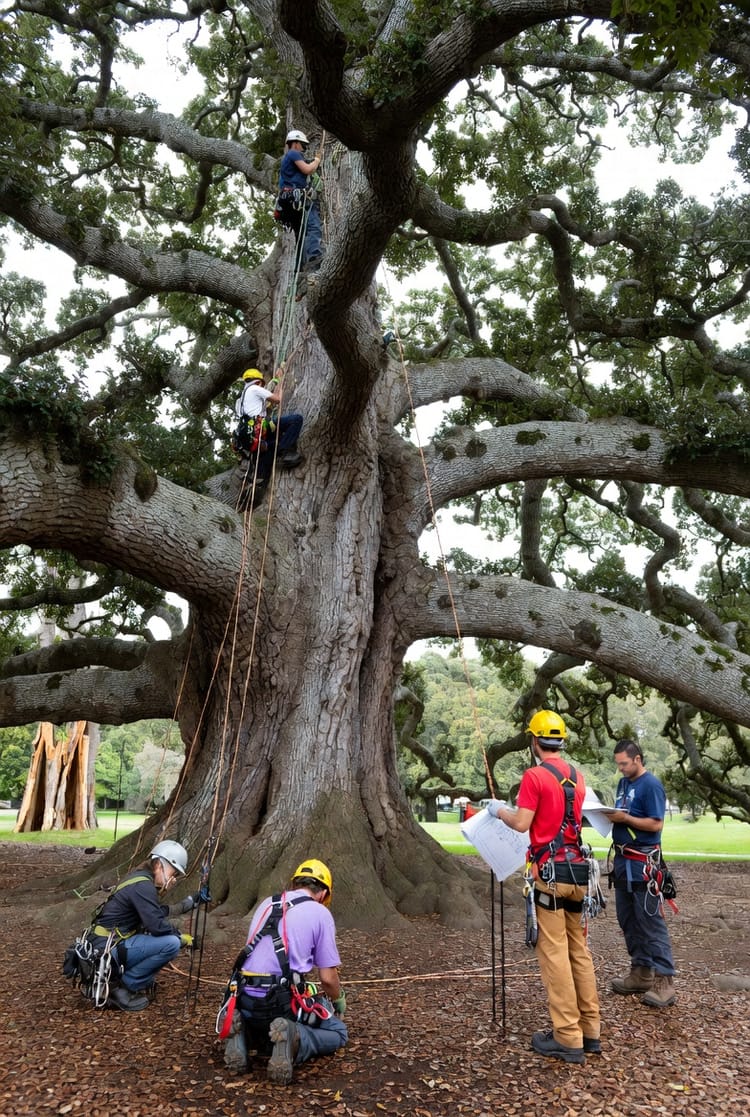
In the world of arboriculture, removing a tree in a tight urban or suburban space isn't just about cutting it down—it's a precise orchestration of physics, biomechanics, and expert technique. As certified arborists, we understand that every tree fall is governed by the laws of motion, gravity, and force distribution. This article delves into the sophisticated rigging techniques that allow professionals to execute safe, controlled tree removal, minimizing risks to people, property, and the environment. Whether you're dealing with an overgrown oak between homes or a leaning pine near power lines, these methods ensure predictability and precision. Rest assured, with the right knowledge and tools, even the most challenging removals can be handled smoothly.
Trust Rigging Physics Pros – Call for Controlled Removal
The Fundamentals of Tree Rigging: A Physics Primer
At its core, tree rigging is the application of biomechanical principles to control the descent of tree parts. Arborists treat trees as dynamic structures, analyzing their center of gravity, load distribution, and structural integrity before any cut is made. This isn't guesswork; it's calculated science.
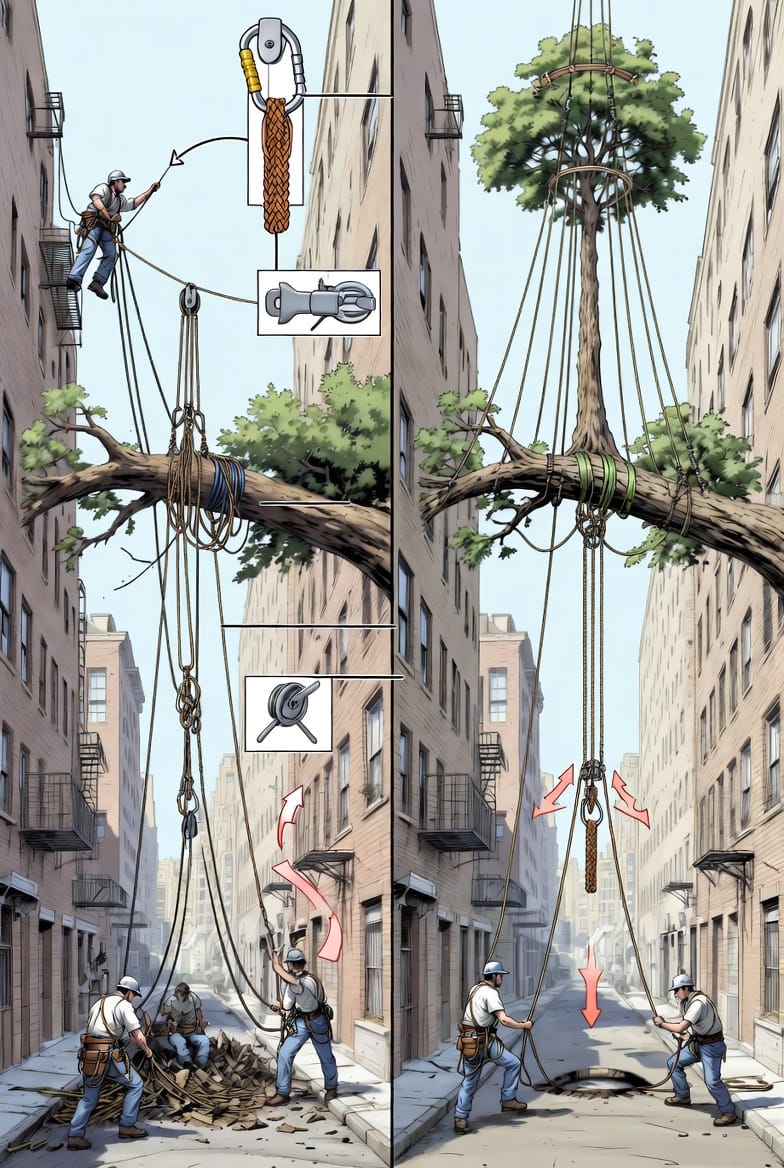
- Mechanical Advantage Systems: By using pulleys and blocks, arborists create systems that multiply force. For instance, a simple 2:1 pulley setup reduces the effort needed to lower a 500-pound limb by half, leveraging leverage ratios to manage heavy loads effortlessly.
- Force Vectors and Tension: Understanding how ropes pull in specific directions prevents unintended swings or drops, keeping everything aligned with the intended path.
- Gravity as an Ally: Rather than fighting it, experts harness gravity through controlled releases, turning potential energy into manageable kinetic motion.
These basics form the foundation for controlled tree removal in tight spaces, where a single miscalculation could lead to costly damage. Our teams at Tree Experts Inc. always prioritize site assessments to map out these physics in advance, giving you peace of mind.
Dynamic vs. Static Ropes: Choosing the Right Lifeline
One of the most critical choices in rigging is selecting between dynamic ropes and static ropes, each with unique properties rooted in material science and elasticity.
Dynamic ropes are designed to stretch under load, absorbing shock like a bungee cord. They're ideal for scenarios involving sudden impacts, such as when a limb snaps unexpectedly:
- Shock Absorption: Can elongate up to 30% under stress, reducing peak forces on the arborist and tree.
- Use Cases: Perfect for climbing or when dropping smaller sections where bounce-back is a risk.
- Risk Mitigation: Prevents rope failure by distributing energy over time, crucial in high-wind or unstable conditions.
In contrast, static ropes offer minimal stretch (less than 5%), providing consistent control for precise lowering:
- Precision Control: Maintains length under load, allowing exact positioning in confined areas.
- Heavy-Duty Applications: Essential for rigging large limbs where predictability trumps flexibility.
- Safety Benefits: Lowers the chance of oscillation or swinging, protecting nearby structures.
By blending these ropes in a setup—dynamic for climber safety and static for load-bearing—arborists achieve a balanced system. This duality ensures safe tree removal without compromising efficiency, a technique our certified professionals refine through years of experience.
Harnessing Friction: The Role of Devices in Controlled Descent
Friction is the unsung hero in rigging physics, transforming uncontrolled falls into gentle lowers. Arborists employ specialized friction devices to regulate speed and manage heat buildup from rope movement.
- Ported Brakes and Bollards: These wrap-around devices increase surface contact, allowing gradual release. A common setup might involve a figure-eight descender, where friction coefficients dictate descent velocity.
- Mechanical Brakes: Advanced options like the GRCS (Good Rigging Control System) use winches for motorized control, ideal for ultra-heavy loads in tight spaces.
- Heat Management: Friction generates heat, so devices with aluminum construction dissipate it quickly, preventing rope melt—a key risk in prolonged operations.
In practice, these tools create a braking force that counters gravity, enabling arborists to pause mid-descent if needed. This level of control is vital for avoiding property damage, such as when lowering branches over fences or vehicles. Trust us: with proper friction management, what could be a chaotic drop becomes a symphony of safety.
Strategic Cutting: The Notch-and-Hinge Method Explained
No rigging setup is complete without precise cutting techniques. The notch-and-hinge method is a biomechanical masterpiece, using the tree's own wood fibers as a pivot point for directional control.
- The Undercut Notch: A V-shaped cut on the fall side removes a wedge, determining the direction of collapse. Angle it at 70-90 degrees for optimal hinge formation.
- The Back Cut: Made slightly above the notch apex, this releases the tree while leaving a hinge of uncut wood—typically 10% of the trunk diameter—to guide the fall.
- Hinge Dynamics: The hinge acts like a door hinge, providing rotational control and preventing premature splitting.
This method's physics rely on torque and fulcrum points, ensuring the tree falls exactly where planned. In tight spaces, arborists adjust notch depth based on wind, lean, and wood density, turning potential hazards into predictable outcomes.
Piece-by-Piece Dismantling: Precision in Layers
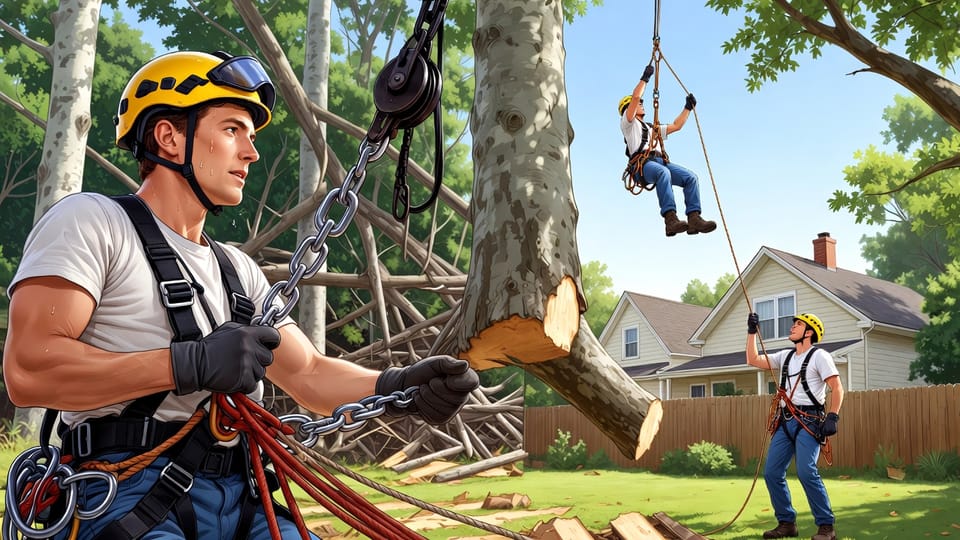
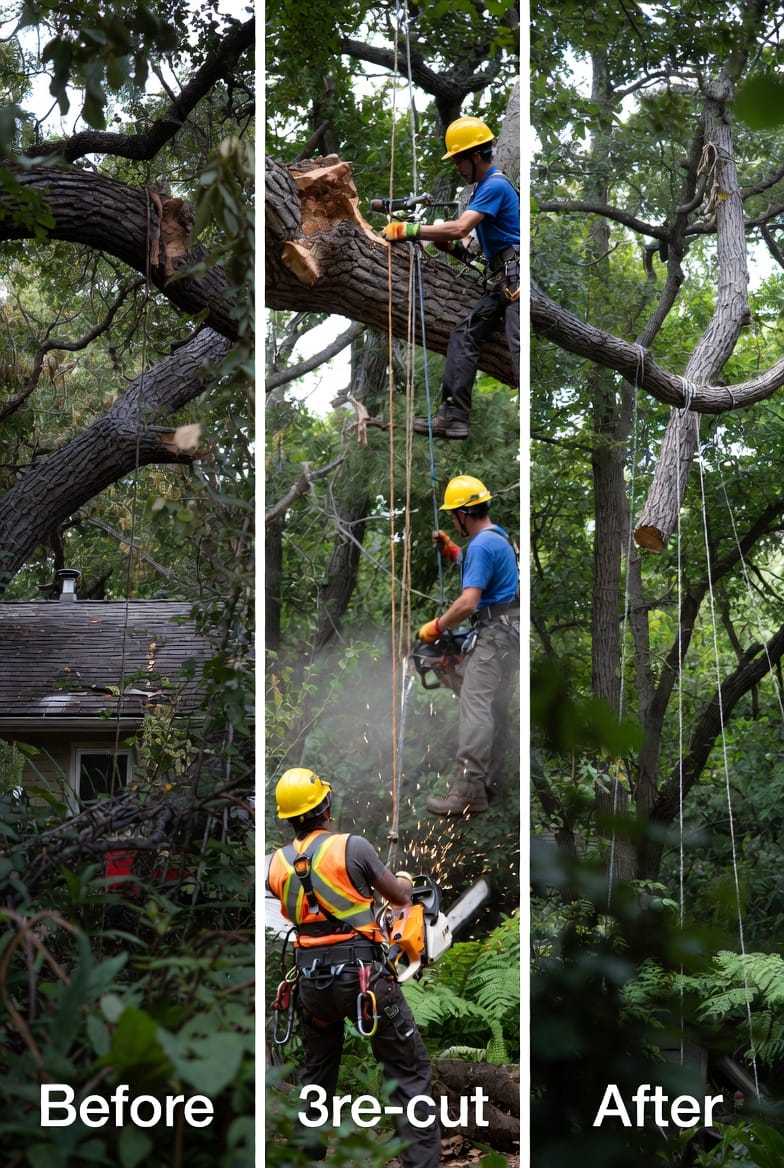
For trees in extremely confined areas, whole-tree felling isn't feasible. Instead, arborists opt for piece-by-piece removal, dismantling the canopy downward using rigging to lower sections safely.
This approach starts at the top:
- Crown Reduction: Remove outer limbs first to shift the center of mass inward, stabilizing the structure.
- Rigged Lowering: Each piece is tied off with ropes run through pulleys, then cut and lowered slowly.
- Sequence Strategy: Work from smallest to largest sections to maintain balance, avoiding torque imbalances that could cause tipping.
Biomechanically, this method respects the tree's natural growth patterns, cutting along compartmentalization zones where the tree can heal post-removal. It's particularly effective near homes, where a single errant branch could shatter windows. Our teams use real-time calculations—factoring in weight estimates via diameter measurements—to ensure each drop is under 200 pounds, well within rigging capacities.
Advanced Rigging Configurations for Maximum Control
Beyond basics, arborists deploy complex setups like drift lines and tag lines to fine-tune trajectories.
- Drift Lines: Horizontal ropes that pull sections sideways, away from obstacles.
- Multiple Anchor Points: Distributing loads across several trees or ground stakes to enhance stability.
- Dynamic Load Sharing: Using slings to connect multiple ropes, balancing forces evenly.
These configurations draw from engineering principles, similar to crane operations but adapted for organic, irregular shapes. In controlled tree removal, they prevent side loading on equipment, a common failure point. Rest assured, our certified arborists simulate these setups mentally before execution, backed by rigorous training.
Risk Assessment and Safety Protocols
Safety isn't an afterthought—it's embedded in every rigging decision. Key risks include rope abrasion, overloading, and human error, all mitigated through protocols:
- Pre-Job Inspections: Check gear for wear, using tools like dynamometers to test tensions.
- Team Communication: Hand signals and radios ensure synchronized actions.
- Emergency Contingencies: Backup ropes and quick-release mechanisms for rapid interventions.
By adhering to ISA (International Society of Arboriculture) standards, we minimize accidents, making safe tree removal in tight spaces a reliable service.
Integrating Biomechanics with Modern Tools
Today's arborists blend traditional physics with tech innovations. Drones scout tree structures for better load mapping, while software models fall paths using algorithms. This fusion enhances accuracy, especially in urban tree removal where margins are slim.
Consider a case: A 80-foot maple sandwiched between two houses. Using rigging physics, we rigged from the top, lowering 10-foot sections via friction hitches. No damage, no drama—just expert execution.
The Human Element: Training and Expertise
Ultimately, rigging's success hinges on skilled arborists. Our team undergoes continuous certification, mastering biomechanical analysis to predict tree behaviors. This expertise turns complex physics into everyday safety.
Safe Dismantling in Tight Spaces – Call Now for Precisi