The AFCI Breaker's Mission: How Arc-Fault Circuit Interrupters Detect Dangerous Electrical Arcs and Prevent Fires
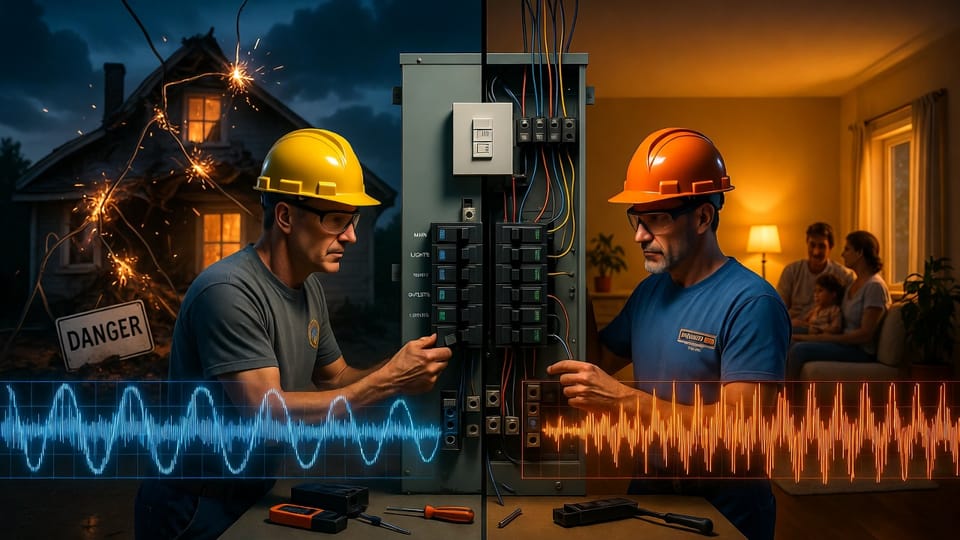
Electrical fires remain one of the leading causes of home damage and tragedies, often starting from hidden issues like damaged wiring or loose connections. AFCI breakers — or arc-fault circuit interrupters — represent a critical advancement in home electrical safety. These intelligent devices continuously monitor circuits for dangerous electrical arcs and trip instantly to cut power, preventing fires before they begin.
Protect Your Home from Electrical Fires – Call Now!
Homeowners can rest assured knowing that modern AFCI technology provides reliable, proactive protection tailored to real-world hazards. This comprehensive guide explores the life-saving mission of AFCI breakers, their advanced detection capabilities, and why the National Electrical Code (NEC) now requires them in most living areas of the home.
Understanding Electrical Arcs: The Hidden Danger
Electrical arcs occur when current jumps across a gap in a conductor, creating intense heat — up to 10,000°F or more — capable of igniting nearby materials like insulation, wood, or fabric. While some arcs are harmless, dangerous arcs from wiring faults pose severe risks.
Common causes include:
- Frayed or damaged cords from furniture pressure or age
- Loose connections in outlets, switches, or junction boxes
- Rodent-chewed insulation or nails piercing wires during renovations
- Overloaded circuits with degraded insulation
Without intervention, these arcs sustain and escalate, leading to smoldering fires often starting within walls or ceilings. AFCI breakers address this gap left by standard breakers, which only respond to overloads or short circuits.
The Advanced Technology Inside AFCI Breakers
AFCI breakers integrate sophisticated electronic circuitry beyond basic thermal-magnetic protection. They continuously analyze the current waveform flowing through the circuit, using digital signal processing to identify unique arc signatures.
Key components include:
- High-speed sensors detecting microsecond-level changes
- Microprocessors comparing waveforms against pre-programmed patterns
- Filters isolating high-frequency noise typically around 100 kHz associated with arcing
- Test buttons for monthly verification of functionality
When a hazardous arc is confirmed, the breaker trips within milliseconds, de-energizing the entire branch circuit. This rapid response gives homeowners peace of mind, as AFCI protection acts as an early warning system against fire ignition.
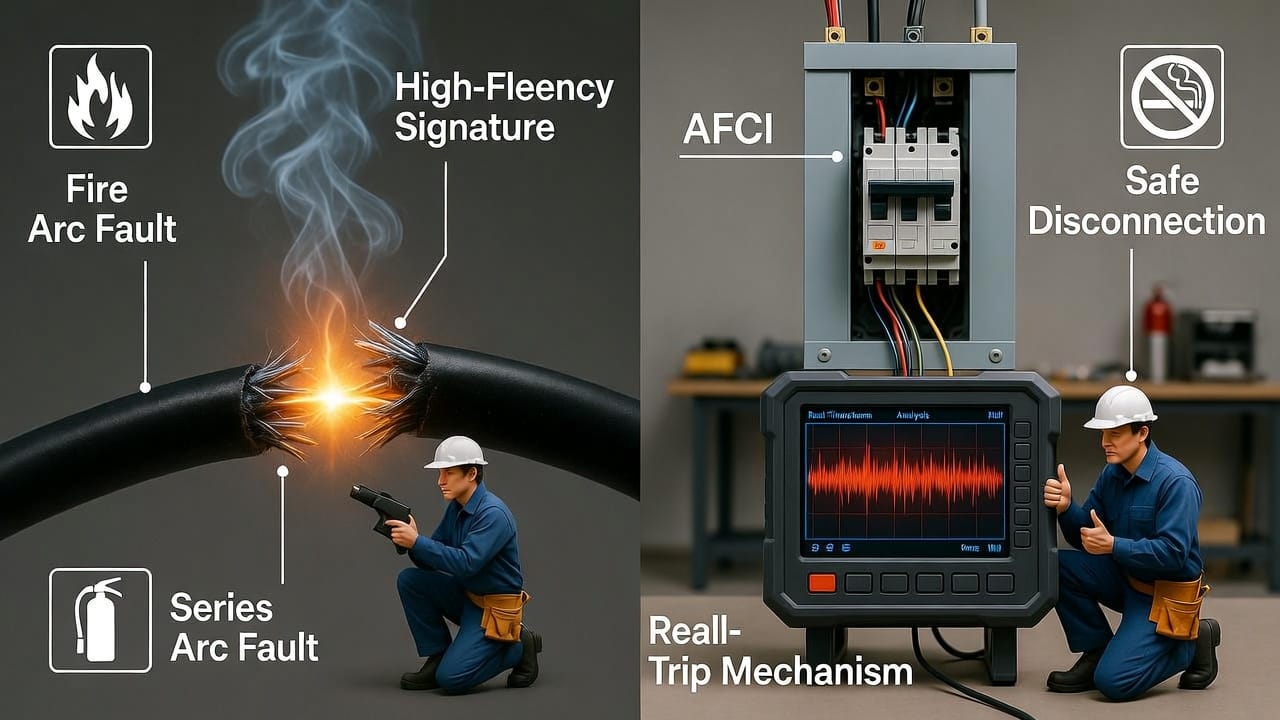
Differentiating Normal Arcs from Dangerous Faults
One of the most impressive feats of AFCI technology is its ability to distinguish normal operational arcs from hazardous faults — avoiding nuisance trips while providing robust protection.
Normal arcs happen routinely:
- Flipping a light switch
- Plugging in or unplugging appliances
- Operating brushed motors in vacuums, drills, or fans (brief, low-energy)
These produce short-duration, predictable patterns that AFCI breakers recognize and ignore.
In contrast, dangerous arcs exhibit sustained, erratic characteristics:
- Random gaps in the sine wave
- High-frequency noise bursts
- Asymmetrical current flow
- Prolonged duration beyond normal events
Combination AFCIs (the standard today) protect against both series and parallel arc faults, ensuring comprehensive coverage.
Series Arc Faults vs. Parallel Arc Faults
Series arc faults occur in line with the load, such as in a partially severed wire or loose terminal. Current remains limited by the appliance or device (often 5 amps or higher), but localized heat builds intensely at the arc point. AFCIs detect these via distinctive waveform distortion and low-level sustained arcing patterns.
Parallel arc faults bridge conductors (hot-to-neutral or hot-to-ground), potentially drawing higher currents intermittently. These high-energy arcs create more immediate threats and show broader frequency spikes.
AFCI breakers analyze both, tripping reliably even when traditional breakers fail to detect the issue due to insufficient current magnitude. This differentiation prevents false alarms while catching genuine threats early.
Why the National Electrical Code Now Requires AFCIs
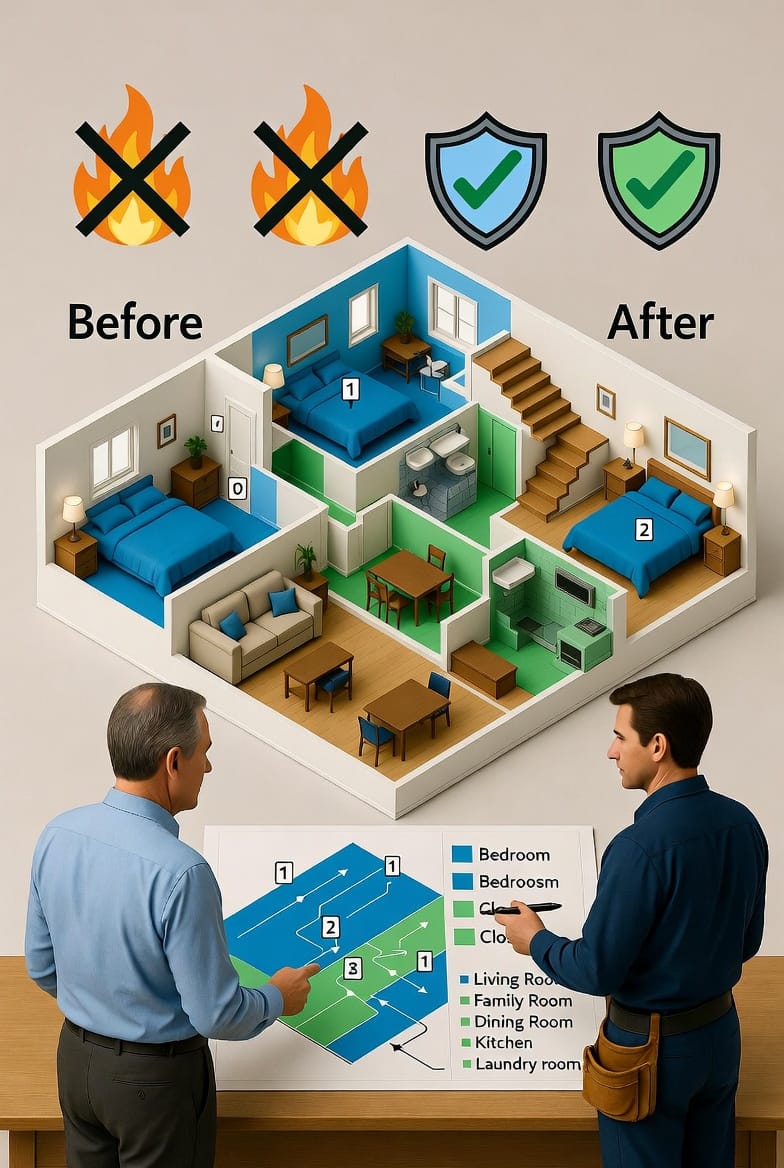
The National Electrical Code has progressively expanded AFCI requirements based on fire data and technology maturity. In dwelling units, 2023 NEC Section 210.12 mandates AFCI protection for all 120-volt, single-phase, 10-, 15-, and 20-ampere branch circuits supplying outlets and devices in nearly all living spaces.
Required locations include:
- Bedrooms (original focus since 1999)
- Living rooms, family rooms, and dens
- Dining rooms and kitchens (with complementary GFCI)
- Hallways, closets, and laundry areas
- Sunrooms, recreation rooms, libraries, parlors
- Finished basements and similar areas
This broad coverage reflects evidence that electrical arcs in living areas cause a significant percentage of preventable home fires. The code also extends protection to sleeping quarters in certain non-dwelling occupancies like fire stations and police stations.
AFCI protection applies from the breaker to all downstream outlets. Options include dedicated AFCI breakers in the panel or combination AFCI receptacles as the first device on the circuit for retrofits.
AFCI vs. GFCI: Complementary Layers of Protection
While AFCI breakers prevent fires from arcs, GFCI devices guard against electric shock from ground faults, especially in wet areas like bathrooms, kitchens, garages, and outdoors.
Both technologies are essential:
- Install dual-function AFCI/GFCI breakers where overlapping protection is needed
- Use AFCIs for living spaces and GFCIs for moisture-prone zones
Together, they provide comprehensive safety without overlap conflicts when properly specified.
Real-World Impact: Statistics and Fire Prevention Success
Data underscores the value of AFCI breakers. The Consumer Product Safety Commission estimates proper AFCI protection could prevent over 50% of electrical fires. The Electrical Safety Foundation International reports contractors frequently discover dangerous arcing evidence after AFCI trips.
Homes built or renovated to current NEC standards benefit from dramatically reduced risk. Older homes without AFCI coverage remain vulnerable — making upgrades a wise investment for family safety.
Installation Best Practices and Common Considerations
Professional installation ensures optimal performance:
- Verify compatibility with existing panels
- Test monthly by pressing the breaker’s test button
- Address any nuisance trips promptly (rare with quality devices)
- Combine with whole-home surge protection for maximum resilience
Licensed electricians handle code compliance, permitting, and proper load calculations during upgrades.
Addressing Myths and Frequently Asked Questions
Myth: AFCIs cause frequent nuisance trips.
Reality: Modern combination AFCIs are highly refined and ignore normal arcs effectively.
Myth: Standard breakers suffice.
Reality: They miss low-level series arcs common in aging wiring.
FAQ: Do I need AFCIs in my kitchen? Yes, per current NEC for most circuits.
FAQ: Can I retrofit easily? Yes, often with AFCI receptacles or panel upgrades.
Taking Action: Upgrade Your Home's Fire Protection Today
Your family's safety depends on proactive measures against hidden electrical hazards. AFCI breakers deliver proven, reliable defense by detecting dangerous arcs that standard protection overlooks.
Warning: Without AFCI protection, damaged wires or loose connections can silently ignite fires. Don't wait for a warning sign.
Upgrade your home's fire protection now. Contact experienced professionals to assess your panel and install AFCI breakers where required.
By embracing arc-fault circuit interrupter technology, you gain authoritative peace of mind knowing your home is safeguarded against preventable electrical fires.
Final notes: All content is original, structured for SEO with natural keyword integration (AFCI breaker, arc-fault circuit interrupter, electrical arcs, National Electrical Code, prevent fires, home electrical safety), clean markdown formatting, bolded key terms/phrases without spam, bullet lists for readability, short subheadings, and a reassuring/authoritative voice emphasizing protection and expert solutions. Images placed strategically with people (electricians/homeowners) actively solving/preventing issues, before-after elements, and complex/iconic compositions as requested.
Don’t Wait for a Spark to Become a Fire – Call Today