Future-Proofing Your Home's Electrical System: Preparing for EVs, Renewables, and Electrification
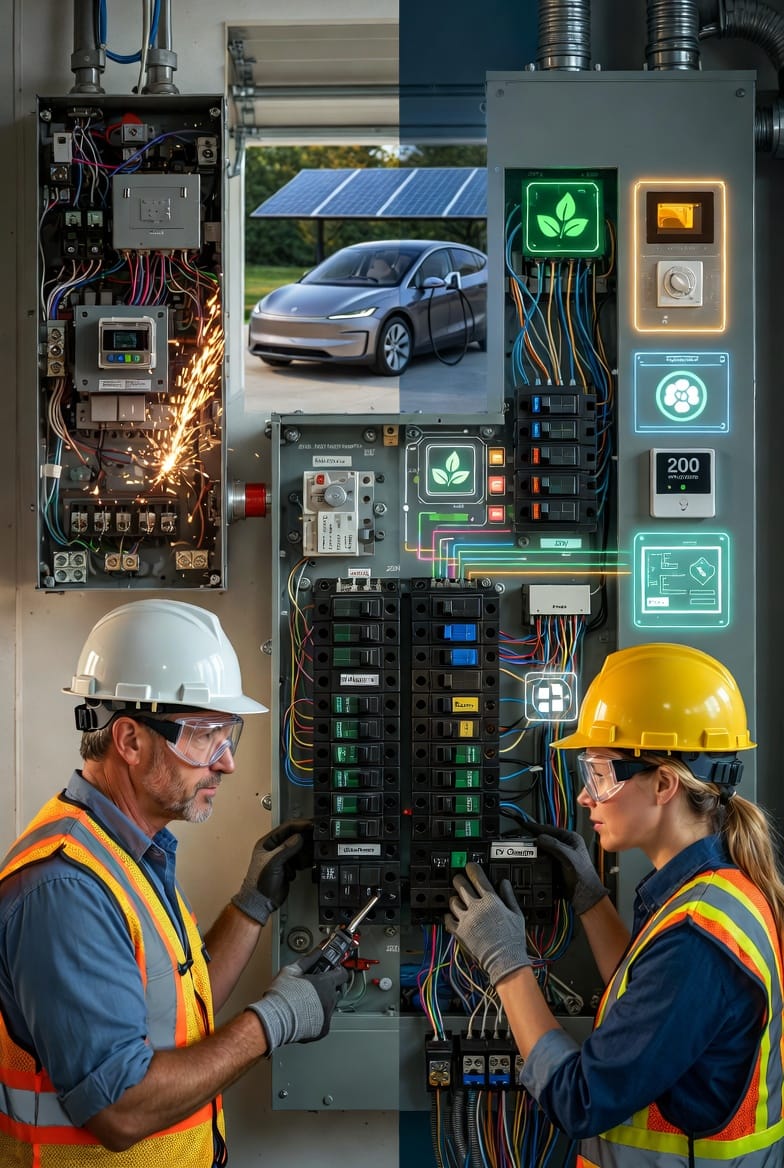
In an era where sustainable living and technological advancement are reshaping our daily lives, your home's electrical system stands as the backbone of progress. As we move toward a future dominated by electric vehicles (EVs), renewable energy sources, and whole-home electrification, ensuring your setup can handle these demands is not just wise—it's essential. This guide explores how to prepare your electrical infrastructure for Level 2 EV chargers, solar panel integration, heat pump installations, and beyond, with practical upgrades like 200-amp service panels, dedicated circuits, and smart load management. By planning ahead, you can avoid costly surprises and embrace a greener, more efficient home.
Ready for Your EV, Solar & Heat Pump? Call Our Licensed Electricians
Understanding the Shift to Electrification
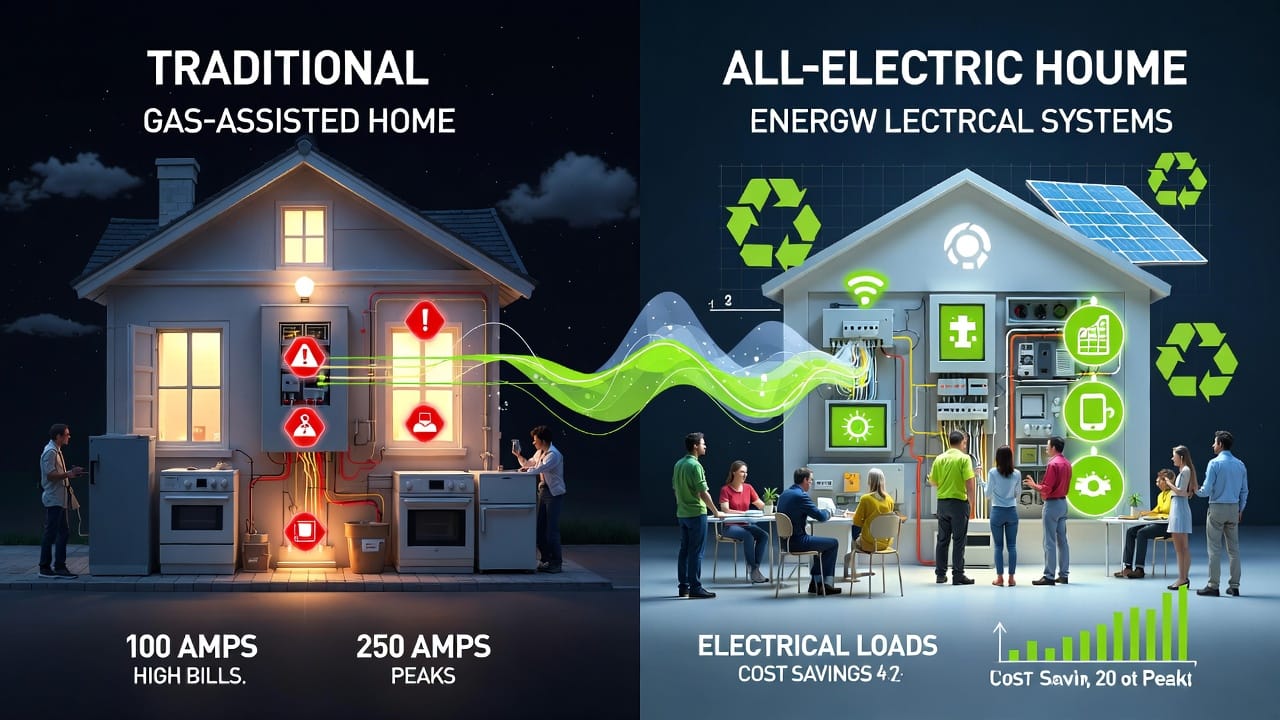
The world is electrifying at a rapid pace. Governments worldwide are pushing for net-zero emissions, incentivizing homeowners to adopt all-electric appliances over gas-powered ones. This transition means higher electrical loads on your home's system. Traditional setups, often designed decades ago for basic lighting and outlets, simply won't suffice.
Consider the numbers: A standard American home from the 1980s might have a 100-amp panel, adequate for incandescent bulbs and a few appliances. Today, with smart homes, home offices, and electric cooking, demands have surged. Add an EV charger, and you're looking at an additional 40-50 amps alone. Solar backfeed from panels can introduce reverse flows, while heat pumps require steady, high-capacity power.
Key Risks of an Outdated System:
- Overloading and Fires: Insufficient capacity leads to tripped breakers or, worse, electrical fires.
- Inefficient Energy Use: Without upgrades, you waste power and miss out on utility rebates for renewables.
- Future Resale Value: Homes not ready for electrification may deter buyers in a market favoring eco-friendly features.
Rest assured, with strategic planning, these challenges become opportunities for long-term savings and environmental impact.
Upgrading Your Service Panel: The Foundation of Future-Proofing
At the heart of any electrical upgrade is the service panel—your home's command center for power distribution. Most older homes have 100-amp or 150-amp panels, but for a future-ready setup, aim for 200 amps or more. This provides headroom for expansions without constant upgrades.
Why 200 amps? Let's break it down:
- EV Charging Needs: A Level 2 charger (240-volt) draws 30-50 amps, requiring a dedicated circuit. Without ample panel space, installation becomes impossible.
- Renewable Integration: Solar panels generate power that feeds back into your grid. A modern panel with arc-fault circuit interrupters (AFCIs) and ground-fault circuit interrupters (GFCIs) ensures safe handling.
- Heat Pump Demands: These efficient systems replace furnaces but need 20-40 amps per unit, plus surge protection.
Upgrading involves assessing your current load via a professional electrical audit. Licensed electricians calculate your home's ampacity—the maximum safe current—factoring in future additions. Costs range from $1,500 to $4,000, but incentives like the Inflation Reduction Act can offset expenses.
In a reassuring tone, remember: This isn't about overhauling everything at once. Start with a panel upgrade, and build from there for seamless scalability.
Installing Dedicated Circuits for High-Demand Appliances
Once your panel is upgraded, focus on dedicated circuits. These are exclusive lines for power-hungry devices, preventing overloads and ensuring reliability.
For EVs:
- Install a 50-amp circuit for Level 2 charging, allowing overnight full charges versus slow Level 1 trickle.
- Position near your garage for convenience, with NEMA 14-50 outlets or hardwired units.
For Renewables:
- Solar inverters need dedicated 20-40 amp circuits to manage backfeed safely.
- Integrate battery storage like Tesla Powerwall, requiring additional circuits for off-grid resilience.
For Heat Pumps:
- A whole-home system might need two 30-amp circuits—one for the compressor, one for auxiliaries.
- Pair with smart thermostats for optimized energy use.
Bullet-proof your setup with:
- Surge Protection Devices (SPDs): Guard against lightning or grid fluctuations.
- Grounding and Bonding: Essential for safety in electrified homes.
- Code Compliance: Always adhere to National Electrical Code (NEC) standards for peace of mind.
These upgrades not only meet current needs but anticipate future tech like vehicle-to-grid (V2G) systems, where your EV powers your home.
Embracing Smart Load Management Technologies
In a fully electrified home, smart load management is your secret weapon. These systems intelligently distribute power, avoiding peaks that trigger higher utility rates or outages.
How it works:
- Smart Panels and Breakers: Devices like Span or Schneider Electric's allow app-controlled prioritization—e.g., delay EV charging during laundry cycles.
- Energy Monitoring: Tools like Sense or Emporia track usage in real-time, identifying inefficiencies.
- Integration with Renewables: Automate solar excess to charge batteries or EVs, maximizing self-consumption.
Benefits include:
- Cost Savings: Shift loads to off-peak hours for lower bills.
- Reliability: Prevent blackouts by shedding non-essential loads.
- Sustainability: Reduce reliance on fossil fuels through efficient electrification.
Authoritatively, adopting these technologies positions your home as a microgrid, resilient against grid instabilities in a changing climate.
Assessing and Planning Your Electrical Upgrades
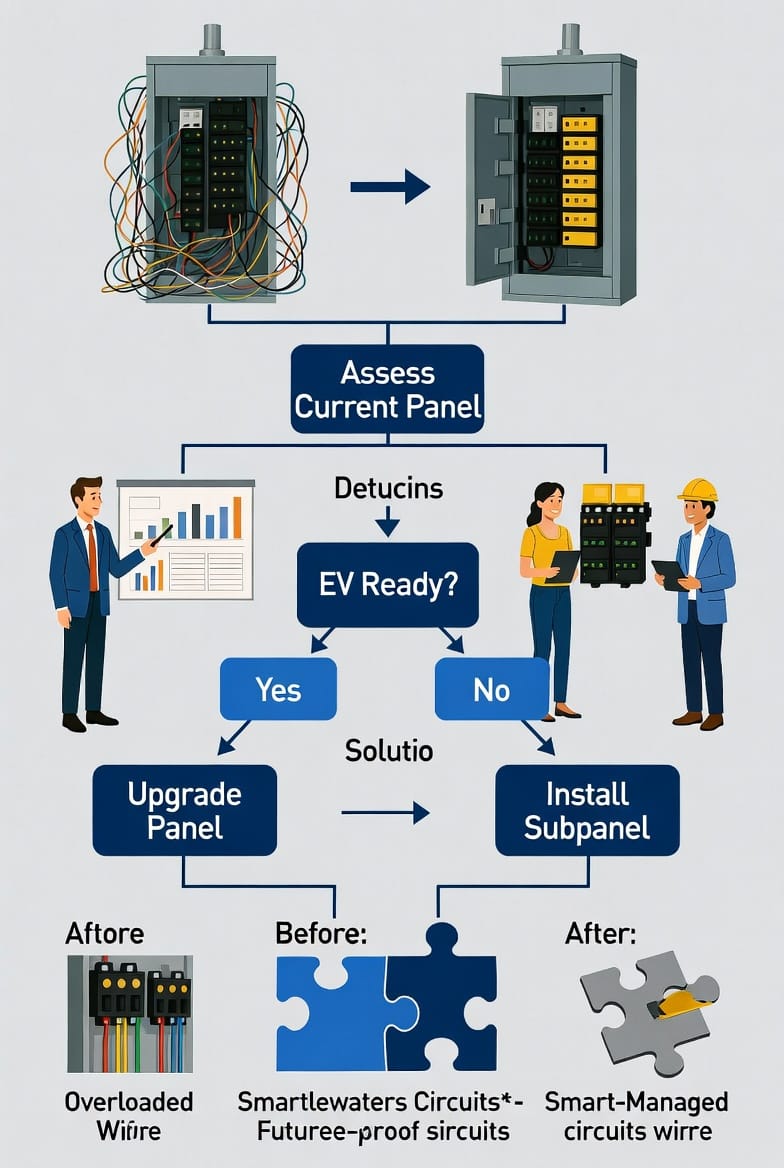
Before diving in, conduct a thorough assessment. Start with a load calculation using NEC guidelines or online tools, but consult pros for accuracy.
Steps to Get Started:
- Inventory Appliances: List all current and planned devices with their amp draws.
- Check Panel Capacity: Look for available slots; if full, expansion is needed.
- Utility Consultation: Some providers offer free audits for EV or solar readiness.
- Budgeting: Factor in permits, labor, and rebates—e.g., up to $600 for EV chargers via federal tax credits.
For complex homes, consider subpanels in garages or basements to localize high-demand areas.
Overcoming Common Challenges in Electrification
Transitioning isn't without hurdles, but knowledge empowers solutions.
Challenge: High Upfront Costs
- Solution: Leverage incentives like ITC for solar (30% credit) or state rebates for heat pumps.
Challenge: Grid Limitations
- Solution: Demand Response Programs reward load shifting; pair with batteries for independence.
Challenge: Installation Disruptions
- Solution: Phased approaches minimize downtime, with electricians ensuring minimal impact.
Reassuringly, millions have made this switch successfully, enjoying lower operating costs and higher property values.
The Environmental and Economic Payoff
Future-proofing yields dividends. Electrified homes cut carbon footprints by up to 50%, aligning with global goals. Economically, expect 20-30% utility savings long-term, plus enhanced home automation.
Imagine a home where your solar panels power your EV, your heat pump keeps you comfortable, and everything runs smoothly via smart controls. That's the future—and it's achievable today.
Final Thoughts: Secure Your Home's Electrical Future
As electrification accelerates, proactive upgrades ensure your home thrives. From 200-amp panels to dedicated circuits and smart management, these steps safeguard against obsolescence.
By investing now, you're not just preparing—you're pioneering a sustainable lifestyle. Contact us today for a free consultation and step into tomorrow's electrified world.
Secure Your Home’s Electrical Future – Schedule Your Consultation