Demystifying Home Solar: From System Components to Financial Returns
In an era where energy independence and sustainable living are more attainable than ever, adopting home solar systems represents a smart, forward-thinking choice for homeowners. This comprehensive guide demystifies the world of residential solar energy, breaking down everything from the fundamental workings of photovoltaic systems to the essential roles of inverters and batteries. We'll explore various financing options – including outright purchase, loans, and Power Purchase Agreements (PPAs) – and provide step-by-step insights on calculating your potential savings and Return on Investment (ROI). Whether you're a first-time explorer or ready to make the switch, rest assured: going solar is a proven path to lower bills, reduced carbon footprint, and long-term financial benefits. Let's dive in with confidence.
Unlock Your Solar Savings Estimate – Call Today
Understanding Photovoltaic Systems: The Basics
At the heart of every home solar setup is the photovoltaic (PV) system, a technology that converts sunlight directly into electricity. This process, known as the photovoltaic effect, was discovered in the 19th century but has evolved dramatically to become efficient and affordable for everyday homes.
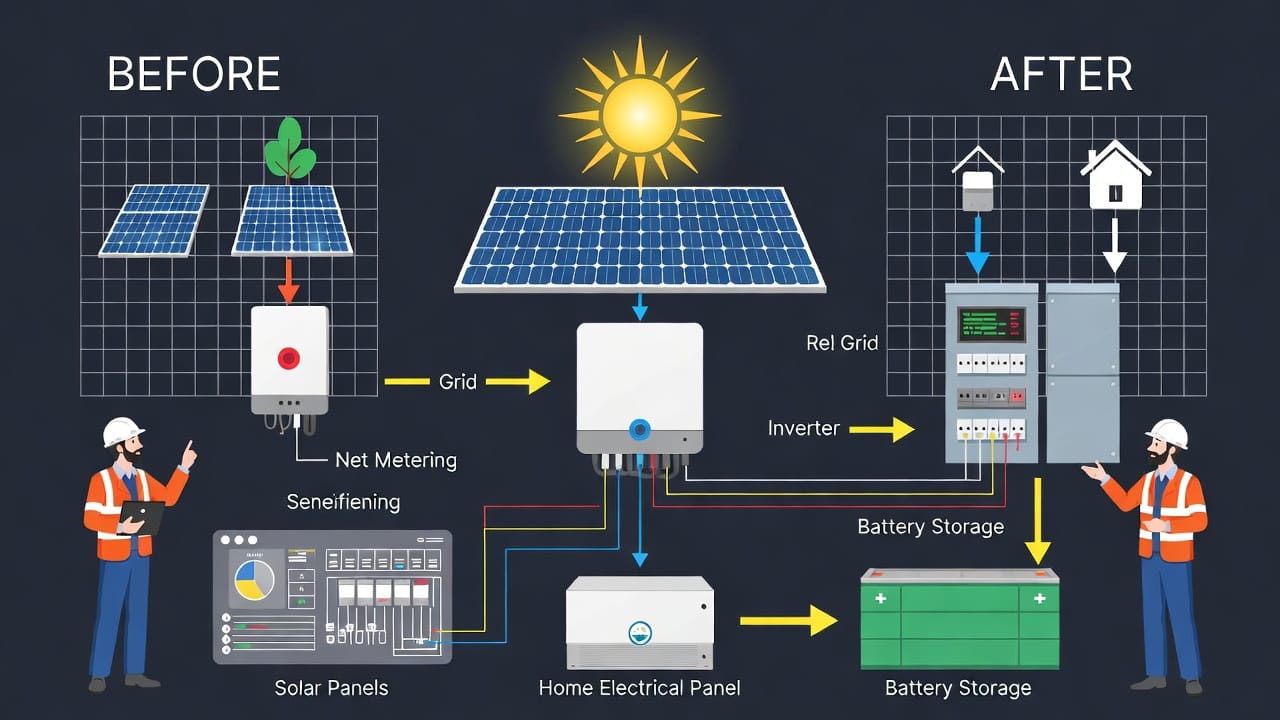
Here's how it works in simple terms:
- Sunlight Absorption: Solar panels, typically made from silicon-based cells, absorb photons from the sun. These photons knock electrons loose within the cells, creating an electric current.
- Direct Current (DC) Generation: The initial output is DC electricity, which flows through wires connected to the panels.
- Conversion to Usable Power: This DC is then transformed into Alternating Current (AC) – the type your home appliances use – via an inverter.
- Energy Distribution: Excess power can be stored, used immediately, or fed back into the grid for credits.
What makes PV systems so reliable? Modern panels boast efficiencies of 15-22%, meaning they convert a significant portion of sunlight into power. Factors like panel orientation (ideally south-facing in the Northern Hemisphere), tilt angle (matching your latitude), and shading avoidance play crucial roles. Don't worry if your roof isn't perfect – ground-mounted or adjustable systems offer flexible alternatives. With warranties often spanning 25 years, these systems are built to last, providing peace of mind against weather and wear.
The Crucial Role of Inverters in Your Solar Setup
No solar system is complete without an inverter, the unsung hero that bridges the gap between harvested solar energy and your household needs. Think of it as the brain of the operation, ensuring seamless integration with your home's electrical grid.
There are several types to consider:
- String Inverters: Cost-effective for standard setups, these connect multiple panels in a "string" and convert DC to AC centrally. Ideal for unshaded roofs, they offer simplicity and lower upfront costs.
- Microinverters: Attached to each panel, these optimize performance individually, mitigating issues like partial shading. They're pricier but enhance overall efficiency, especially in variable conditions.
- Hybrid Inverters: Combining inversion with battery management, these prepare your system for energy storage, allowing for off-grid capabilities or backup during outages.
Inverters also enable net metering, a policy in many regions where excess energy sent to the grid earns you credits on your utility bill. This two-way flow maximizes your solar investment, turning your home into a mini power plant. Rest assured, advancements like smart inverters with monitoring apps let you track production in real-time via your smartphone, empowering you to make informed adjustments.
Batteries: Storing Sunshine for Round-the-Clock Power
While solar panels generate power during the day, batteries extend that benefit into the night, outages, or peak demand times. They're not always essential – many start with grid-tied systems – but adding storage elevates your setup to true energy resilience.
Popular options include:
- Lithium-Ion Batteries: Dominant in the market (e.g., Tesla Powerwall), they offer high energy density, long lifespans (10-15 years), and fast charging. They're compact and efficient, with depths of discharge up to 90%.
- Lead-Acid Batteries: More affordable but bulkier and less efficient, suitable for budget-conscious off-grid applications.
- Flow Batteries: Emerging tech for larger scales, providing scalability and longevity but at higher costs.
How do they integrate? Energy from panels flows to the inverter, then to batteries for storage. During low production, batteries discharge to power your home, reducing reliance on the grid. This setup can qualify for incentives like the federal Investment Tax Credit (ITC), currently at 30% through 2032. Importantly, batteries mitigate time-of-use rates, where utilities charge more during evenings – storing cheap daytime solar for expensive nighttime use. With proper sizing (based on your daily consumption, often 10-20 kWh for average homes), batteries ensure your system pays off faster, offering security in an unpredictable energy landscape.
Exploring Financing Options: Making Solar Accessible
One of the biggest myths about home solar is that it's only for the wealthy. In reality, diverse financing options make it feasible for most budgets, with many achieving positive cash flow from day one.
Let's break them down:
- Outright Purchase: Pay upfront for full ownership. Benefits include immediate tax credits, no interest, and all future savings in your pocket. Ideal if you have the capital – expect costs of $2.50-$3.50 per watt, or $15,000-$25,000 for a 6-8 kW system after incentives.
- Solar Loans: Finance through banks, credit unions, or solar-specific lenders. Terms range from 5-20 years with interest rates of 4-7%. You still own the system and claim incentives, but monthly payments offset utility savings. Many offer zero-down options, making entry barrier-free.
- Power Purchase Agreements (PPAs): No upfront cost – a provider installs and owns the system, selling you the generated power at a fixed, often lower rate than utility prices. You lock in predictable bills for 15-25 years, with the option to buy out later. Great for renters or those avoiding debt, though you forgo direct incentives.
Each path has its perks: Purchases maximize long-term ROI, loans balance affordability with ownership, and PPAs minimize risk. Factor in local rebates, state incentives, and the ITC to slash costs by 30-50%. A trusted installer can run personalized quotes, ensuring the choice aligns with your financial goals. Remember, solar adds home value – studies show a $20 increase in resale price per $1 saved on annual bills.
Calculating Potential Savings and ROI: Numbers That Add Up
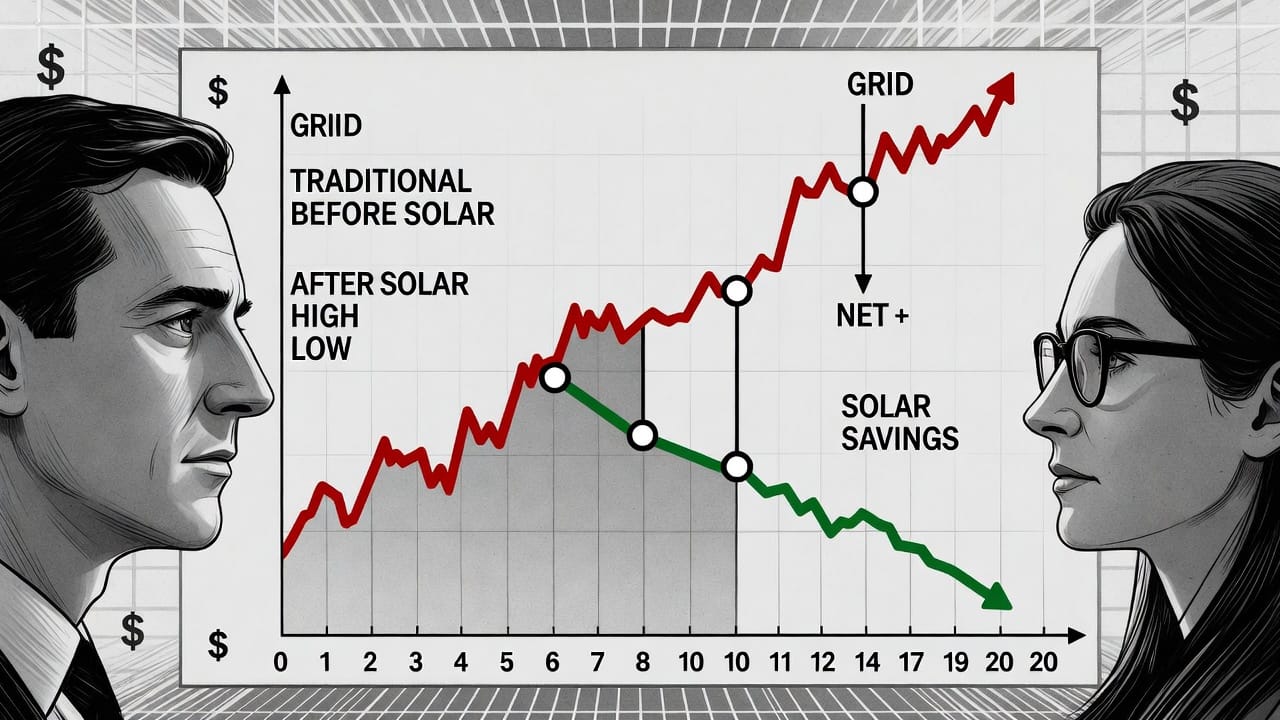
The true allure of home solar lies in its financial returns. By crunching the numbers, you'll see how it stacks up against traditional grid power. Start with these steps for a realistic projection.
First, assess your energy usage: Review utility bills for annual kWh consumption (average U.S. home: 10,000-12,000 kWh). Tools like Google's Project Sunroof or PVWatts calculator estimate production based on your location, roof size, and system capacity.
Next, estimate system size: Divide usage by local solar hours (e.g., 4-5 hours/day in sunny areas) and panel efficiency. A 7 kW system might produce 10,000 kWh yearly.
Now, calculate savings:
- Bill Reduction: Solar covers 50-100% of needs, slashing monthly costs. At $0.12/kWh average rate, a full offset saves $1,200/year.
- Net Metering Credits: Excess production earns bill credits, often at retail rates.
- Incentive Impact: Deduct 30% ITC from gross cost (e.g., $25,000 system drops to $17,500).
For ROI, use this formula:
ROI = (Total Savings Over Lifetime - Initial Cost) / Initial Cost × 100
Assume:
- System Cost: $17,500 (post-ITC)
- Annual Savings: $1,500 (escalating 2-3% yearly as rates rise)
- Lifetime: 25 years
- Total Savings: $37,500 (conservative, excluding appreciation)
ROI ≈ ($37,500 - $17,500) / $17,500 × 100 = 114%
Payback Period: Initial Cost / Annual Savings ≈ 11.7 years
These figures vary by location – sunnier states like California yield faster ROIs (7-10 years), while incentives boost everywhere. Account for maintenance (minimal, ~$150/year) and degradation (0.5%/year). Online calculators from reputable sources refine these for your zip code.
Over 20 years, cumulative savings often exceed $50,000, far outpacing grid costs that rise 3-5% annually. Solar isn't just eco-friendly; it's a sound investment hedging against inflation.
Overcoming Common Concerns and Next Steps
Worried about installation disruptions? Professional teams complete most jobs in 1-3 days with minimal hassle. Aesthetic issues? Sleek, low-profile panels blend seamlessly. Weather resilience? Panels withstand hail, wind, and snow, often outperforming roofs.
In summary, home solar demystified reveals a straightforward, rewarding upgrade. From PV basics to smart financing and proven ROI, the path is clear and beneficial.
Power Your Home with Solar – Call for Your Free Quote