Tree Cabling and Bracing: Strengthening Weak Trees to Avoid Removal
In the world of professional tree care, tree cabling and bracing stands as one of the most effective preservation techniques available today. When a valuable tree develops weak unions, codominant stems, or structural defects that could lead to failure, many property owners immediately think of removal. Yet with expert structural support systems, arborists can extend the life of these trees for decades while dramatically reducing safety risks. This article explores how tree cabling and tree bracing work, why they serve as smart alternatives to removal, and how they help homeowners protect cherished landscape assets.
Protect Your Tree from Failure – Get Expert Cabling & Bracing
Tree cabling and bracing is not a temporary fix—it is a proven, science-backed method used by certified arborists to reinforce trees that would otherwise pose liabilities. By installing high-strength cables and braces, professionals redistribute mechanical stress, support weak branch attachments, and prevent catastrophic splitting during storms or high winds. The result? A safer, healthier tree that continues to provide shade, beauty, and ecological benefits without the need for removal.
Understanding the Risks of Weak Tree Structures
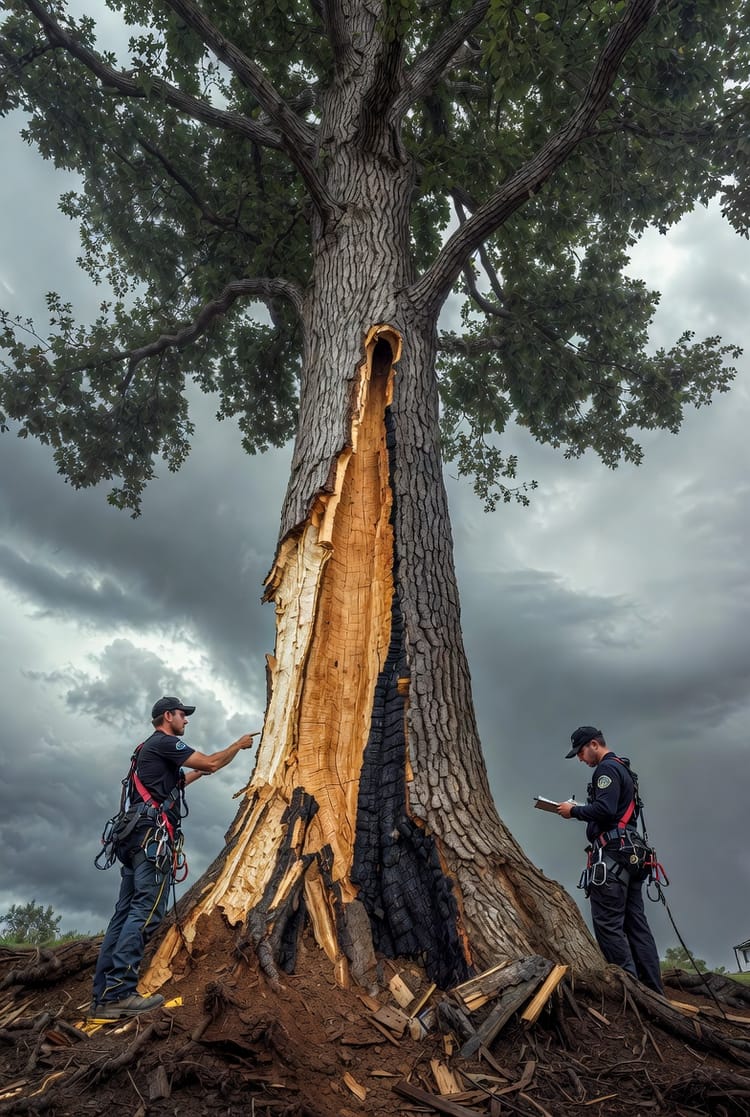
Every mature tree faces natural challenges. As trees grow, codominant stems often form V-shaped unions that lack the strong connective wood found in properly attached branches. Over time, these weak unions become vulnerable to splitting under the weight of ice, snow, or high winds. Left unaddressed, the risk of failure increases dramatically, potentially damaging homes, vehicles, or power lines.
Tree failure is more than an inconvenience—it can result in costly repairs, insurance claims, and even personal injury. Yet many valuable specimen trees—those planted decades ago by previous homeowners or cherished for their historical significance—deserve a second chance. Tree cabling and bracing directly addresses these structural weaknesses, offering a reassuring solution that preserves the tree’s natural beauty while enhancing its stability.
What Is Tree Cabling and How Does It Work?
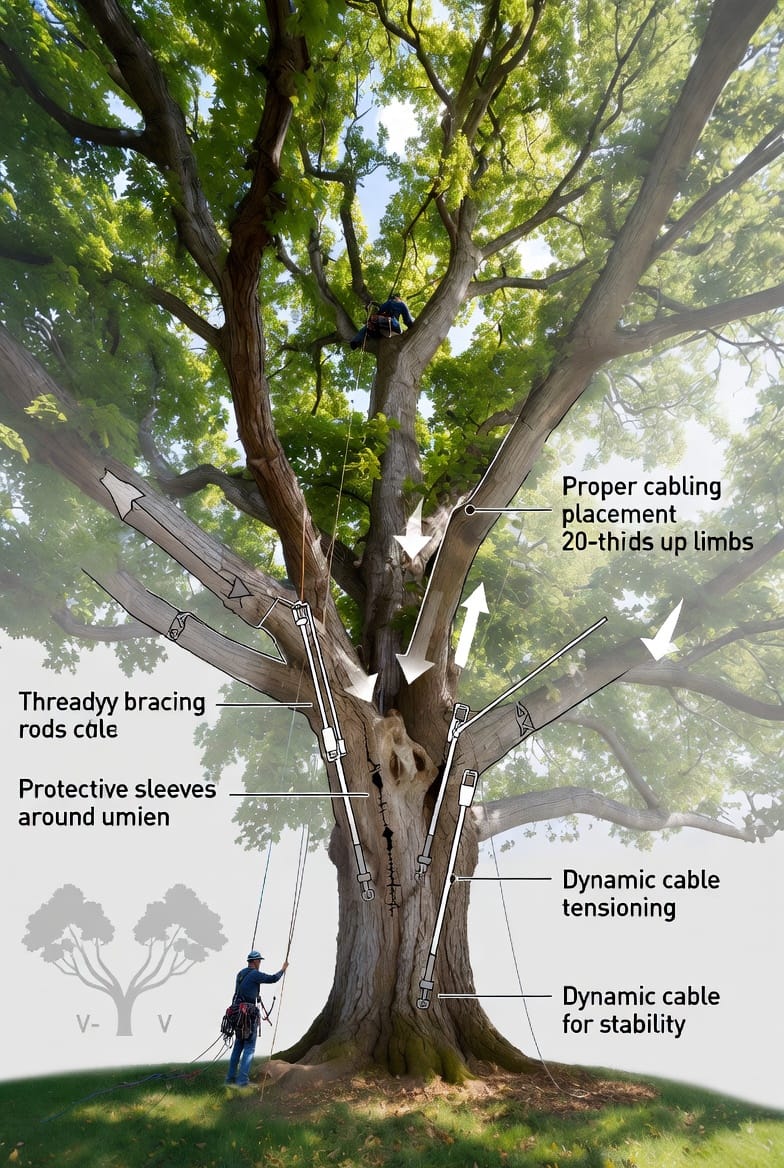
Tree cabling involves installing flexible steel cables between major limbs or stems to limit their movement and reduce stress on weak unions. Unlike rigid systems, modern dynamic cabling allows controlled sway, which actually strengthens the tree’s wood over time by promoting adaptive growth.
Arborists select cable placement based on the tree’s specific architecture. Cables are typically installed in the upper third of the canopy, approximately two-thirds of the distance from the union to the branch tips. This strategic positioning maximizes leverage while minimizing visible impact on the tree’s appearance.
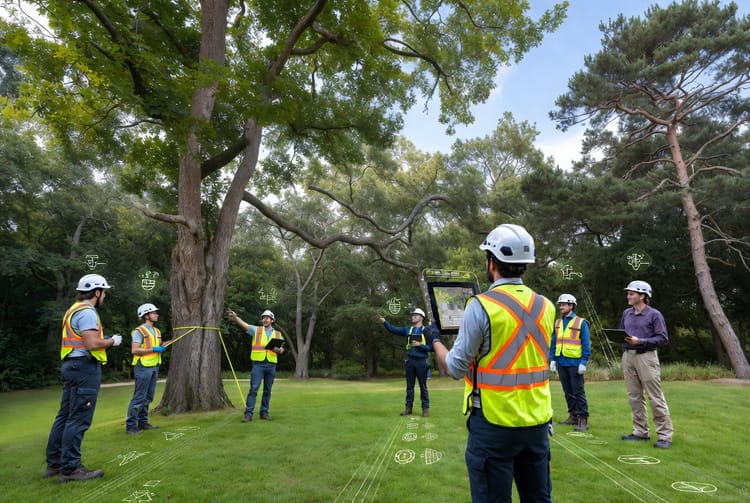
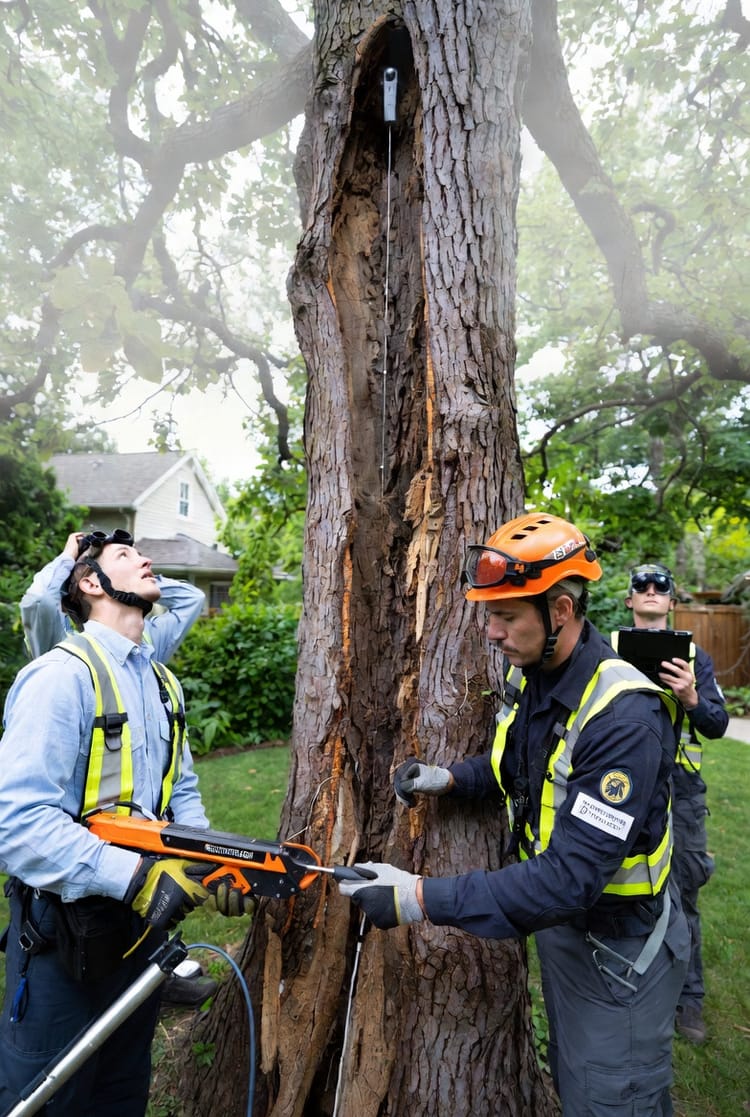
The process begins with a thorough risk assessment by a certified arborist. Using specialized tools, the team drills precise holes through healthy wood, threads the cable through protective sleeves to prevent bark damage, and secures it with heavy-duty hardware. The cables are then tensioned to the exact specifications required for that particular tree species and site conditions.
The Role of Tree Bracing in Structural Support
While tree cabling addresses lateral movement between limbs, tree bracing provides direct support for split or cracked unions. Threaded steel rods are installed through the trunk or major branches to hold compromised sections firmly together. Combined with cabling, bracing creates a comprehensive structural support system that works with the tree’s natural growth patterns.
Bracing is particularly effective for trees showing early signs of included bark or vertical cracks. The rods act like internal reinforcement, allowing the tree to compartmentalize wounds and continue healthy growth around the hardware. When performed correctly, these installations are nearly invisible from the ground, preserving the tree’s aesthetic value.
Step-by-Step Professional Installation Process
Certified arborists follow a meticulous, multi-stage process to ensure long-term success:
- Initial Evaluation: A detailed inspection identifies weak unions, measures branch angles, and assesses overall tree health. Soil conditions, wind exposure, and proximity to structures are all factored into the plan.
- Custom System Design: Using engineering principles, the team calculates exact cable lengths, brace diameters, and tension requirements tailored to the tree’s species and size.
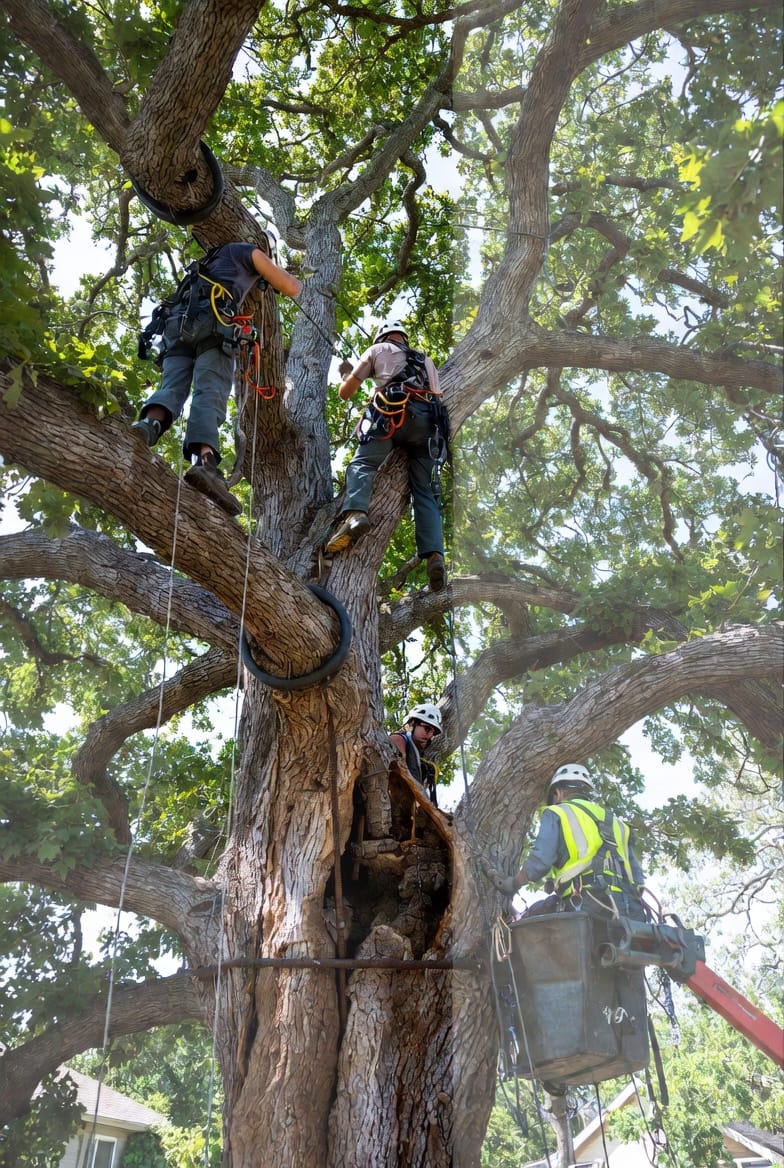
- Safe Access and Preparation: Arborists use ropes, harnesses, and aerial lifts to reach the canopy without causing additional stress to the tree.
- Hardware Installation: Precision drilling, cable threading, and brace placement occur under strict safety protocols. Protective sleeves and washers prevent girdling and promote callus formation.
- Tensioning and Testing: Cables are adjusted to optimal tension, and the entire system is tested for stability.
- Post-Installation Review: The team documents the work with photos and provides the homeowner with a maintenance schedule.
This methodical approach ensures every tree cabling and bracing project delivers maximum safety and longevity.
When Cabling and Bracing Is the Ideal Preservation Choice
Tree cabling and bracing is recommended in several key situations:
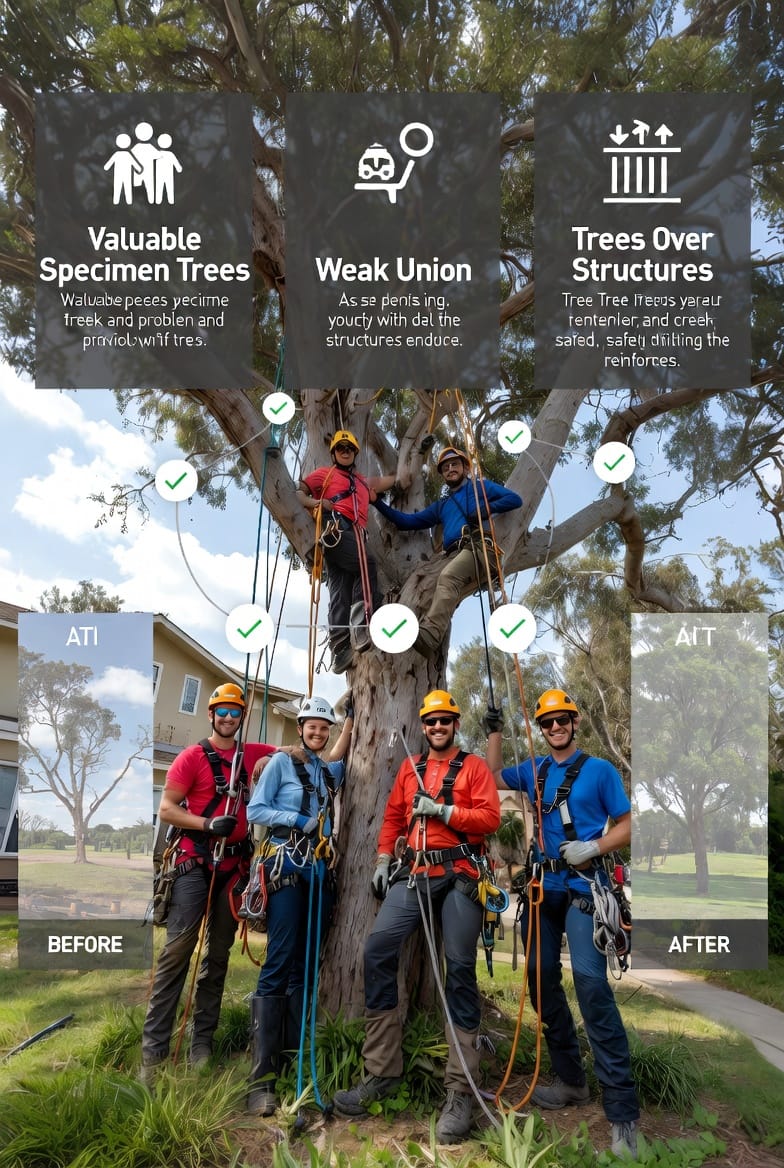
- Valuable specimen trees that hold sentimental or historical value to the property owner.
- Trees with weak unions between codominant stems that show early signs of separation but remain otherwise healthy.
- Trees positioned over structures, walkways, or high-traffic areas where failure could cause significant damage.
- Mature landscape trees that contribute to privacy, shade, or neighborhood character and would be costly or impossible to replace.
- Trees showing moderate structural defects but still exhibiting vigorous growth and no advanced decay.
In each case, professional evaluation confirms that the tree’s overall health supports long-term success with structural support.
Key Benefits of Choosing Preservation Over Removal
Opting for tree cabling and bracing delivers numerous advantages that extend far beyond simply avoiding removal costs. First, it maintains the tree’s established root system, which continues to stabilize soil, prevent erosion, and support local biodiversity. Mature trees also provide immediate canopy benefits that newly planted replacements cannot match for many years.
Property values often increase with well-maintained, structurally supported trees. Homeowners enjoy continued shade, wind protection, and visual appeal without the disruption of large-scale removal and replanting. From an environmental perspective, preserving existing trees sequesters far more carbon than starting with a sapling.
Safety remains the top priority. Properly installed structural support systems significantly reduce the likelihood of limb failure, offering peace of mind during severe weather events. Homeowners receive expert guidance on monitoring and maintenance, ensuring the supported tree remains an asset rather than a liability for decades to come.
Real-World Applications and Long-Term Success
Consider a 70-year-old oak tree leaning toward a family home after years of codominant stem growth. Rather than removal, the homeowner chose professional tree cabling and bracing. Five years later, the tree stands stronger than ever, with callus tissue forming around the hardware and no further movement detected during annual inspections.
Similar success stories repeat across residential and commercial properties. Urban parks, historic estates, and private backyards all benefit from these techniques. Because each installation is custom-engineered, results consistently exceed expectations when performed by qualified professionals.
Ongoing Maintenance for Supported Trees
Tree cabling and bracing requires periodic professional inspection—typically every 12 to 24 months—to verify hardware integrity and adjust tension as the tree grows. Arborists check for signs of girdling, corrosion, or new defects. Minor adjustments keep the system performing optimally throughout the tree’s extended lifespan.
Homeowners play an important supporting role by maintaining overall tree health through proper watering, mulching, and avoiding compaction around the root zone. When both arborist expertise and homeowner stewardship combine, supported trees thrive for generations.
Addressing Common Concerns About Structural Support
Some property owners worry that installing hardware will harm the tree or create an unnatural appearance. In reality, modern materials and techniques minimize impact while delivering superior results compared to unsupported growth. The small amount of wood removed during installation is far less invasive than the total loss of the tree through removal.
Another frequent question involves cost. While tree cabling and bracing represents an investment, it is almost always more economical than removal plus replacement, especially when factoring in the decades of continued benefits a mature tree provides.
Why Partner With Certified Arborists for Tree Cabling
Only qualified professionals possess the training, equipment, and experience necessary to design and install effective structural support systems. Certified arborists understand tree biology, species-specific requirements, and local environmental conditions. Their expertise ensures installations enhance rather than compromise tree health.
When you choose experienced providers, you gain more than hardware—you gain a long-term partner committed to preserving your landscape. Every project includes detailed documentation, clear maintenance recommendations, and ongoing support.
Conclusion
Tree cabling and bracing offers a reliable, attractive alternative to removal for weak or structurally challenged trees. By reinforcing weak unions, reducing stress, and extending tree life, these techniques allow homeowners to keep valuable assets safely in place for years to come.
Extend Your Tree’s Life – Schedule Professional Bracing Now