The Window Well Egress: Meeting Code Requirements for Basement Bedroom Safety
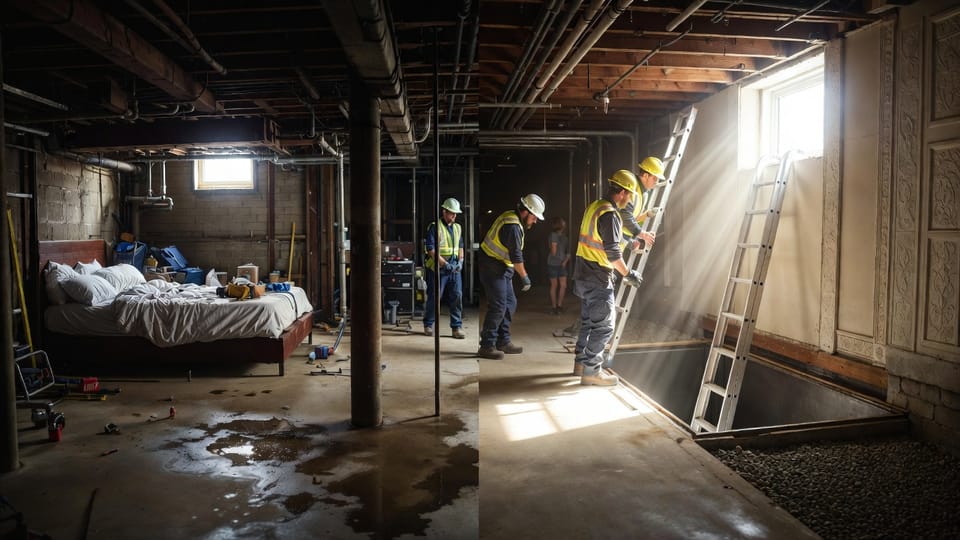
Basement bedrooms offer valuable living space in many homes, yet they come with a critical responsibility: ensuring safe emergency exits. Without a properly designed egress window and window well, these rooms may fail to meet building codes, putting families at serious risk during fires, floods, or other emergencies.
Safe Basement Bedrooms Start Here – Call Experts Today
Rest assured, compliance is achievable and brings lasting peace of mind. Meeting egress window requirements not only satisfies legal standards but also protects the people you love while boosting your home’s value and safety. This comprehensive guide walks you through every essential detail—from minimum opening dimensions and sill heights to window well sizing, drainage solutions, and ladder necessities—so you can confidently create a legal, secure basement bedroom.
Why Egress Windows Are Non-Negotiable for Basement Bedrooms
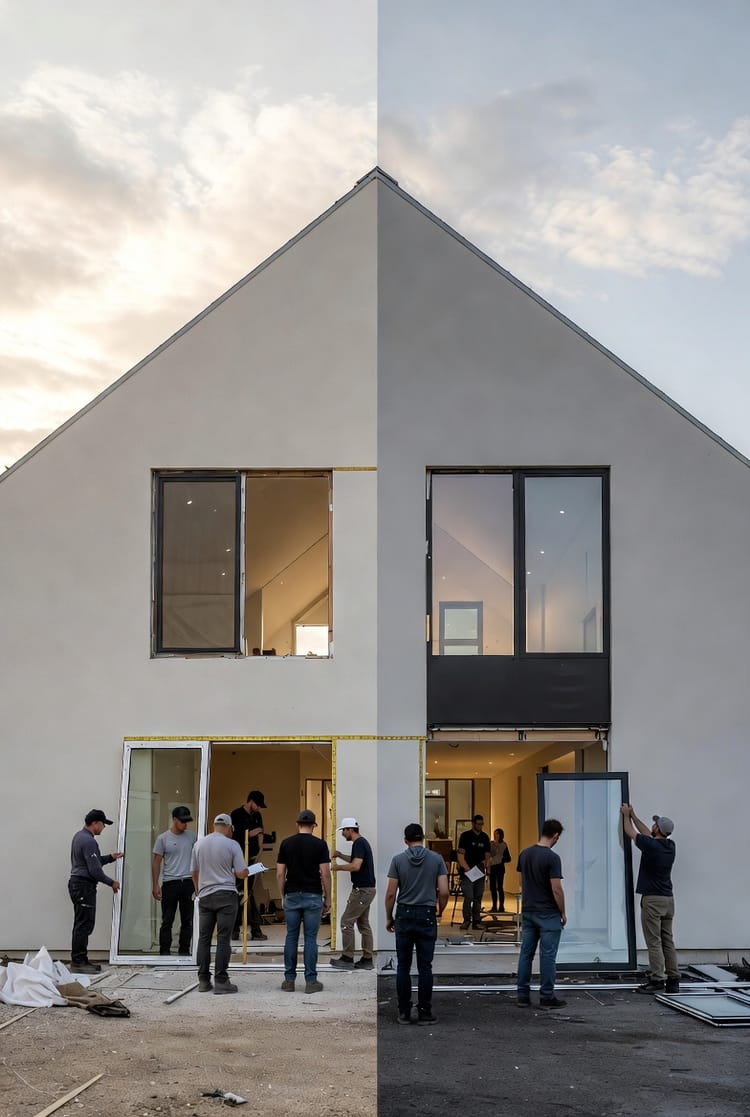
Many homeowners convert basement space into bedrooms without realizing the hidden dangers. Standard windows often sit too high or open too narrowly to serve as true escape routes. In an emergency, every second counts. A compliant egress window allows adults and children to exit quickly and first responders to enter without obstruction.
Local building codes, based on the International Residential Code (IRC), treat basement bedrooms differently from upper-level rooms precisely because they are below grade. Failing to meet these standards can result in failed inspections, denied permits, insurance complications, or—most importantly—tragic outcomes.
The good news? Modern solutions make code compliance straightforward. Professional installation transforms potential hazards into reliable safety features, giving you a fully legal and livable space your family can enjoy for years.
Understanding Core Egress Window Dimensions
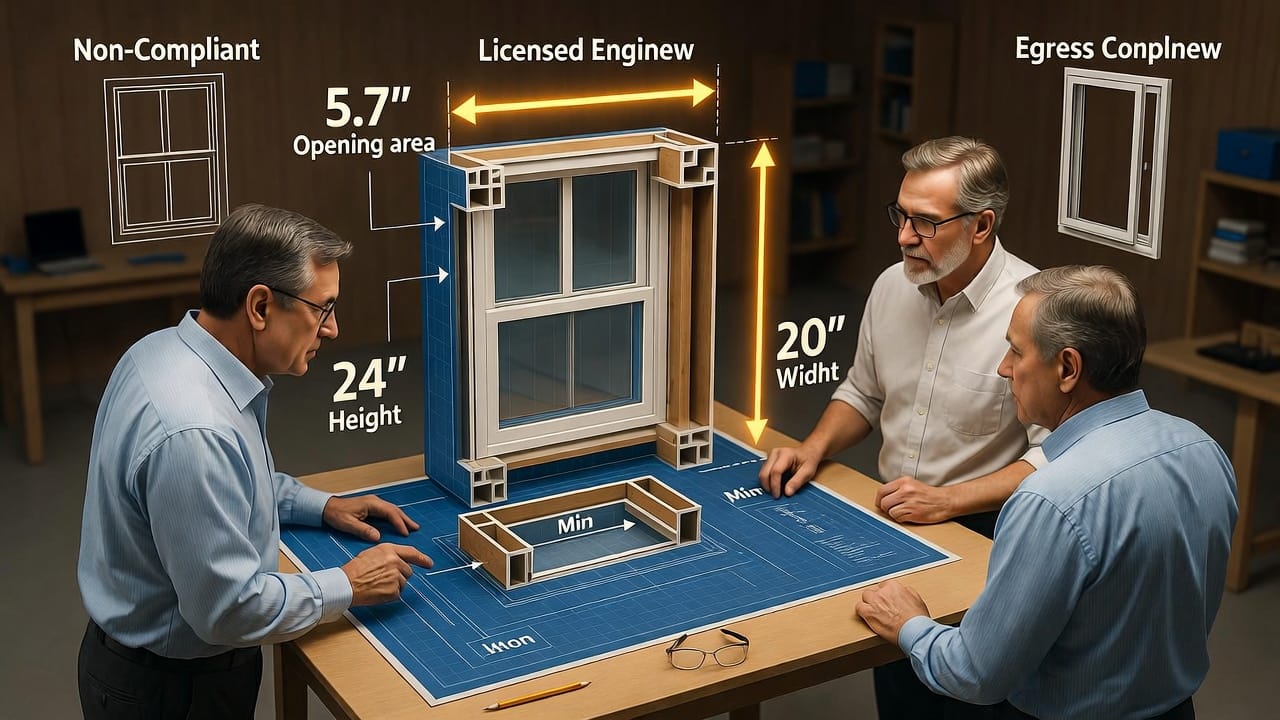
Code requirements focus on three key measurements that guarantee an adult can pass through the opening in an emergency. These are not suggestions—they are strict minimums designed with real-life safety in mind.
- Net clear opening area must be at least 5.7 square feet. This provides enough space for safe passage.
- Minimum opening height is 24 inches.
- Minimum opening width is 20 inches.
The window sill height from the finished floor cannot exceed 44 inches. If it sits higher, escape becomes difficult or impossible for many people. These precise figures ensure even a sleeping adult can wake, reach the window, and exit without assistance.
Window wells must be sized to allow the window to open fully outward or inward without obstruction. The well itself must project far enough from the foundation to create an unobstructed exit path.
Proper Window Well Installation and Drainage Essentials
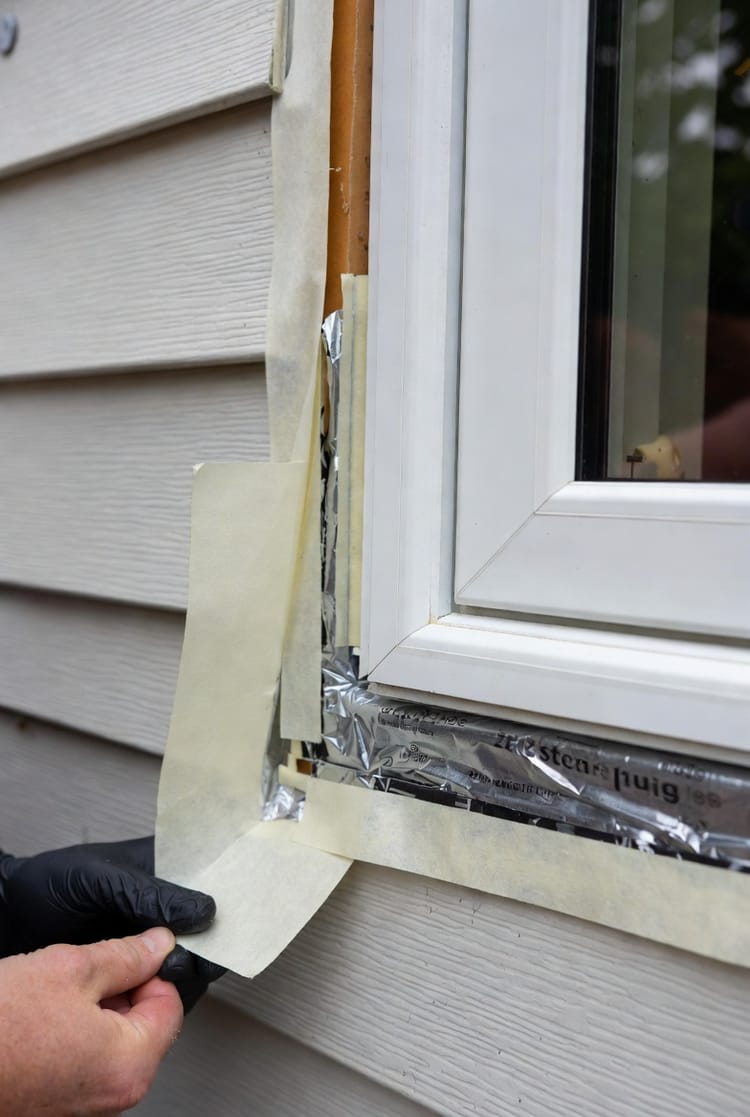
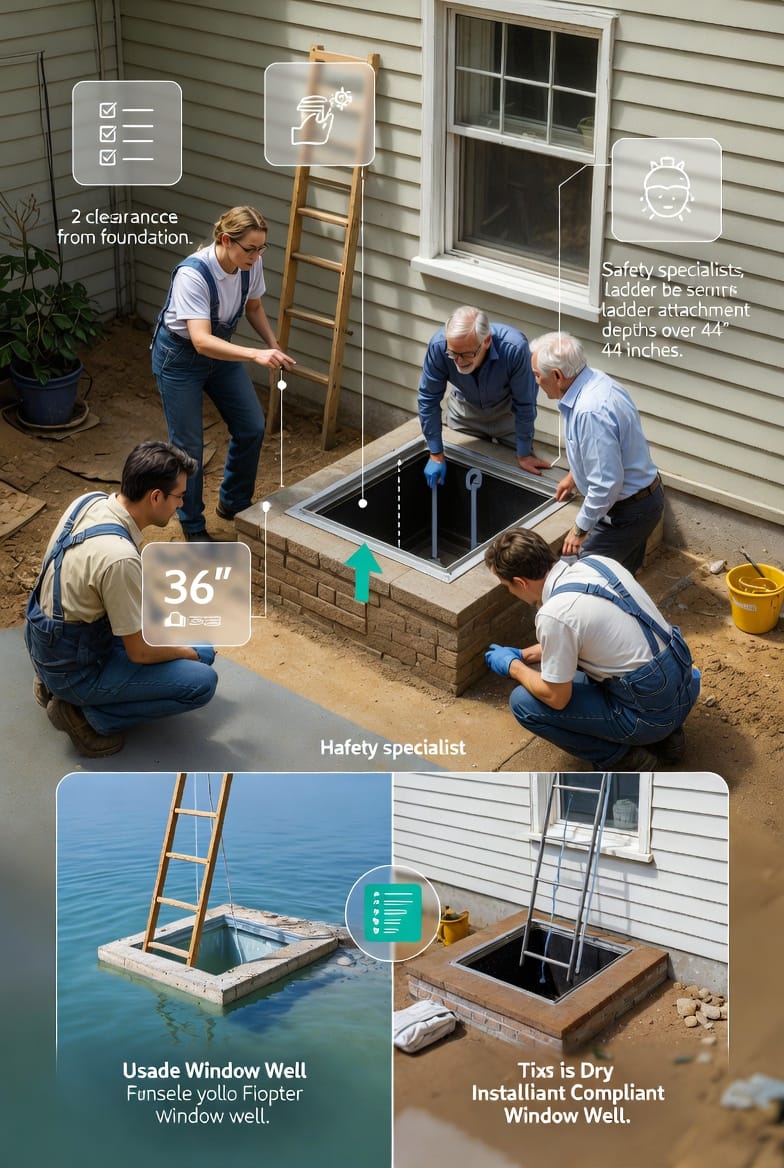
Installing a window well correctly prevents water intrusion while maintaining the required clearance for escape. The well must sit at least 36 inches away from the house foundation to create adequate space for the window to swing open and for a person to stand comfortably.
Begin with careful excavation to the proper depth, then install a sturdy corrugated metal or composite well liner. At the base, place a generous layer of clean gravel or install a perforated drain pipe connected to a sump pump or daylight drain. This drainage system is vital—standing water not only damages the foundation but can turn the well into a hazardous trap.
Many homeowners overlook grading the surrounding soil to slope away from the well. Professional crews ensure positive drainage and often add a clear plastic cover or grated lid to keep debris and animals out while still allowing full emergency access.
When executed properly, these steps eliminate moisture problems and create a dry, reliable exit path that meets every code provision.
Ladder Requirements for Deeper Window Wells
If your window well depth exceeds 44 inches, a permanent ladder or step system becomes mandatory. The ladder must be permanently affixed, corrosion-resistant, and positioned so it does not block the window’s clear opening area. Rungs must be spaced no more than 18 inches apart and provide secure handholds.
Modern ladder designs are discreet yet extremely sturdy, blending seamlessly with the well while offering immediate access. For wells exactly at or under 44 inches, a ladder is optional but often recommended for added safety, especially in homes with children or elderly residents.
Installing the correct ladder transforms a deep well from a potential obstacle into a straightforward escape route. Trained technicians calculate exact depth and placement to guarantee compliance without compromising aesthetics.
Step-by-Step Process for Code-Compliant Installation
Professional crews follow a proven sequence to deliver perfect results every time:
- Conduct a thorough site assessment measuring current sill height, opening size, and soil conditions.
- Obtain necessary permits and confirm local code variations.
- Excavate precisely, install drainage gravel or pipe, and position the window well liner.
- Replace or modify the existing window to meet the 5.7 square foot opening requirement.
- Secure the ladder (if required) and test full operation.
- Backfill, grade, and add protective covers or landscaping.
- Schedule final inspection to receive official approval.
Each step includes quality checks that eliminate guesswork. Homeowners receive documentation proving full code compliance, protecting your investment and safety for the long term.
Common Mistakes and How Professionals Prevent Them
Many DIY attempts fall short by using undersized wells, skipping drainage, or installing ladders that obstruct the opening. Others forget to verify sill height or neglect proper grading, leading to water damage and failed inspections.
Expert teams avoid these pitfalls through specialized training, precise tools, and years of experience. They select durable materials rated for below-grade use and ensure every measurement exceeds minimum standards. The result is a worry-free installation that looks great and performs flawlessly.
Long-Term Benefits of a Compliant Egress Setup
Beyond safety, a properly installed egress window and window well increase your home’s resale value by allowing the basement to be legally advertised as bedroom space. Insurance companies often reward code-compliant homes with better rates. Families gain genuine peace of mind knowing every bedroom offers a reliable escape route.
Regular maintenance—clearing debris and checking drainage—keeps the system functioning perfectly for decades. Many homeowners report sleeping better at night simply because they know their basement meets the highest safety standards.
Making Your Basement a Legal, Safe Living Space
Transforming your basement into a comfortable, code-approved bedroom is one of the smartest home improvements you can make. With the right window well egress solution, you eliminate risks, satisfy inspectors, and create a secure environment your family deserves.
Do not leave safety to chance. Partner with experienced professionals who understand every detail of basement bedroom safety and egress window requirements.
Ensure Basement Safety Compliance – Call for Expert Help