The Window Balance System: How Spiral and Block-and-Tackle Balances Keep Your Sashes in Place

Have you ever wondered what keeps your windows gliding smoothly up and down without slamming shut or requiring Herculean effort to open? The secret lies in the window balance system, a hidden engineering marvel that ensures effortless operation. In this comprehensive guide, we'll delve into how spiral balances and block-and-tackle balances work to counterbalance the weight of your window sashes, keeping them securely in place. Whether you're dealing with windows that refuse to stay open or simply curious about home maintenance, understanding these mechanisms can save you time, money, and frustration. Rest assured, with the right knowledge, maintaining your windows is straightforward and reliable.
Stop Propping Windows Open – Call for Expert Repair
What Is a Window Balance System?
At its core, the window balance system is designed to offset the gravitational pull on a window's movable parts, known as sashes. In double-hung windows—the most common type in homes—the upper and lower sashes slide vertically within the frame. Without balances, the weight of these sashes (often made from heavy wood, vinyl, or aluminum) would make them difficult to maneuver, leading to wear and tear over time.
Balances are typically installed in the jambs—the vertical sides of the window frame—and remain concealed behind trim or channels. They act like invisible assistants, providing just enough upward force to match the sash's weight, allowing you to raise or lower the window with minimal effort. This counterbalancing prevents the sash from dropping unexpectedly, which could pose safety risks like pinched fingers or broken glass.
Historically, older windows relied on counterweights with ropes and pulleys, but modern systems have evolved to more efficient designs like spirals and block-and-tackles. These innovations not only improve functionality but also enhance energy efficiency by ensuring tight seals when closed. If your windows are sticking or failing to hold position, a faulty balance is often the culprit— but don't worry; identification and replacement are manageable tasks that restore your windows to peak performance.
Understanding Window Sashes and Their Role
Before diving deeper into balances, let's clarify what a window sash entails. The sash is the framed section that holds the glass panes and moves within the window frame. In a standard double-hung setup, there are two sashes: the lower one you typically operate most, and the upper one for ventilation from above.
The weight of a sash can vary significantly— from 10 pounds for smaller vinyl units to over 30 pounds for large wooden ones. This weight is what the balance system must counteract precisely. If the balance fails, the sash may:
- Drop suddenly when opened.
- Require propping up with sticks or books.
- Stick in place, making operation laborious.
Such issues not only inconvenience daily life but can also lead to energy inefficiency, as poorly sealing windows allow drafts, increasing heating and cooling costs. Fortunately, modern balances are engineered for longevity, often lasting 10-20 years with proper care. Regular cleaning of tracks and lubrication can extend their life, but when wear sets in, prompt attention prevents minor problems from escalating.
How Window Balances Work: The Science Behind Smooth Operation
The fundamental principle of any window balance is tension or spring force counteracting gravity. When you lift a sash, the balance extends or uncoils, storing energy. As you release it, this stored energy helps hold the sash at your desired height, defying its natural tendency to fall.
This mechanism ensures easy operation for all users, from children to seniors, reducing strain on the window hardware. It's a blend of physics and practical design: the balance's force must equal the sash's weight for neutral buoyancy— too weak, and the window drops; too strong, and it's hard to close.
In terms of materials, balances are often made from durable steel or aluminum, with protective coatings to resist corrosion. They operate quietly and efficiently, contributing to the overall home comfort by maintaining stable window positions for better airflow control.
Exploring Spiral Balances: Simplicity in Design
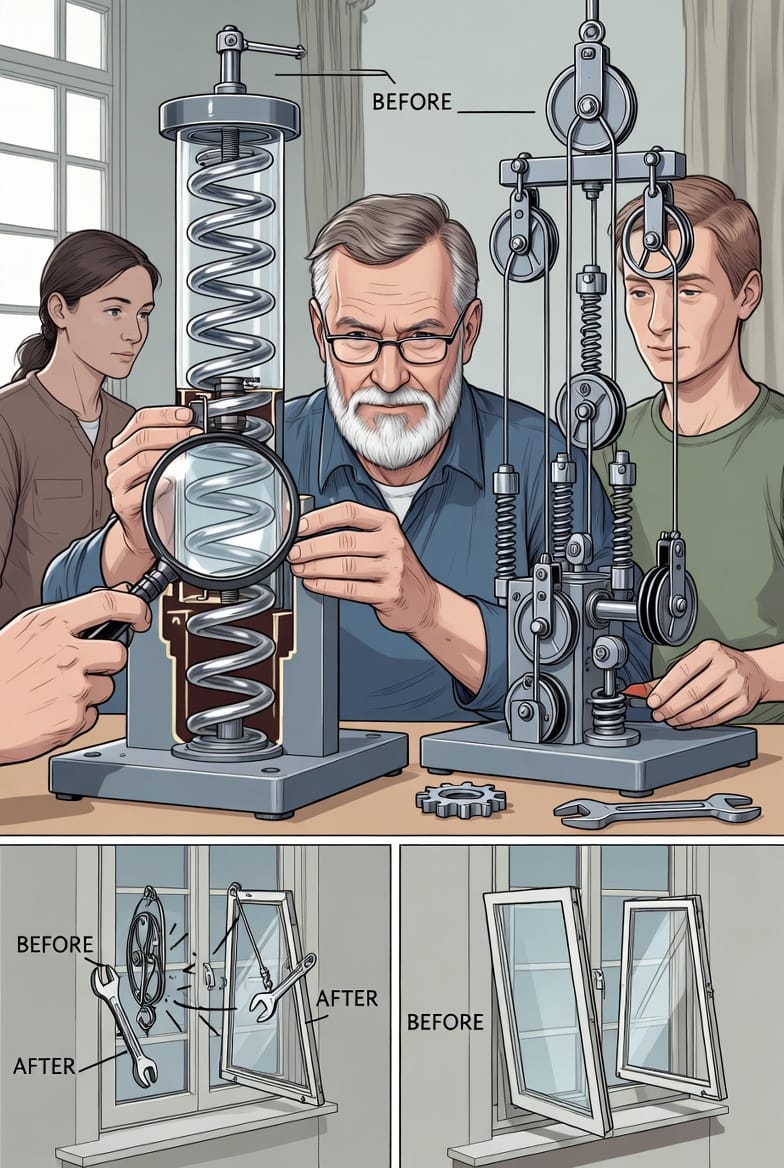
One of the most common types is the spiral balance, a coiled spring housed inside a tubular rod. Imagine a tightly wound metal ribbon that twists as the sash moves.
Here's how it functions:
- Installation: The spiral rod attaches to the bottom of the sash and extends into the jamb channel.
- Operation: As you raise the sash, the rod uncoils, creating tension that supports the weight. Lowering it allows the spiral to rewind naturally.
- Advantages: Compact and cost-effective, ideal for lighter sashes in residential settings. They're low-maintenance and easy to adjust with a simple tensioning tool.
Spiral balances shine in their adaptability— available in various lengths and tensions to match specific sash weights. If you've noticed a rattling sound or uneven movement, it might indicate a worn spiral needing replacement. Rest easy; these are straightforward to swap out, often without removing the entire window.
To identify a spiral balance, look for a thin metal tube (about 3/8 inch in diameter) visible when the sash is tilted inward. Colors like white, red, or blue often denote tension levels, guiding replacements.
Block-and-Tackle Balances: Power for Heavier Loads
For heavier sashes or commercial applications, block-and-tackle balances offer superior strength through a pulley system combined with springs.
Key components include:
- Pulleys and Cords: A series of blocks (pulleys) connected by nylon cords, amplifying the spring's force.
- Spring Mechanism: A constant-force spring provides consistent tension regardless of sash position.
- Benefits: Handles up to 100 pounds per balance, making them perfect for large or historic windows. They provide smoother, more controlled movement.
Unlike spirals, block-and-tackles are bulkier, often encased in a metal or plastic housing. Their design mimics a simple machine, leveraging mechanical advantage to reduce the effort needed for operation.
Common in vinyl and aluminum windows, these balances are highly reliable but can fail due to cord fraying or spring fatigue. Signs include sashes that tilt unevenly or require excessive force to move.
Identifying Failed Balances: Common Signs and Troubleshooting
Nothing lasts forever, and failed balances are a frequent issue in older homes. The good news? Spotting them early prevents bigger problems.
Watch for these red flags:
- Window won't stay up: The sash slides down immediately after opening— a classic symptom.
- Uneven operation: One side moves freely while the other sticks.
- Noisy movement: Grinding or squeaking indicates worn parts.
- Visible damage: Cracked housings or exposed springs in the jamb.
To troubleshoot, start by safely tilting the sash inward (most modern windows allow this). Inspect the balances for breaks or detachment. If the window is from the 1980s or later, it's likely using spirals or block-and-tackles.

Measuring for Replacement: A Step-by-Step Guide
Once identified, replacing a failed balance requires accurate measurements. Here's how to do it confidently:
- Weigh the sash: Remove it carefully and use a bathroom scale. Subtract the scale's reading without the sash.
- Determine type: Check for spiral (rod-like) or block-and-tackle (pulley system).
- Measure length: For spirals, note the tube length; for block-and-tackles, the overall housing size.
- Note attachments: Hooks, shoes, or brackets must match.
Purchase replacements from reputable suppliers, matching weight ratings (e.g., a 20-pound sash needs balances rated accordingly). DIY enthusiasts can handle this with basic tools, but for safety, consider professional help if heights or heavy lifting are involved.
Step-by-Step Replacement Process
Replacing balances is empowering and cost-effective. Follow these steps for spirals:
- Remove the sash by releasing tilt latches.
- Unscrew and detach the old balance.
- Install the new one, tensioning the spiral with a winding tool.
- Reinsert the sash and test.
For block-and-tackles:
- Access the jamb pocket.
- Disconnect cords and remove the unit.
- Attach the new balance, ensuring pulleys align.
- Test for smooth travel.
Always wear gloves and eye protection to avoid injury risks. If done correctly, your windows will operate like new, enhancing home safety and comfort.
When to Call the Professionals
While DIY is viable for some, complex issues like multiple failed balances or historic windows warrant expert intervention. Professionals bring precision tools and warranties, ensuring long-term reliability. Plus, they can spot related problems like rotting frames or seal failures.
In summary, the window balance system—powered by spirals and block-and-tackles—is essential for functional, safe windows. By understanding how they counterbalance sash weight, you can identify failures early and restore ease of use.
- Windows Falling? Call for Fast Balance Replacement