The Thermal Imaging Inspection: How Infrared Cameras Reveal Hidden Moisture
Water damage often strikes silently. Hidden moisture can linger behind walls, under floors, or inside ceilings for weeks before any visible sign appears. When left undetected, it leads to costly structural weakening, mold growth, and health concerns. Fortunately, modern thermal imaging inspection technology gives restoration professionals a powerful, non-invasive way to locate these threats with precision and confidence.
Secure Your Home Against Invisible Moisture – Schedule Your Infrared Scan Now
Infrared cameras have transformed how experts approach water damage restoration. Instead of relying on guesswork or destructive probing, technicians now use advanced thermal technology to see temperature variations invisible to the naked eye. This method delivers fast, accurate results while preserving the integrity of your property.
In this comprehensive guide, we explore exactly how thermal imaging inspection works, the science driving its accuracy, and why it has become the gold standard for detecting hidden moisture in homes and commercial buildings.
Understanding Thermal Imaging Technology
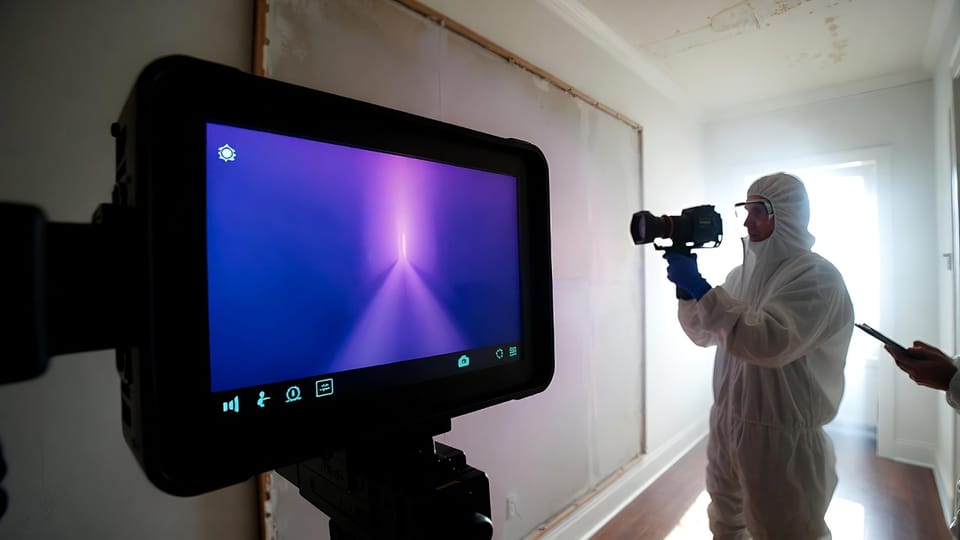
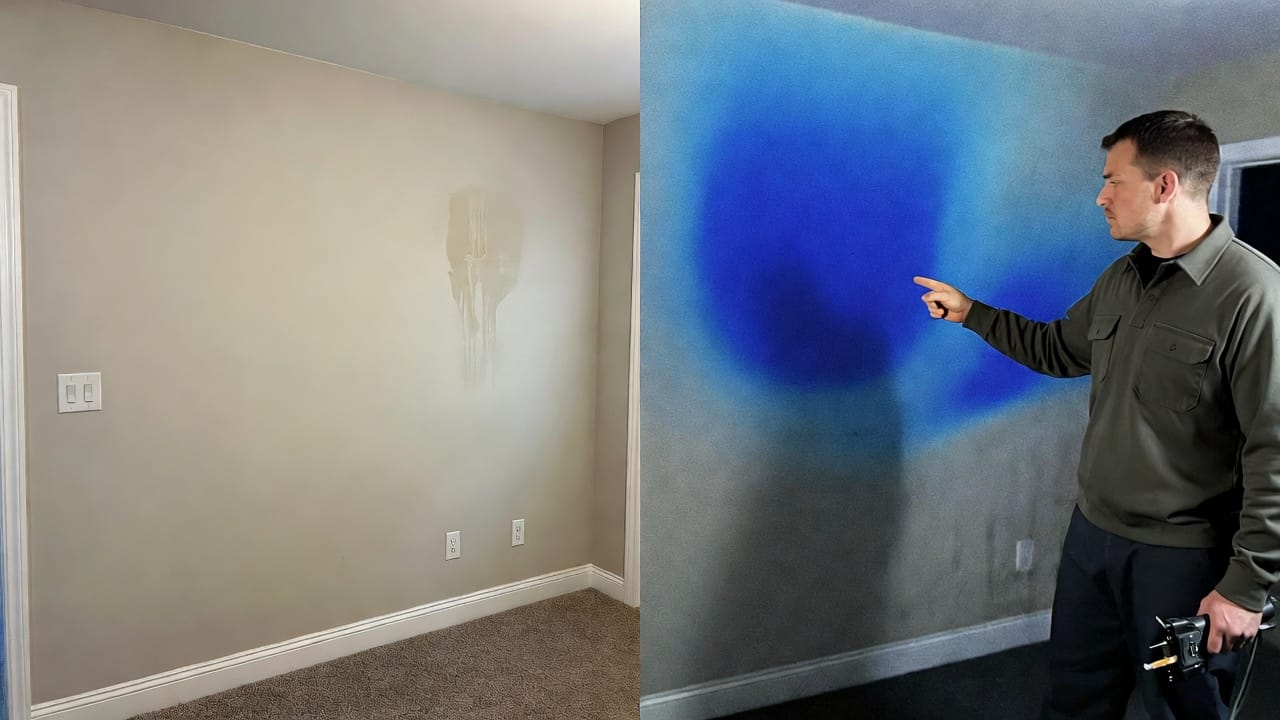
Thermal imaging, also known as infrared thermography, captures heat signatures rather than visible light. Every object emits infrared radiation based on its surface temperature. Sophisticated cameras convert these emissions into visible color maps where cooler areas appear in shades of blue and purple, while warmer zones show as yellows and reds.
Modern infrared cameras used in water damage restoration feature high-resolution sensors capable of detecting temperature differences as small as 0.1 degrees Celsius. This sensitivity allows technicians to identify even minor moisture intrusion long before traditional methods would notice a problem.
Unlike older moisture meters that require physical contact and often miss widespread issues, today’s thermal imaging devices scan large surfaces quickly and safely from a distance. The result is a complete visual picture of moisture patterns across entire rooms or structures.
The Science of Evaporative Cooling and Moisture Detection
The core principle behind thermal imaging inspection is evaporative cooling. When water invades building materials such as drywall, wood, or insulation, it begins to evaporate. This process absorbs heat from the surrounding material, creating a measurable temperature drop compared to adjacent dry areas.
Even small amounts of moisture produce this cooling effect. A wet section of wall might register 2–5 degrees cooler than a dry section just inches away. The infrared camera instantly translates these subtle differences into a clear, color-coded image on its screen.
This non-contact detection method eliminates the need for destructive probing. Technicians no longer have to cut holes in walls or pull up flooring to confirm water presence. The camera reveals the exact location, extent, and sometimes even the source of intrusion without disturbing the property.
Rest assured that this technology is both safe and highly reliable when used by certified professionals. It works equally well on various surfaces, including drywall, concrete, wood framing, and even behind tile or wallpaper.
How Professional Technicians Conduct a Thermal Imaging Inspection
A thorough thermal imaging inspection follows a systematic, proven protocol designed to deliver complete peace of mind:
- Initial visual assessment establishes baseline conditions and identifies potential entry points such as windows, roofs, or plumbing fixtures.
- Controlled environmental preparation ensures accurate readings by stabilizing room temperature and humidity.
- Systematic scanning covers every wall, floor, ceiling, and structural element in a grid pattern.
- Real-time analysis allows the technician to mark problem areas directly on the thermal image for immediate documentation.
- Cross-verification with secondary tools confirms findings and maps moisture migration patterns.
Throughout the process, technicians document everything with timestamped thermal images and detailed reports. This documentation serves as a valuable record for insurance claims and future reference.
The entire inspection typically takes just 30–60 minutes for an average home, yet it provides insights that traditional methods might miss entirely. Homeowners appreciate the speed and minimal disruption while gaining complete confidence in the results.
Advantages of Infrared Detection Over Traditional Methods
Thermal imaging inspection offers several clear advantages that make it the preferred choice for water damage professionals:
- Non-destructive – No holes, no mess, no unnecessary repairs.
- Comprehensive coverage – Scans hundreds of square feet in minutes.
- Early detection – Identifies moisture before mold or rot develops.
- Accurate mapping – Shows exact boundaries and depth of affected areas.
- Visual proof – Provides clear images for clients and insurance adjusters.
Traditional probing methods are slow, invasive, and often incomplete. They can miss moisture pockets hidden deep within cavities or behind multiple layers of material. In contrast, infrared cameras see through these barriers by reading surface temperature signatures.
This technology also excels in hard-to-reach areas such as attics, crawl spaces, and behind finished walls. Technicians can safely assess conditions without climbing into dangerous spaces or removing extensive drywall.
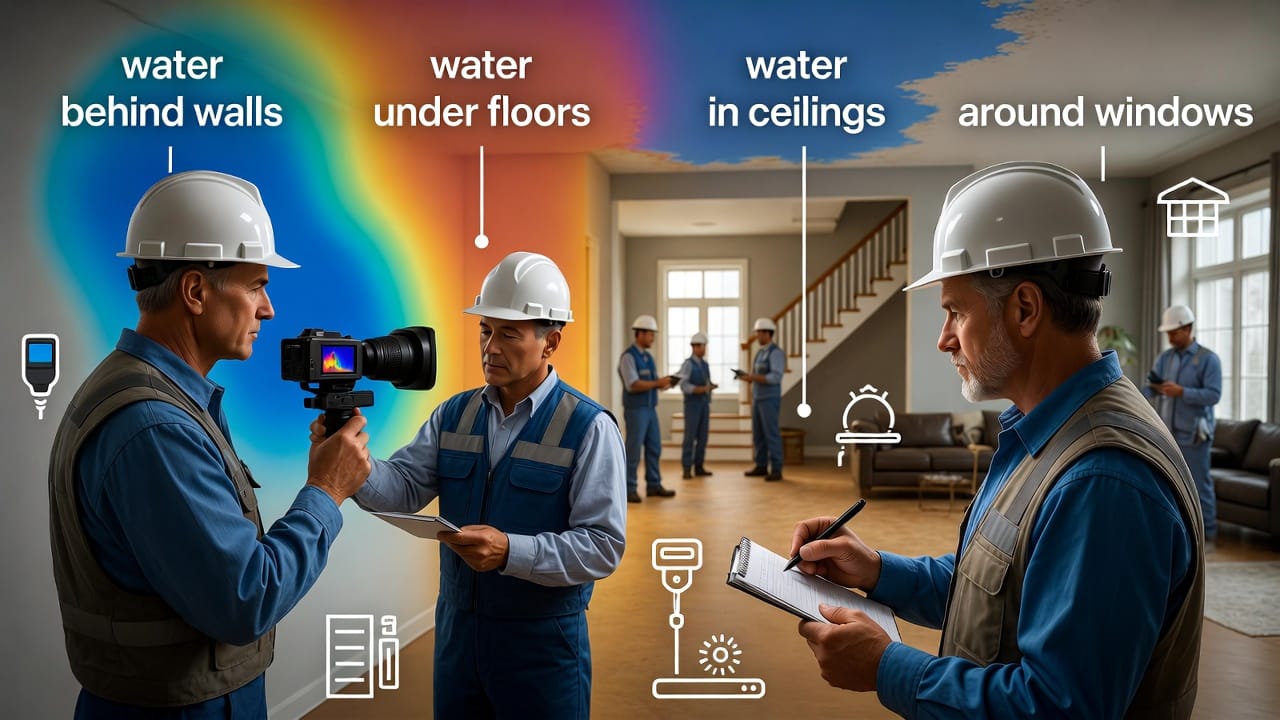
Common Areas Where Thermal Imaging Detects Hidden Moisture
Infrared cameras excel at locating water intrusion in the following critical locations:
- Behind walls – Leaks from plumbing, roof runoff, or exterior siding.
- Under flooring – Slab leaks, pipe bursts, or rising damp.
- In ceilings – Roof leaks, condensation from HVAC systems, or upstairs overflows.
- Around windows and doors – Poor seals, flashing failures, or condensation buildup.
- Inside insulation – Hidden condensation or flood residue.
Each of these areas presents unique challenges, yet thermal imaging inspection handles them all with equal precision. The camera reveals not only the presence of moisture but also its migration path, helping technicians trace the original source quickly.
Preventing Mold Growth and Structural Damage
The greatest value of thermal imaging inspection lies in its ability to stop problems before they escalate. Hidden moisture creates the perfect environment for mold to thrive within 24–48 hours. Once mold establishes itself, remediation becomes far more expensive and disruptive.
Early detection through infrared technology allows for targeted drying and repair. Technicians can focus drying equipment exactly where it is needed, reducing overall restoration time and cost by up to 50 percent in many cases.
Structural integrity also benefits significantly. Prolonged moisture exposure weakens wood framing, causes drywall to crumble, and promotes corrosion in metal components. By identifying and eliminating water early, homeowners protect their largest investment and maintain a healthy living environment for their families.
Experience has shown that properties inspected promptly after water events recover faster, with fewer secondary damages and lower insurance deductibles.
What to Expect During Your Thermal Imaging Inspection
When you schedule a thermal imaging inspection, our certified technicians arrive equipped with the latest infrared cameras and years of specialized training. The process is straightforward, respectful of your schedule, and focused entirely on delivering clear answers.
We begin with a brief walkthrough to understand your concerns. Then we perform the thermal scan while explaining findings in real time. You will see the color images on the camera screen as we work, gaining immediate understanding of any issues present.
Following the scan, we provide a detailed written report with annotated thermal images, moisture readings, and recommended next steps. This documentation supports insurance claims and guides any necessary restoration work.
Throughout the inspection, our priority remains your peace of mind. We answer every question thoroughly and ensure you fully understand the condition of your property.
Why Thermal Imaging Is Essential After Any Water Event
Whether the issue stems from a burst pipe, roof leak, appliance failure, or flooding, prompt thermal imaging inspection is the smartest first step. Waiting for visible signs often allows damage to spread, increasing repair costs and health risks.
Modern homes contain complex plumbing, HVAC systems, and building materials that hide water effectively. Only advanced infrared technology can penetrate these layers and reveal the full picture.
Property owners who act quickly consistently report faster recovery times, smoother insurance experiences, and greater confidence in the restoration process. The technology removes uncertainty and replaces it with clear, actionable data.
Taking Action to Protect Your Property Today
Hidden moisture does not resolve itself. The longer it remains undetected, the greater the potential for serious consequences. Thermal imaging inspection offers a proven, professional solution that delivers results you can trust.
Our team combines cutting-edge infrared camera technology with extensive restoration expertise to deliver thorough, non-invasive assessments. We focus on protecting your home, your health, and your investment with every inspection we perform.
Find hidden water before it causes mold.
Our experts are ready 24/7 to answer your questions and schedule your inspection at the earliest possible time. Don’t let invisible moisture compromise your property – discover the power of thermal imaging and restore confidence in your home’s safety and integrity.
Non-Invasive Home Protection Starts Here – Request Your Infrared Inspection