The Structural Drying Science: How Restorers Know When Wood and Drywall Are Truly Dry
Water damage can strike unexpectedly, whether from a burst pipe, heavy rainfall, or a leaking roof. But the real challenge isn't just removing visible water—it's ensuring that the underlying structures like wood and drywall are thoroughly dry to prevent long-term issues such as mold growth, structural weakening, and costly repairs. In the world of professional water damage restoration, restorers rely on a scientific approach known as structural drying. This process goes beyond guesswork, using precise tools and methods to confirm that every affected area is truly dry. As experts in the field, we assure you that with the right techniques, your property can be restored safely and efficiently.
Verify Dryness Before It's Too Late – Call for Science-Backed Help
In this comprehensive guide, we'll delve into the moisture measurement process, explore how professionals use moisture meters to track progress, explain the importance of establishing a dry standard, and detail the steps to verify hidden cavities before sealing up walls. By understanding these principles, you'll gain confidence in the restoration process and know why it's crucial to trust certified professionals.
Why Structural Drying Matters
Structural drying is the cornerstone of effective water damage mitigation. When water infiltrates building materials, it doesn't just sit on the surface—it penetrates deep into porous substances like wood framing, drywall sheets, and subfloors. If not addressed properly, residual moisture can lead to secondary damage, including:
- Mold proliferation: Fungi thrive in damp environments, potentially causing health risks like respiratory issues.
- Material degradation: Wood can warp, swell, or rot, while drywall may crumble or develop stains.
- Structural instability: Over time, weakened supports could compromise your home's integrity.
Professional restorers prioritize scientific drying to mitigate these risks. According to industry standards from organizations like the Institute of Inspection, Cleaning and Restoration Certification (IICRC), drying must be verifiable through data-driven methods. This reassuring approach ensures that your property isn't just appearing dry but is proven dry, safeguarding your investment for years to come.
Understanding Moisture in Building Materials
To grasp how restorers determine dryness, it's essential to understand how moisture behaves in materials like wood and drywall. Moisture content (MC) is measured as a percentage of the material's dry weight. For instance, wood typically has a natural MC of 8-12% in most climates, while drywall should be below 1% to be considered dry.
Water enters these materials through capillary action, where it moves through tiny pores, or via vapor diffusion, spreading as humidity. In a water damage scenario, affected areas can absorb moisture rapidly, but drying them requires controlled evaporation using equipment like dehumidifiers and air movers.
Restorers monitor three types of moisture:
- Free water: Visible liquid that's easy to extract.
- Bound water: Chemically attached within the material's fibers, harder to remove.
- Trapped water: Hidden in cavities or behind barriers, posing the greatest challenge.
By addressing all forms, professionals prevent lingering dampness that could lead to problems down the line.
Tools of the Trade: Moisture Meters
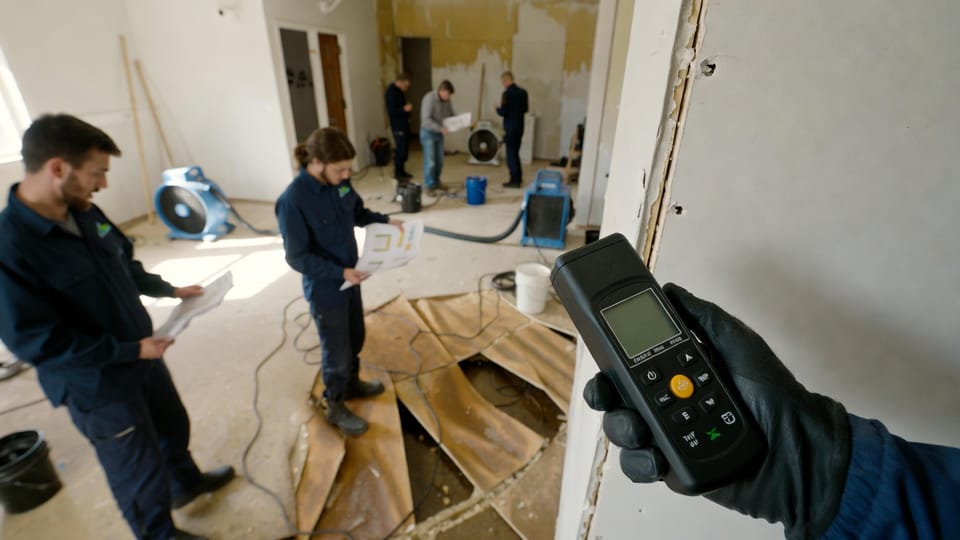
At the heart of the moisture measurement process are specialized tools called moisture meters. These devices provide quantitative data, allowing restorers to make informed decisions rather than relying on visual inspections alone. There are two primary types: pin meters and pinless meters, each with unique advantages.
- Pin Meters: These invasive tools feature sharp probes that penetrate the material's surface to measure electrical resistance, which correlates with moisture levels. They're ideal for pinpointing exact readings in wood and are often used in hard-to-reach spots. However, they leave small holes, so they're applied judiciously.
- Pinless Meters: Also known as non-invasive or scan meters, these use electromagnetic waves to detect moisture without damaging the surface. They're perfect for scanning large areas quickly, such as entire walls of drywall, and provide depth readings up to 1 inch.
Professionals select the appropriate meter based on the material and situation. For example, in a flooded basement, a pinless meter might first survey the extent of damage, followed by pin meters for detailed verification. This combination ensures accuracy and efficiency, giving you peace of mind that no area is overlooked.
Establishing a Dry Standard
Before drying begins, restorers establish a dry standard—a baseline moisture level from unaffected areas of the property. This comparative approach is key to scientific drying.
Here's how it's done:
- Site Assessment: Technicians inspect the property to identify "control" zones, such as undamaged rooms with similar materials and environmental conditions.
- Baseline Readings: Using moisture meters, they record MC in these areas. For wood, this might be 10%; for drywall, under 0.5%.
- Goal Setting: The dry standard becomes the target for damaged zones. Drying continues until affected materials match or fall below this level.
This method accounts for regional humidity variations— a home in a humid climate like Florida might have a higher natural dry standard than one in arid Arizona. By customizing the process, restorers ensure results that are both effective and tailored to your environment.
Tracking Drying Progress
Once the dry standard is set, restorers track progress through regular monitoring. This involves daily or periodic readings to document how moisture levels decrease over time.
A typical workflow includes:
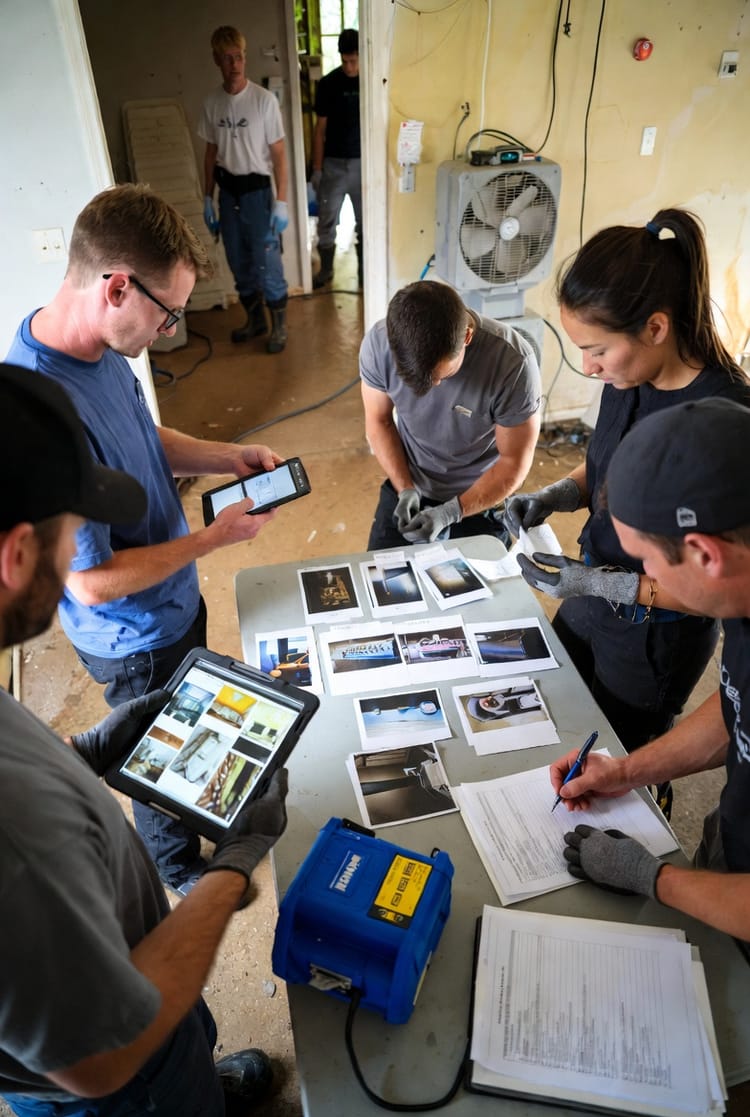
- Initial Mapping: Creating a floor plan with marked zones and initial MC readings.
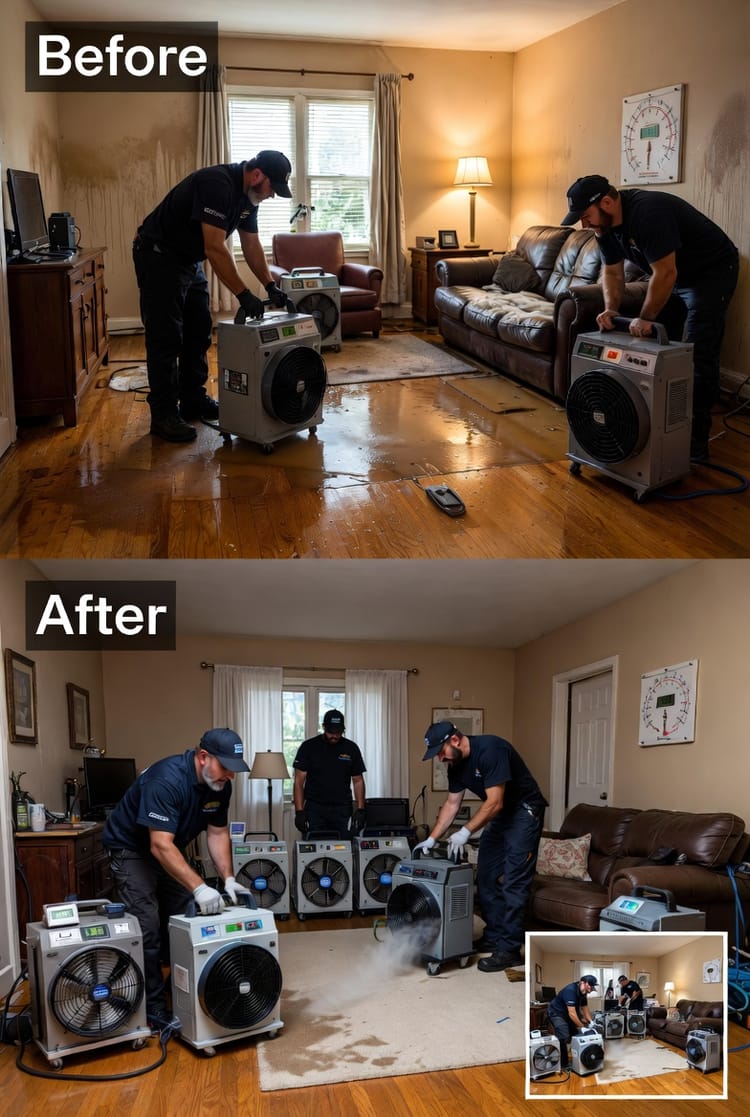
- Equipment Placement: Positioning dehumidifiers, air movers, and heaters to promote evaporation.
- Ongoing Measurements: Using meters to log data at consistent points, noting trends like a wood beam dropping from 25% MC to 12% over several days.
Drying logs are essential records, often digital for accuracy. They include columns for date, location, material type, meter used, and readings. If progress stalls, adjustments are made—such as increasing airflow or addressing barriers.
This meticulous tracking not only accelerates restoration but also provides documentation for insurance claims, proving that the job was done right.
Verifying Hidden Cavities
One of the trickiest aspects of structural drying is ensuring hidden cavities—spaces behind walls, under baseboards, or in insulation—are dry. Moisture can linger here undetected, leading to insidious damage.
Professionals tackle this with advanced techniques:
- Invasive Probing: Drilling small access holes to insert pin meters or hygrometers into cavities.
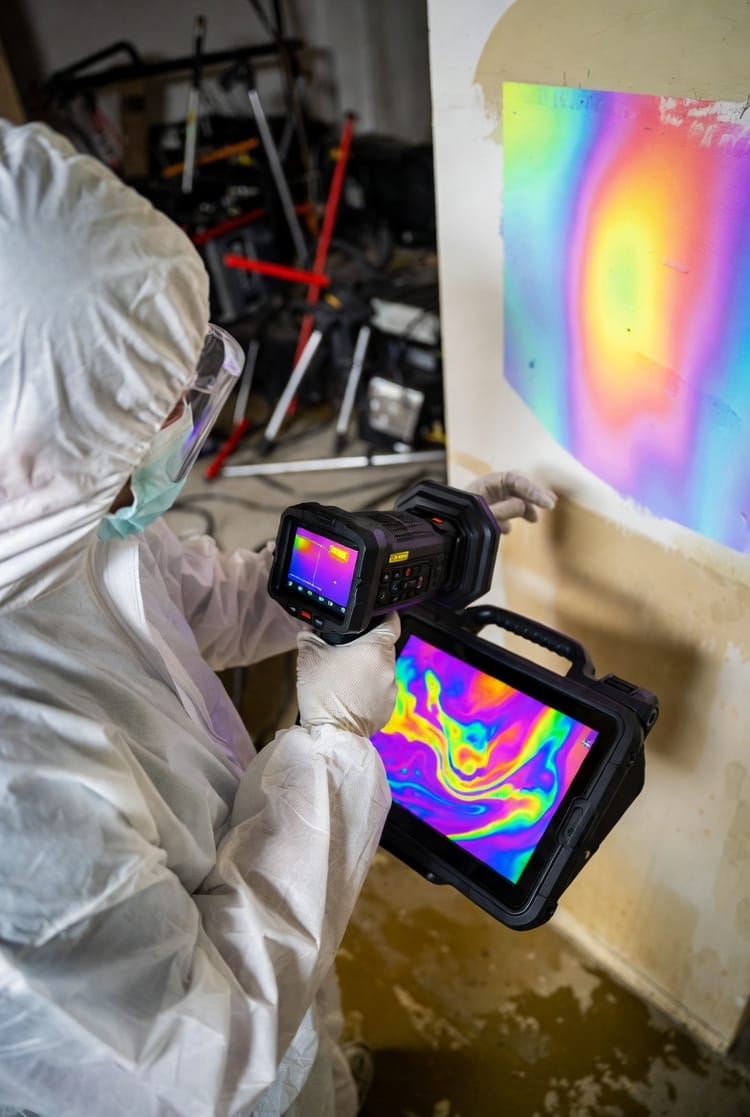
- Thermal Imaging: Using infrared cameras to detect temperature differences indicating moisture.
- Cavity Drying Systems: Injecting dry air into enclosed spaces via tubes.
Before closing up walls, multiple verifications confirm dryness. For instance, if a cavity reading exceeds the dry standard, drying continues. This step is non-negotiable, as premature sealing could trap moisture and cause mold outbreaks.
Rest assured, certified restorers follow protocols like those in IICRC S500 standards to eliminate these risks.
Common Challenges and Solutions
Even with the best tools, challenges arise in structural drying. High humidity environments can slow evaporation, while dense materials like hardwood take longer to dry. Restorers counter this by:
- Environmental Control: Sealing off areas and using desiccant dehumidifiers for low-humidity drying.
- Material-Specific Strategies: For wood, avoiding over-drying to prevent cracking; for drywall, removing irreparably damaged sections.
- Psychrometrics Knowledge: Applying science of air properties to optimize conditions, such as maintaining 40-50% relative humidity.
By anticipating these issues, professionals ensure efficient, thorough results.
The Role of Certification and Expertise
Choosing a certified restoration company is vital. Look for IICRC-trained technicians who adhere to evidence-based practices. Their expertise in moisture measurement and structural drying minimizes downtime and maximizes safety.
In summary, the science of structural drying transforms a potentially disastrous water event into a manageable recovery. Through precise tools, data tracking, and verification, restorers deliver proven dryness.
Restore with Confidence – Call for Professional Moisture Proof