The SEER Reality: Understanding Seasonal Energy Efficiency Ratio and What It Means for Your Utility Bills

In the world of home comfort, few metrics carry as much weight as the Seasonal Energy Efficiency Ratio (SEER). If you've ever shopped for a new air conditioner or heat pump, you've likely encountered this term on product labels or in discussions with HVAC professionals. But what does it really mean for your daily life – and more importantly, your utility bills? As energy costs continue to fluctuate, understanding SEER empowers you to make informed decisions that can lead to significant long-term savings. Rest assured, we're here to break it down step by step, demystifying this efficiency rating system so you can confidently navigate your options.
Find the Perfect SEER Rating for Your Climate – Call Today
This guide will explore the fundamentals of SEER, how it's calculated, the real-world implications of different ratings like 14 SEER versus 20 SEER, and the critical installation factors that ensure you reap the full benefits. Whether you're in a sweltering southern climate or a milder northern one, grasping these concepts can transform your approach to home cooling and heating. Let's dive in with an authoritative look at why SEER matters more than ever in today's energy-conscious landscape.
What Is SEER and Why Should You Care?
At its core, SEER stands for Seasonal Energy Efficiency Ratio, a standardized measure developed by the U.S. Department of Energy (DOE) to gauge how efficiently an air conditioning or heat pump system uses electricity over an entire cooling season. Unlike older metrics that only considered peak performance, SEER accounts for varying temperatures and part-load conditions, providing a more realistic picture of energy use.
Why does this matter for your utility bills? Higher SEER ratings translate to lower energy consumption, which directly reduces your monthly expenses. For instance, upgrading from an outdated system could slash your cooling costs by 20-50%, depending on your location and usage patterns. This isn't just about savings – it's about sustainability and comfort. Modern high-SEER units often run quieter, provide better humidity control, and contribute to a greener planet by minimizing your carbon footprint.
To put it simply:
- Lower SEER (e.g., 10-13): Common in older systems; higher operating costs and less efficient under real-world conditions.
- Mid-range SEER (14-18): Balances affordability with noticeable efficiency gains.
- High SEER (19+): Premium performance for maximum savings, ideal for hot climates or energy-focused homeowners.
Rest easy knowing that investing in the right SEER level isn't guesswork. With proper guidance, you can select a system that aligns with your budget and lifestyle, ensuring years of reliable performance.
How Is SEER Calculated? A Behind-the-Scenes Look
Understanding the calculation of SEER removes the mystery and highlights why it's a superior benchmark for efficiency. The formula is straightforward yet comprehensive: SEER = Total Cooling Output (in BTUs) / Total Electricity Input (in watt-hours) over a simulated cooling season.
This isn't a simple lab test at full blast. Instead, the Air-Conditioning, Heating, and Refrigeration Institute (AHRI) oversees rigorous testing that mimics seasonal variations. Systems are evaluated at temperatures ranging from 65°F to 104°F, with weighted averages reflecting typical U.S. weather patterns – more emphasis on moderate conditions where units operate most often.
Key factors in the calculation include:
- Compressor Technology: Single-stage compressors (common in lower SEER units) run at full speed or off, while variable-speed ones in high-SEER models adjust dynamically for efficiency.
- Coil Design and Size: Larger evaporator and condenser coils enhance heat transfer, boosting the ratio.
- Fan Efficiency: Variable-speed blowers optimize airflow, reducing energy waste.
- Refrigerant Type: Modern refrigerants like R-410A or R-32 contribute to higher ratings by improving thermal properties.
The result? A number that predicts annual performance. For example, a 16 SEER unit theoretically uses 37.5% less energy than a 10 SEER baseline for the same cooling output. Of course, real-world results depend on installation and maintenance, which we'll cover later. This calculation method ensures transparency, allowing you to compare apples to apples when shopping.
Decoding SEER Numbers: 14 SEER vs. 20 SEER in Action
When comparing SEER ratings, the numbers aren't just arbitrary – they represent tangible differences in efficiency and cost. A 14 SEER system, often the minimum required in many regions since 2015, offers solid performance for moderate climates. It might consume about 7.14 watt-hours per BTU of cooling, leading to reasonable bills in areas with shorter summers.
In contrast, a 20 SEER unit is a powerhouse, using only 5 watt-hours per BTU. This 30% efficiency jump over 14 SEER can yield substantial savings, especially in hot zones where AC runs extensively. But what do these translate to in dollars?
Consider a typical 3-ton system in a 2,000 sq ft home:
- At 14 SEER, annual cooling costs might hover around $500-$700, assuming average electricity rates of $0.13/kWh.
- Bump to 20 SEER, and you're looking at $350-$500 yearly – a $150-$200 reduction per season.
Over a decade, that's $1,500-$2,000 in savings, often offsetting the higher upfront cost of premium units. However, these figures vary by factors like insulation, thermostat settings, and local energy prices. Higher SEER also means fewer repairs, as advanced components like scroll compressors endure less wear.
Don't worry if the math seems daunting; tools like the DOE's EnergyGuide labels provide estimated costs based on national averages, helping you visualize the impact.

Real-World Savings: Beyond the Ratings
While SEER provides a strong foundation, actual savings hinge on how the system performs in your home. Upgrading from a 10 SEER relic to a 16 SEER model could cut bills by 37%, but jumping to 20 SEER amplifies that to 50%. In hotter regions, payback periods shorten to 3-5 years, making it a smart investment.
To illustrate:
- Short-Term Gains: Immediate reduction in peak summer bills, plus rebates from utilities or tax credits (e.g., up to $300 via the Inflation Reduction Act).
- Long-Term Benefits: Enhanced home value, as energy-efficient systems appeal to buyers; reduced environmental impact with lower greenhouse gas emissions.
- Hidden Savings: Better indoor air quality and consistent temperatures mean fewer health issues and less reliance on supplemental fans.
Case studies show homeowners in Texas saving $400 annually by switching to 18 SEER, while those in cooler states like Minnesota see modest but steady returns. The key is realistic expectations – SEER shines in variable conditions, not constant full-load scenarios.
Installation Considerations: The Make-or-Break Factors
Even the highest SEER system underperforms without proper installation. This is where expertise matters most. Factors like refrigerant charge and airflow are pivotal, as mismatches can reduce efficiency by 15-30%.
Proper Refrigerant Charge: Over- or under-charging leads to inefficiency and compressor failure. Technicians must use precise gauges to achieve the manufacturer's specified levels, ensuring optimal heat exchange.
Airflow Optimization: Ductwork must support the system's design. Restricted airflow forces the unit to work harder, negating SEER benefits. Variable-speed fans help, but sealing leaks and sizing ducts correctly is essential.
Other considerations include:
- Sizing the System: An oversized unit cycles too frequently, wasting energy; proper load calculations prevent this.
- Thermostat Integration: Smart thermostats enhance SEER by scheduling and zoning.
- Maintenance Protocols: Regular filter changes and coil cleaning preserve ratings over time.
Rest assured, partnering with certified professionals ensures these elements align, maximizing your investment. Skimping here risks voiding warranties and inflating bills.
SEER by Climate: Tailoring Efficiency to Your Location
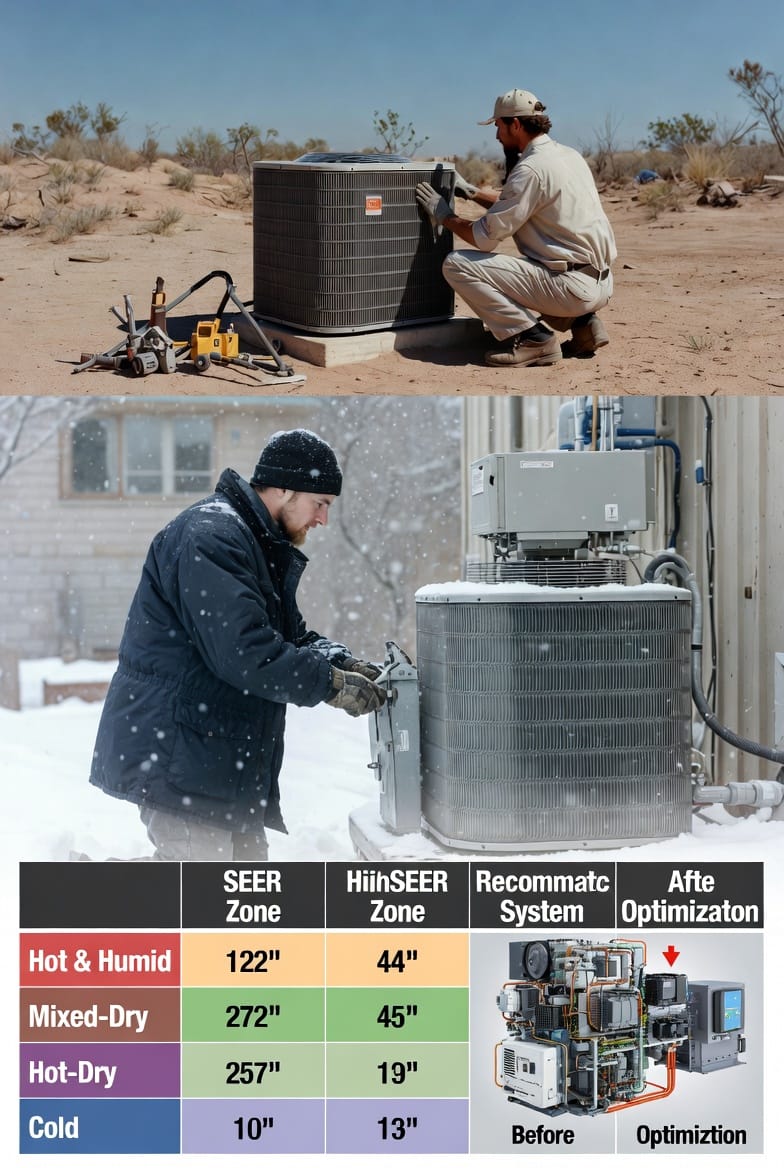
Your region's weather plays a starring role in SEER selection. The DOE divides the U.S. into zones: hotter southern areas demand higher ratings for payback, while northern climates suffice with moderate ones.
Recommended minimums:
- Southern Zones (e.g., Florida, Arizona): 16-18 SEER for quick ROI, as extended cooling seasons amplify savings.
- Northern Zones (e.g., New York, Michigan): 14-16 SEER, balancing cost with milder demands.
- Transitional Areas: 15-17 SEER, adjusting for variable weather.
This zoning ensures optimal efficiency without overspending. For instance, a 20 SEER in the North might take 10+ years to recoup, but in the South, it's under 5.
Maximizing Your SEER Investment: Tips for Homeowners
To fully leverage SEER, adopt these strategies:
- Conduct an energy audit to identify inefficiencies.
- Combine with insulation upgrades for compounded savings.
- Monitor usage via apps for proactive adjustments.
- Schedule annual tune-ups to maintain peak performance.
With these in place, your system becomes a reliable ally against rising energy costs.
In conclusion, mastering SEER equips you to lower utility bills while enhancing comfort. Higher ratings offer compelling savings, but success lies in informed choices and expert installation.
Ready for Lower Cooling Costs? Call for Expert Advice