The Science of Sealers: How Penetrating vs. Film-Forming Concrete Sealants Work and Why You Need One
Concrete is the backbone of modern construction, from driveways and patios to industrial floors and architectural masterpieces. Yet, this durable material is surprisingly vulnerable to the elements. Water infiltration, chemical exposure, and UV radiation can lead to cracking, staining, and premature degradation. That's where concrete sealers come in – advanced polymer-based solutions that act as a chemical shield, extending the life of your surfaces. In this comprehensive guide, we'll demystify the science behind penetrating sealers (like silane and siloxane) and film-forming sealers (such as acrylic and epoxy), explain their mechanisms, and help you choose the right one based on your needs. Rest assured, with the proper sealer, your concrete investment is protected for years to come.
Professional Concrete Protection Starts Here – Call Now
Understanding Concrete's Vulnerabilities
Before diving into sealers, it's essential to grasp why concrete needs protection. Concrete is porous by nature, composed of cement, aggregates, and water that create a network of microscopic pores. These pores allow moisture to seep in, leading to issues like:
- Freeze-thaw damage: Water expands when it freezes, cracking the concrete from within.
- Efflorescence: Salts migrate to the surface, leaving unsightly white deposits.
- Staining and corrosion: Oils, chemicals, and pollutants penetrate and degrade the material.
- UV degradation: Sunlight breaks down the surface, causing fading and weakening.
By applying a sealer, you create a barrier that mitigates these risks. Polymer chemistry plays a pivotal role here, as sealers are formulated with resins that interact with concrete at a molecular level. Whether you're a homeowner maintaining a patio or a contractor sealing a commercial driveway, understanding these formulations empowers informed decisions.
The Basics of Penetrating Sealers
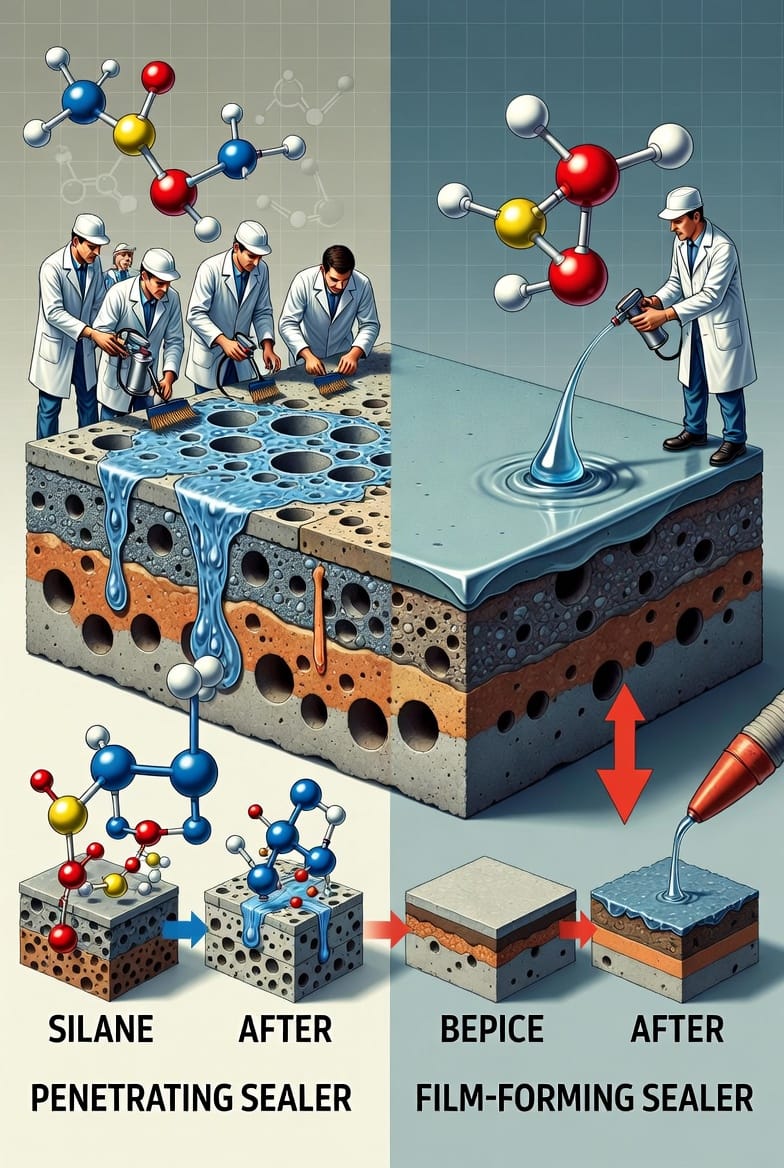
Penetrating sealers, often based on silane or siloxane compounds, work by soaking into the concrete's pores rather than sitting on top. These are silicone-based polymers that react with the concrete's minerals to form a hydrophobic (water-repelling) layer inside the substrate.
How They Work
At the chemical level, silane and siloxane molecules are small enough to penetrate depths of up to 1/4 inch. Once inside, they undergo hydrolysis – a reaction with moisture in the concrete – to create silanol groups. These bond with the silica in the cement, lining the pores with a non-stick, water-repellent coating. The result? Water beads up and rolls off the surface, while the concrete remains breathable, allowing vapor to escape and preventing trapped moisture issues.
Advantages
- Deep protection: Ideal for high-exposure areas like driveways, where they resist heavy traffic and weather.
- Natural appearance: They don't alter the concrete's look, maintaining a matte finish without gloss.
- Low maintenance: Reapplication is needed every 3-5 years, but they don't peel or flake.
Potential Drawbacks
While highly effective, penetrating sealers require a clean, dry surface for optimal absorption. Over-application can lead to a hazy residue if not managed properly, but professional applicators ensure precision.
In environments with extreme freeze-thaw cycles, such as northern climates, siloxane-based penetrating sealers excel due to their superior water repellency. Studies in polymer science show that these sealers can reduce water absorption by up to 95%, significantly extending concrete lifespan.
Exploring Film-Forming Sealers
In contrast, film-forming sealers create a protective layer on the concrete's surface. Common types include acrylic, polyurethane, and epoxy resins, which cure to form a continuous film.
Mechanism of Action
These sealers are topical applications that polymerize on the surface. Acrylic sealers, for instance, are solvent- or water-based polymers that dry to a hard, glossy coating. Epoxy variants involve a two-part system where resins and hardeners react to form cross-linked networks, offering exceptional durability. This film acts as a physical barrier, blocking water, chemicals, and UV rays from reaching the concrete.
Key Benefits
- Enhanced aesthetics: They provide a wet-look or glossy finish, making patios and decorative concrete pop.
- Surface protection: Excellent for indoor floors or low-traffic areas, resisting stains and abrasion.
- Quick application: Many dry in hours, allowing fast return to use.
Considerations
Film-forming sealers can make surfaces slippery when wet, so additives for slip resistance are often recommended. They may require more frequent maintenance, as wear from traffic can cause chipping or yellowing over time, especially under UV exposure. Reapplication every 1-3 years keeps them performing optimally.
Polymer chemists design these sealers with varying degrees of flexibility. For example, flexible polyurethane films accommodate concrete's natural expansion and contraction, reducing cracking risks.
Key Differences: Penetrating vs. Film-Forming
Choosing between penetrating and film-forming sealers boils down to understanding their core differences in polymer interaction with concrete.
- Penetration Depth: Penetrating sealers go deep (up to 1/4 inch), offering internal protection; film-forming stay on top (5-10 mils thick).
- Breathability: Penetrating allow vapor transmission, ideal for damp climates; film-forming can trap moisture if not breathable formulations are used.
- Appearance: Matte and natural for penetrating; glossy and enhanced for film-forming.
- Durability in Exposure: Penetrating handle outdoor weathering better; film-forming suit controlled environments.
A hybrid approach sometimes combines both for ultimate protection – a penetrating base layer topped with a film-forming coat.
Selecting the Right Sealer for Your Needs
Your choice should align with the concrete's exposure level, desired appearance, and maintenance preferences. Here's a step-by-step guide:
Assess Exposure
- High-exposure areas (e.g., driveways): Opt for penetrating sealers like siloxane for superior water repellency and freeze-thaw resistance.
- Low-exposure zones (e.g., indoor basements): Film-forming acrylics provide stain resistance without needing deep penetration.
- Moderate use (e.g., patios): Consider epoxy for a balance of gloss and durability.
Consider Appearance
If you prefer a subtle, unchanged look, penetrating sealers are your go-to. For a polished, vibrant finish that highlights stamped or colored concrete, film-forming options shine – literally.
Factor in Maintenance
Penetrating sealers demand less upkeep but require periodic reapplication. Film-forming may need stripping and recoating if worn, but they offer immediate visual feedback on condition.
Environmental factors matter too. In sunny regions, UV-resistant formulas prevent yellowing. For eco-conscious users, water-based sealers reduce VOC emissions, aligning with green building standards.
Professional assessment ensures compatibility. Concrete's age, condition, and previous treatments influence sealer performance. Always test a small area first.
Application Best Practices
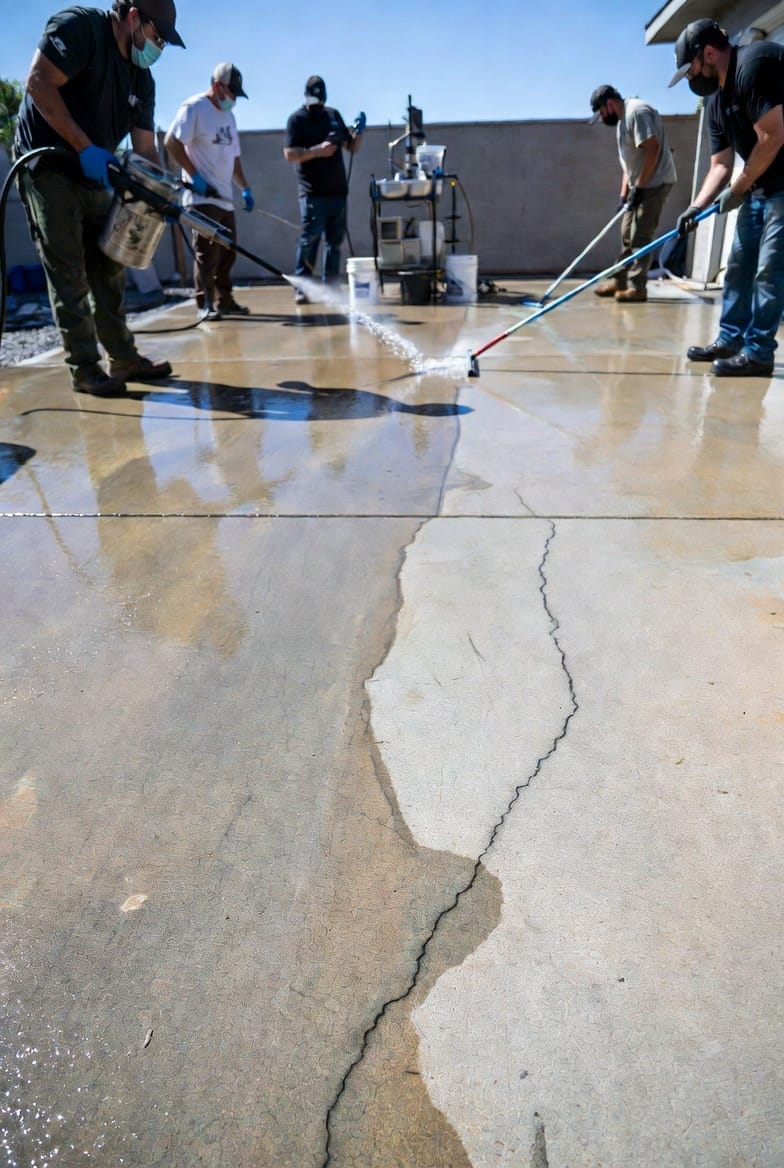
Proper application maximizes sealer efficacy. Start with surface preparation: Clean with pressure washing and etch if needed to open pores. Apply in ideal weather – dry, 50-90°F, no rain forecast.
For penetrating sealers, use a low-pressure sprayer for even distribution, allowing full absorption. Film-forming require rollers or brushes for uniform films, often in multiple thin coats.
Safety is paramount: Wear protective gear, as solvents can be hazardous. Professionals handle this seamlessly, ensuring compliance with local regulations.
Post-application, avoid traffic for 24-48 hours. Regular cleaning with mild detergents preserves the seal.
The Role of Polymer Chemistry in Modern Sealers
Advancements in polymer science have revolutionized sealers. Nanotechnology integrates nano-silica particles in penetrating formulas for tighter pore lining. Bio-based polymers in film-forming sealers offer sustainable alternatives without compromising performance.
Research from institutions like the American Concrete Institute highlights how these innovations reduce permeability by 80-90%, combating issues like alkali-silica reaction.
In commercial settings, sealers enhance slip resistance through additives, meeting OSHA standards. For residential users, they boost property value by maintaining pristine appearances.
Long-Term Benefits and Cost Savings
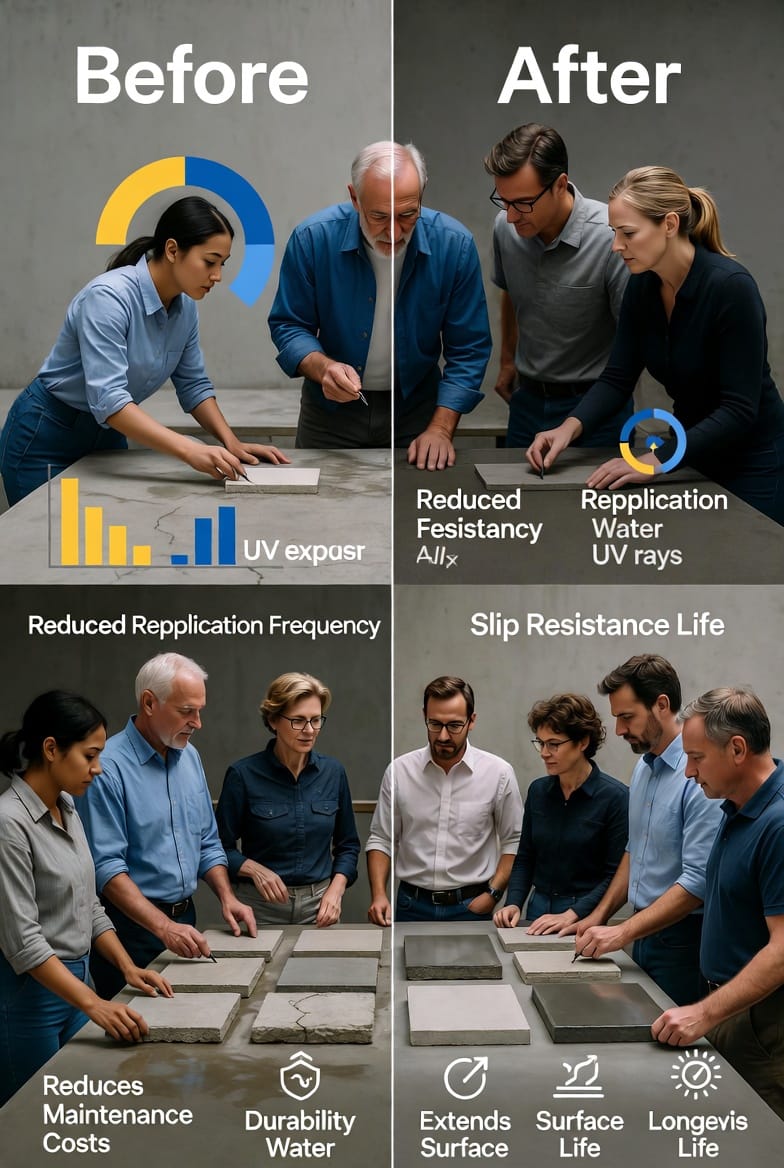
Investing in a quality sealer pays dividends. It prevents costly repairs – resealing is far cheaper than replacing cracked slabs. Enhanced aesthetics increase curb appeal, potentially raising home values by 5-10%.
Environmentally, sealed concrete reduces runoff pollution by repelling contaminants. Durability means less material waste over time.
Case studies show sealed driveways lasting 20+ years versus 10 for unsealed ones. This longevity stems from the molecular bonds formed by advanced polymers.
Common Myths Debunked
Myth: Sealers make concrete completely waterproof. Reality: They repel water but allow breathability to prevent internal damage.
Myth: All sealers are the same. Reality: Polymer compositions vary widely, tailored to specific needs.
Myth: DIY is always sufficient. Reality: Professionals ensure optimal results, especially for large or complex projects.
Conclusion: Preserve Your Investment
Concrete sealers are more than coatings – they're scientific safeguards rooted in polymer chemistry. Whether choosing penetrating sealers for internal repellency or film-forming sealers for surface shine, the right one shields your surfaces from the elements. By selecting based on exposure, appearance, and maintenance, you ensure longevity and beauty.
Preserve Your Investment with Pro Sealing – Call Today