The Return Air Pathway: Why Proper Return Sizing and Placement Is Critical for System Performance
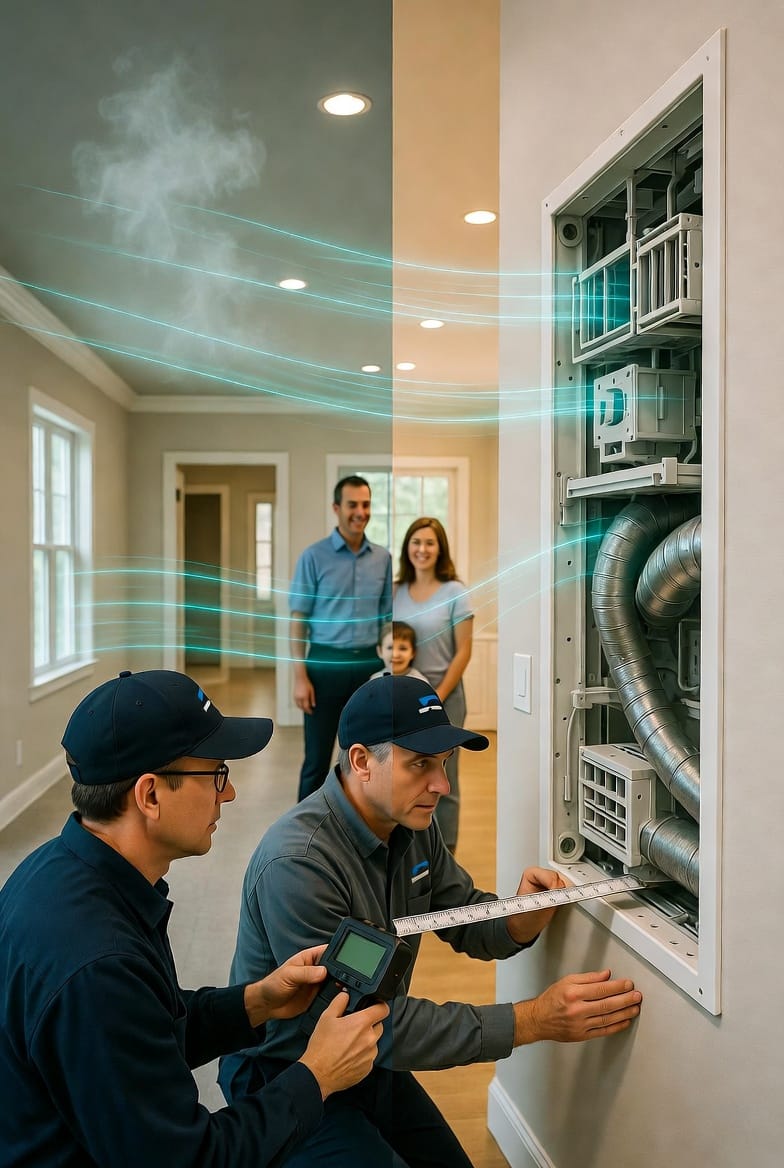
In the intricate dance of your home's HVAC system, most homeowners focus on the visible stars: the sleek supply vents pumping out conditioned air and the powerful unit humming in the basement or attic. Yet, the unsung hero—the return air pathway—often operates in the shadows, quietly pulling stale air back to be filtered, heated, or cooled anew.
Stop Pressure Imbalances & Save Energy – Get Your Free Airflow Check
Neglect this vital component, and even the most advanced HVAC setup falters. Insufficient return air doesn't just whisper inefficiencies; it shouts through skyrocketing energy bills, uneven room temperatures, and premature equipment breakdowns.
At the core, the return air pathway ensures balanced airflow, maintaining neutral pressure across your living spaces. When sized and placed correctly, it transforms your HVAC from a good system into an exceptional one—delivering consistent comfort, superior indoor air quality, and longevity that saves thousands over time.
This comprehensive guide dives deep into the often-overlooked return air pathway. We'll explore its mechanics, the perils of getting it wrong, precise sizing strategies, room-by-room placement tactics, and actionable fixes. By the end, you'll understand why prioritizing return air isn't optional—it's essential for peak system performance.
Understanding the Return Air Pathway: The Foundation of HVAC Harmony
The return air pathway is the circulatory system of your HVAC. While supply ducts push treated air into rooms, return vents and ducts draw it back, completing the loop. This isn't mere mechanics; it's physics in action. Proper return air prevents pressure imbalances that force your blower motor to overwork, much like a heart straining against clogged arteries.
Consider a typical 3-ton air conditioner. It demands around 1,200 CFM (cubic feet per minute) of airflow for optimal operation. Without adequate returns, that air has nowhere to go efficiently. Rooms near the unit feel like pressure cookers, while distant ones starve for relief.
Why it matters more than you think:
- Air quality boost: Returns pull contaminants through filters, reducing dust, allergens, and pollutants.
- Energy efficiency: Balanced flow means shorter run times and lower utility costs—up to 20-30% savings in extreme cases.
- Comfort equilibrium: No more hot upstairs, cold downstairs battles.
In homes with open floor plans, a single central return might suffice. But in segmented spaces? Dedicated returns per zone become non-negotiable. Homeowners who invest here report quieter operation, fewer repairs, and that elusive "just right" feel year-round.
Return air isn't a luxury—it's the backbone. Skimp on it, and your entire system pays the price.
The Hidden Dangers of Inadequate Return Air: Risks That Compound Over Time
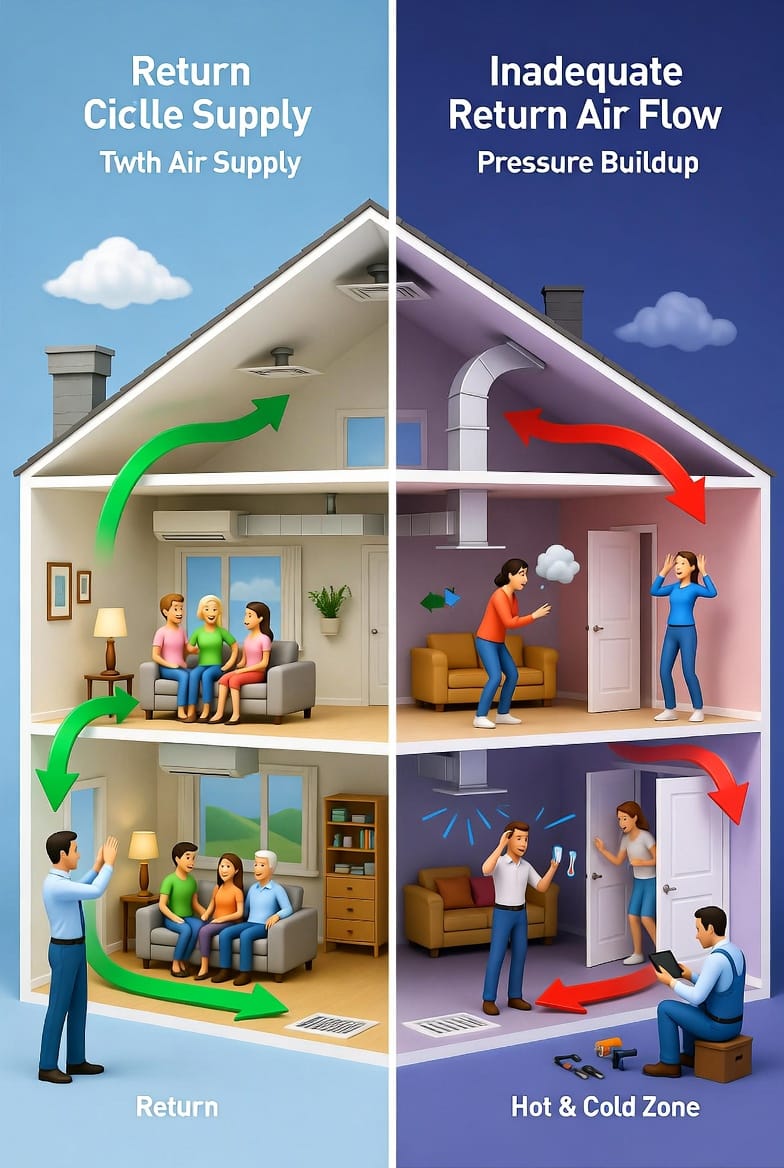
Inadequate return air is a silent saboteur, eroding performance from within. It starts subtly— a stuffy room here, a draft there—but escalates into costly crises. Let's break down the key risks with the clarity they demand.
Pressure Imbalances: The Silent Pressure Cooker
When returns are too few, too small, or poorly placed, negative pressure builds in rooms. Your HVAC fights to pull air, creating a vacuum effect. Doors slam unexpectedly. Windows whistle. In extreme cases, this draws in unfiltered outdoor air through cracks, introducing pollen, moisture, and pollutants.
Consequences?
- Uneven temperatures: Bedrooms stay frigid while kitchens bake.
- Increased humidity: Poor circulation lets moisture linger, fostering mold in basements or attics.
- Higher energy bills: Your system cycles longer, burning 15-25% more power.
Reduced Efficiency and Skyrocketing Costs
Efficiency loss is quantifiable. A restricted return forces the blower to ramp up RPMs, spiking electricity use. For a 2,500 sq ft home, this could add $300-500 annually to bills.
Worse, coils ice over from starved airflow, dropping SEER ratings and forcing emergency service calls. Equipment strain accelerates wear on motors, compressors, and heat exchangers—shortening lifespan by years.
The Path to Equipment Failure
Chronic pressure imbalances don't just annoy; they destroy. Overworked components overheat, leading to:
- Blower motor burnout: The heart of your system fails first.
- Compressor damage: In AC units, low airflow causes refrigerant issues and total breakdowns.
- Duct leaks and collapses: High static pressure warps flexible ducts, creating permanent inefficiencies.
Real-world data from HVAC pros shows that 40% of "mysterious" failures trace back to return air woes. Don't let yours be next.
Reassuring truth: These risks are 100% preventable. With informed design, your system runs smoother, quieter, and longer—delivering the reliability you deserve.
Sizing Your Return Air: Precision for Peak Performance
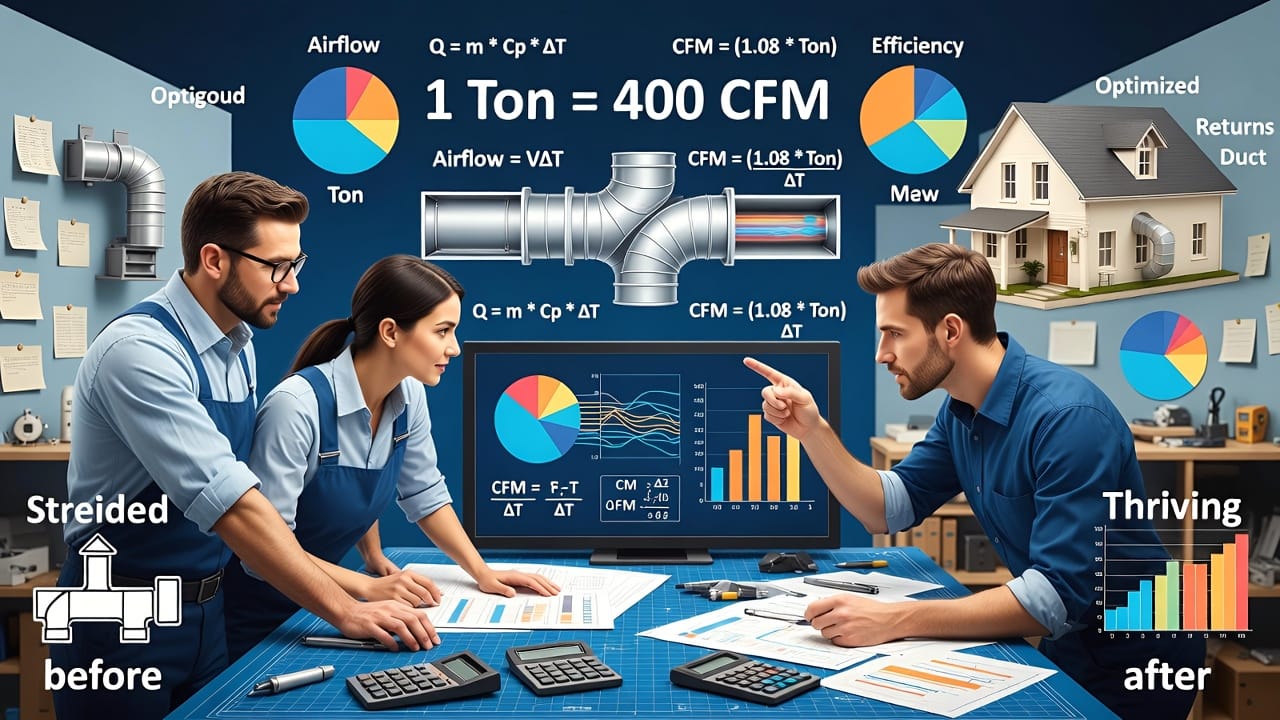
Return air sizing is where science meets practicality. The golden rule? 400 CFM per ton of cooling capacity. For a 4-ton system, that's 1,600 CFM total—split across returns to avoid bottlenecks.
But sizing isn't guesswork. It demands calculating total effective length (TEL) of ducts, friction rates, and static pressure. Undersized returns spike resistance, while oversized ones waste space and money.
Step-by-step sizing essentials:
- Assess tonnage: Multiply BTU output by 1/12,000 for tons.
- Factor room loads: Use Manual J calculations for precise CFM per space.
- Duct dimensions: Returns should match or exceed supply sizes. A 20x20 grille handles ~800 CFM; scale up for larger homes.
- Velocity limits: Keep under 700-900 FPM to minimize noise and turbulence.
Pro tip: In multi-story homes, prioritize larger returns on upper levels during cooling season to capture rising warm air.
Strategic Return Placement: Room-by-Room Mastery
Proper return placement turns potential problem zones into comfort havens. The goal? Unobstructed paths for air to return without short-circuiting supplies.
Central Hallways: The Command Center
Place a primary return here for whole-home balance. It serves as a hub, drawing from adjacent spaces. Ideal for 70% of homes—spacious, low-traffic, and centrally located.
Bedrooms: Dedicated or Transfer Paths
Closed doors kill airflow. Install dedicated returns in larger bedrooms (>150 sq ft) or use jumper ducts and door undercuts (minimum 1" gap) for smaller ones. Position low on interior walls, opposite supplies, to pull cool air down in summer.
Avoid: Returns in closets— they trap air and collect lint.
Living Areas and Kitchens: High-Impact Zones
For open kitchens and great rooms, multiple returns prevent odor migration and humidity spikes. High wall placement in cooling-dominant climates captures stratified air; low for heating.
Key rule: One return per 600-900 sq ft. In 2,000+ sq ft homes, distribute evenly.
Bathrooms and Utility Rooms: Restricted Real Estate
Never place returns here—high moisture and contaminants risk mold and poor IAQ. Rely on hallway transfers instead.
Basements and Attics: Specialized Solutions
Basements need low returns to combat dampness. Attics? High returns for heat escape. Always insulate to prevent condensation.
Placement best practices:
- Opposite supplies: Creates cross-flow for even mixing.
- Floor or ceiling? Low for heating (pulls cold air); high for cooling. Dual setups shine in mixed climates.
- Clearance: 12-18 inches from furniture, doors, or walls.
With this blueprint, every room achieves thermal equilibrium—no more chasing comfort.
Diagnosing and Optimizing Your Return Air System
Spotting issues early saves headaches. Common signs of trouble:
- Weak airflow from supplies.
- Hot/cold spots persisting despite thermostat tweaks.
- Noisy operation or doors resisting closure.
- Rising bills without usage changes.
- Dust buildup around returns (a sign of imbalance).
DIY checks:
- Feel for suction at returns.
- Use a tissue test—does it stick?
- Monitor static pressure (pros use manometers for precision).
Professional solutions:
- Airflow assessments: Measure CFM room-by-room.
- Duct modifications: Upsize returns or add transfers.
- Sealing and cleaning: Eliminate leaks, replace filters quarterly.
- Zoning upgrades: For ultimate control.
Before-and-after transformations abound: Homes with optimized returns see 25% efficiency gains and halved repair needs.
Balancing Your System for Lifelong Excellence
The return air pathway isn't just plumbing—it's the secret to a resilient, efficient home. By sizing generously, placing strategically, and maintaining diligently, you safeguard against the pitfalls that plague lesser systems.
Your HVAC deserves this attention. The rewards? Unparalleled comfort, lower costs, and peace of mind that lasts decades.
Maximize Your System’s Lifespan – Call for Professional Return Air Evaluation