The Renaissance of Linoleum: Why This Vintage Material is a Modern, Sustainable Flooring Powerhouse
In an era where sustainable living and eco-friendly home design dominate conversations, one flooring material is experiencing a remarkable comeback. Genuine linoleum, often misunderstood and overshadowed by synthetic alternatives, is reclaiming its place as a powerhouse in modern interiors. Invented in the mid-19th century, this natural flooring solution offers a blend of history, performance, and environmental responsibility that few materials can match. If you're exploring flooring options that prioritize health, longevity, and the planet, linoleum deserves your attention. This article delves into its rich history, unique composition, standout properties, and why it's superior to vinyl counterparts like LVT (luxury vinyl tile) and PVC-based products. Rest assured, choosing linoleum isn't just a nod to the past—it's a forward-thinking decision for your home.
Discover Sustainable Linoleum for Your Home – Call Us!
A Brief History: From Invention to Revival
Linoleum's story begins in 1860 when English inventor Frederick Walton sought a durable, affordable alternative to expensive rubber. He discovered that oxidizing linseed oil created a flexible, resilient substance. By 1863, Walton patented linoleum, naming it from the Latin words linum (flax) and oleum (oil). Early production involved mixing oxidized linseed oil with cork dust, wood flour, and pigments, then pressing it onto a jute backing.
The material quickly gained popularity in the late 19th and early 20th centuries. It adorned floors in iconic buildings, from hospitals to homes, thanks to its hygienic qualities and ease of maintenance. During the Art Deco era, linoleum evolved with bold patterns and colors, becoming a staple in kitchens and bathrooms. However, post-World War II, the rise of cheaper synthetic vinyl flooring pushed linoleum into the background. Many consumers confused the two, assuming linoleum was outdated or inferior.
Fast forward to today: With growing awareness of environmental impacts, linoleum is undergoing a renaissance. Manufacturers like Forbo and Tarkett are innovating with modern designs that echo its vintage roots while meeting contemporary demands. This revival isn't mere nostalgia; it's driven by linoleum's proven track record in sustainability and performance. Unlike fleeting trends, linoleum has endured for over 150 years, adapting without compromising its core values.
Understanding Genuine Linoleum: Composition and Craftsmanship
At its heart, genuine linoleum is a natural, biodegradable product crafted from renewable resources. Its primary ingredients include:
- Linseed oil: Derived from flax seeds, this provides the base for linoleum's flexibility and water resistance.
- Cork dust and wood flour: These add cushioning and insulation, enhancing comfort underfoot.
- Jute backing: A natural fiber from the jute plant, offering stability and eco-friendliness.
- Natural pigments and resins: For color and durability, without harmful chemicals.
The manufacturing process is meticulous: Ingredients are mixed, calendared onto jute, and cured naturally. This results in a homogeneous sheet that's through-and-through durable—no surface layer to wear away like in laminates.
Crucially, distinguish genuine linoleum from vinyl. Vinyl flooring, including LVT and PVC sheets, is petroleum-based plastic. It's synthetic, often containing phthalates and volatile organic compounds (VOCs) that can off-gas and affect indoor air quality. Linoleum, by contrast, is VOC-free and made from 97% natural materials. If a product claims to be "linoleum" but feels plasticky or has a strong chemical smell, it's likely vinyl in disguise. Always check certifications like Cradle to Cradle or FloorScore to ensure authenticity.
Natural Antimicrobial Properties: Health Benefits Built In
One of linoleum's most compelling features is its inherent antimicrobial properties. Linseed oil naturally inhibits bacterial growth, including strains like Staphylococcus aureus and E. coli. This bacteriostatic effect stems from the oil's oxidation process, which continues even after installation, creating a self-sanitizing surface.
In practical terms, this makes linoleum ideal for high-traffic areas prone to spills and germs, such as kitchens, bathrooms, and healthcare facilities. Studies from the University of Glasgow have shown that linoleum floors reduce microbial contamination by up to 90% compared to synthetic alternatives. For families with children or pets, this means fewer worries about allergens and easier cleaning—simply mop with mild soap and water.
Unlike vinyl, which can harbor bacteria in seams or scratches, linoleum's seamless installation and natural resistance promote a healthier home environment. It's hypoallergenic, resisting dust mites and mold, and contributes to better indoor air quality. In a world increasingly focused on wellness, linoleum offers peace of mind without relying on added chemicals.
Unmatched Durability: Built to Last Generations
Durability is where linoleum truly shines. With a lifespan of 25-40 years or more, it outlasts many modern floorings. Its homogeneous construction means wear doesn't expose weaker layers; instead, it develops a patina that enhances its character over time.
Key durability highlights include:
- Impact resistance: Cork content absorbs shocks, reducing dents from furniture or dropped items.
- Scratch and stain resistance: Natural resins create a tough surface that repels everyday marks.
- Water resilience: While not fully waterproof, linoleum handles moisture well in controlled environments, unlike swelling-prone hardwoods.
- Thermal stability: It maintains integrity in varying temperatures, making it suitable for radiant heating systems.
Comparatively, vinyl like LVT may mimic wood or stone visually but often fails under heavy use. PVC can yellow, crack, or emit odors with age. Linoleum's robustness has been proven in real-world settings—from bustling schools to historic homes. With proper maintenance, it retains its vibrancy, saving you replacement costs and reducing waste.
Sustainability at Its Core: Eco-Friendly from Cradle to Grave
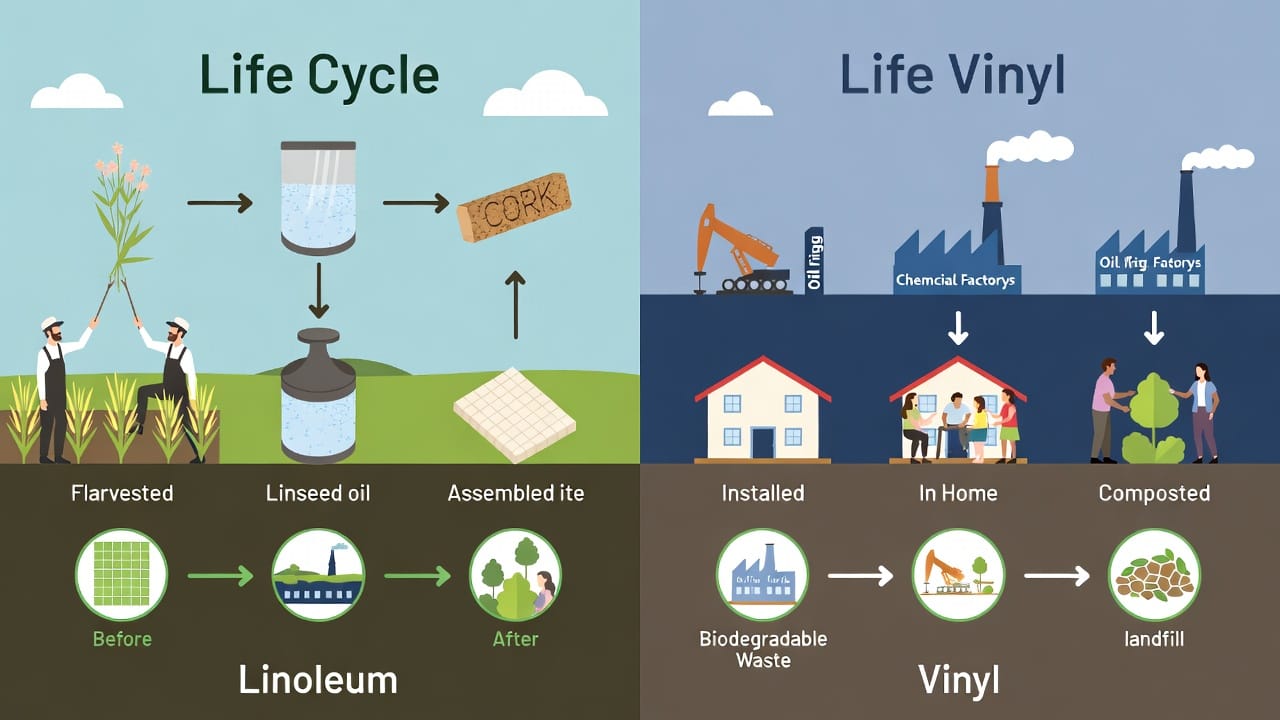
Sustainability isn't a buzzword for linoleum—it's intrinsic. Made from rapidly renewable resources, it boasts a low carbon footprint. Flax grows in 100 days, cork regenerates every 9-10 years, and jute is abundant. Production uses minimal energy, and many factories run on renewable sources.
Linoleum is fully biodegradable, breaking down naturally without toxic residues. At end-of-life, it can be composted or incinerated cleanly, unlike vinyl, which contributes to plastic pollution and microplastics. Certifications like DECLARE and EPD (Environmental Product Declaration) underscore its transparency.
Environmental benefits extend to:
- Resource efficiency: No petroleum dependency, reducing fossil fuel reliance.
- Waste reduction: Offcuts are recyclable, and some brands offer take-back programs.
- Carbon sequestration: Flax plants absorb CO2 during growth, offsetting emissions.
In contrast, vinyl production involves harmful extraction and disposal. LVT's "recyclable" claims often fall short due to contaminants. Choosing linoleum aligns with green building standards like LEED, supporting a circular economy. It's a choice that future-proofs your home while safeguarding the environment.
Contemporary Design Options: Style Meets Substance
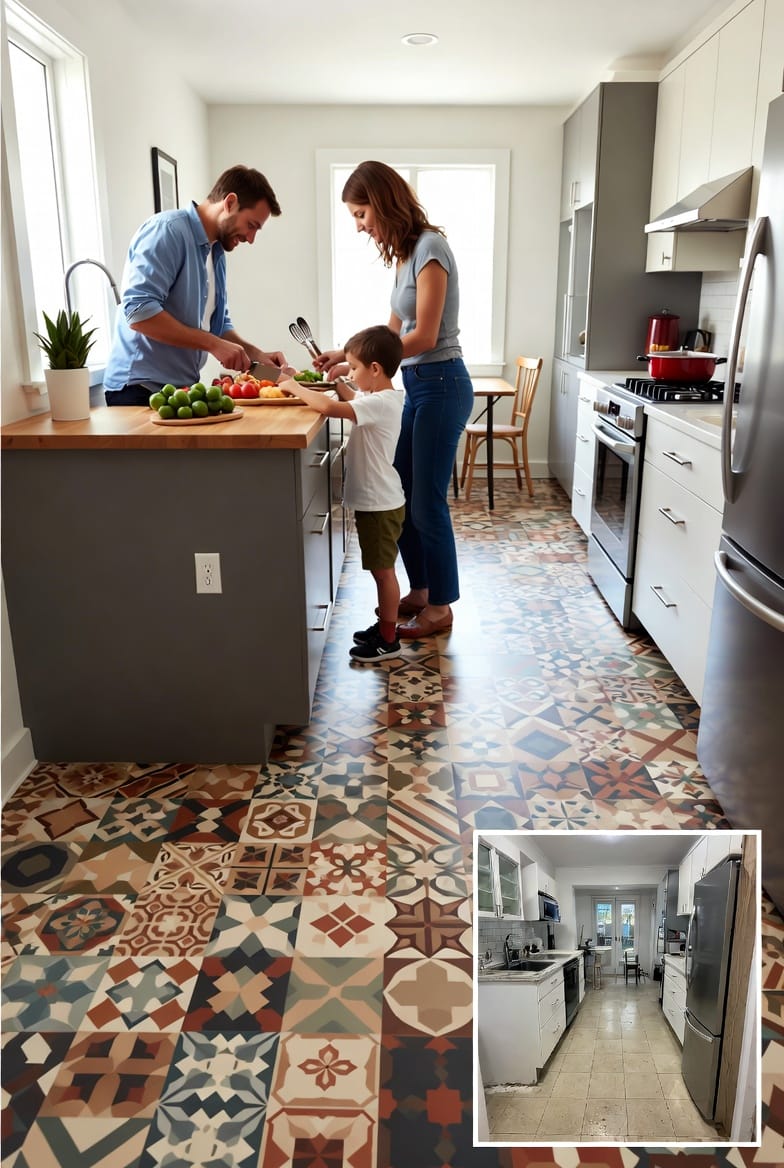
Gone are the days of drab linoleum. Today's offerings rival any flooring in aesthetics. Available in sheets, tiles, or clicks, it comes in endless colors, patterns, and textures—from subtle marbling to bold geometrics.
Design versatility includes:
- Mimicking naturals: Wood-look planks or stone tiles without resource depletion.
- Custom patterns: Digital printing allows personalized motifs for unique spaces.
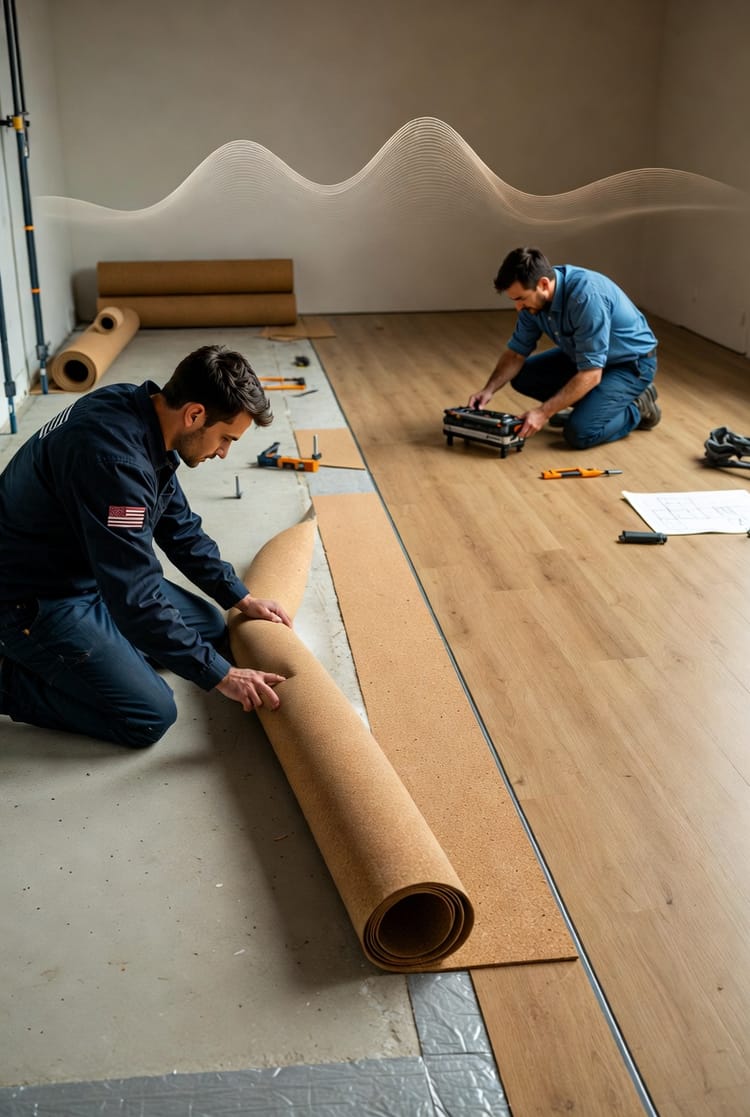
- Acoustic enhancements: Added underlays reduce noise, perfect for apartments.
- Installation ease: Glue-down or floating options suit DIY or pro installs.
Unlike rigid vinyl, linoleum's warmth and softness provide underfoot comfort, making it family-friendly. It pairs seamlessly with modern decor, from minimalist Scandinavian to eclectic boho. Brands innovate with anti-static versions for offices or conductive ones for labs, expanding its appeal beyond residential use.
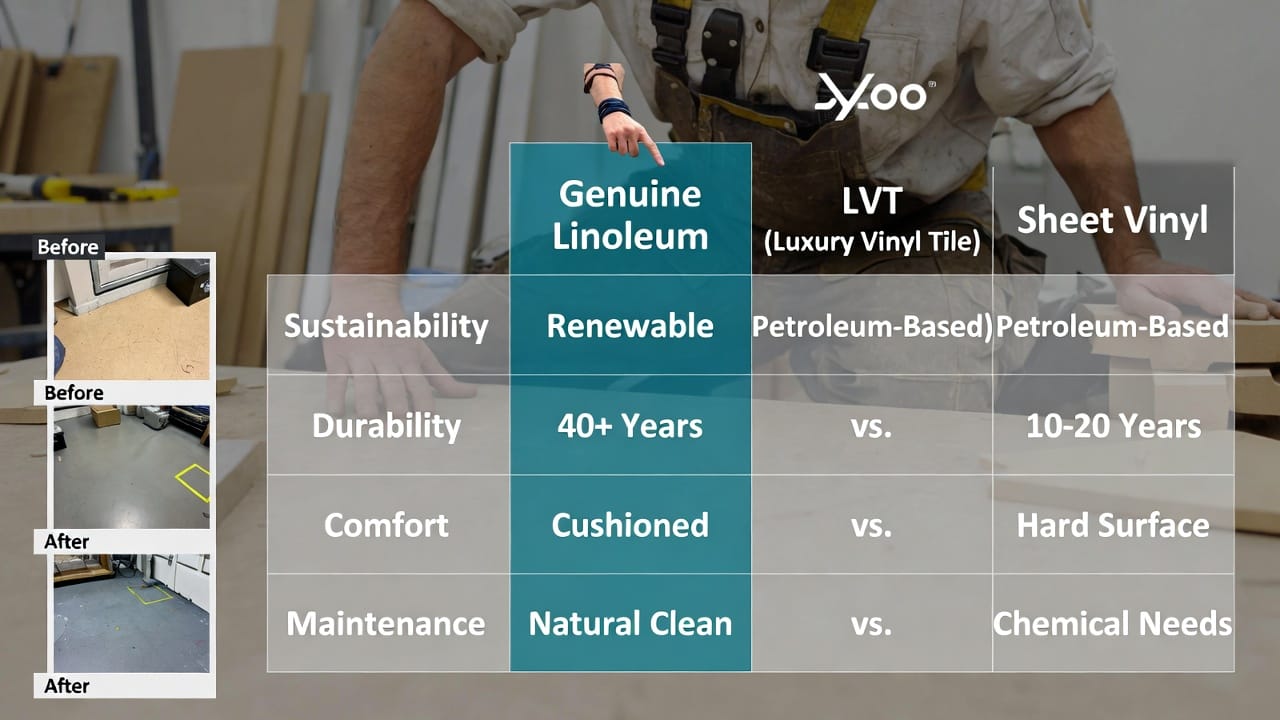
Performance Comparison: Linoleum vs. Vinyl
To quantify advantages, consider these metrics:
- Sustainability: Linoleum scores high with renewable materials and biodegradability; vinyl relies on non-renewables and persists in landfills.
- Durability: Linoleum withstands decades of use; LVT may delaminate or fade sooner.
- Comfort: Natural cushioning in linoleum beats vinyl's rigidity, reducing fatigue.
- Maintenance: Both are easy, but linoleum's antimicrobial nature minimizes deep cleans.
Real-user testimonials highlight linoleum's edge: "Our kitchen linoleum has held up to kids and dogs for 15 years—vinyl in our old home cracked after five," shares one homeowner. Data from flooring associations confirms linoleum's lower lifecycle costs.
Why Linoleum is the Future-Proof Choice
In summary, genuine linoleum merges vintage reliability with modern innovation. Its natural composition, antimicrobial prowess, durability, sustainability, and design flexibility set it apart from synthetic vinyl. Whether renovating a historic home or building anew, linoleum delivers performance without compromise.
Bring Vintage Charm & Modern Performance Home – Call Us!