The Relapse Prevention Plan: Building Personal Strategies and Triggers Awareness for Long-Term Sobriety

Recovery is not a single decision but a daily practice of skill-building. One of the most critical skills taught in professional treatment programs is the relapse prevention plan – a personalized roadmap that turns potential setbacks into manageable moments. By developing deep triggers awareness and practical coping strategies, you gain the confidence to protect your sobriety long after treatment ends.
Protect Your Sobriety Long-Term – Speak with a Counselor Today
This comprehensive guide walks you through every element of an effective relapse prevention plan. You will learn how to spot your unique triggers, create powerful responses, build a reliable support network, and write a clear “if-then” action plan ready for high-risk situations. With consistent application, these tools become second nature, supporting long-term sobriety that feels secure and sustainable.
You already possess the strength to succeed. The structured approach outlined here has helped countless individuals transform vulnerability into resilience. Let’s begin.
Understanding Relapse as a Predictable Process
Relapse does not happen suddenly. It unfolds in stages: emotional, mental, and physical. Recognizing this process empowers you to intervene early. A well-crafted relapse prevention plan addresses each stage before cravings intensify.
Treatment professionals emphasize that relapse is not a moral failure but a signal that certain skills need strengthening. This reassuring perspective removes shame and replaces it with actionable knowledge. When you view recovery as a learnable skill, every day becomes an opportunity to reinforce your progress.
Step 1: Identifying Your Personal Triggers
Triggers are the people, places, emotions, and situations that spark cravings or thoughts of use. Awareness is your greatest ally. Once identified, triggers lose much of their power.
Common Categories of Triggers
- People who trigger you: Old using companions, certain family members during conflicts, or even overly critical coworkers.
- Places associated with past use: Specific bars, neighborhoods, parties, or even your former apartment.
- Emotional states: Loneliness, anger, boredom, anxiety, or overwhelming joy that once paired with substance use.
- Physical sensations or events: Fatigue, hunger, chronic pain, anniversaries, or financial stress.
To identify yours, begin with honest self-reflection. Ask: “When have I felt the strongest urges in the past year?” Journal daily for two weeks. Note patterns without judgment. Many clients discover surprising triggers – a particular song, scent, or time of day – only after consistent tracking.
In treatment, counselors guide this discovery through structured exercises. Group discussions reveal that no two plans are identical, which makes your personal triggers list uniquely effective. The process itself builds self-trust: you are no longer reacting blindly but responding with clarity.
Triggers awareness grows stronger with practice. Review your list monthly. New triggers may appear as life changes; old ones may fade. This ongoing awareness is the foundation of long-term sobriety.
Step 2: Developing Powerful Coping Strategies
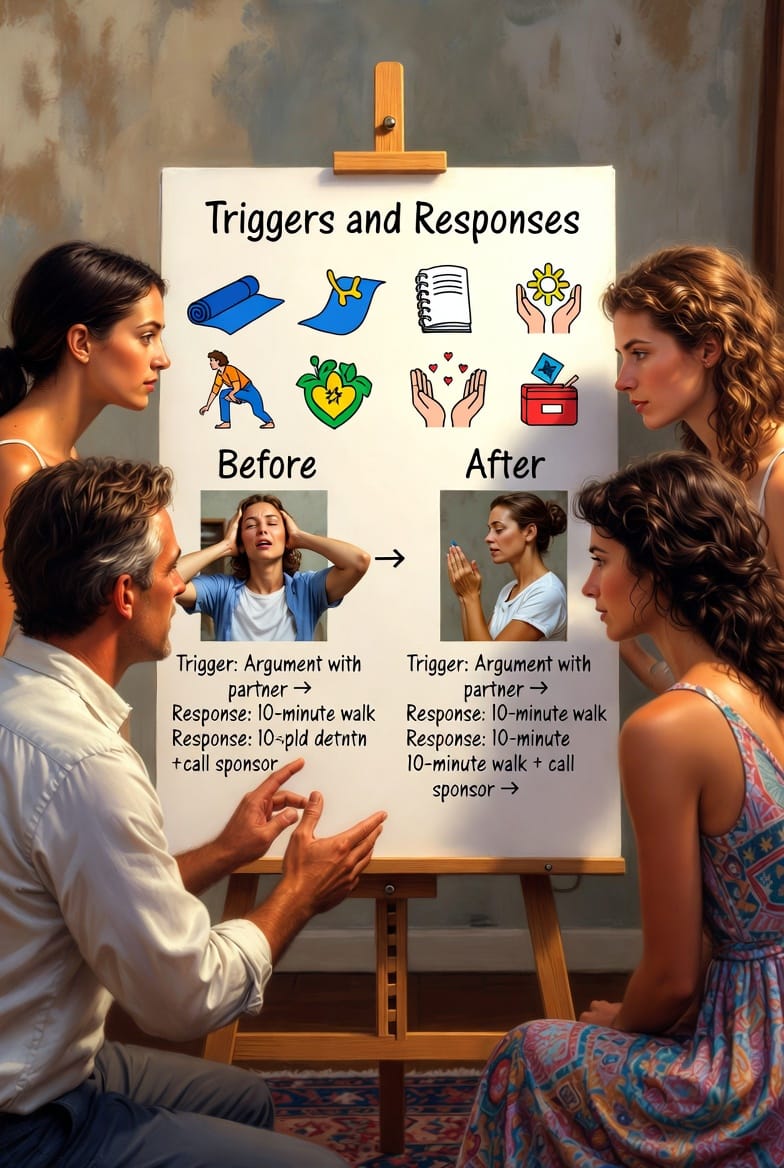
Once triggers are clear, the next essential element is a toolbox of coping strategies that work specifically for you. Effective strategies replace old habits with new, healthier ones that satisfy the same underlying needs.
Immediate Coping Tools (Use Within Minutes)
- Deep breathing exercises (4-7-8 technique)
- Grounding with 5-4-3-2-1 sensory check
- Urgent phone call to a trusted contact
- Short physical movement – push-ups, jumping jacks, or brisk walk
Daily and Weekly Practices
- Regular exercise releases natural endorphins and reduces stress
- Mindfulness meditation strengthens emotional regulation
- Creative outlets such as painting, music, or gardening redirect focus
- Healthy routines around sleep, nutrition, and hydration prevent HALT states (Hungry, Angry, Lonely, Tired)
Clients often feel reassured when they realize they already use some of these tools naturally. Treatment simply organizes and expands them. Pair each trigger with at least three coping options. Test them in safe settings so they become automatic.
The beauty of personalized coping strategies lies in their flexibility. What works during a stressful workday may differ from weekend triggers. Experimentation builds confidence. Over time, these practices rewire your brain’s response pathways, making sobriety feel natural and rewarding.
Step 3: Building a Strong Support Network
No one maintains long-term sobriety in isolation. A robust support network provides accountability, encouragement, and immediate help when needed.
Key members include:
- Sponsor or recovery coach – someone with lived experience who understands the journey
- Therapist or counselor – professional guidance for deeper emotional work
- 12-step or mutual-aid group members – weekly meetings create consistency
- Sober friends and family – chosen carefully with clear boundaries
Reach out regularly, not only in crisis. Schedule weekly check-ins. Share your relapse prevention plan with at least two people so they can gently remind you of your strategies.
Many individuals initially hesitate to ask for help, fearing burden. Yet studies of successful recovery consistently show that those with active support networks experience significantly higher success rates. Your network wants to see you thrive. Letting them in strengthens relationships and reinforces your commitment.
Step 4: Creating Your Written “If-Then” Plan
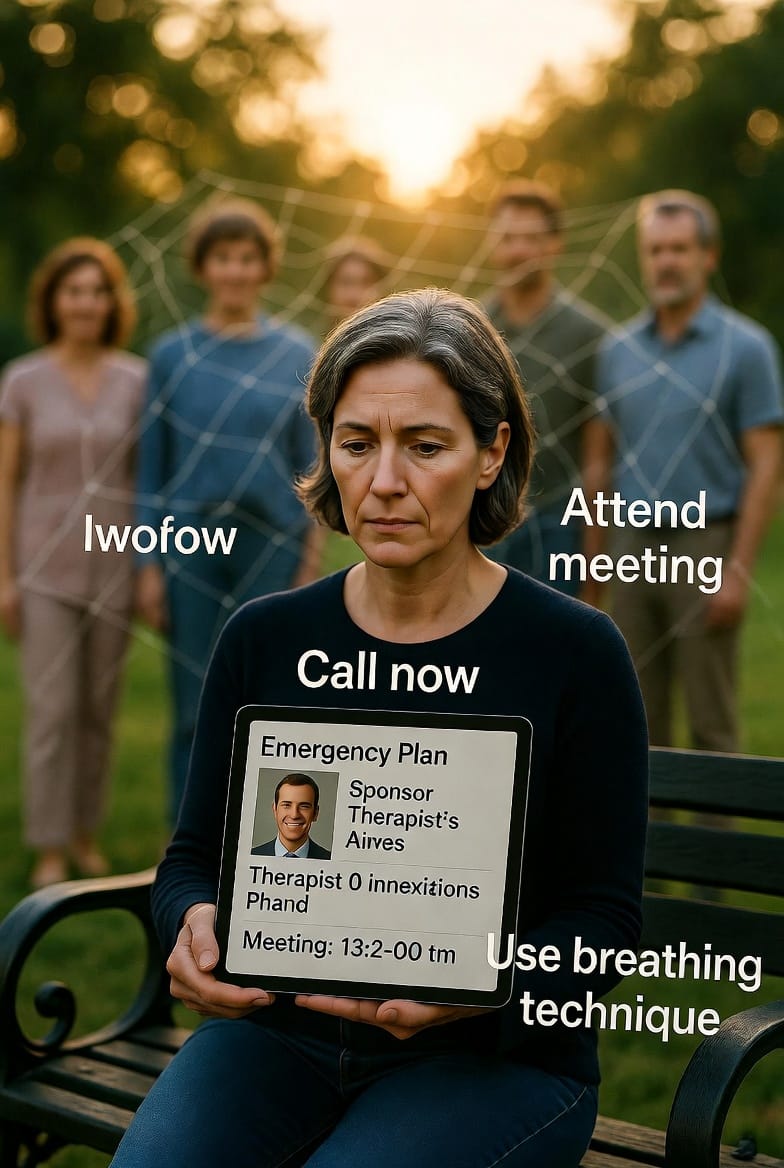
The if-then plan turns good intentions into concrete actions. It anticipates high-risk situations and pre-decides your response.
How to Build Your If-Then Plan
- List your top five triggers from your awareness work.
- For each trigger, write specific, realistic responses.
- Include emergency contacts and exact next steps.
- Print or save digitally and keep accessible (phone, wallet, car).
- Review and update every 30 days.
Real-World If-Then Examples
- If I feel lonely on a Friday night, then I will attend the 7 pm online meeting and text my sponsor immediately afterward.
- If work stress triggers cravings at 3 pm, then I will step outside for a 10-minute breathing exercise and drink water.
- If I encounter an old using friend, then I will politely excuse myself and call my therapist within five minutes.
- If an anniversary brings sadness, then I will visit my sober support group and journal three things I am grateful for today.
Write your plan in simple, positive language. Make it detailed enough to follow when emotions run high. Many clients carry a laminated copy or set phone reminders. The written format removes guesswork during vulnerable moments.
This proactive tool has proven transformative. Individuals who use a personalized if-then plan report greater confidence and fewer unplanned slips. You deserve that same peace of mind.
Step 5: Implementing, Reviewing, and Refining Your Plan
Create the plan, then live it. Place copies where you will see them daily. Share with your network. Practice role-playing scenarios in therapy sessions.
Schedule monthly reviews. Ask: “Which strategies worked best? Did new triggers appear?” Life evolves – your relapse prevention plan must evolve too. Celebrate small wins: a month without a high-risk incident, a successful use of coping skills, or deeper connections in your support circle.
Common challenges include forgetting to review or feeling overwhelmed when adding new elements. Address them gently. Start small, stay consistent. Progress compounds.
The Lasting Benefits of a Personalized Relapse Prevention Plan
Mastering these skills creates freedom. You move through life with tools that protect your sobriety while allowing genuine joy and connection. Families heal, careers stabilize, and self-respect grows.
Professional treatment accelerates this process. Experienced counselors help you uncover blind spots, practice skills in safe environments, and customize every element to your life.
Recovery Is a Skill You Can Build
You now hold a complete framework for a powerful relapse prevention plan. From triggers awareness to coping strategies, from support networks to ready-to-use if-then plans – every piece works together to safeguard your sobriety.
Take the next step today. Review your personal triggers this evening. Draft one if-then statement. Small actions create lasting change.
Recovery is a skill you can build. Your long-term sobriety awaits – and you are fully equipped to achieve it.
Take Control of Triggers Before They Control You – Call Today