The Refrigerant Revolution: How Modern HVAC Systems Use New Gases for Better Efficiency and Environmental Impact
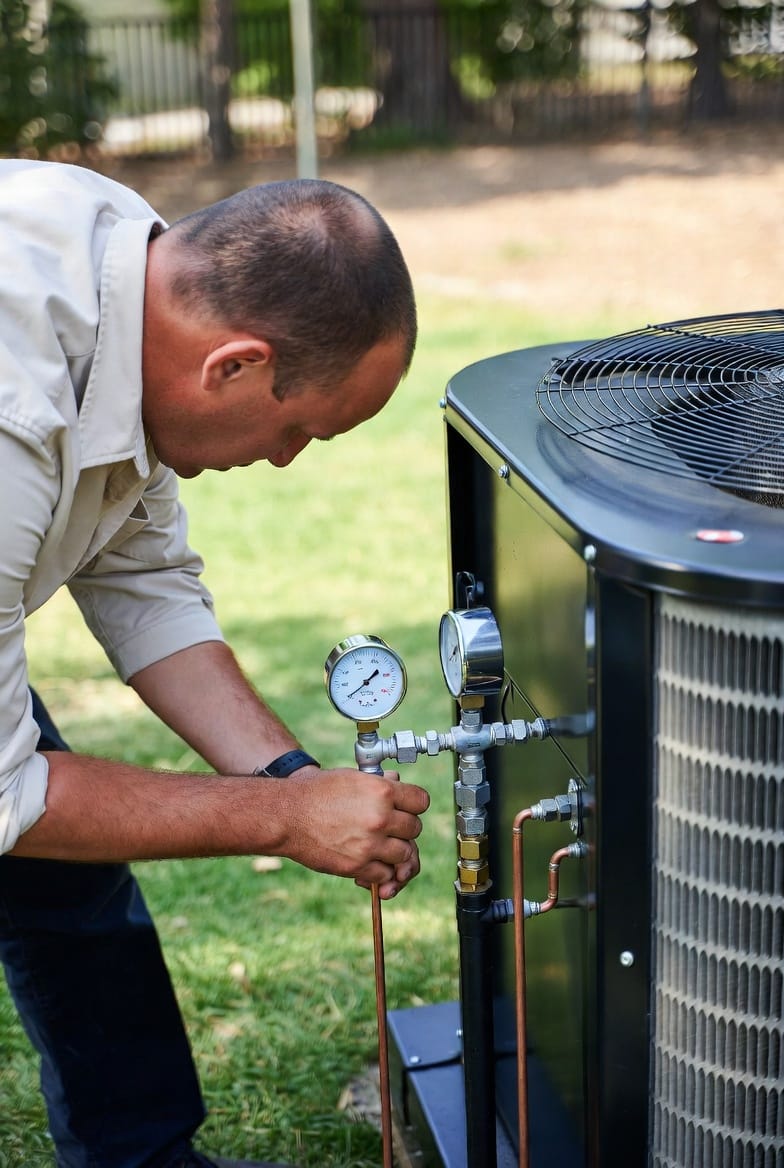
In the ever-evolving world of HVAC systems, the shift in refrigerants marks a pivotal advancement toward sustainability and performance. As environmental regulations tighten and energy costs rise, understanding the transition from legacy gases like R-22 to modern alternatives such as R-410A and emerging A2L refrigerants is essential for homeowners, businesses, and industry professionals alike. This refrigerant revolution not only enhances cooling capacity and energy efficiency but also significantly lowers global warming potential (GWP), paving the way for greener climate control solutions.
Future-Proof Your AC – Call for an Environmental & Economic Check
At its core, refrigerants are the lifeblood of air conditioning and heat pump systems, absorbing and releasing heat through thermodynamic cycles. The move away from older hydrochlorofluorocarbons (HCFCs) like R-22 stems from their harmful impact on the ozone layer and high GWP. In contrast, hydrofluorocarbons (HFCs) like R-410A and the newer hydrofluoroolefins (HFOs) in A2L classes offer superior properties that align with global environmental goals, such as those outlined in the Montreal Protocol and the Kigali Amendment. This article delves into the science behind these changes, exploring how thermodynamic efficiencies translate to real-world benefits, all while maintaining a reassuring tone: upgrading your system is a smart, forward-thinking investment.
The Legacy of R-22: Understanding the Phase-Out
For decades, R-22, also known as Freon, dominated the HVAC landscape. Introduced in the mid-20th century, this HCFC refrigerant was prized for its stability, non-flammability, and effective heat transfer capabilities. In a typical vapor-compression cycle, R-22 evaporates at low pressures in the indoor coil, absorbing heat from the air, and condenses at higher pressures outdoors, releasing that heat. Its boiling point of around -40.8°C at atmospheric pressure made it ideal for residential and commercial cooling.
However, environmental concerns emerged in the 1980s. R-22 contains chlorine, which depletes the ozone layer when released into the atmosphere. Its GWP is a staggering 1,810—meaning it's 1,810 times more potent than carbon dioxide over a 100-year period. The Montreal Protocol of 1987 initiated a global phase-out, with the U.S. Environmental Protection Agency (EPA) enforcing a complete ban on R-22 production and import by 2020. This has led to skyrocketing prices for remaining stockpiles, often exceeding $100 per pound, making repairs on older systems uneconomical.
The risks of clinging to R-22 are multifaceted:
- Economic Strain: Sky-high refrigerant costs can turn a simple leak repair into a major expense.
- System Inefficiency: Aging units with R-22 often suffer from reduced cooling capacity due to wear and incompatible lubricants.
- Regulatory Non-Compliance: Continued use may violate local codes, potentially leading to fines or insurance issues.
- Environmental Harm: Leaks contribute to ozone depletion and climate change, underscoring the need for proactive upgrades.
Fortunately, the industry has responded with innovative alternatives, ensuring that transitioning is not only feasible but advantageous.
R-410A: The Bridge to Modern Efficiency
Enter R-410A, a blend of difluoromethane (R-32) and pentafluoroethane (R-125), which became the standard replacement for R-22 starting in the early 2000s. Unlike its predecessor, R-410A is an HFC with zero ozone depletion potential (ODP) and a lower GWP of 2,088—still high, but a step in the right direction. Its thermodynamic properties shine in high-pressure applications, operating at pressures about 50-60% higher than R-22, which demands sturdier components like thicker copper tubing and enhanced compressors.
Thermodynamically, R-410A excels in cooling capacity. Its higher vapor density allows for greater heat absorption per unit volume, meaning systems can achieve the same cooling output with smaller coils and less refrigerant charge. For instance, in a standard air conditioner, R-410A's enthalpy of vaporization is approximately 200 kJ/kg, compared to R-22's 235 kJ/kg, but its overall cycle efficiency compensates through better pressure-enthalpy dynamics. This results in Seasonal Energy Efficiency Ratio (SEER) ratings often exceeding 16-20, far surpassing R-22's typical 10-13.
Energy efficiency gains are tangible:
- Reduced Compressor Work: Higher suction pressures minimize the energy needed to compress the gas.
- Improved Heat Transfer: The blend's azeotropic behavior ensures consistent performance across temperature ranges.
- Lower Operating Costs: Homeowners can see up to 40% savings on electricity bills with R-410A systems.
Moreover, R-410A's non-flammable nature (A1 classification) makes it safe for widespread use. While it's not perfect—its GWP prompts further evolution— it has bridged the gap, allowing millions of systems to operate efficiently while regulations catch up.
The Emergence of A2L Refrigerants: A Greener Horizon
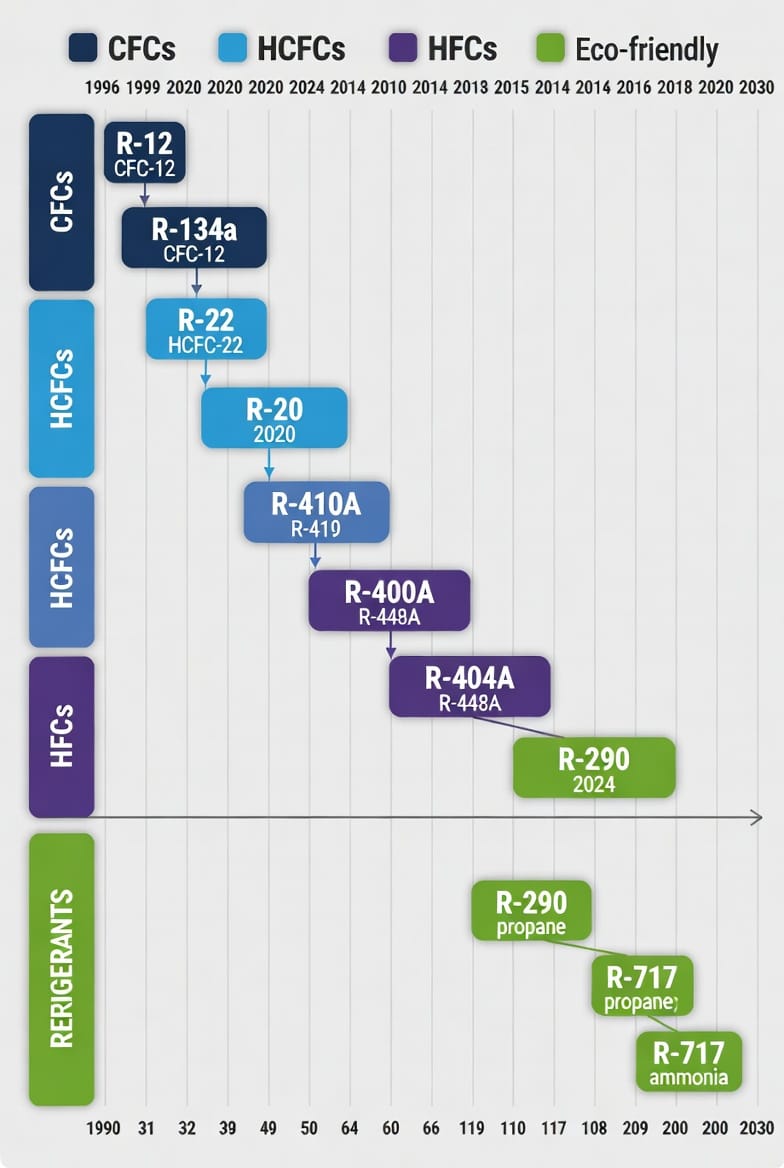
As the push for lower GWP intensifies, A2L refrigerants—mildly flammable HFO blends like R-32, R-454B, and R-1234yf—represent the next frontier. Classified as A2L by ASHRAE (low toxicity, mild flammability), these gases boast GWPs under 700, with some as low as 1. For example, R-32 has a GWP of 675, while R-454B clocks in at 466, making them compliant with upcoming EPA mandates under the American Innovation and Manufacturing (AIM) Act, which targets an 85% HFC reduction by 2036.
The thermodynamic edge of A2L refrigerants lies in their molecular design. HFOs incorporate double bonds, enhancing stability and reducing atmospheric lifetime. R-32, a pure HFC but often blended in A2L formulations, has a critical temperature of 78.1°C, allowing efficient operation in high-ambient conditions. Compared to R-410A, A2L options offer similar or better coefficient of performance (COP), with R-454B achieving up to 5% higher efficiency in heat pumps.
Key advantages include:
- Enhanced Cooling Capacity: Lower molecular weight enables faster heat transfer, ideal for variable-speed systems.
- Energy Savings: Optimized pressure-temperature curves reduce energy input by 10-15% in next-gen equipment.
- Flammability Management: Safety features like leak detectors and ventilation mitigate risks, ensuring A2L systems are as safe as predecessors.
Adopting A2L requires system redesigns, but the payoff is immense: lower carbon footprints and compliance with incentives like those from the Inflation Reduction Act.
Decoding Thermodynamic Properties: Efficiency at the Molecular Level
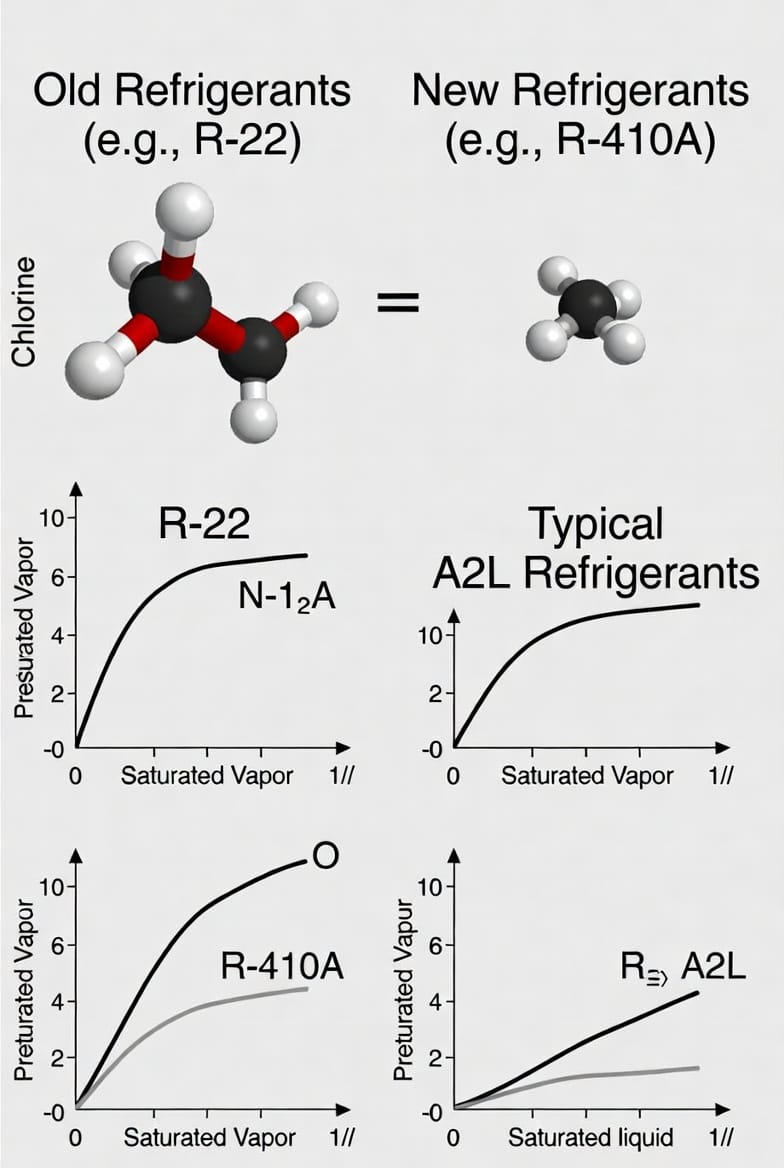
To appreciate the revolution, let's examine the thermodynamic properties driving these improvements. Refrigerants function in the Rankine cycle, where efficiency hinges on pressure-enthalpy (P-h) diagrams. R-22's P-h curve shows a glide (temperature change during phase shift), but R-410A's near-azeotropic mix minimizes this, stabilizing temperatures.
For cooling capacity, consider the volumetric cooling capacity (VCC): R-410A's is about 40% higher than R-22's due to denser vapor. Mathematically, VCC = ρ_v * Δh / v, where ρ_v is vapor density, Δh is enthalpy change, and v is specific volume. This allows compact designs without sacrificing output.
A2L refrigerants push further. R-32's high latent heat (around 380 kJ/kg) and low viscosity improve flow rates, reducing pressure drops in piping. In energy efficiency terms, the isentropic efficiency of compressors rises because A2L gases have lower discharge temperatures, preventing oil breakdown and extending component life.
Pressure-temperature (P-T) relationships are crucial:
- R-22: At 100°F, condensing pressure is ~278 psig.
- R-410A: ~420 psig, enabling higher subcooling for better efficiency.
- R-32 (A2L): ~500 psig, but with blends like R-454B, it's balanced for drop-in compatibility.
These properties translate to real efficiency: A system with A2L can achieve SEER ratings over 25, slashing energy use and emissions.
Environmental Impact: Slashing Global Warming Potential
The environmental imperative is clear: older refrigerants exacerbate climate change. R-22's high GWP means even small leaks have outsized effects. In contrast, R-410A reduces ODP to zero, and A2L refrigerants cut GWP by over 70%, aligning with net-zero goals.
Quantitatively, a 5-ton R-22 system leaking 10% annually releases equivalent to 900 kg of CO2. Switching to R-410A halves that, while A2L drops it to under 300 kg. This not only aids planetary health but qualifies systems for green certifications like ENERGY STAR.
Broader benefits:
- Ozone Protection: Eliminating chlorine halts stratospheric damage.
- Carbon Footprint Reduction: Efficient systems lower indirect emissions from power plants.
- Regulatory Alignment: Future-proofing against bans ensures long-term viability.
Rest assured, these changes are backed by rigorous testing, with organizations like AHRI certifying performance.
Benefits for Homeowners and Businesses: Practical Gains
Beyond science, the revolution delivers everyday advantages. Homeowners enjoy quieter, more reliable systems with smart features like variable refrigerant flow (VRF). Businesses, especially in data centers or retail, benefit from scalable solutions that cut operational costs.
Consider:
- Cost Savings: Lower energy bills and reduced maintenance offset upgrade expenses.
- Comfort Enhancement: Precise temperature control from efficient cycles.
- Property Value Boost: Eco-friendly HVAC adds appeal in green-conscious markets.
Transitioning involves assessing your current setup—our experts can guide you seamlessly.
Navigating the Transition: Tips for Upgrading
Upgrading isn't daunting. Start with a professional audit to check compatibility. For R-22 systems, retrofitting to R-410A may require new linesets, but full replacements yield best results. For A2L, ensure installers are certified in handling mildly flammable gases.
Steps include:
- System Evaluation: Measure efficiency and detect leaks.
- Refrigerant Recovery: Properly reclaim old gases to avoid environmental release.
- Installation Best Practices: Use compatible components for optimal performance.
- Maintenance Protocols: Regular checks maximize longevity.
With incentives like rebates, the ROI is swift—often within 5-7 years.
In conclusion, the refrigerant revolution empowers us to cool responsibly. By embracing R-410A and A2L technologies, we harness superior thermodynamic properties for unmatched efficiency and minimal environmental impact. Stay ahead of regulations and maximize efficiency with an updated system.
Unlock Better Efficiency & Sustainability – Call Our Team Today