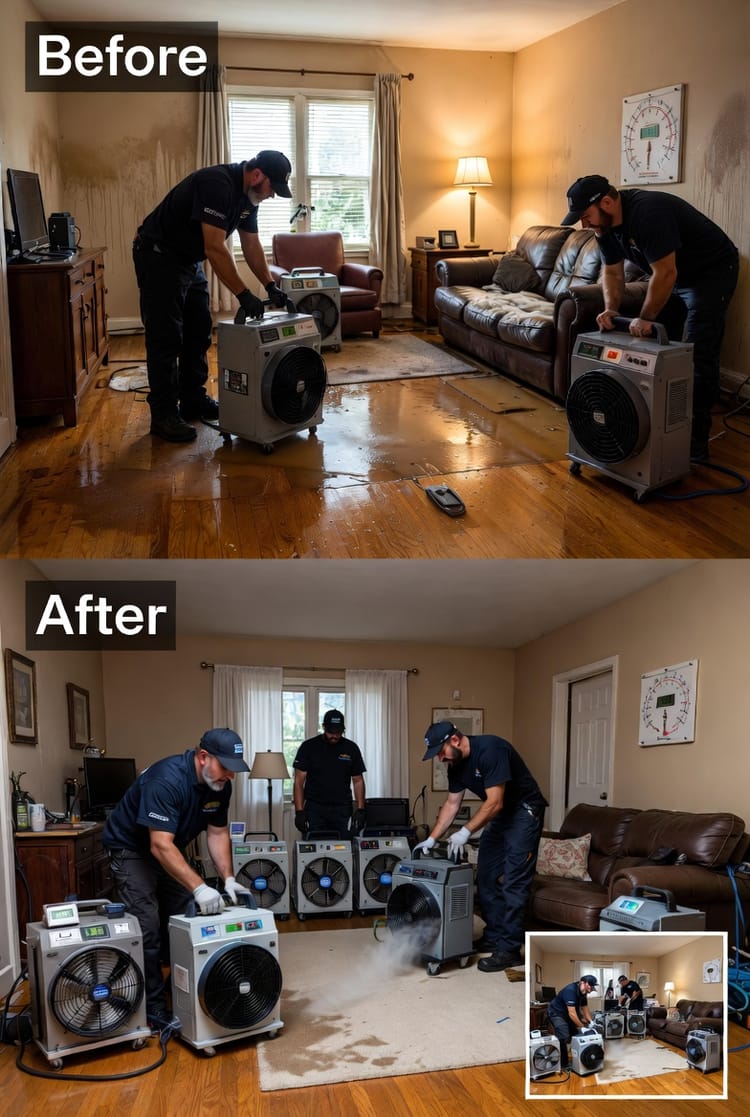
The Paper Trail: How to Properly Document Water Damage for a Successful Insurance Claim
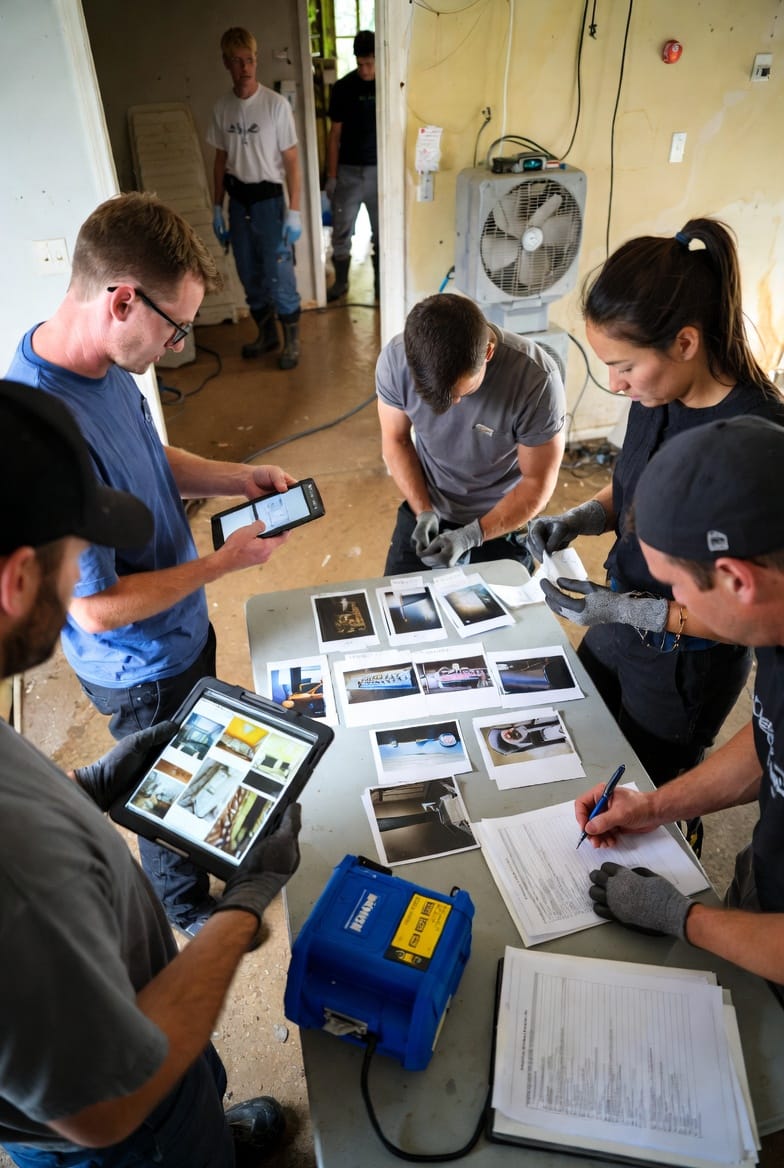
Water damage can strike unexpectedly, turning your home into a chaotic mess. But with the right approach to documentation, you can navigate the insurance claim process smoothly and secure the compensation you deserve. This guide empowers homeowners like you to take control after calling in professionals but before the insurance adjuster arrives. We'll walk you through essential steps, from capturing visual evidence to compiling inventories and understanding key forms. Remember, thorough documentation is your strongest ally in proving the extent of the damage and ensuring a successful payout.
Call Today: Secure Your Insurance Payout with Confidence
As a leading water damage restoration service, we handle the mitigation while you focus on building a solid claim. Start the process right by calling us at (855) 321-3350, then follow these steps to document effectively. We're here to reassure you: with proper preparation, your claim can proceed without unnecessary delays or denials.
Understanding the Importance of Documentation
Proper documentation transforms a stressful water damage event into a manageable claim. Insurance companies require clear evidence to validate your losses, and without it, you risk underpayment or rejection. By acting promptly and methodically, you demonstrate responsibility, which can expedite approvals.
Key benefits include:
- Proving Causation: Show that the damage resulted from a covered peril, like a burst pipe or storm flooding.
- Quantifying Losses: Detailed records help calculate repair costs accurately.
- Avoiding Disputes: Comprehensive proof minimizes back-and-forth with adjusters.
In the critical window after mitigation begins but before the adjuster visits, your actions set the stage for success. Stay calm—many homeowners recover fully when they follow a structured plan.
Step 1: Photograph and Video the Damage
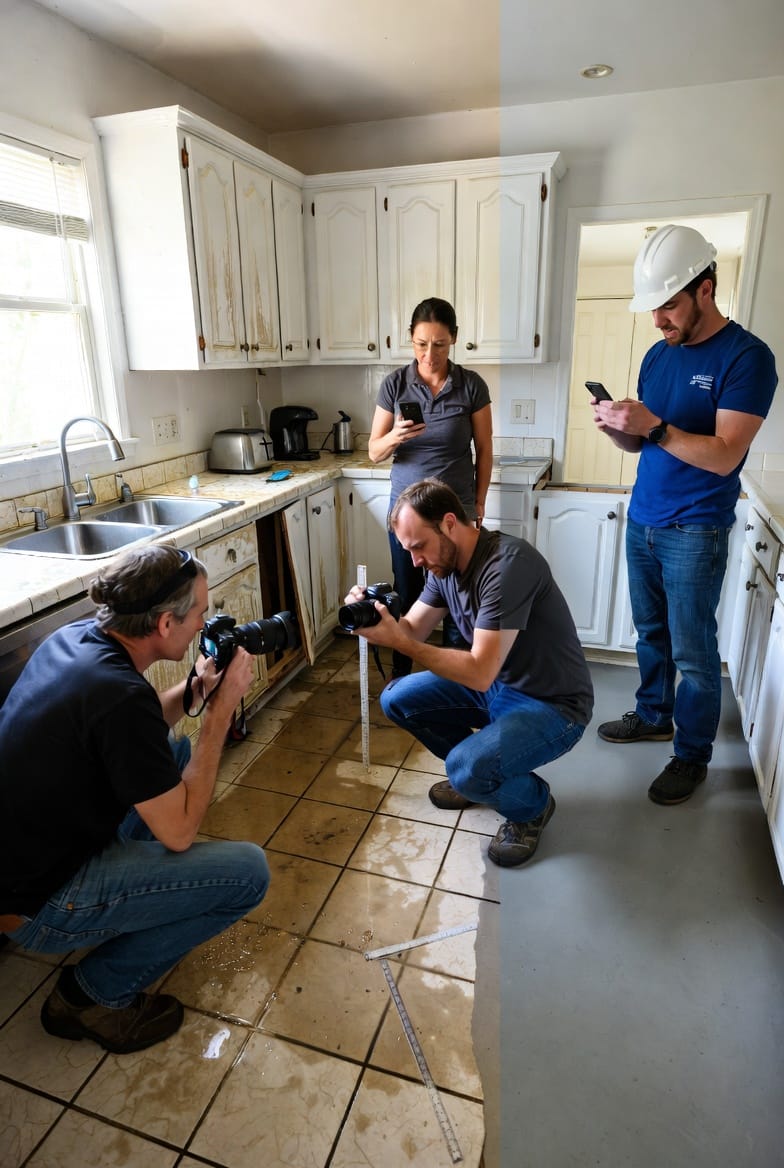
Visual evidence is irrefutable. Before any cleanup or repairs, capture the scene to preserve the initial state of the damage. This step is crucial as water can evaporate or spread, altering the appearance over time.
Best Practices for Capturing Evidence
- Use High-Quality Devices: Employ your smartphone or a digital camera for clear, high-resolution images and videos. Enable timestamps to record the date and time automatically.
- Take Comprehensive Shots: Start with wide-angle views to show the overall affected area, then zoom in for close-ups of specific damages like warped floors or stained walls.
- Include Scale References: Place a ruler, tape measure, or common object (like a coin) next to damaged items to illustrate severity.
- Document from Multiple Angles: Cover all sides—front, back, top, and bottom—to provide a 360-degree perspective.
- Video Walkthroughs: Record slow, narrated videos describing what you're seeing, noting any odors or sounds (e.g., dripping water).
Pro Tip: Organize files in a dedicated folder on your device or cloud storage, labeling them with dates and descriptions like "Living Room Ceiling Leak - March 2, 2026." This prevents confusion later.
By documenting visually, you're building a narrative that supports your claim, making it harder for insurers to question the extent of the water damage.
Step 2: Create a Detailed Inventory of Damaged Contents
Once visuals are secured, inventory your belongings. This list details what was affected, helping insurers assess replacement or repair values. Skipping this can lead to overlooked items and reduced compensation.
How to Build Your Inventory
- Categorize Items: Group by room (e.g., kitchen, bedroom) or type (furniture, electronics, clothing).
- Describe Each Item: Note make, model, age, condition before damage, and estimated value. For example: "Samsung 55-inch TV, 2 years old, excellent condition, $800 value—water-damaged screen."
- Quantify Damage: Specify if items are repairable, salvageable, or total losses. Include photos linking to each entry.
- Track Serial Numbers: For appliances and valuables, record these for verification.
- Use Templates: Download free inventory spreadsheets from reliable sources or create one in apps like Google Sheets.
Risk Alert: Don't discard damaged items until the adjuster approves—store them safely if possible. This preserves evidence for inspections.
A thorough inventory not only strengthens your claim but also aids in personal recovery, helping you prioritize replacements.
Step 3: Keep Records of All Communications and Receipts
Communication logs and financial records form the backbone of your paper trail. They prove your proactive efforts and track expenses incurred during mitigation.
Maintaining Communication Logs
- Document Every Interaction: Note dates, times, names, and summaries of calls or emails with insurers, contractors, and adjusters. For instance: "March 3, 2026, 10 AM: Spoke with Adjuster Jane Doe—discussed initial damage assessment."
- Use Digital Tools: Apps like Evernote or simple email folders keep everything organized and searchable.
- Request Written Confirmations: Always ask for emails summarizing verbal agreements to avoid misunderstandings.
Managing Receipts and Expenses
- Collect All Receipts: Save bills for emergency services, temporary housing, or supplies like tarps and fans.
- Categorize Expenses: Separate mitigation costs from personal outlays, noting reimbursable items.
- Track Additional Living Expenses: If displaced, log hotel stays or meal costs if your policy covers them.
Authoritative Advice: Review your policy for coverage limits on these expenses—most standard homeowners' insurance includes provisions for additional living expenses (ALE) during repairs.
These records demonstrate diligence, reassuring insurers of your claim's legitimacy.
Step 4: Understanding and Completing the "Proof of Loss" Form
The proof of loss form is a sworn statement detailing your claim. It's often required within 60 days of the incident, though timelines vary by policy.
Key Elements of the Form
- Personal Details: Your name, policy number, and incident date.
- Damage Description: A narrative of how the water damage occurred and its impacts.
- Itemized Losses: Attach your inventory, photos, and estimates.
- Sworn Declaration: Affirm the information's accuracy under penalty of perjury.
Tips for Accurate Completion
- Gather Supporting Documents: Include all photos, videos, inventories, and receipts.
- Seek Professional Estimates: Get quotes from licensed contractors for repair costs.
- Review Before Submission: Double-check for completeness to avoid delays.
- File Promptly: Submit via certified mail or your insurer's portal for proof of delivery.
Reassuring Note: If overwhelmed, consult a public adjuster—they can assist without upfront costs, taking a percentage of the settlement. However, many homeowners succeed independently with organized documentation.
Understanding this form ensures your claim is presented professionally, increasing approval chances.
Common Pitfalls to Avoid
Even with good intentions, errors can jeopardize your claim. Be vigilant about:
- Delaying Documentation: Act fast, as evidence can deteriorate.
- Incomplete Records: Missing details lead to undervalued claims.
- Ignoring Policy Exclusions: Know what's covered—e.g., flood damage often requires separate insurance.
- Overlooking Hidden Damage: Check for mold or structural issues that appear later.
By steering clear of these, you maintain control and authority over the process.
Final Thoughts: Empowering Your Recovery
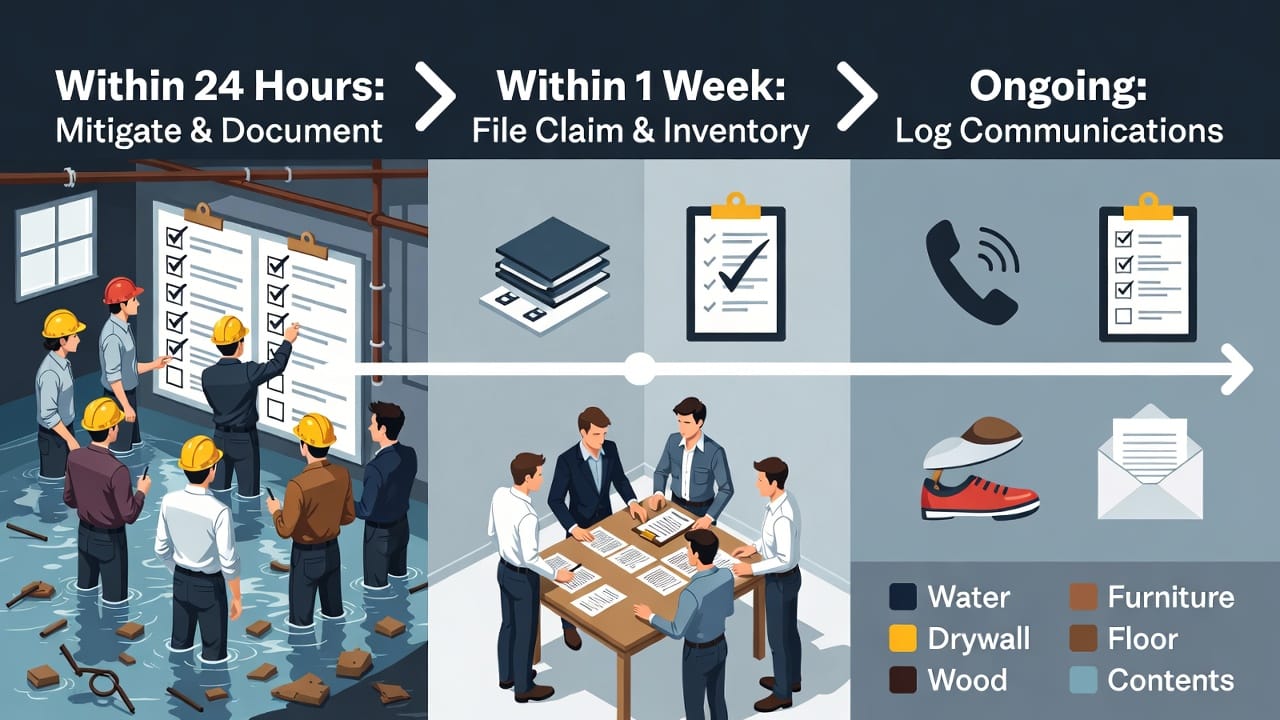
Dealing with water damage is daunting, but proper documentation paves the way for a successful insurance claim. You've now got a roadmap: capture visuals, inventory items, log communications, and master the proof of loss. This preparation not only secures funds but also accelerates your home's restoration.
We mitigate the damage; you document the claim. With our expertise and your diligence, recovery is within reach.
Call Today: Secure Your Insurance Payout with Confidence