The Panic Button Placement: Strategic Locations for Emergency Duress Alarms
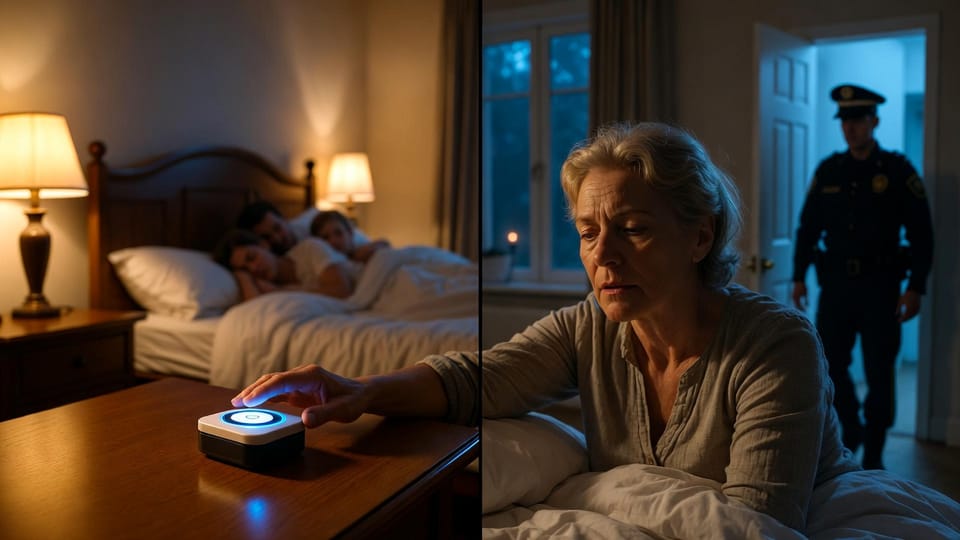
In today’s unpredictable world, personal safety remains a top priority for every homeowner. A single moment of uncertainty can change everything, which is why panic buttons have become an essential layer of protection. These discreet emergency duress alarms—available in wireless or fixed models—connect instantly to professional monitoring centers and trigger immediate emergency response when activated.
Safety at Your Fingertips – Call for Panic Button Setup!
Proper panic button placement transforms an ordinary home into a secure sanctuary. By positioning these lifesaving devices in the most logical, reachable spots, you ensure help arrives faster than you could ever dial a phone. This guide explores the strategic locations that matter most: bedroom nightstands, home offices, and entry doors. Each placement is chosen for maximum accessibility and minimum delay, delivering reassurance that safety is literally at your fingertips.
Understanding Emergency Duress Alarms and Their Life-Saving Role
Panic buttons are compact, reliable devices engineered for one purpose: to summon help without hesitation. Whether wireless for flexibility or fixed for permanence, they silently or audibly alert a 24/7 monitoring team the instant you press them. The team verifies the signal and dispatches police, medical personnel, or firefighters directly to your address with precise details.
No shouting. No searching for your phone in the dark. Just one deliberate press and trained professionals are on the way. This immediate emergency response capability sets duress alarms apart from standard security systems. They empower you during medical emergencies, intrusions, domestic disturbances, or sudden fires—situations where seconds truly count.
Homeowners who integrate these devices report greater confidence and reduced anxiety. Knowing that help is one touch away allows families to live more freely, sleep more soundly, and focus on what matters most: each other.
Why Strategic Placement Is Essential for Personal Safety
Random placement reduces effectiveness. The goal is accessibility during high-stress moments when fine motor skills or clear thinking may falter. Experts agree that panic button placement should prioritize three core areas where vulnerability peaks: sleeping quarters, workspaces, and points of entry.
These locations cover the majority of daily routines and highest-risk scenarios. A well-placed button ensures activation happens instinctively, triggering the rapid response chain that protects lives and property. With correct positioning, you eliminate precious seconds spent fumbling or moving across a room—seconds that can make the difference between safety and harm.
Bedroom Nightstands: Your Nighttime Shield
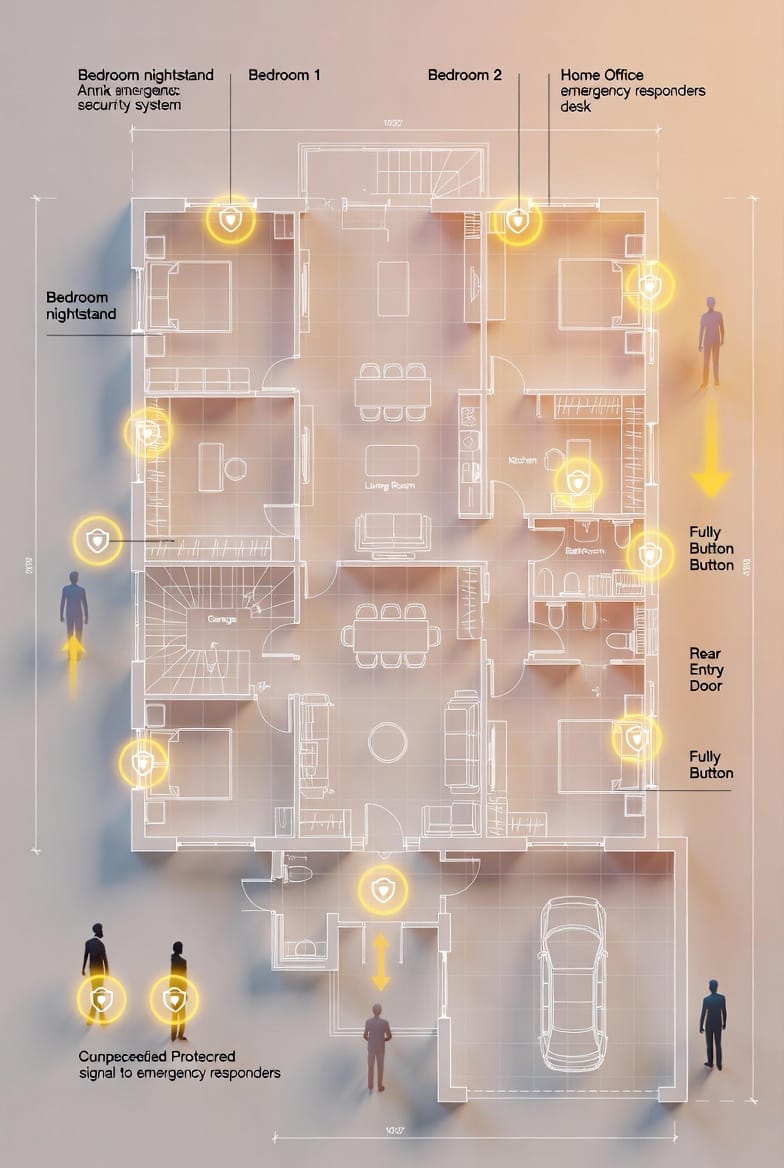
Nighttime is when most households are at their most vulnerable. Darkness, fatigue, and deep sleep slow reaction times. Placing a panic button on the bedside table puts protection within arm’s reach—literally inches from where you rest.
Wireless models are ideal here; they require no wiring and can be positioned exactly where your hand naturally falls. Fixed versions work well if mounted securely to the nightstand frame. In a medical emergency—such as sudden chest pain or breathing difficulty—an elderly parent or spouse can press the button without leaving the bed. During an intrusion, the silent signal alerts authorities while you remain still and safe.
Consider a typical night: you hear an unfamiliar sound downstairs. Instead of reaching for a phone that might be charging across the room, your fingers find the familiar button. One press and help is dispatched. Families with young children or mobility challenges especially benefit from this placement. The reassurance of knowing assistance is seconds away allows everyone to rest easier.
Maintenance is simple: test the device monthly by pressing and confirming the monitoring center receives the signal. Keep the area around the nightstand clear so the button stays visible and accessible at all times. With this single strategic choice, your bedroom becomes the safest room in the house after dark.
Home Offices: Protecting Your Workspace Sanctuary
More professionals now work from home, turning spare rooms into productive offices. Yet these spaces can also become isolated. A suspicious visitor at the door, a sudden health issue while alone, or even a domestic disturbance can escalate quickly. Positioning a panic button on or beside the desk ensures protection without interrupting workflow.
Wireless buttons clip neatly to a drawer or sit discreetly under the desktop edge. Fixed models integrate seamlessly into the furniture. When activated, the signal travels instantly, summoning help while you maintain visual contact with the situation if safe to do so.
Imagine focusing on an important call when an unexpected knock turns threatening. Instead of panic, you press the button and continue speaking calmly, knowing responders are already en route. This placement supports both remote workers and small-business owners who spend long hours alone. It also provides peace of mind for parents balancing childcare and deadlines—knowing backup is always available.
Regular testing and unobstructed placement keep the device ready. The result? A workspace that feels secure rather than exposed, allowing you to concentrate fully on your tasks.
Entry Doors: First Line of Defense at Access Points
Front and back doors are the most common entry points for both welcome visitors and potential threats. Keeping a panic button nearby—mounted just inside the frame or on a small console table—gives you control the moment something feels wrong.
Wireless portability lets you move the button if you rearrange furniture. Fixed versions offer a permanent, tamper-resistant solution. When a stranger at the door raises concern, or a domestic situation intensifies near the exit, one press activates the full emergency response protocol.
This placement is especially valuable for seniors living alone or families with teenagers who answer the door. It also helps during fire emergencies when smoke may block other exits. The button serves as a silent guardian, ensuring authorities receive your exact location and the nature of the alert.
Position it at adult height but within easy reach for shorter family members. Avoid placing it visibly from outside windows to maintain discretion. Regular checks confirm the signal strength remains strong near exterior walls.
Choosing Wireless or Fixed Panic Buttons for Your Home
Both types deliver the same rapid response, yet each suits different needs. Wireless buttons offer unmatched flexibility and easy relocation during renovations. Battery life typically spans years, with low-battery alerts sent automatically to the monitoring center. Fixed models provide rock-solid reliability and are ideal for high-traffic or permanent installations.
Many homeowners combine both: wireless for bedrooms and offices, fixed near entry doors. The choice depends on your layout, lifestyle, and existing security infrastructure. Either way, professional installation ensures optimal signal strength and seamless integration.
Seamless Integration With Your Existing Security System
Panic buttons work best as part of a complete home security ecosystem. They communicate directly with the central panel, sharing the same monitoring connection. Activation overrides other alarms when necessary, prioritizing your duress signal. Modern systems also support mobile apps, so you receive real-time confirmation that help is dispatched.
Integration requires no major rewiring. Certified technicians assess your home and recommend the ideal combination of devices. The result is layered protection that feels invisible yet ever-present.
Avoiding Common Placement Mistakes
Placing a button too high, too low, or hidden behind objects defeats its purpose. Avoid locations near windows visible from outside or areas prone to accidental bumps. Never position solely under pillows or inside drawers—accessibility must remain instinctive.
Testing every thirty days prevents surprises. Replace batteries at recommended intervals and confirm the monitoring center logs each test successfully. These small habits ensure your emergency duress alarms remain ready around the clock.
Real-Life Confidence: Before and After Strategic Placement
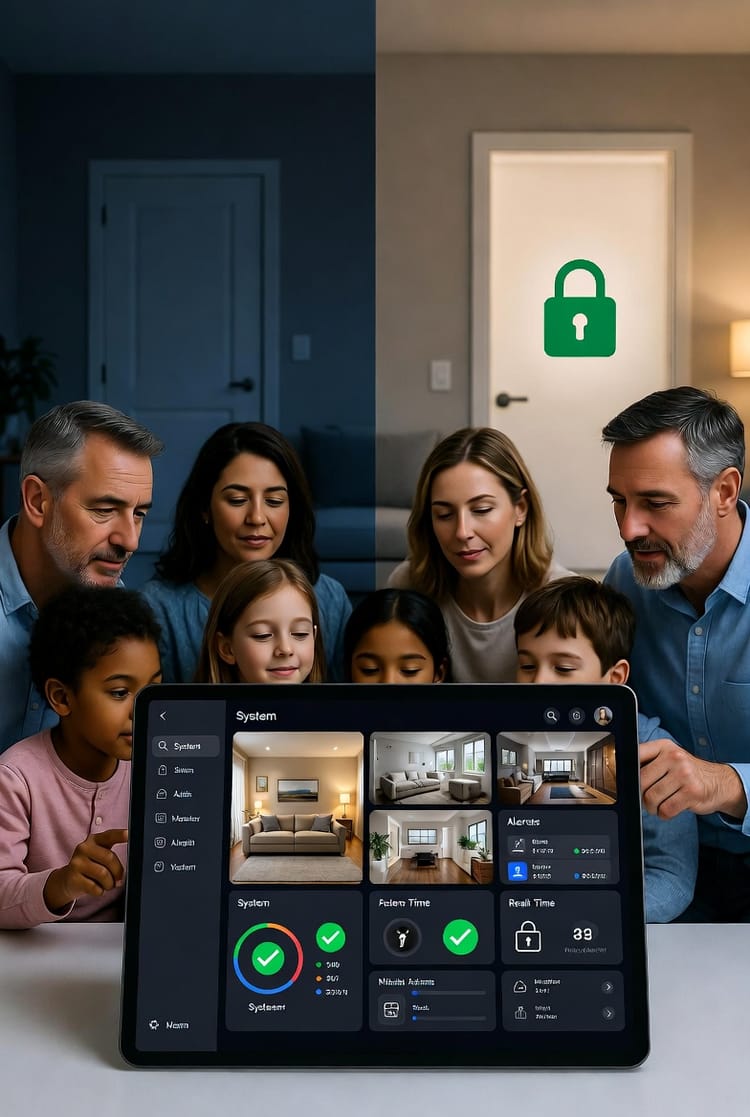
Before installing strategically placed panic buttons, many families describe lingering worry—especially at night or when alone during the day. After proper placement, that anxiety lifts. Sleep improves. Daily routines feel lighter. Children learn that help is always available with one touch, building their own sense of security.
The transformation is measurable in peace of mind. Homeowners report fewer sleepless nights and greater freedom to enjoy their space. The devices become silent partners in everyday life, present but never intrusive.
Maintaining and Testing for Lifelong Reliability
Routine care keeps your system performing at peak. Monthly tests take less than a minute yet confirm everything functions perfectly. Monitoring centers appreciate proactive customers and often provide reminders. Simple cleaning with a soft cloth prevents dust buildup on wireless models.
Professional annual inspections catch any signal issues early. These steps ensure your investment continues delivering immediate emergency response for years to come.
Safety at Your Fingertips
Strategic panic button placement in bedroom nightstands, home offices, and by entry doors creates a home where protection is intuitive and ever-ready. Wireless or fixed, these emergency duress alarms deliver the fastest possible help when seconds matter most.
You deserve to feel secure in every room and every situation. Take the next step toward complete personal safety today.
Never Face an Emergency Alone – Request Panic Button Placement!