The Ordinance or Law Coverage: Paying for Code Upgrades After a Loss
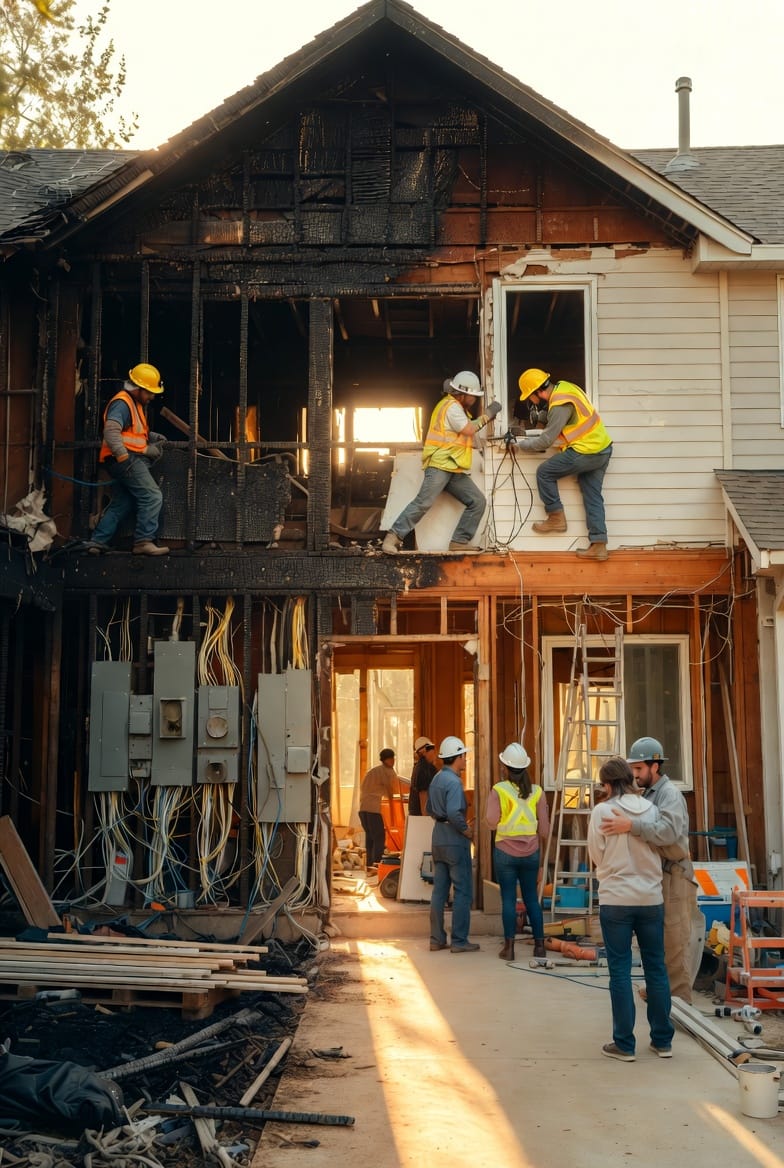
When disaster strikes your home, the last thing you want to worry about is an unexpected bill for building code upgrades. Yet this is exactly what catches many homeowners off guard. Standard homeowners insurance policies are designed to restore your property to its pre-loss condition – but they stop short when local ordinances require modern standards. That’s where ordinance or law coverage steps in as a critical, often overlooked endorsement that provides genuine peace of mind.
Protect Yourself from Hidden Code Upgrade Costs – Call Today
In this comprehensive guide, we’ll walk you through exactly how this endorsement works, why it matters more than ever in today’s regulatory environment, and how it protects you from paying thousands of dollars out of pocket for upgrades you never planned for. Whether your home is decades old or recently purchased, understanding ordinance or law coverage can mean the difference between a smooth recovery and financial stress.
Why Standard Home Insurance Falls Short After a Covered Loss
Most standard homeowners policies promise to repair or replace damaged property with materials of “like kind and quality.” This sounds reassuring – until you discover that local building codes have evolved since your home was built.
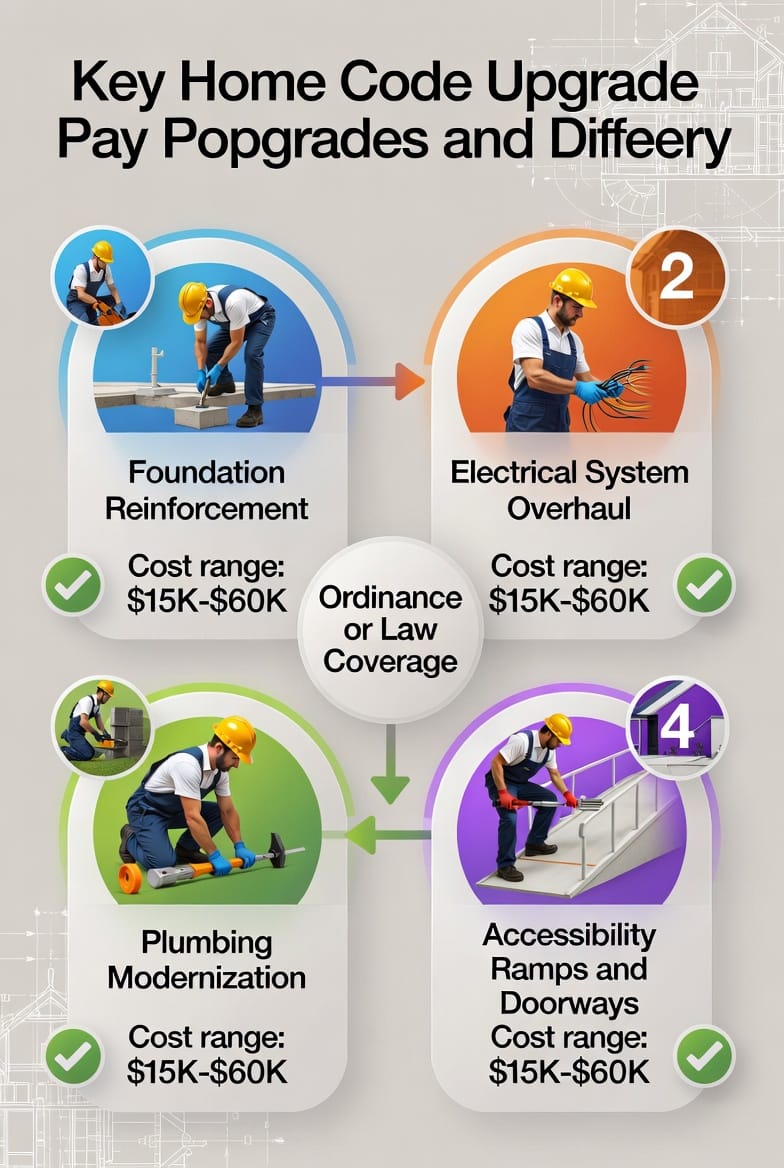
Today’s codes often mandate upgraded electrical systems, reinforced foundations, energy-efficient windows, accessible entrances, and improved plumbing for safety and environmental compliance. These upgrades are not considered repairs under a basic policy; they’re treated as additional improvements. Without the right endorsement, the extra costs land squarely on your shoulders.
Imagine a kitchen fire that damages walls and wiring. Your insurer approves replacement of the damaged drywall and old wiring – but only to the original 1990s standard. If your city now requires arc-fault circuit interrupters, upgraded smoke detectors throughout the home, or seismic reinforcements, those costs are excluded. This gap leaves many families facing bills ranging from $20,000 to well over $100,000 depending on the scope of work.
Ordinance or law coverage bridges this exact gap. It is not automatic; it must be added by endorsement, yet it remains one of the most valuable and affordable ways to future-proof your protection.
What Is Ordinance or Law Coverage and How Does It Actually Pay?
Ordinance or law coverage is a targeted endorsement that reimburses the increased cost of construction required to bring your damaged home into compliance with current building, zoning, and land-use laws after a covered peril (fire, windstorm, hail, etc.).
It typically pays for three key categories:
- Demolition and removal of the undamaged portion of the structure when local law requires it.
- Increased cost to repair or rebuild the damaged portion to meet current codes.
- Replacement of undamaged portions when the entire structure must be brought up to code standards.
Coverage is usually expressed as a percentage of your dwelling limit – commonly 10%, but higher limits (up to 50% or more) are available and often recommended for older homes or areas with strict codes. Importantly, this coverage applies only after a covered loss triggers the need for upgrades; it does not fund voluntary renovations.
The result? You rebuild safer, more efficiently, and in full compliance – without dipping into emergency savings or taking out loans.
Common Code Upgrades That Trigger Additional Costs
Local building codes continue to evolve for safety, energy efficiency, and accessibility. Here are the upgrades most frequently required after a loss:
- Electrical systems – replacement of outdated panels, addition of GFCI/AFCI outlets, and whole-home surge protection.
- Structural framing and foundation – seismic retrofitting, wind-load reinforcements, or raised foundations in flood zones.
- Plumbing and HVAC – modern piping materials, energy-efficient heating systems, and backflow prevention.
- Roofing and exterior – upgraded materials meeting current wind and hail standards.
- Accessibility features – wider doorways, ramps, and bathroom modifications required by updated fair housing or disability access laws.
Without ordinance or law coverage, these items become your responsibility even though the original damage was covered.
When Is Ordinance or Law Coverage Most Essential?
Certain situations dramatically increase the likelihood you’ll need this protection:
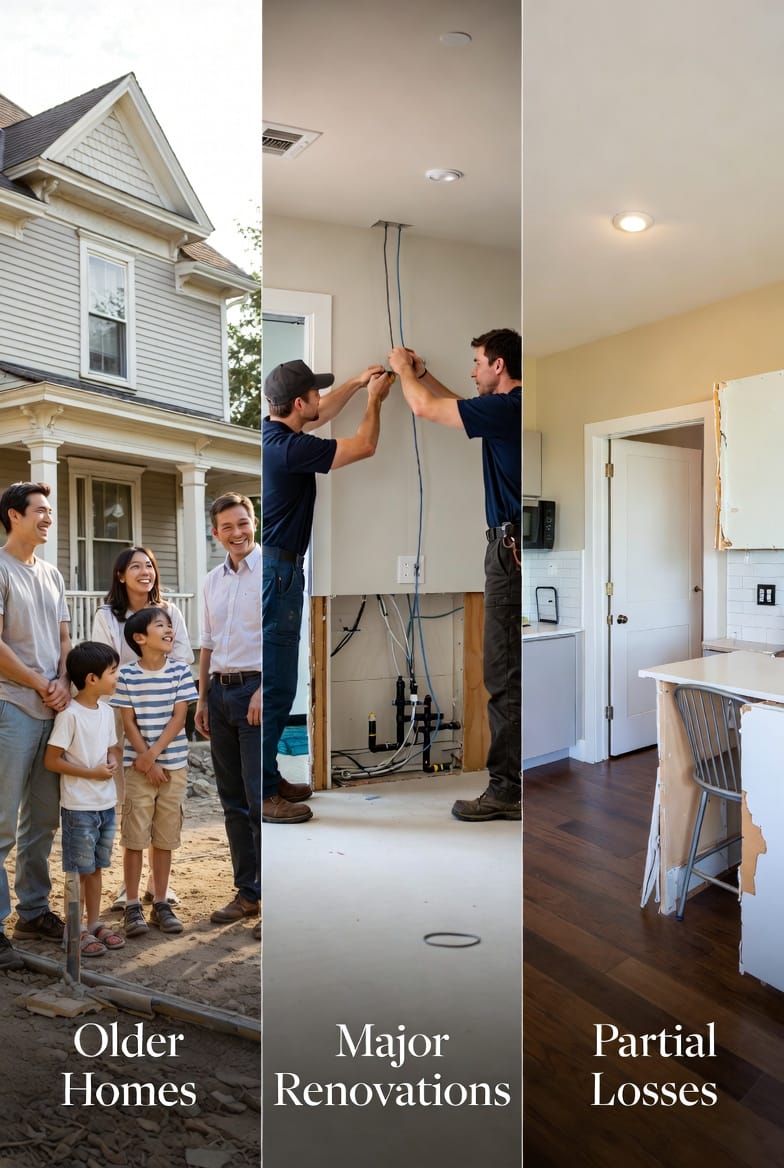
- Older homes built before 1980 – most pre-date multiple code cycles and almost always require upgrades after significant damage.
- Homes in areas with frequent code changes – coastal zones, wildfire-prone regions, or cities updating for climate resilience.
- Partial losses – even when only 30–40% of the home is damaged, ordinances may require the entire structure to be brought into compliance.
- Major renovations already planned – if you’ve recently updated part of your home, a loss elsewhere can force cascading upgrades.
Pro tip: If your home was built more than 20 years ago or you live in a high-regulation municipality, adding higher limits of ordinance coverage is one of the smartest policy decisions you can make.
Real-World Impact: How Much Can This Coverage Save?
Consider Sarah and Michael in suburban Texas. After a kitchen fire, their insurer covered $85,000 to restore the damaged areas. However, current codes required a full electrical rewire, foundation bolting, and accessibility updates totaling an extra $47,000. Without ordinance or law coverage, they would have paid that amount themselves. With the endorsement at 25% of their dwelling limit, the insurer covered the entire difference – allowing them to rebuild confidently and safely.
Similar stories play out daily across the country. The financial relief is real, and the emotional reassurance is even greater: knowing your home will meet today’s highest safety standards rather than yesterday’s minimums.
Choosing the Right Limits and Adding Coverage to Your Policy
Most insurers offer ordinance or law coverage as a simple endorsement for a modest additional premium – often just a few dollars per month. You can select coverage from 10% up to 50% or more of your dwelling amount, depending on your home’s age, location, and local code strictness.
When reviewing your policy:
- Check your current declarations page for any existing ordinance coverage.
- Discuss your home’s age and local building department requirements with your agent.
- Consider bundling with other valuable endorsements like extended replacement cost for maximum protection.
At reputable insurance agencies, agents routinely recommend this coverage because they’ve seen firsthand how it prevents financial hardship after a loss.
Common Myths About Ordinance or Law Coverage
Myth: “My home is already up to code, so I don’t need it.”
Reality: Codes change constantly. Even recently built homes can face new requirements after a loss.
Myth: “It only applies to total losses.”
Reality: Many ordinances trigger upgrades even after partial damage.
Myth: “It’s too expensive.”
Reality: The cost is typically far lower than the potential out-of-pocket expenses it prevents.
Protecting What Matters Most
Your home is more than bricks and mortar – it’s where memories are made and your family finds safety. Ordinance or law coverage ensures that after a covered loss, you don’t just repair; you rebuild better, safer, and fully compliant. It removes uncertainty and replaces it with confidence.
Don’t leave code upgrades to chance. Review your homeowners policy today and make sure this critical endorsement is in place. The small investment now can save you tens of thousands of dollars – and countless hours of stress – when you need it most.
Make Sure Your Home Meets Current Building Codes – Call Today