The Nutrition in Recovery: How Dietary Changes Support Brain Healing and Emotional Stability

In the journey toward lasting sobriety, true healing reaches far beyond therapy sessions and support groups. Nutrition in recovery stands as a powerful, often overlooked foundation that directly fuels brain healing and emotional stability. When individuals commit to dietary changes tailored for recovery, they give their bodies the precise building blocks needed to repair damage caused by substance use. At our treatment center, we have witnessed how proper nutrition transforms not only physical health but also mental clarity and emotional resilience, making it an essential part of every personalized recovery plan.
Fuel Your Recovery the Right Way – Call for Our Nutrition Program
This comprehensive guide explores the deep connection between food and recovery. You will discover how substance use depletes critical nutrients, the specific ways protein, complex carbohydrates, omega-3 fatty acids, and B vitamins restore neurotransmitter function and mood regulation, and why nutritional counseling is a game-changer in professional rehab programs. With practical insights and reassuring guidance, you will see that healing your body truly supports healing your mind.
How Substance Use Depletes Essential Nutrients
Substance use places enormous stress on the body, rapidly draining vital vitamins, minerals, and amino acids. Alcohol, opioids, stimulants, and other substances interfere with nutrient absorption in the gut, increase oxidative stress, and elevate inflammation. Over time, this depletion leaves the brain and nervous system struggling to function properly.
Common signs of nutrient deficiency during active use include persistent fatigue, intense cravings, mood swings, anxiety, and difficulty concentrating. These symptoms often persist into early recovery, making the transition feel even more challenging. The good news? Your body possesses remarkable healing capacity once given the right support. Dietary changes can reverse much of this damage, helping restore balance faster than many realize.
The Science of Brain Healing Through Nutrition
The human brain relies on a steady supply of specific nutrients to produce and regulate neurotransmitters—the chemical messengers responsible for mood, motivation, and emotional stability. When these nutrients are depleted, neurotransmitter production slows, leading to the low mood, irritability, and cravings that can threaten sobriety.
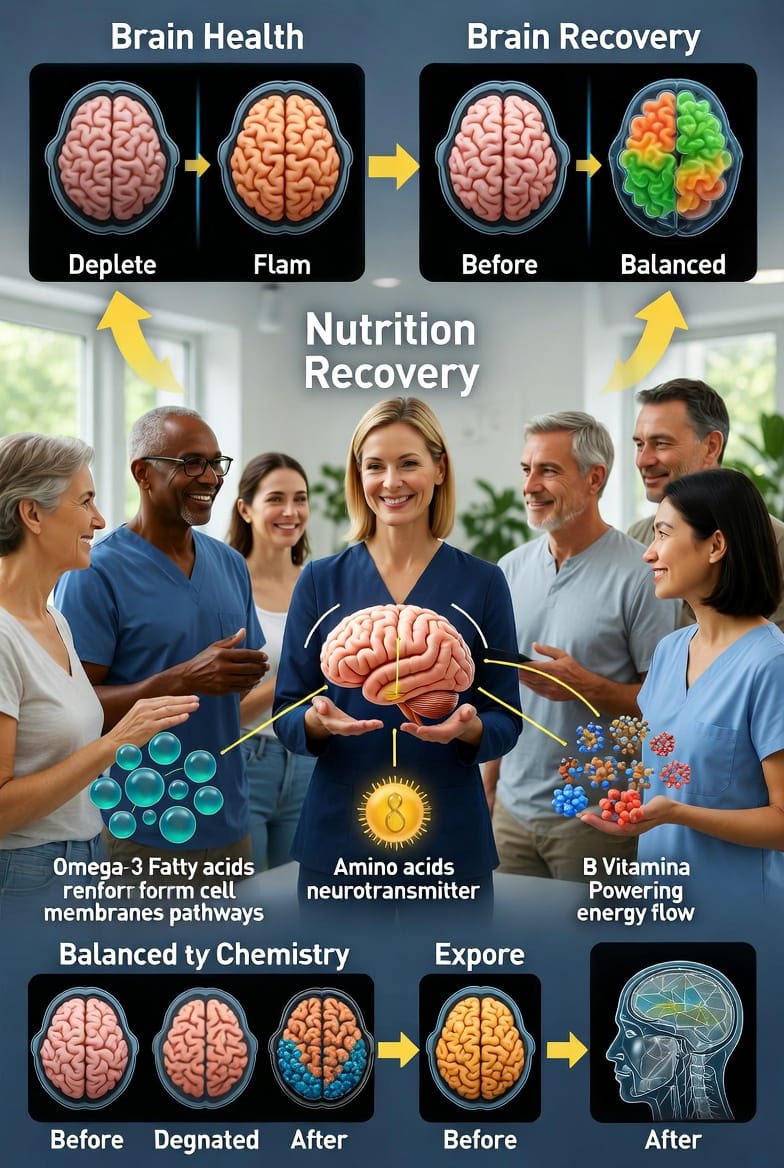
Protein supplies amino acids such as tyrosine and tryptophan, which serve as direct building blocks for dopamine and serotonin. Without adequate protein, the brain cannot maintain healthy levels of these feel-good chemicals, increasing the risk of emotional instability. Complex carbohydrates provide steady glucose to the brain, preventing the blood-sugar crashes that trigger anxiety and mood dips. Omega-3 fatty acids reduce brain inflammation and strengthen cell membranes, supporting clearer thinking and emotional regulation. Finally, B vitamins act as essential cofactors in energy production and nerve signaling, helping combat the fatigue and brain fog common in early recovery.
When these nutrients are consistently supplied through thoughtful meals, the brain begins repairing itself at the cellular level. Synaptic connections strengthen, inflammation decreases, and emotional stability returns—often within weeks of adopting recovery-focused eating habits.
Key Nutrients That Power Recovery and Emotional Stability
Protein: The Foundation for Neurotransmitter Production
Lean sources of protein deliver the amino acids your brain needs most. Incorporating chicken, turkey, fish, eggs, beans, and nuts into daily meals supports dopamine and serotonin synthesis, directly improving motivation and mood. Many of our clients report feeling more focused and less anxious after increasing their protein intake under professional guidance.
Complex Carbohydrates: Stabilizing Blood Sugar and Mood
Whole grains, sweet potatoes, quinoa, and vegetables release energy slowly, preventing the roller-coaster blood-sugar swings that fuel emotional turmoil. This steady supply helps maintain emotional stability throughout the day, reducing the urge to self-medicate with substances.
Omega-3 Fatty Acids: Protecting and Repairing Brain Structure
Found abundantly in fatty fish, flaxseeds, walnuts, and chia seeds, omega-3 fatty acids are critical for rebuilding brain cell membranes damaged by substance use. They also lower inflammation, which research links to depression and anxiety in recovery. Regular consumption promotes clearer cognition and a greater sense of calm.
B Vitamins: Energizing the Nervous System
B vitamins (especially B1, B6, B9, and B12) are often severely depleted by alcohol and drug use. These nutrients support energy metabolism and nerve health, helping lift the mental fog and fatigue that can derail progress. Leafy greens, eggs, legumes, and fortified whole grains are excellent sources that restore vitality naturally.
The Transformative Role of Nutritional Counseling in Rehab
Nutritional counseling elevates simple healthy eating into a targeted recovery tool. Trained professionals assess each individual’s unique deficiencies, medical history, and preferences to create sustainable meal plans. This personalized approach ensures nutrients are delivered exactly when and how the body needs them most.
Counselors also teach practical skills—reading labels, meal prepping, and recognizing emotional eating triggers. In our program, clients learn to view food as medicine that supports long-term sobriety. Many discover that addressing nutritional gaps reduces cravings dramatically and improves sleep, energy, and overall outlook within the first month.
Practical Strategies for Implementing Dietary Changes
Making lasting dietary shifts feels achievable with the right approach. Start small and build confidence through these proven steps:
- Plan balanced plates using the “half-vegetable, quarter-protein, quarter-complex carb” rule at every meal.
- Stock recovery-friendly snacks such as nuts, Greek yogurt, fresh fruit, and whole-grain crackers to stabilize energy between sessions.
- Stay hydrated—dehydration worsens mood and cravings; aim for at least eight glasses of water daily.
- Involve the community by sharing meals with peers; social support makes healthy eating more enjoyable and sustainable.
- Track your progress in a simple journal noting mood, energy, and cravings to see tangible improvements.
These small, consistent changes compound into profound brain healing and emotional stability. Clients often share stories of waking up feeling hopeful rather than overwhelmed—proof that nutrition truly works.
Recovery-Supporting Foods to Embrace Daily
Focus on these nutrient-dense options that directly aid healing:
- Leafy greens (spinach, kale, Swiss chard) packed with B vitamins and magnesium for calm nerves.
- Fatty fish (salmon, mackerel, sardines) rich in omega-3s for brain repair.
- Eggs offering complete protein and choline for memory and mood.
- Nuts and seeds (walnuts, almonds, flaxseeds) delivering healthy fats and fiber.
- Complex carbohydrates (quinoa, brown rice, oats, sweet potatoes) for steady energy.
Incorporating these foods daily creates a powerful internal environment for recovery. Many participants describe the shift from constant exhaustion to steady vitality as life-changing.

Overcoming Common Challenges in Recovery Nutrition
Some individuals worry about cost, time, or taste preferences when starting new eating habits. Rest assured—our nutritional counseling team provides budget-friendly options, quick recipes, and flavor-enhancing techniques that make healthy eating both accessible and delicious. Cultural and personal preferences are always honored, ensuring plans feel sustainable rather than restrictive.
Cravings for sugary or processed foods often decrease naturally as nutrient levels rise and blood sugar stabilizes. Patience and consistency are key; the brain and body respond positively when supported with care.
Long-Term Benefits of Nutrition in Recovery
Sustained dietary changes deliver benefits that extend far beyond early sobriety. Improved neurotransmitter function leads to greater emotional resilience, reducing the risk of relapse. Enhanced brain structure from omega-3s supports sharper cognition and better decision-making. Overall physical health improves, boosting self-esteem and confidence in maintaining a substance-free life.
Many graduates of our program continue their nutrition journey at home, reporting stronger relationships, better sleep, and a renewed sense of purpose. Nutrition truly becomes a lifelong ally in protecting the hard-won gains of recovery.
Integrating Nutrition with Your Overall Recovery Plan
Nutrition works best when woven seamlessly into comprehensive care. Pairing dietary changes with therapy, exercise, and support meetings creates a holistic approach that addresses body, mind, and spirit. At our center, every client receives integrated support, ensuring dietary changes reinforce every other aspect of healing.
You are not alone on this path. Professional guidance makes the process smoother, more effective, and deeply rewarding.
Heal Your Body as You Heal Your Mind
The evidence is clear: nutrition in recovery is not a luxury—it is a necessity for optimal brain healing and emotional stability. By understanding nutrient depletion, embracing key foods, and engaging with expert nutritional counseling, you empower yourself to build a stronger, more resilient foundation for lasting sobriety.
Take the next step today. Heal your body as you heal your mind. Your brighter, more stable future begins with the very next nourishing meal.
Brain Healing Starts with the Right Food – Call for Expert Guidance