The Mold Threshold: Understanding When Water Damage Becomes a Health Hazard
Water damage in your home can seem like a minor inconvenience at first—a leaky roof or a burst pipe that leaves behind damp walls and a musty smell. But when does this everyday issue cross the line into a serious health hazard? The key lies in understanding the "mold threshold," the point where moisture fosters the growth of potentially toxic molds that can impact your well-being. In this comprehensive guide, we'll explore the conditions that lead to harmful mold proliferation, distinguish between harmless "cosmetic" mold and dangerous varieties, and highlight the health symptoms associated with prolonged exposure. Rest assured, with prompt professional intervention, you can safeguard your indoor environment and protect your family's health.
Breathe Safe Again – Schedule Professional Remediation
As a leading authority in water damage restoration, we emphasize that early detection and expert remediation are your best defenses. Let's dive into the science and solutions, empowering you to recognize risks and take action confidently.
What Causes Water Damage to Turn Toxic?
Water damage doesn't become a health threat overnight. It starts with moisture intrusion from sources like floods, plumbing failures, or high humidity. When left unaddressed, this dampness creates an ideal breeding ground for mold spores, which are naturally present in the air but thrive in wet conditions.
Key factors accelerating mold growth include:
- Prolonged Moisture: Water that lingers for more than 48 hours significantly increases the risk. Porous materials like drywall, carpet, and wood absorb water, providing nutrients for molds.
- Poor Ventilation: Areas with limited airflow, such as basements or attics, trap humidity, allowing spores to colonize.
- Temperature Ranges: Molds prefer 77-86°F (25-30°C), common in many homes, especially during warmer months.
- Organic Matter: Dust, paper, or food residues act as food sources, fueling rapid expansion.
Among the most concerning is toxic mold growth, particularly species like Stachybotrys chartarum (often called "black mold"). This fungus produces mycotoxins—harmful compounds that can become airborne and inhaled. Other problematic molds include Aspergillus, Penicillium, and Cladosporium, each with varying toxicity levels. While not all molds are deadly, ignoring them can lead to widespread contamination, turning a simple leak into a pervasive issue.
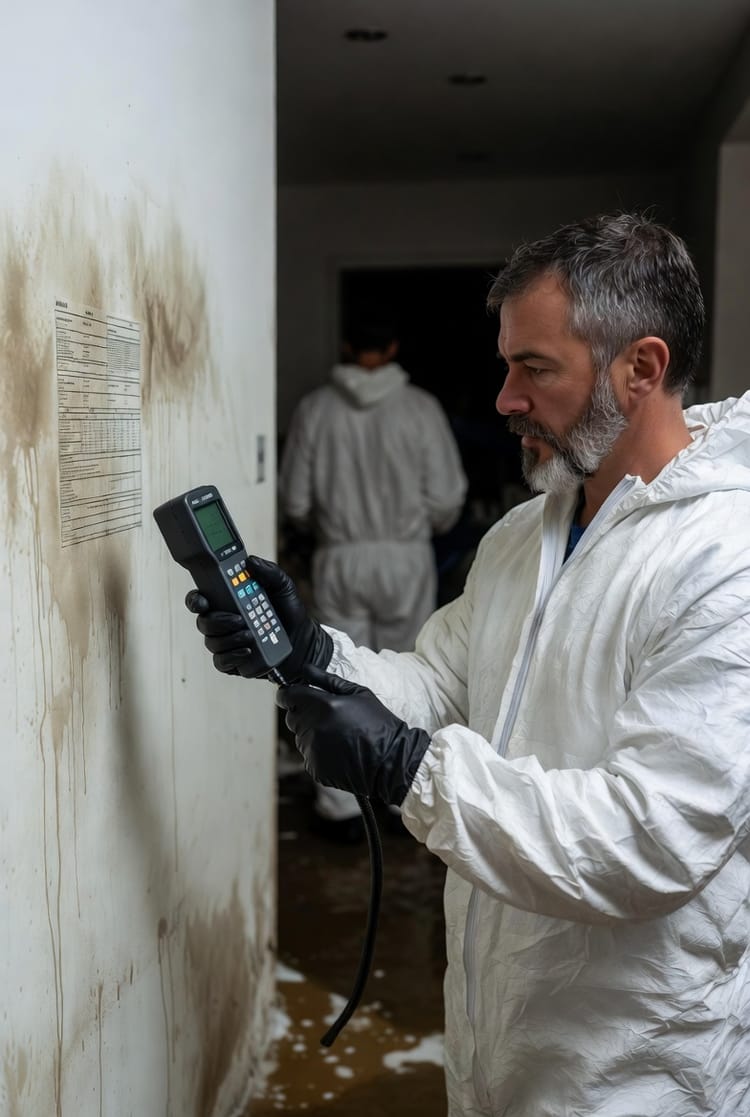
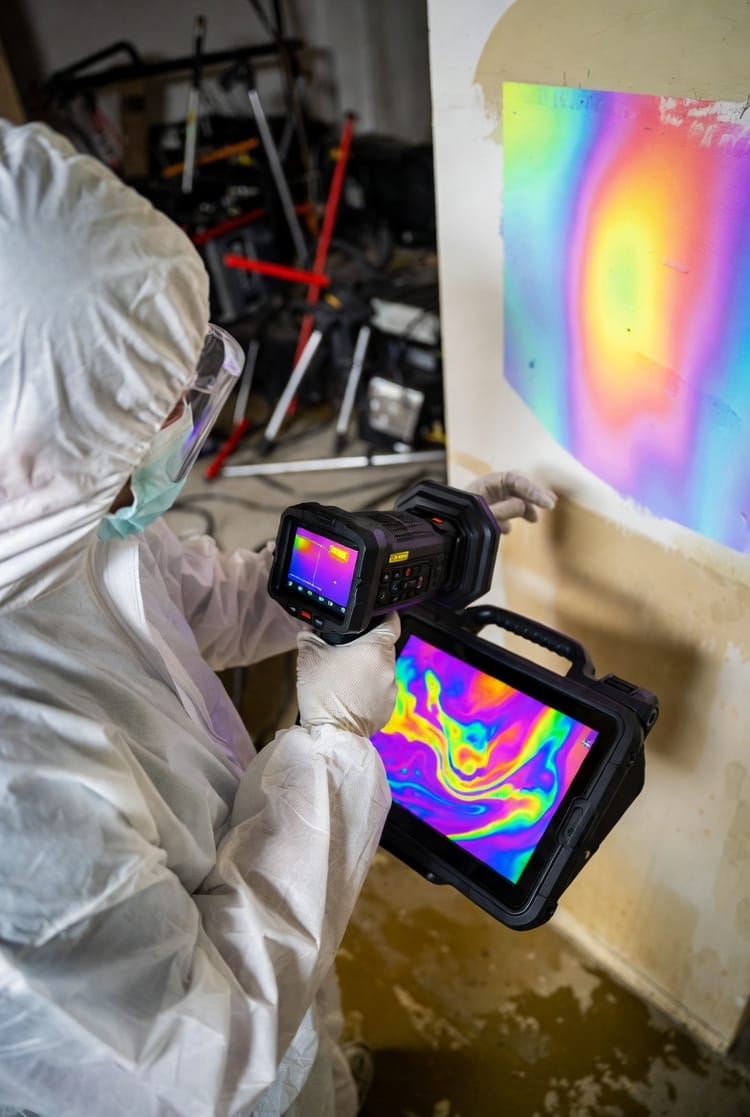
Remember, the threshold isn't just about visible signs; hidden moisture behind walls can silently cultivate hazards. Professional tools like moisture meters and thermal imaging are essential for uncovering these risks.
Cosmetic Mold vs. Hazardous Varieties: Know the Difference
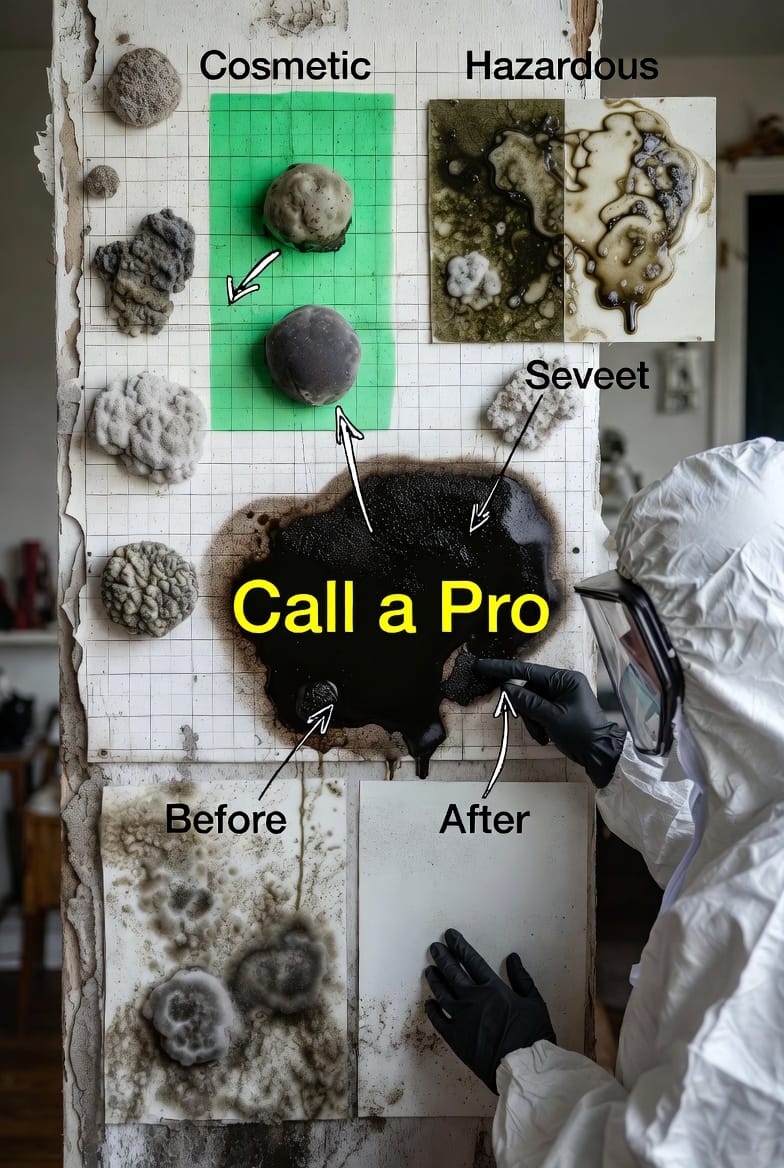
Not all mold is created equal. Distinguishing between benign "cosmetic" mold and hazardous types is crucial for prioritizing your response. Cosmetic mold typically appears as small, surface-level spots on non-porous materials like tiles or glass. It's often harmless, caused by temporary condensation, and can be wiped away with household cleaners without long-term health effects.
In contrast, hazardous molds penetrate deeper into materials, releasing spores and toxins that compromise indoor air quality. Here's how to spot the differences:
- Appearance: Cosmetic mold is usually powdery and light-colored (white or green). Hazardous varieties, like black mold, appear slimy, dark, and clustered, often with a musty odor.
- Location and Spread: Surface mold stays contained; toxic types spread quickly to adjacent areas, indicating underlying moisture problems.
- Health Impact: Benign mold might cause minor allergies, but hazardous ones link to severe symptoms (more on this later).
- Growth Speed: Cosmetic spots develop slowly; dangerous molds can cover large areas in days under ideal conditions.
If you suspect hazardous mold, avoid DIY attempts—they can disperse spores further. Instead, opt for a professional assessment to identify species through lab testing and determine remediation needs. This approach ensures thorough removal without cross-contamination.
Health Symptoms from Prolonged Mold Exposure
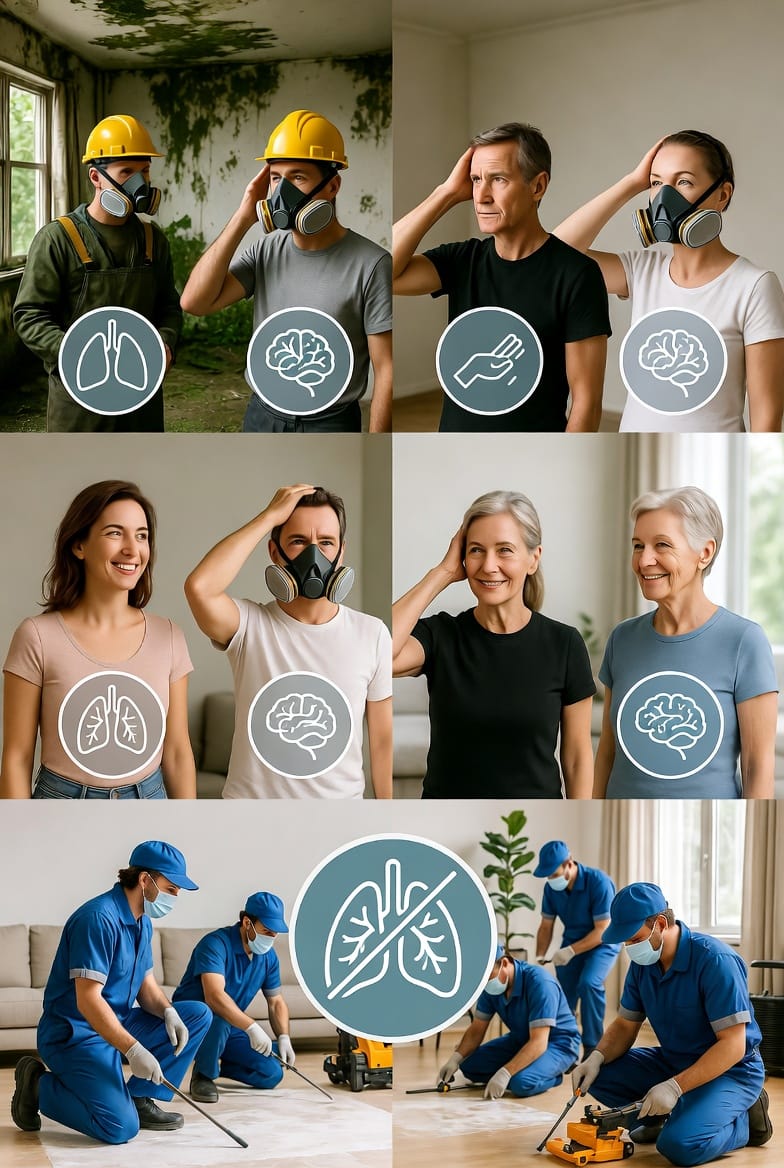
Exposure to toxic molds after water damage isn't just uncomfortable—it's a potential health hazard that can affect anyone, especially vulnerable groups like children, the elderly, or those with respiratory conditions. Mycotoxins from molds like Stachybotrys can trigger inflammation, immune responses, and chronic issues if ignored.
Common health symptoms include:
- Respiratory Problems: Wheezing, coughing, or shortness of breath, often mistaken for allergies or asthma flares.
- Neurological Effects: Headaches, dizziness, memory fog, or fatigue that persists despite rest.
- Skin Irritations: Rashes, hives, or itchy eyes from spore contact.
- Immune System Strain: Frequent infections or exacerbated autoimmune conditions.
- Long-Term Risks: In severe cases, prolonged exposure may contribute to conditions like hypersensitivity pneumonitis or mycotoxicosis.
These symptoms often worsen with time, as mold colonies expand and release more volatiles. Poor indoor air quality post-water damage amplifies this, with studies showing up to 50% of affected homes reporting health complaints. The good news? Symptoms typically resolve once the source is remediated professionally.
To mitigate risks, maintain humidity below 60%, use dehumidifiers, and ensure prompt drying after leaks. But if symptoms arise, consult a doctor and a remediation specialist—their combined expertise restores health and home.
The Role of Professional Assessment in Mold Detection
Crossing the mold threshold demands more than guesswork. A professional assessment uses advanced techniques to evaluate risks accurately:
- Air and surface sampling to identify mold types and concentrations.
- Moisture mapping to locate hidden water sources.
- Infrared scans for undetected leaks.
This authoritative process provides a clear remediation plan, preventing recurrence. DIY tests often miss nuances, leading to incomplete fixes. Trust certified experts for peace of mind.
Effective Remediation Strategies for Health Safety
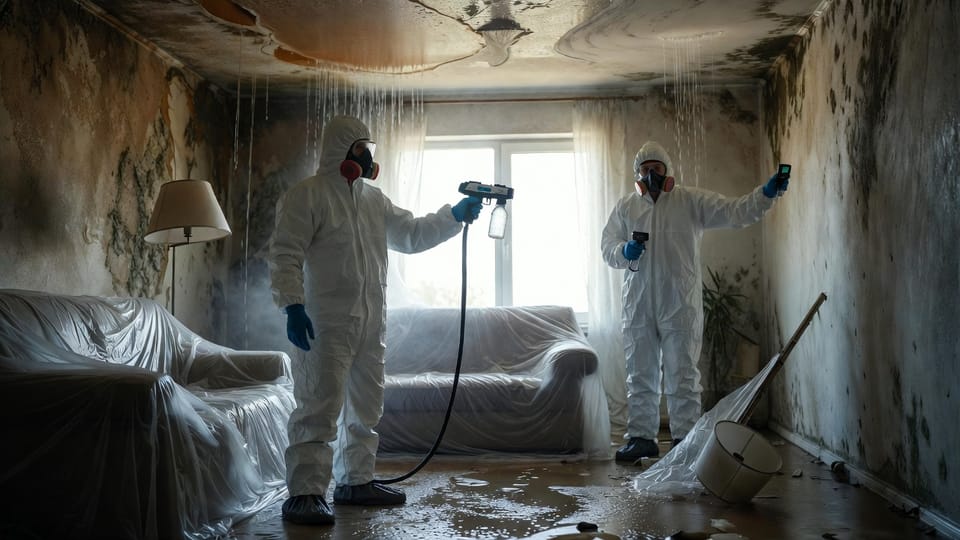
Once assessed, remediation focuses on safe removal and prevention. Professionals in full PPE contain the area, remove contaminated materials, and apply antimicrobial treatments. HEPA filtration cleans the air, ensuring toxins are eliminated.
Post-remediation, they verify success with follow-up tests. This comprehensive approach not only addresses current hazards but fortifies your home against future issues.
Preventing the Mold Threshold: Proactive Home Tips
Prevention is your strongest ally. Implement these strategies to avoid health hazards:
- Inspect for leaks regularly, especially after storms.
- Use exhaust fans in bathrooms and kitchens to reduce humidity.
- Clean gutters and ensure proper drainage around your foundation.
- Invest in mold-resistant materials during renovations.
By staying vigilant, you minimize risks and maintain a healthy living space.
When to Act: Recognizing the Urgency
If water damage lingers, don't wait for visible mold. Early signs like persistent odors or discoloration signal potential hazards. Delaying can escalate costs and health impacts.
In conclusion, understanding the mold threshold empowers you to protect your home and health. With knowledge of growth conditions, mold distinctions, and symptoms, plus the assurance of professional help, you can navigate water damage confidently. Stay informed, act swiftly, and breathe easy in a safe environment.
Safe Home Starts with Expert Mold Remediation – Call Now