The Lightning Strike Assessment: Evaluating Trees After a Strike and Determining Fate
When lightning strikes a tree on your property, the aftermath can feel overwhelming. Lightning strike assessment becomes essential to protect your home, family, and landscape investment. Many homeowners assume every damaged tree must come down immediately, yet professional evaluation often reveals that timely care can save valuable specimens. This comprehensive guide walks you through post-storm evaluation, explains how to distinguish immediate versus delayed death, and clarifies when tree removal is the safest choice versus when recovery remains possible.
Lightning-Damaged Tree? Call for Expert Assessment Now
At first glance, lightning damage appears sudden and catastrophic. In reality, the effects unfold over days, weeks, or even months. Understanding this timeline empowers you to act decisively while avoiding unnecessary panic or costly mistakes. Whether you’re dealing with a backyard oak, maple, or pine, a structured lightning strike assessment provides clarity and peace of mind.
Understanding How Lightning Affects Trees
Lightning delivers millions of volts in a fraction of a second, generating intense heat that can exceed 50,000 degrees Fahrenheit. The electrical current seeks the path of least resistance—often traveling through the tree’s moisture-rich vascular system. This rapid energy transfer causes explosive steam expansion, stripping bark and fracturing wood.
Key risks include hidden internal damage that compromises structural integrity long after the storm passes. Roots may suffer unseen trauma, and the cambium layer—the vital tissue responsible for nutrient transport—can be destroyed in seconds. Yet not every strike is fatal. Trees with robust health and deep root systems frequently survive with proper intervention.
Immediate Signs of a Lightning Strike
Within hours of the event, several visible indicators confirm a strike occurred. Look for:
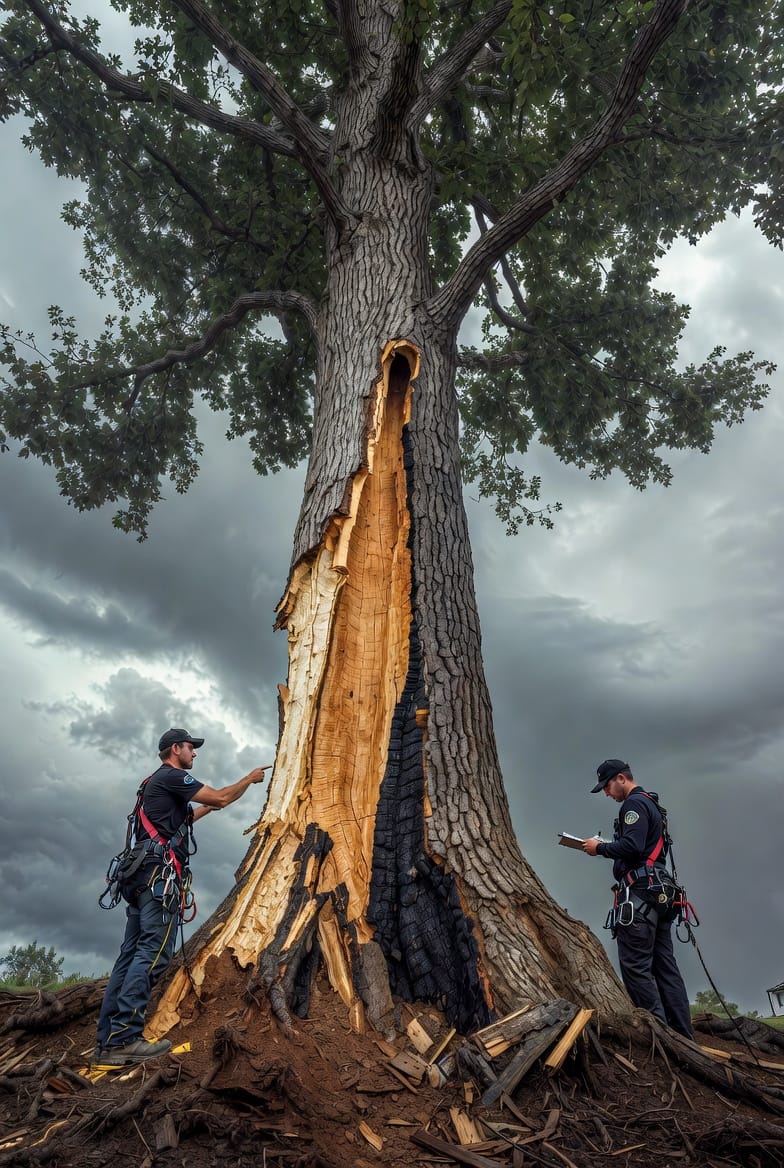
- Vertical bark strips blown outward, revealing bright or scorched wood beneath
- Charred or blackened branches at the canopy peak
- Shattered trunk sections or deep spiral cracks
- Sudden leaf wilt or browning on one side only
- Ground heaving or soil disruption near the root zone
These immediate signs demand prompt attention. However, absence of dramatic external damage does not guarantee safety. Some strikes travel internally, leaving the exterior deceptively intact.
Professional tip: Photograph every visible symptom before weather erases evidence. Documentation supports insurance claims and guides expert evaluation.
Assessing Bark and Trunk Damage
The trunk tells the most critical story. Bark damage severity directly correlates with survival odds. Minor superficial scorching may heal naturally as the tree compartmentalizes the wound. Extensive stripping that circles more than 50 percent of the trunk circumference, however, severs the cambium and often proves fatal.
Inspect for:
- Depth of the scar—does it penetrate beyond the outer bark into living tissue?
- Length of the vertical strip—longer scars increase vascular disruption
- Presence of sap flow or new callus growth within weeks
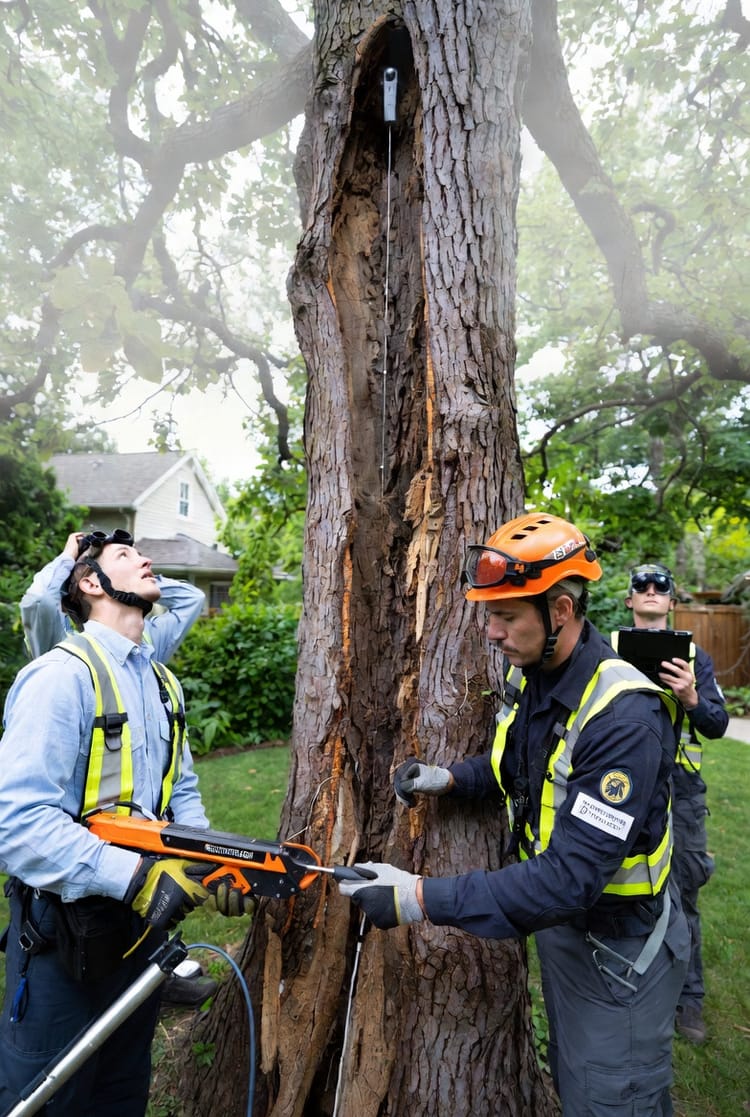
When cambium damage affects large continuous sections, the tree loses its ability to transport water and nutrients effectively. This leads to branch dieback and eventual decline. Certified arborists use specialized probes and electrical resistance testing to map hidden internal decay that visual inspection alone cannot reveal.
Evaluating Root and Soil Impact
Lightning frequently exits through the root system, traveling into the ground and causing explosive soil displacement. Root damage may remain invisible above ground yet compromise stability dramatically. Signs include:
- Soil mounding or cracking around the base
- Exposed or severed large anchor roots
- Sudden leaning or shifting posture after rain
A compromised root plate turns even a partially damaged tree into a safety hazard. During high winds or saturated soil conditions, the risk of failure multiplies. Professional lightning strike assessment includes root-zone excavation and ground-penetrating radar when necessary to determine underground health accurately.
Immediate Versus Delayed Tree Death
Trees struck by lightning follow two distinct timelines. Immediate death occurs when the strike vaporizes critical vascular tissues or shatters the trunk beyond repair. The canopy may brown within days, and the tree never leafs out the following spring.
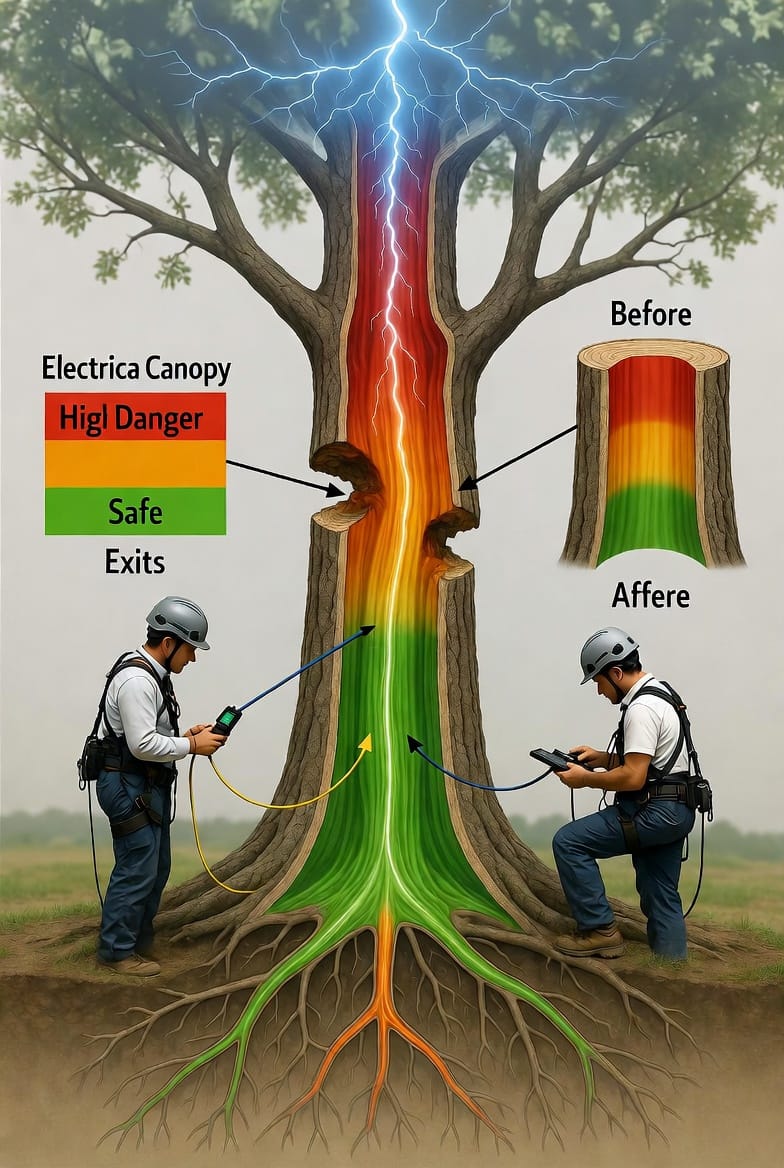
Delayed death presents a more deceptive picture. The tree may appear to recover initially, producing new foliage while internal decay progresses. Months or even years later, structural weakness leads to sudden branch failure or total collapse. This delayed response underscores why post-storm evaluation should never rely solely on short-term observations.
Reassuringly, many trees demonstrate remarkable resilience. With expert monitoring and targeted care, they can seal wounds, redirect growth, and thrive for decades.
When Tree Removal Becomes Necessary
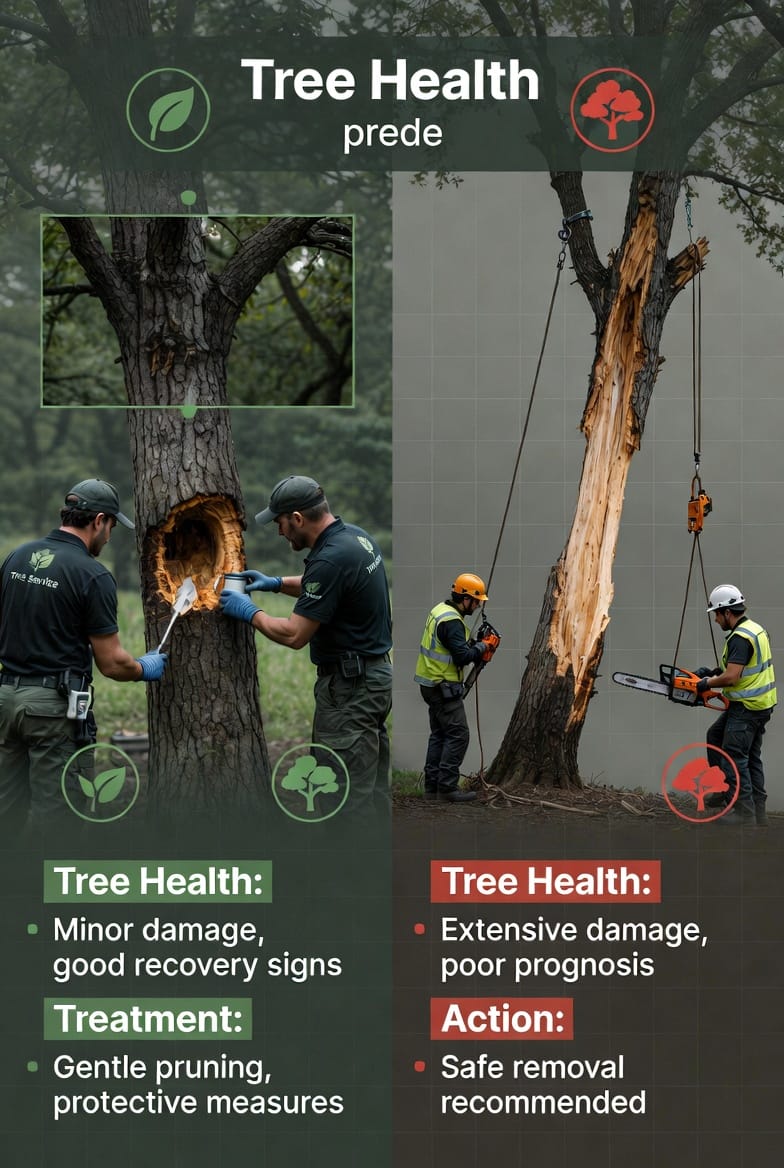
Certain damage thresholds make tree removal the only responsible choice. Removal is required when:
- More than one-third of the canopy is dead or dying
- The trunk shows extensive spiral cracking that compromises load-bearing capacity
- Root system damage exceeds 40 percent, creating unacceptable lean risk
- The tree stands near high-traffic areas, homes, or power lines
Ignoring these indicators invites property damage, personal injury, or liability concerns. Prompt, professional tree removal after lightning ensures safety while allowing you to replant with lightning-resistant species better suited to your region.
Signs a Tree Can Recover
Conversely, many trees display clear indicators of recovery potential. Minor bark damage limited to narrow strips often heals completely. Additional positive signs include:
- Rapid callus formation around wound edges
- Healthy new leaf flush on unaffected branches
- Strong, undamaged root flare and soil stability
- No secondary pest or fungal invasion
When these conditions exist, a structured recovery plan—pruning deadwood, deep root fertilization, and regular monitoring—gives the tree every advantage. Homeowners who choose preservation frequently enjoy both aesthetic continuity and ecological benefits.
The Value of Professional Lightning Strike Assessment
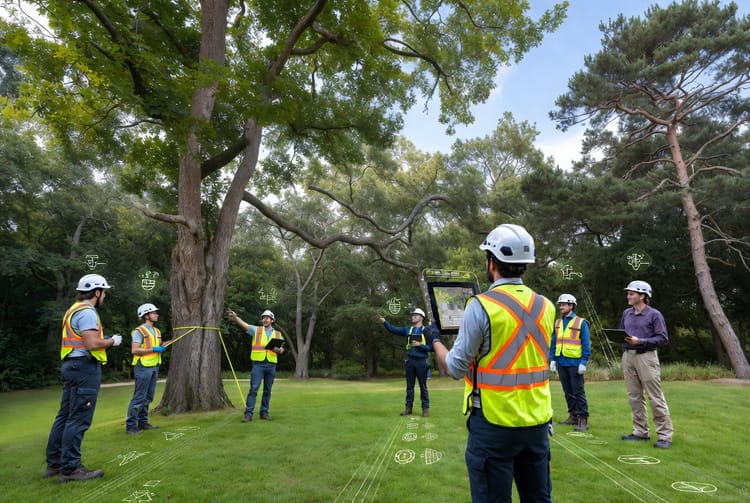
DIY evaluation carries significant limitations. Certified arborists bring diagnostic tools, decades of experience, and safety protocols that protect both the tree and your property. They assess not only visible damage but also hidden structural weaknesses invisible to the untrained eye.
A thorough lightning strike assessment typically includes:
- Detailed visual inspection from base to canopy
- Resistograph or tomography testing for internal decay
- Soil and root-zone analysis
- Written report with clear recommendations and cost estimates
This professional documentation also strengthens insurance claims and provides peace of mind during uncertain recovery periods.
Safety Considerations Every Homeowner Must Know
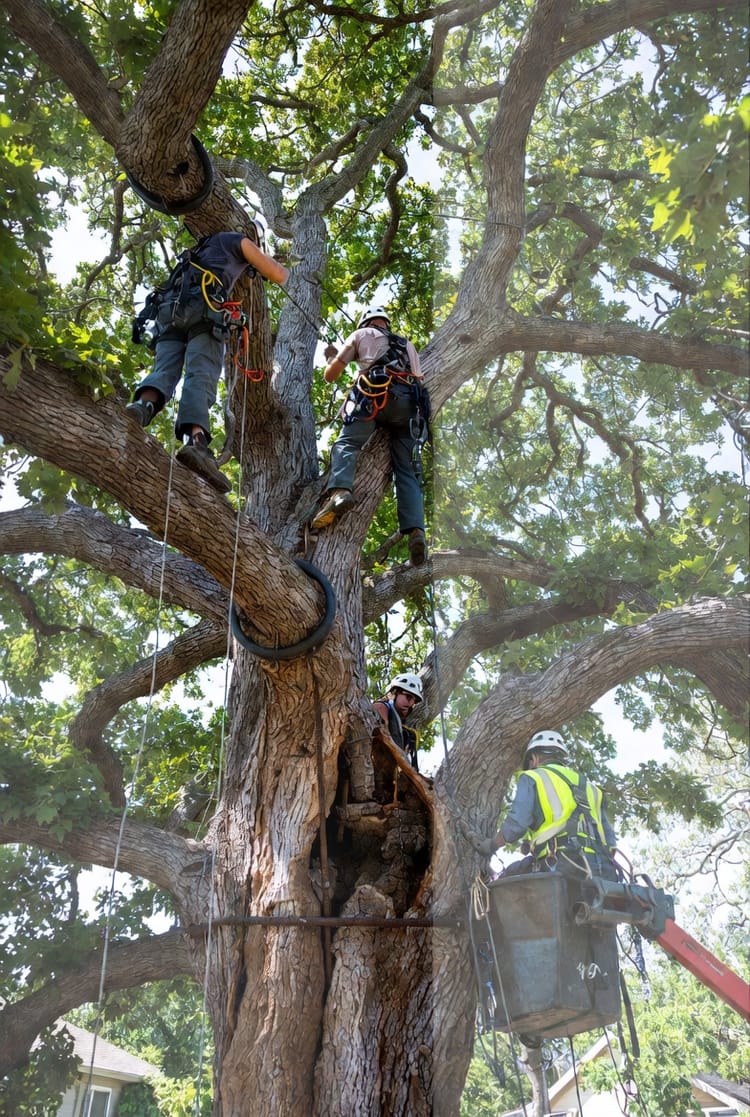
Lightning-damaged trees pose immediate risks. Unstable limbs can fall without warning, and compromised trunks may fail under their own weight. Never attempt personal climbing or heavy pruning on suspected strike victims. Instead, maintain a safe distance and contact qualified professionals who arrive equipped with proper rigging, chainsaws, and aerial lift capabilities.
Risk mitigation also involves clearing the area of people and pets until evaluation is complete. Storm debris may conceal energized power lines or hidden hazards.
Long-Term Care Strategies for Surviving Trees
Trees that pass assessment benefit from proactive support. Mulching the root zone conserves moisture and moderates soil temperature. Targeted fertilization restores nutrient balance depleted by vascular disruption. Regular pruning removes deadwood and improves airflow, reducing secondary infection risk.
Monitoring remains crucial for the first two growing seasons. Seasonal inspections catch any delayed decline early, allowing timely intervention before small issues escalate.
Common Myths About Lightning and Trees
Many homeowners believe “lightning rods protect trees” or “all struck trees die eventually.” Neither statement holds universally true. While lightning protection systems help in specific high-value cases, they do not eliminate risk entirely. Similarly, countless trees recover fully when given appropriate professional care.
Separating fact from fiction enables informed decisions rather than emotional reactions.
Choosing the Right Tree Service Partner
Not every tree company possesses the specialized knowledge required for accurate lightning strike assessment. Seek providers with International Society of Arboriculture (ISA) certification, comprehensive insurance, and transparent reporting practices. Experience with storm damage claims further ensures smooth handling of your situation.
The right team delivers authoritative guidance delivered with genuine care for both your landscape and your safety.
Conclusion: Know Your Tree’s Fate After Lightning
Lightning strikes create uncertainty, yet they do not have to result in irreversible loss. Through careful lightning strike assessment, you gain the knowledge needed to protect what matters most. Whether the recommendation favors preservation or tree removal, acting promptly safeguards your property and restores confidence in your landscape’s future.
Professional Lightning Strike Evaluation – Call Today