The Invisible Fence: Exploring Perimeter Intrusion Detection with Buried Sensors and Outdoor Beams
In today's world, where home security is more crucial than ever, relying solely on traditional cameras and door sensors might leave your property vulnerable to savvy intruders. Imagine stopping threats before they even approach your front door. That's the power of perimeter intrusion detection—a sophisticated layer of defense that acts like an invisible fence around your entire property. This article delves into advanced technologies such as buried geophone cables and outdoor passive infrared (PIR) beams, explaining how they provide early warning systems to safeguard your home. We'll explore their mechanics, benefits, and integration, all while maintaining a reassuring tone: with the right setup, you can rest easy knowing your boundaries are protected.
Buried Sensors & Invisible Beams – Call for Advanced Perimeter Security
Understanding Perimeter Intrusion Detection
Perimeter intrusion detection shifts the focus from reactive measures inside your home to proactive barriers at the edges of your property. Unlike standard alarms that trigger only when a door or window is breached, these systems detect unauthorized access at the property line, giving you precious time to respond. This approach is especially vital for larger estates, rural homes, or properties with expansive yards where intruders could lurk undetected.
Key advantages include:
- Early Alerts: Notifications arrive seconds after detection, allowing for swift action like calling authorities or activating lights.
- Deterrence Factor: Knowing a property is fortified often discourages potential threats.
- Integration with Smart Homes: Seamlessly connects to apps, cameras, and automated responses.
By going beyond cameras—which can be evaded or tampered with—and door sensors that only activate post-entry, perimeter systems create a multi-layered shield. Let's break down the core technologies.
The Science Behind Buried Geophone Cables
At the heart of underground perimeter security lies buried geophone cables, a technology inspired by seismic detection used in geology. These sensors are embedded just below the soil surface, forming an invisible barrier that picks up vibrations from footsteps or vehicle movements.
How do they work? Geophones convert ground vibrations into electrical signals. When an intruder steps across the perimeter, the cable detects pressure waves—subtle disturbances in the earth. Advanced algorithms then analyze these signals to distinguish human activity from harmless sources like wind, rain, or small animals.
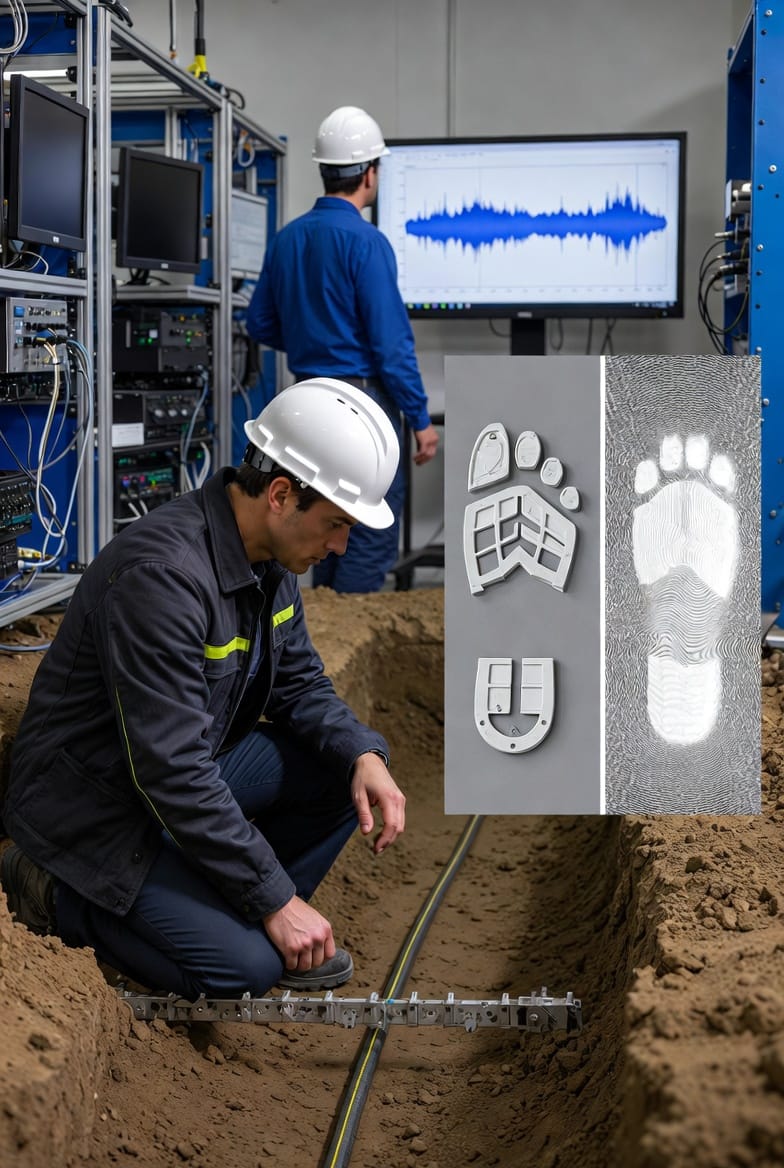
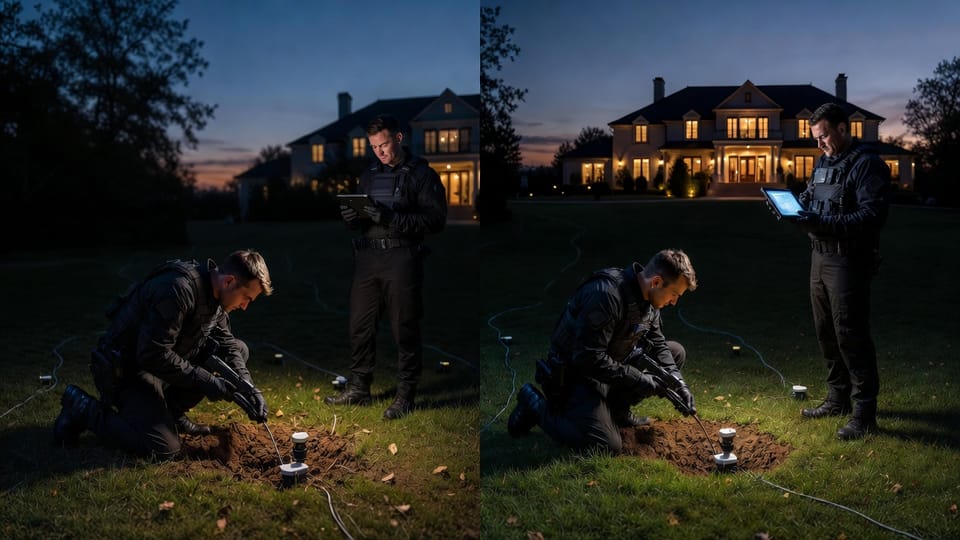
Consider the installation process: Professionals dig a shallow trench around your property's boundary, lay the sensor cable, and cover it with soil or turf for complete invisibility. No unsightly fences or wires mar your landscape. Once active, the system connects to a central control panel that processes data in real-time.
Benefits of buried geophone cables:
- Weather Resistance: Buried design protects against rain, snow, and extreme temperatures.
- Low False Alarms: Intelligent software filters out non-threats, such as deer or falling branches.
- Scalability: Ideal for irregularly shaped properties, covering hundreds of meters without gaps.
- Cost-Effectiveness Over Time: Initial setup might seem investment-heavy, but reduced insurance premiums and prevented losses make it worthwhile.
In practice, these cables have proven invaluable. For instance, on a sprawling suburban estate, they can alert homeowners to someone scaling a distant fence long before reaching the house. This early warning empowers you to activate floodlights, sirens, or even automated gates, turning potential risks into non-events.
Outdoor Passive Infrared (PIR) Beams: The Invisible Tripwire
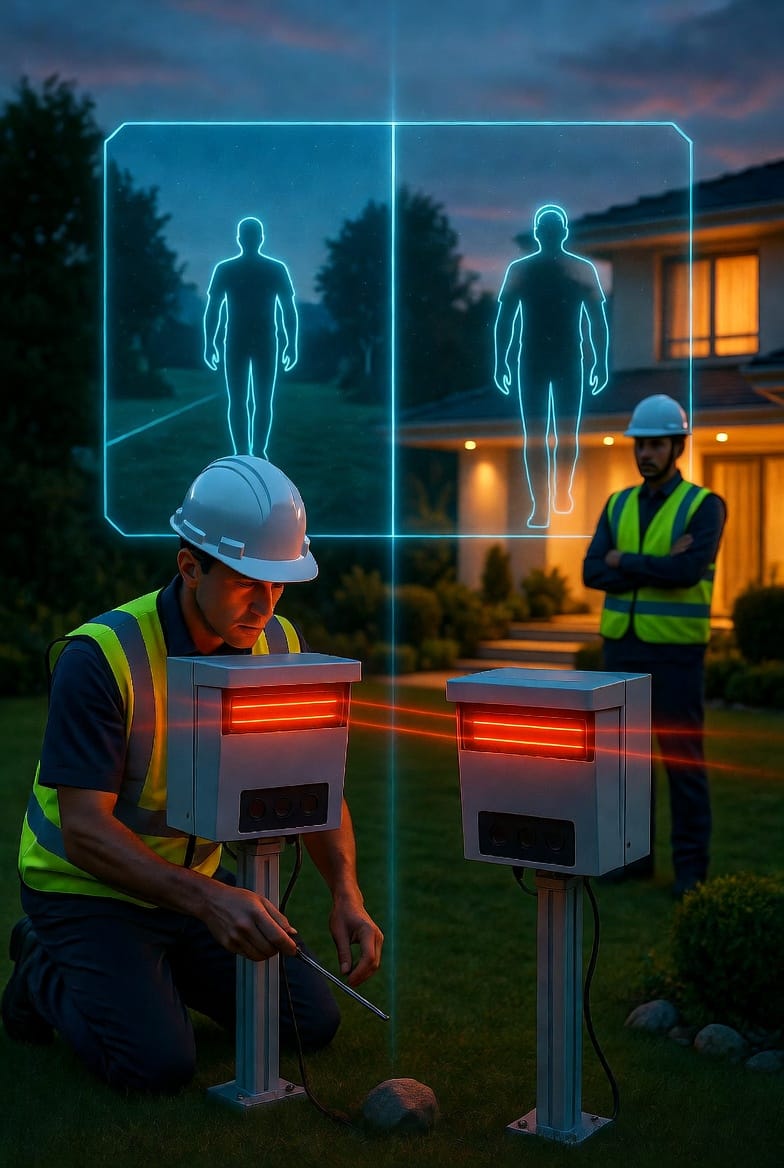
Complementing buried sensors are outdoor PIR beams, which create virtual walls of detection using infrared technology. These devices consist of paired transmitters and receivers mounted on posts or walls, emitting invisible beams that form a "tripwire" across entry points like driveways or garden paths.
The mechanism is straightforward yet ingenious: When an object crosses the beam, it interrupts the infrared signal, triggering an alarm. Unlike active infrared that constantly scans, passive versions detect heat signatures from living beings, making them energy-efficient and less prone to environmental interference.
Installation tips for optimal performance:
- Strategic Positioning: Place beams at waist height to avoid triggering by small animals.
- Multiple Layers: Use stacked beams for taller barriers, preventing jumps or crawls.
- Integration with Lighting: Pair with motion-activated lights for visual confirmation.
What sets PIR beams apart is their adaptability. They excel in areas where burying cables isn't feasible, such as paved driveways or rocky terrain. Moreover, they provide zoned detection—dividing your perimeter into segments for precise alerts, like "Intrusion detected in Zone 3: Backyard Gate."
Risks to consider, though minimal with quality systems:
- Weather Vulnerability: Heavy fog or foliage growth can occasionally disrupt beams, but regular maintenance mitigates this.
- Pet Interference: Larger pets might trigger alarms; adjustable sensitivity settings resolve most issues.
By combining PIR beams with buried sensors, you achieve comprehensive coverage. For example, beams handle above-ground paths while cables monitor open fields, ensuring no blind spots.
Comparing Perimeter Detection Technologies
To help you choose the right system, let's evaluate key options. While buried geophone cables and outdoor PIR beams stand out, other methods like fence-mounted sensors or microwave barriers offer alternatives.
In a side-by-side analysis:
- Buried Geophone Cables: Moderate cost; completely invisible; low weather/pet vulnerability; excellent integration with smart systems.
- Outdoor PIR Beams: Affordable; semi-visible (devices on posts); moderate weather/pet issues; seamless app connectivity.
- Fence-Mounted Sensors: Low cost; visible; high weather exposure; basic integration.
- Microwave Barriers: Higher cost; invisible; minimal pet interference but weather-sensitive; advanced integration.
This comparison underscores why buried and beam technologies often provide the best balance for residential use.
Implementation and Best Practices
Deploying these systems requires professional expertise to avoid common pitfalls. Start with a site survey: Assess your property's layout, soil type, and potential entry points. Then, select compatible components—ensure your buried cables sync with PIR beams for unified alerts.
Maintenance is key to longevity:
- Regular Checks: Inspect for cable damage or beam alignment shifts.
- Software Updates: Keep algorithms current to refine detection accuracy.
- Testing Protocols: Simulate intrusions quarterly to verify responsiveness.
Integration extends their value. Link to your existing smart home ecosystem for automated responses, such as locking doors or notifying neighbors. For ultimate reassurance, opt for monitored services where professionals oversee alerts 24/7.
Real-World Applications and Success Stories
From high-end villas to family homes, perimeter detection transforms security. In urban settings, where properties border public spaces, these systems prevent casual trespassing. Rural areas benefit from wide-area coverage against wildlife poachers or thieves.
One authoritative study from security experts highlights a 70% reduction in break-in attempts with early perimeter alerts. Homeowners report sleeping better, knowing threats are halted at the boundary.
Addressing Common Concerns
Worried about complexity? Modern systems are user-friendly, with intuitive apps for arming/disarming. Privacy remains intact—no cameras involved unless you add them. And for eco-conscious users, these low-power technologies minimize environmental impact.
In terms of risks, false positives are rare with tuned sensitivity, and professional installation ensures compliance with local regulations.
The Future of Perimeter Security
Advancements like AI-enhanced vibration analysis and solar-powered beams promise even smarter detection. Imagine systems that learn your property's normal patterns, further reducing errors.
As threats evolve, so does defense. Embracing buried sensors and outdoor beams positions you ahead of the curve.
Peace of Mind Begins at Your Property Edge – Call for a Custom Plan