The Ice Maker Inquisition: Troubleshooting Common Refrigerator Ice Production Failures
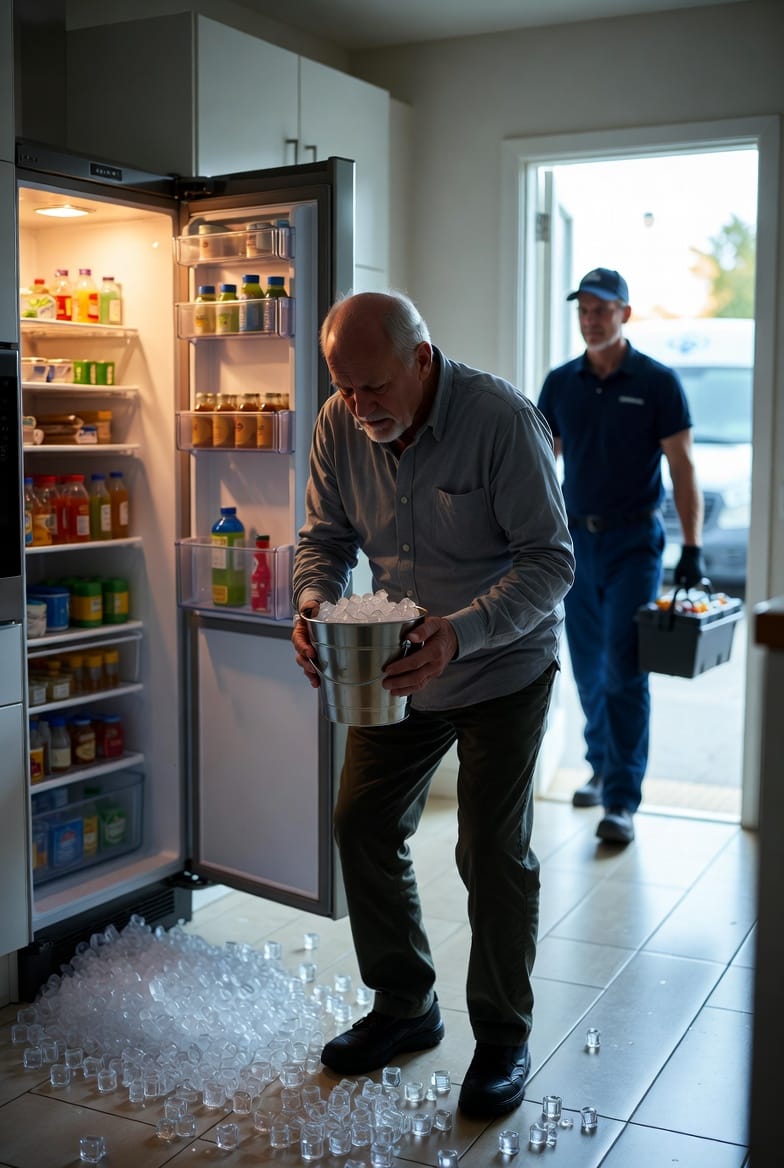
Is your refrigerator's ice maker leaving you high and dry? You're not alone. Refrigerator ice maker problems are among the most common complaints we hear from homeowners. Whether it's a complete halt in ice production or inconsistent cubes, these issues can disrupt your daily routine. But fear not – with a systematic approach, you can diagnose and often resolve them yourself. In this comprehensive guide, we'll walk you through the common failure points in your ice maker system, providing simple checks and troubleshooting steps. Our goal is to empower you with knowledge, saving time and money while ensuring your appliance runs smoothly.
No More Empty Ice Buckets – Call for Fast Repair!
As experts in appliance repair, we've seen it all. From clogged lines to faulty valves, we'll break down the culprits behind your ice-less woes. Remember, while DIY checks are great starting points, some issues require professional intervention to avoid further damage. Let's dive in and interrogate your ice maker – step by step.
Understanding Your Refrigerator's Ice Maker Basics
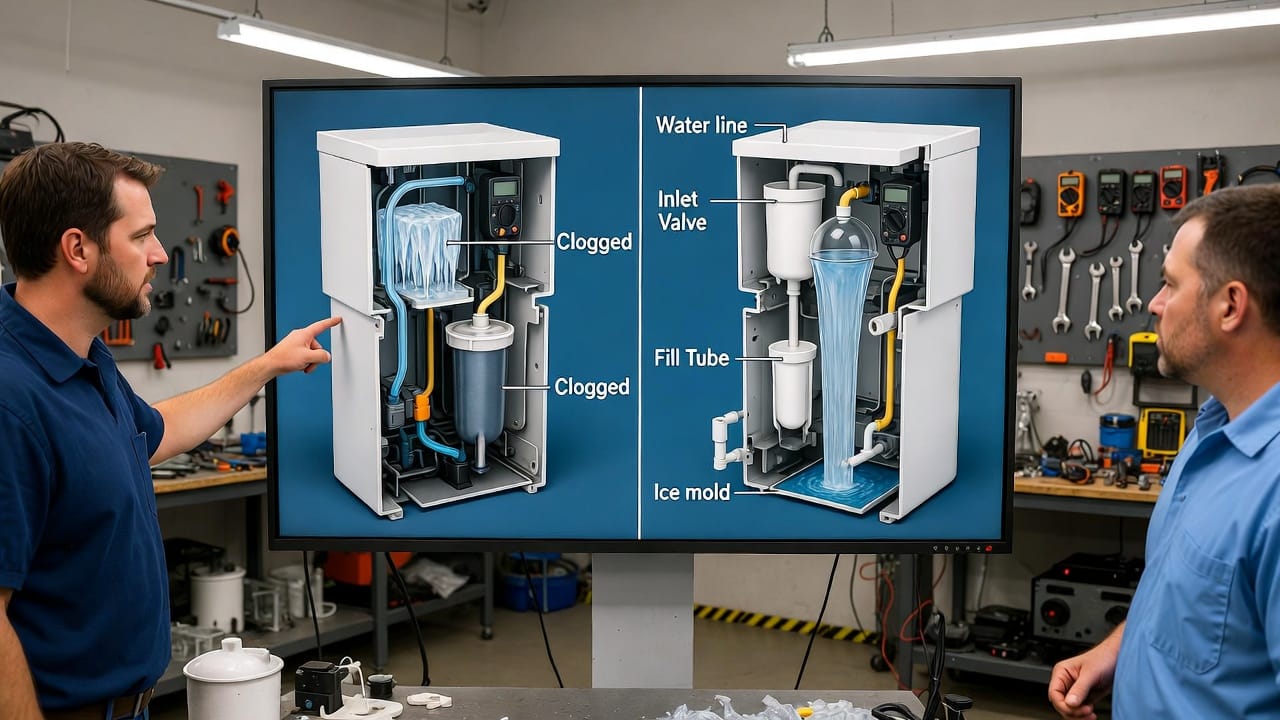
Before we troubleshoot, it's essential to grasp how your ice maker works. Most modern refrigerators feature an automatic ice maker that cycles through filling, freezing, and harvesting ice. Water enters via a supply line, passes through an inlet valve, fills the ice mold, freezes in the freezer compartment, and is ejected into the bin.
Key components include:
- Water inlet valve: Controls water flow to the ice maker.
- Ice maker module: The brain of the operation, managing cycles.
- Supply line and fill tube: Deliver water without leaks or freezes.
- Freezer temperature sensor: Ensures optimal freezing conditions.
If any part falters, ice production stops. Common symptoms? No ice at all, small or hollow cubes, or overflowing trays. By identifying the root cause, you can target fixes effectively. This knowledge not only helps in troubleshooting but also prevents future failures.
Common Complaint: No Ice Production at All
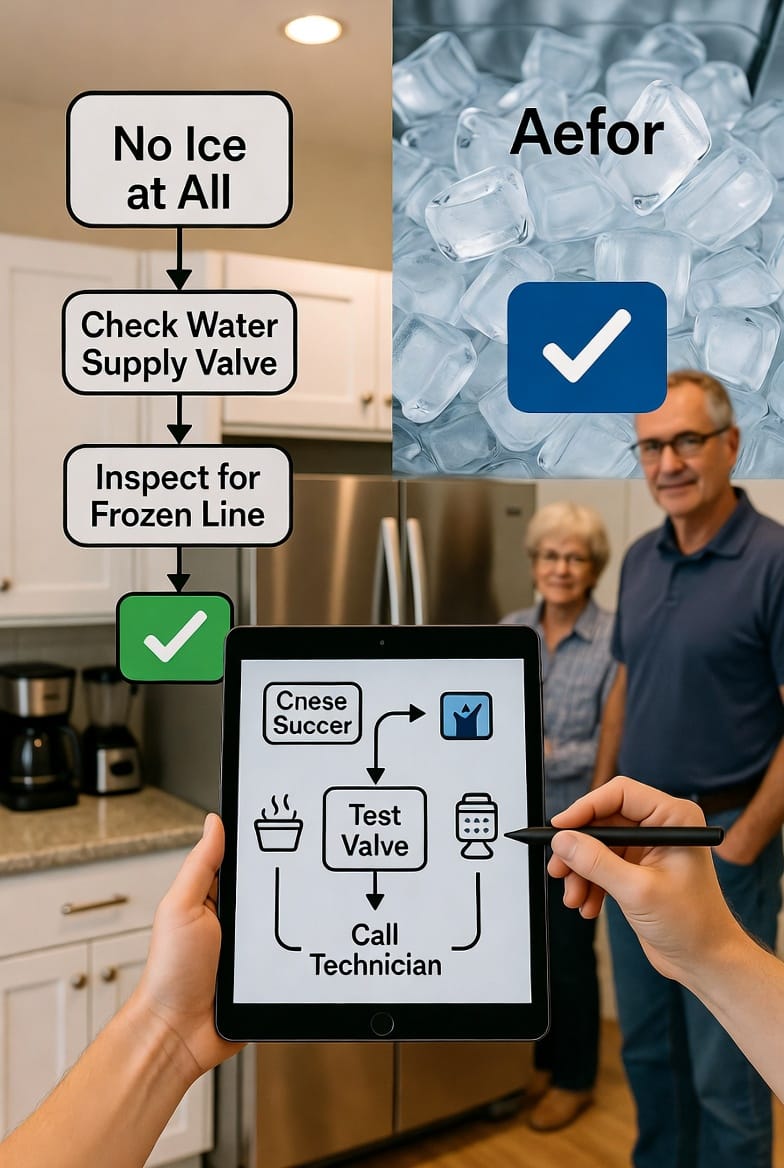
The most frequent grievance is a total lack of ice. This could stem from simple oversights or deeper mechanical issues. Start with the basics – ensure your ice maker is turned on (check the switch or arm) and the bin isn't full, as sensors halt production when it's at capacity.
If those are fine, proceed to systematic checks. We'll cover the top suspects: water inlet valve failures, frozen supply lines, ice maker module malfunctions, and freezer temperature issues. Each section includes easy DIY diagnostics to help you pinpoint the problem.
Checking the Water Supply Valve
First on our list is the water supply valve – the gateway for water into your fridge. Located behind the refrigerator, this valve connects to your home's water line. If it's closed or faulty, no water means no ice.
Simple checks:
- Verify it's open: Gently turn the valve handle to ensure full flow. A partially closed valve restricts water.
- Inspect for kinks: Look for bends in the line that could block water.
- Test water pressure: Disconnect the line and run water into a bucket. Low pressure (below 20 PSI) might indicate plumbing issues.
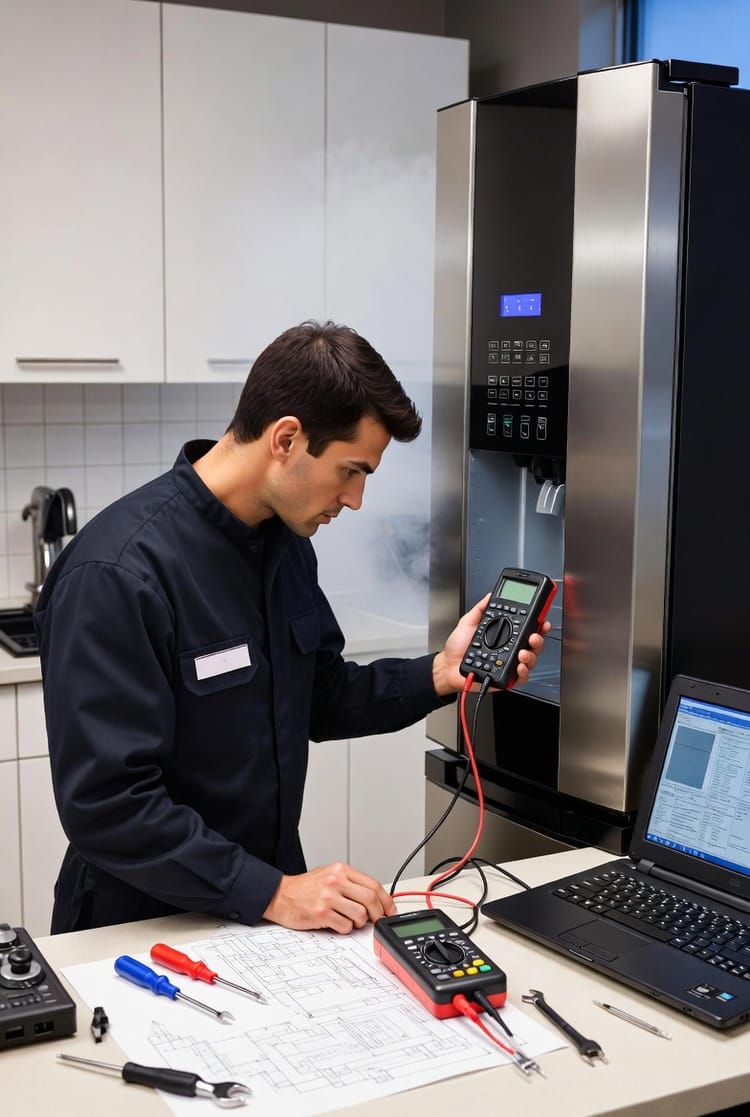
If water flows freely but doesn't reach the ice maker, the inlet valve might be clogged with mineral deposits or electrically faulty. A multimeter can test for continuity, but if you're unsure, it's time for a pro. Replacing this valve is straightforward and often restores function quickly.
Diagnosing a Frozen Supply Line
Next, a frozen supply line is a sneaky culprit, especially in colder climates or if your fridge is in a garage. Water in the line or fill tube can freeze, blocking flow to the ice mold.
How to check:
- Locate the fill tube: It's usually at the back of the freezer, leading to the ice maker.
- Thaw gently: Use a hairdryer on low heat to melt any ice buildup. Avoid high heat to prevent damage.
- Prevent recurrence: Insulate the line or adjust fridge placement to avoid cold drafts.
If thawing resolves it temporarily but the issue returns, check for leaks or improper insulation. This fix is often quick and cost-effective, restoring your ice supply without parts replacement.
Delving Deeper: Ice Maker Module Issues
The ice maker module is the control center, orchestrating the entire process. It includes the motor, thermostat, and ejector blades. Failures here often result from wear and tear or electrical glitches.
Troubleshooting steps:
- Cycle test: Manually advance the module (if your model allows) to see if it harvests ice.
- Inspect for damage: Look for broken arms or stripped gears.
- Check wiring: Loose connections can interrupt signals.
If the module doesn't respond, it might need replacement. Modules are model-specific, so note your fridge's make and model. While DIY-friendly for handy folks, improper installation can lead to leaks – proceed with caution.
Addressing Freezer Temperature Problems
Finally, freezer temperature issues are often overlooked. Ideal freezer temps for ice making are 0°F to 5°F. Warmer settings slow or stop production.
Quick diagnostics:
- Verify thermostat: Use a thermometer to check actual temps.
- Clear vents: Ensure airflow isn't blocked by overpacked shelves.
- Defrost cycle: If the freezer frosts excessively, a faulty defrost timer could be warming things up.
Adjusting temps or clearing space often fixes this. Persistent issues might signal a refrigerant leak or compressor problem – definitely pro territory.
Preventive Maintenance for Long-Term Ice Reliability
Prevention beats cure. Regular maintenance keeps your ice maker humming:
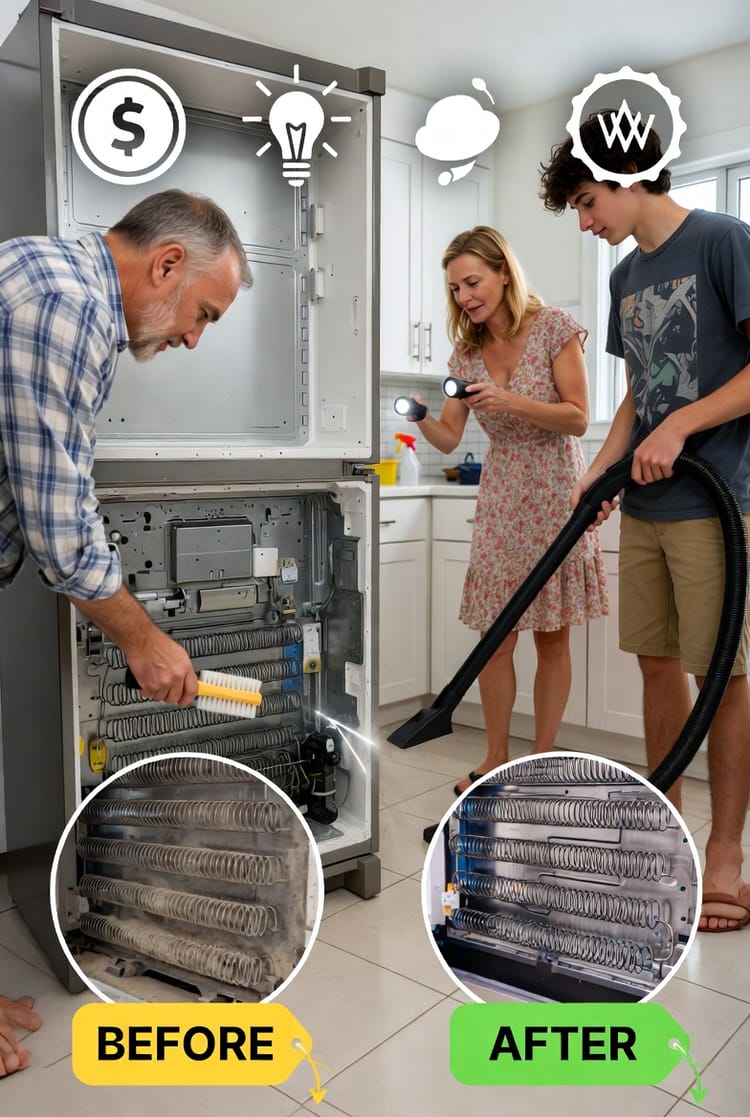
- Clean regularly: Wipe down the mold and bin to prevent mold.
- Replace filters: Change water filters every 6 months to avoid clogs.
- Annual inspections: Schedule pro check-ups for hidden issues.
By staying proactive, you extend your appliance's life and avoid emergencies.
When to Call the Professionals
While these checks empower you, some problems – like electrical faults or sealed system issues – require expertise. Attempting advanced repairs risks voiding warranties or causing damage. Our team at (855) 321-3582 is here to help, offering same-day service and genuine parts.
Don't go thirsty. Diagnose ice maker issues with our help today.
Ice Maker Not Working? Call for Quick Diagnosis