The Holistic Healing Path: Integrating Yoga, Meditation, and Nutrition into Substance Use Recovery

In the journey of substance use recovery, true healing extends far beyond traditional therapies alone. It encompasses the intricate interplay of mind, body, and spirit—a holistic approach that empowers individuals to rebuild from within. At our treatment center, we champion this comprehensive path, where yoga, meditation, and nutritional counseling seamlessly complement evidence-based treatments like counseling and medication-assisted therapy.
Start Your Holistic Healing Journey Today – Call Now
This integration isn't just supportive; it's transformative. By addressing the physical toll of addiction, the emotional turbulence of cravings, and the spiritual disconnection often left in its wake, these practices foster resilience that lasts. Research consistently shows that holistic therapies reduce relapse rates by up to 30% when woven into standard care, helping individuals not only achieve sobriety but thrive in it.
Whether you're in early recovery, facing persistent cravings, or seeking deeper fulfillment, embracing these tools can be the key to reclaiming your life. Let's explore how each element works, why they matter, and how they unite to create a robust foundation for lasting recovery.
Understanding Holistic Recovery: A Whole-Person Approach
Holistic healing recognizes that substance use disorders disrupt every facet of well-being. Chronic use depletes vital nutrients, dysregulates brain chemistry, and heightens stress responses, creating a cycle of vulnerability. Traditional treatments target symptoms effectively, but complementary therapies like yoga, meditation, and nutrition fill the gaps—repairing damage, building coping skills, and nurturing inner peace.
This approach is reassuringly grounded in science. Studies reveal that mind-body practices enhance neuroplasticity, the brain's ability to rewire itself, countering the neural pathways forged by addiction. At our center, clients often report feeling more in control within weeks, as these practices restore balance and amplify the efficacy of core treatments.
Key benefits of holistic integration include:
- Reduced physical withdrawal symptoms through natural detoxification support.
- Enhanced emotional stability to navigate triggers with confidence.
- Strengthened community bonds via group sessions that combat isolation.
- Improved sleep and energy for sustained motivation.
- Long-term relapse prevention by cultivating self-awareness and healthy habits.
By prioritizing holistic recovery, we don't just treat addiction—we heal the person.
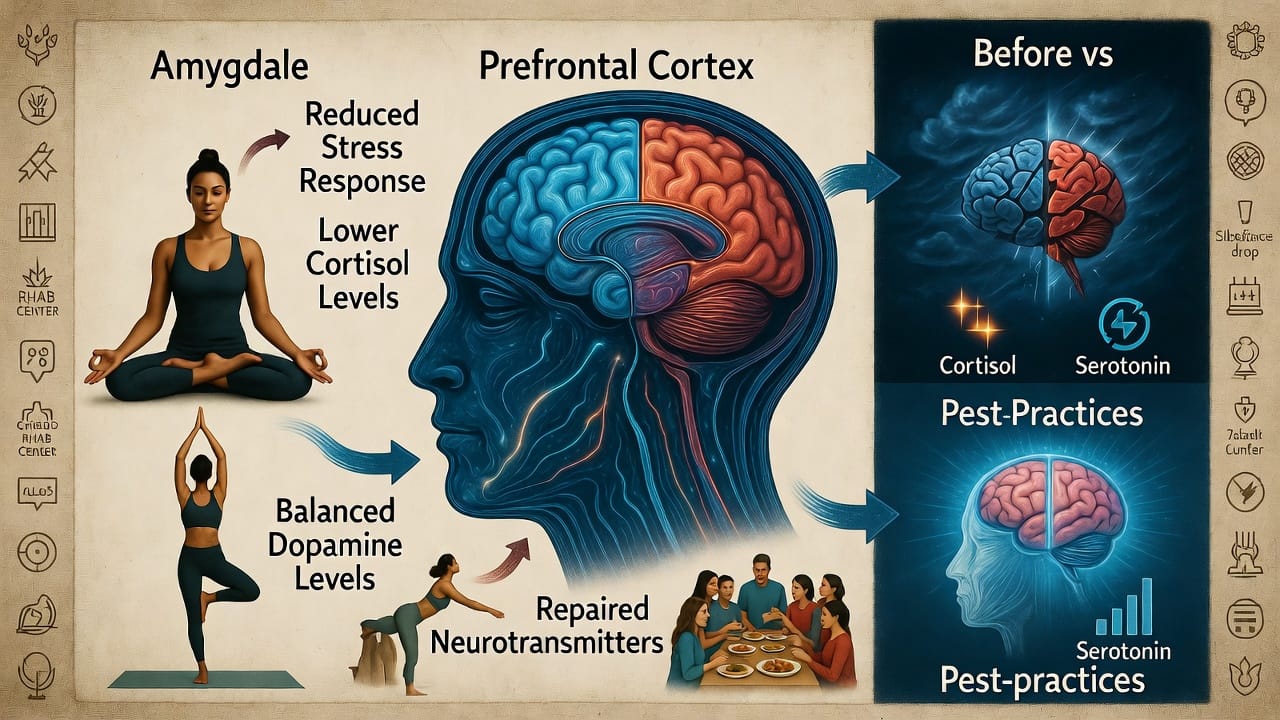
The Power of Yoga: Reducing Stress and Cravings Through Mindful Movement
Yoga stands as a cornerstone of holistic substance use recovery, blending physical postures, breathwork, and mindfulness to quiet the chaos of addiction. Far from a simple exercise, it directly targets the stress-craving cycle that fuels relapse. Chronic substance use floods the body with cortisol, the stress hormone, while depleting calming neurotransmitters like GABA. Yoga restores this balance, promoting dopamine homeostasis—a natural "reward" system that diminishes the allure of substances.
In practice, gentle flows like Hatha or restorative yoga release tension stored in the muscles, often a physical echo of emotional turmoil. Deep breathing techniques, such as alternate nostril breathing, activate the parasympathetic nervous system, signaling safety to the brain and slashing anxiety levels by 40% in regular practitioners, per clinical insights.
Clients at our center describe yoga as their "anchor." One shared how morning sessions transformed overwhelming cravings into manageable waves, allowing her to engage fully in therapy.
How yoga supports recovery in powerful ways:
- Lowers cortisol and inflammation, easing physical discomfort from withdrawal.
- Boosts self-awareness, helping identify triggers before they escalate.
- Improves sleep quality, crucial for cognitive repair and mood regulation.
- Builds physical resilience, countering the muscle atrophy and fatigue from prolonged use.
- Fosters community, as group classes create bonds that reinforce accountability.
- Enhances emotional regulation, replacing impulsive reactions with mindful responses.
Incorporating yoga into substance use recovery is straightforward. Start with 20-minute sessions focused on breath and basic poses. Our programs offer tailored classes, from beginner-friendly vinyasa to trauma-informed flows, ensuring accessibility for all.
This practice doesn't demand perfection—only presence. And in that presence, healing unfolds.
Meditation: Cultivating Emotional Regulation and Inner Resilience
Meditation, particularly mindfulness-based practices, emerges as a beacon for emotional regulation in recovery. Substance use often hijacks the brain's reward and stress centers, leaving individuals reactive to every setback. Meditation rewires this, strengthening the anterior cingulate cortex and prefrontal areas responsible for impulse control and emotional insight.
Through daily sessions, practitioners learn to observe thoughts without judgment—a skill that disrupts the automatic pull of cravings. Loving-kindness meditation, for instance, counters shame with self-compassion, while body scans ground the nervous system, reducing hyperarousal.
Evidence from neuroscientific studies underscores its impact: regular meditators show decreased amygdala activity, meaning less intense fear responses to triggers. In rehab settings, this translates to fewer impulsive decisions and stronger adherence to treatment plans.
At our facility, guided meditations are woven into daily routines, often paired with journaling to deepen insights. Participants report profound shifts: "I no longer fight my emotions—I understand them."
Practical meditation strategies for recovery:
- Start small: 5-10 minutes of breath focus upon waking.
- Use apps or groups: Build consistency with structured support.
- Incorporate variety: Try walking meditation for active minds.
- Track progress: Note reduced reactivity in a simple journal.
- Combine with movement: Follow yoga with a seated practice for synergy.
- Address challenges: Gentle reminders that wandering thoughts are normal—and part of the process.
Meditation isn't about emptying the mind; it's about befriending it. This gentle mastery equips you to face life's ups and downs with grace, fortifying your path to sobriety.
Nutrition: Repairing Physical Damage and Fueling Mental Clarity
Nutritional counseling is the unsung hero of substance use recovery, methodically repairing the ravages of addiction on the body. Alcohol and drugs impair absorption, leading to deficiencies in B vitamins, magnesium, and omega-3s—essentials for brain health and mood stability. Poor eating habits compound this, creating fatigue, depression, and heightened cravings.
A tailored diet reverses this. Anti-inflammatory foods like fatty fish, leafy greens, and berries replenish antioxidants, while complex carbs stabilize blood sugar to prevent mood crashes. Proteins rich in amino acids support neurotransmitter production, directly aiding emotional balance.
Our nutritionists craft plans that feel nourishing, not restrictive. Clients learn to view meals as medicine: a breakfast of eggs and avocado for sustained energy, or a snack of nuts to curb afternoon slumps.
Core nutritional pillars for healing:
- Replenish key nutrients: Focus on B-complex for nerve repair and zinc for immune strength.
- Stabilize blood sugar: Whole grains and proteins prevent energy dips that mimic cravings.
- Support detoxification: Hydration and fiber-rich foods aid liver and gut recovery.
- Boost brain function: Omega-3s from salmon reduce inflammation linked to depression.
- Promote satiety and joy: Colorful plates encourage mindful eating and pleasure in sobriety.
- Monitor and adjust: Regular check-ins ensure progress, celebrating small wins.
The results? Clients regain vitality, with clearer thinking and fewer physical setbacks. Nutrition doesn't just sustain—it revitalizes, making every other recovery tool more effective.
Integrating Holistic Practices: A Synergistic Recovery Framework
The true magic happens when yoga, meditation, and nutrition align with traditional treatments. This synergy amplifies outcomes: mindfulness enhances therapy insights, yoga supports physical detox during medically assisted withdrawal, and nutrition optimizes medication efficacy.
Consider a typical day: Morning yoga primes the body, midday meditation sharpens focus for counseling, and evening nutrition workshops reinforce lessons. This rhythm builds momentum, turning isolated efforts into a cohesive whole.
Evidence of integration's power:
- Faster stabilization: Holistic add-ons reduce withdrawal intensity.
- Lower relapse risk: Combined approaches address root causes holistically.
- Higher engagement: Clients stay committed when treatment feels empowering.
- Personalized growth: Tailored plans meet unique needs, from anxiety to nutritional gaps.
Our programs exemplify this: seamless schedules where every element reinforces the next, guided by compassionate experts.
A Sample Weekly Wellness Schedule for Holistic Integration
To make this actionable, here's a balanced framework adaptable to your needs:
- Monday: Therapy group + restorative yoga (focus: emotional release) + nutrient-dense lunch workshop.
- Tuesday: Mindfulness meditation + light strength training + omega-rich dinner prep.
- Wednesday: Individual counseling + breathwork session + hydration and fiber focus.
- Thursday: Group yoga flow + loving-kindness meditation + protein-building snacks.
- Friday: Reflection journaling + gentle hike meditation + antioxidant-rich meal planning.
- Weekend: Family integration activities + self-paced nutrition experiments + evening wind-down yoga.
This structure ensures variety, preventing burnout while maximizing benefits. Track your energy and cravings—adjust as you grow.
Real Transformations: Stories of Hope and Renewal
Meet Sarah, who entered recovery depleted and anxious. Through yoga, she found physical strength; meditation taught her to sit with discomfort; nutrition restored her glow. Today, she's thriving, crediting the holistic path for her confidence.
Or David, whose cravings lingered until integrated practices rewired his responses. These aren't anomalies—they're the norm when commitment meets compassion.
Embracing the Holistic Path: Your Next Step
Holistic healing isn't a luxury; it's a necessity for profound, enduring recovery. By integrating yoga, meditation, and nutrition, you heal not just the addiction, but the whole self—body, mind, and spirit.
At our center, this path is yours to claim, supported every step.
Explore Our Holistic Programs – Call for a Free Consultation