The Grease Trap Maintenance: Essential Care for Home Kitchens with Heavy Cooking
If you’re an avid home cook who thrives on weekend braises, weeknight stir-fries, and the occasional deep-fried indulgence, you already know the joy of a kitchen that hums with creativity. But every splash of olive oil, every dollop of bacon fat, and every silky pan sauce leaves behind something invisible yet powerful: fats, oils, and grease—better known as FOG.
Protect Your Pipes from Grease Buildup – Call Today
Left unchecked, FOG doesn’t just disappear down the drain. It builds up, hardens, and turns your plumbing into a slow-motion disaster. The unsung hero standing between your culinary passion and a costly sewer backup is the residential grease trap.
With the right grease trap maintenance, you can cook fearlessly, keep your kitchen smelling fresh, and protect your home’s entire plumbing system. This guide is written specifically for home cooks like you—people who treat the kitchen as a creative laboratory, not just a place to heat leftovers. We’ll walk through exactly what a residential grease trap is, how it quietly works for you, why regular care is non-negotiable, and the clear warning signs that it’s time to act.
Keep reading. By the end, you’ll have a complete maintenance blueprint that turns potential plumbing nightmares into simple, scheduled routines.
What Exactly Is a Residential Grease Trap?
Most homeowners have never seen one, yet millions of kitchens rely on them every single day. A residential grease trap is a compact, highly engineered device installed in your kitchen’s drain line—usually right under the sink or in the basement near the main stack.
Unlike the massive concrete monsters found behind restaurants, home versions are sleek, space-efficient, and designed to blend seamlessly into modern plumbing. They typically hold 10–50 gallons and feature a series of internal baffles—strategic walls that slow water flow and force separation.
Think of it as your kitchen’s personal bodyguard. Every time you rinse a pan after searing a steak or drain pasta water shimmering with butter, the grease trap catches the FOG before it can travel further into your pipes or the municipal sewer system.
Key benefits for serious home cooks:
- Prevents pipe corrosion from hardened grease
- Reduces strain on your garbage disposal
- Protects your septic system (if you have one)
- Eliminates the need for harsh chemical drain cleaners
When properly maintained, a residential grease trap becomes invisible—until the day you realize how much trouble it has quietly saved you.
How a Grease Trap Works: The Simple Science That Saves Your Kitchen
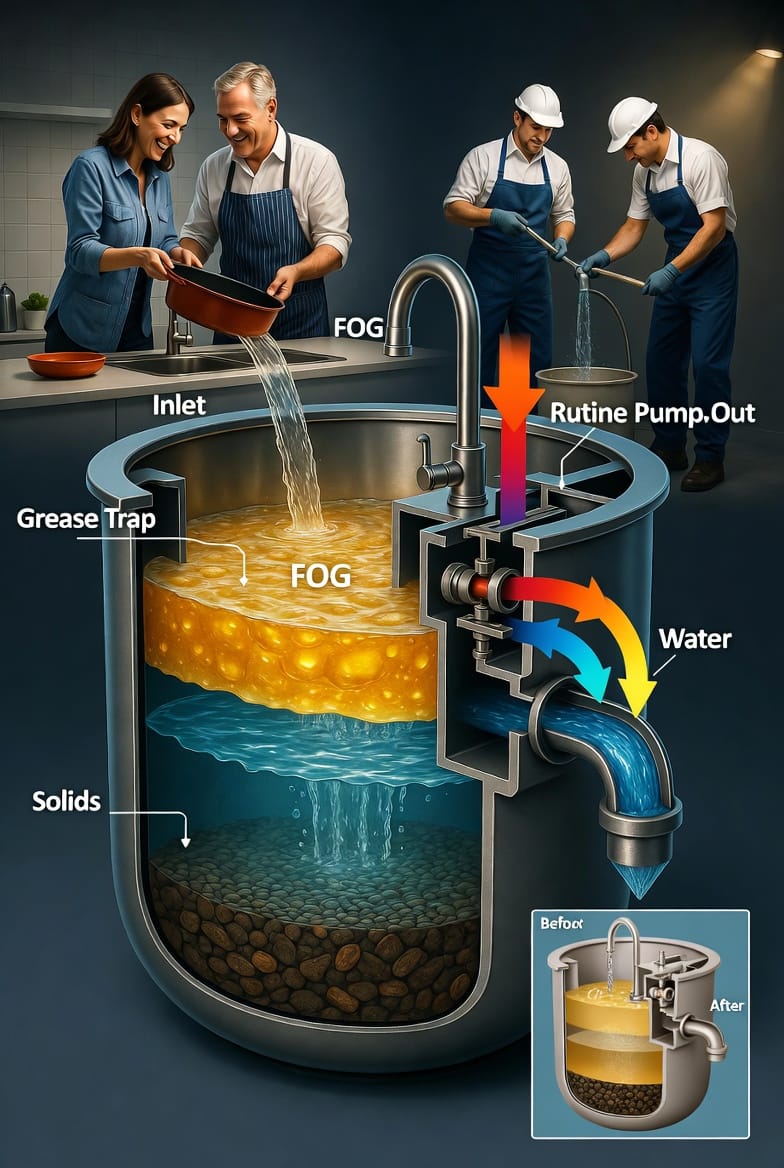
The magic happens through density separation—a principle so reliable it’s been used in commercial kitchens for over a century.
Here’s the step-by-step journey of your dirty dishwater:
- Entry – Wastewater enters the trap through the inlet pipe.
- Slowing – Internal baffles reduce flow speed, giving heavier solids time to sink to the bottom.
- Separation – FOG, being lighter than water, rises and forms a thick layer on top.
- Exit – Only the clearer middle layer of water flows out through the outlet pipe and continues safely to your main drain line.
It’s elegant, passive, and incredibly effective—until the trap fills up.
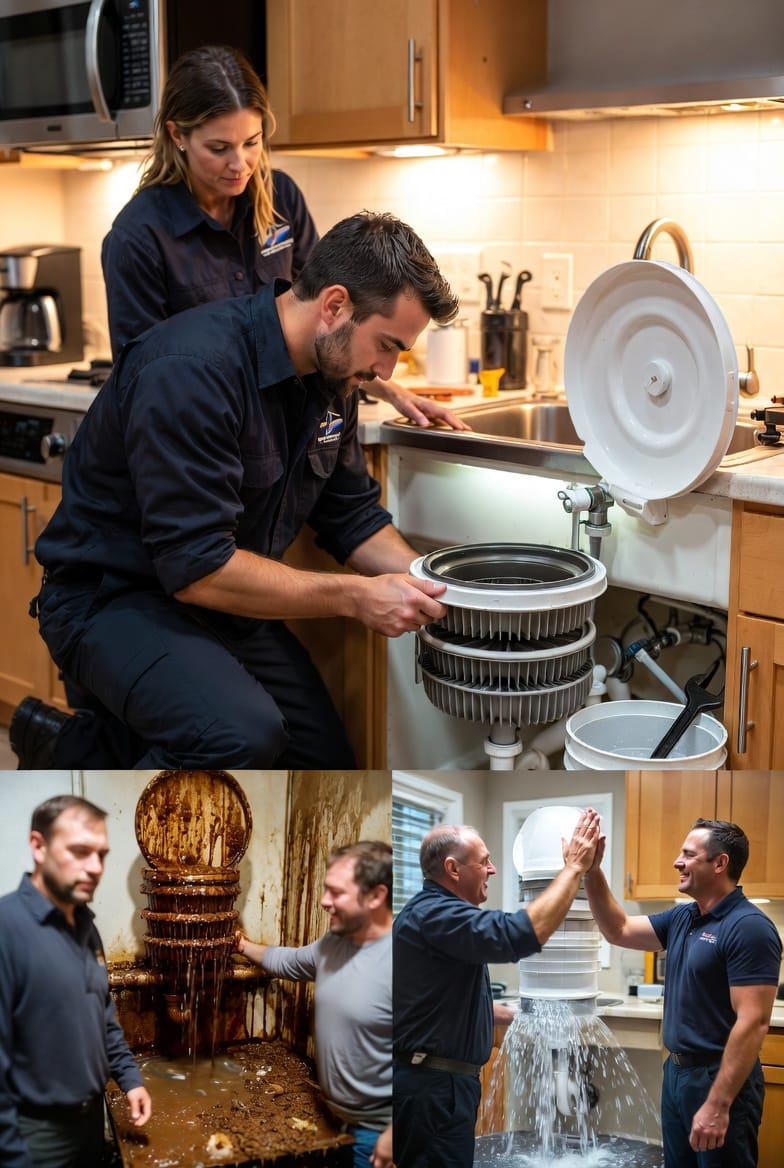
When the FOG layer grows too thick, it starts blocking the baffles. Water can no longer separate cleanly. Instead, it carries partially emulsified grease downstream, where it cools, hardens, and creates stubborn clogs in your pipes.
Regular grease trap maintenance keeps this separation process running at peak efficiency, ensuring your kitchen sink drains like it did the day it was installed.
Why Skipping Maintenance Leads to Expensive Nightmares
Let’s talk realities. A single sewer backup in a home kitchen can easily cost $5,000–$15,000 once you factor in cleanup, pipe replacement, and lost time. For families who cook daily, the risk multiplies.
Here’s what actually happens when a grease trap is ignored:
- FOG accumulates and solidifies into a rock-hard mass.
- Pressure builds in the trap and upstream pipes.
- Eventually, the system gives way—usually at the weakest point: your kitchen sink, dishwasher, or even the main sewer line.
Foul odors are often the first clue. That unmistakable “rotten egg” smell drifting from the drain isn’t just unpleasant—it’s a warning that anaerobic bacteria are feasting on trapped FOG and releasing hydrogen sulfide gas.
Even worse, many municipalities now fine homeowners whose FOG contributions cause blockages in city sewer lines. In some areas, these fines start at $1,000 and climb quickly.
The good news? Consistent grease trap maintenance eliminates nearly all of these risks. It’s not about spending more money—it’s about avoiding massive, unexpected expenses.
Clear Warning Signs Your Grease Trap Needs Immediate Attention
Don’t wait for a full backup. Watch for these telltale symptoms, especially if you cook with oils and fats several times a week:
- Slow-draining sink even after using a plunger
- Persistent greasy film on dishes coming out of the dishwasher
- Gurgling sounds when water drains from the sink or tub
- Unexplained odors that worsen after cooking
- Water backing up into the sink when the washing machine runs
- Multiple fixtures draining slowly at the same time
If you notice even two of these signs, schedule professional grease trap service right away. Catching the problem early can mean the difference between a quick pump-out and a complete pipe replacement.
Your Personalized Maintenance Schedule for Heavy Home Cooking
Cooking frequency directly determines how often your grease trap needs attention. Here’s a practical schedule based on real-world kitchen use:
Heavy Cooking (5+ meals per week with frying, roasting, or sauces)
→ Monthly professional cleaning recommended
Moderate Cooking (3–4 meals per week)
→ Every 10–12 weeks
Light Cooking (mostly steaming, boiling, or takeout)
→ Quarterly service is usually sufficient
Pro tip: Keep a simple kitchen log for the first three months. Note every time you use significant amounts of oil or fat. You’ll quickly see your personal pattern and can adjust the schedule accordingly.

Smart Daily Habits That Extend the Life of Your Grease Trap
Professional service is essential, but your daily choices make a huge difference:
- Never pour grease down the drain—even “small amounts.” Cool it, scrape it into a container, and toss in the trash.
- Install fine-mesh strainers in every sink.
- Run hot water for 30 seconds after each greasy dish.
- Use enzyme-based drain maintainers weekly (ask your plumber for the best formula).
- Avoid the garbage disposal for fatty foods like chicken skin or cheese.
These small steps work in perfect harmony with scheduled grease trap maintenance, creating a comprehensive defense system for your kitchen plumbing.
When to Call the Professionals (And Why DIY Isn’t Enough)
Let’s be honest: opening a grease trap yourself is messy, smelly, and potentially hazardous. The FOG layer can weigh dozens of pounds, and improper disposal violates local regulations in many areas.
Professional grease trap service offers:
- Complete removal of all layers (not just skimming)
- Thorough interior cleaning and baffle inspection
- Proper disposal at licensed facilities
- Detailed inspection for early wear or damage
- Peace of mind from certified technicians
Most importantly, a good service provider becomes your kitchen partner—tracking your cooking habits and adjusting the schedule before problems develop.
The Long-Term Rewards of Consistent Care
Homeowners who treat grease trap maintenance as seriously as they treat their favorite cast-iron skillet report:
- Dramatically fewer plumbing emergencies
- Noticeably fresher kitchen air
- Lower water bills (unrestricted flow = less running water)
- Higher home resale value (clean plumbing records impress inspectors)
- The freedom to cook boldly without constant worry
That last one is the real win. When your plumbing works flawlessly, you stop thinking about it—and start focusing entirely on the joy of cooking.
Keep Your Kitchen Plumbing Flowing Freely
Your home kitchen deserves the same level of protection that professional restaurants demand. With the right grease trap maintenance plan, you can continue creating memorable meals without the shadow of plumbing problems looming over every dinner party.
Ready to take the stress out of kitchen plumbing?
Ask about our specialized grease trap service today. Our team understands the unique demands of passionate home cooking and delivers maintenance that’s thorough, respectful of your space, and scheduled around your life.
Your pipes—and your next masterpiece—will thank you.
Your Heavy-Cooking Kitchen Deserves This – Call Today