The Gas Appliance Conundrum: Diagnosing Ignition, Flame Sensor, and Safety Valve Issues in Ovens and Dryers
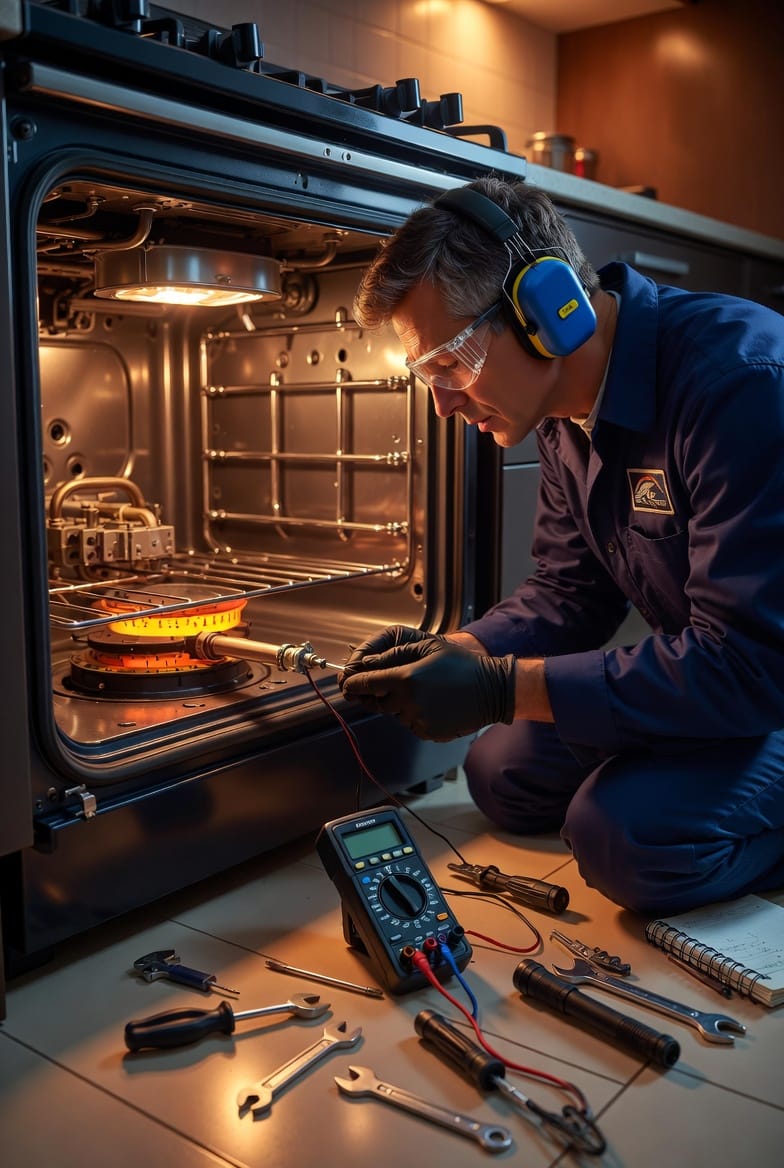
Gas appliances remain a staple in homes for their efficiency and powerful performance. Yet when a gas oven refuses to heat or a gas dryer delivers only intermittent warmth, frustration quickly sets in. These issues often trace back to the same critical trio: the electronic ignition system, the flame sensor, and the safety gas valve.
No Heat? Call Now for Expert Flame Sensor & Ignition Repair
Modern gas appliances rely on sophisticated electronic controls rather than outdated pilot lights. Understanding their sequence of operation empowers homeowners to recognize when professional help becomes essential. Below, we break down the components, explain common failures, and outline safe diagnostic approaches.
Understanding Modern Electronic Ignition Systems
Gone are the days of constantly lit pilot flames. Today's gas ovens and gas dryers use hot surface ignition or direct spark ignition systems for safer, more energy-efficient operation.
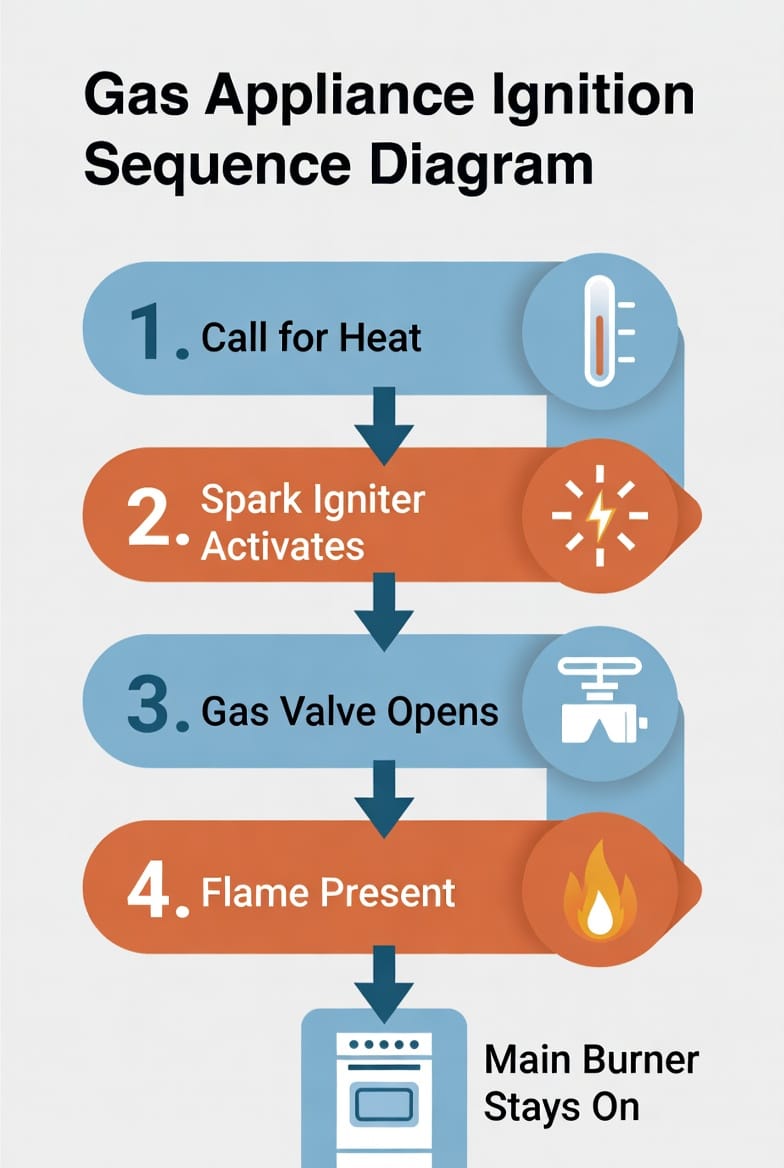
The typical sequence unfolds like this:
- Thermostat or control board calls for heat.
- Igniter activates (glows bright orange or sparks rapidly).
- Once sufficient temperature/current is reached, the gas valve opens.
- Gas flows to the burner and ignites.
- Flame sensor detects the established flame.
- Control board keeps the gas valve energized for continued operation.
Any interruption in this precise chain triggers a safety lockout — a built-in safeguard preventing unburned gas accumulation.
The Critical Role of the Flame Sensor
Often mistaken for an igniter, the flame sensor is a small metallic rod positioned in the burner flame path. Its job? To prove flame presence after ignition.
How it works:
- The control board sends a low-voltage signal through the sensor.
- When flame engulfs the rod, it rectifies the AC signal to produce a tiny DC micro-amp current (typically 1–10 μA).
- The board monitors this current continuously.
- If micro-amps drop below the threshold (due to flame loss, dirty sensor, or poor grounding), the safety valve closes within seconds.
Common flame sensor failures include:
- Oxidation or carbon buildup weakening the signal.
- Misalignment outside the proper flame zone.
- Faulty wiring or poor ground connection reducing current.
A failing sensor often causes no heat on initial try, intermittent cycling, or repeated lockouts after brief operation.
Homeowners frequently ask: “Can I clean it myself?” In many cases, gentle cleaning with fine emery cloth or steel wool restores performance — but only if done safely with gas supply off and proper reassembly.
Why Safety Valves Lock Out — and What It Really Means
The gas safety valve (also called the gas control valve) acts as the final gatekeeper. It incorporates redundant solenoids that require constant electrical confirmation to stay open.
Lockout occurs when:
- No flame is proven within the trial-for-ignition period (usually 4–10 seconds).
- Flame signal drops during operation.
- Control board detects other faults (pressure switch, limit thermostat, etc.).
Once in lockout, the system halts gas flow and often requires a power reset (unplugging or cycle breaker) to attempt restart. Repeated failed attempts may trigger error codes on digital displays.
This design prioritizes safety over convenience, preventing hazardous gas buildup. Attempting to bypass safety features is extremely dangerous and voids warranties.
Step-by-Step Diagnostic Approach for Homeowners
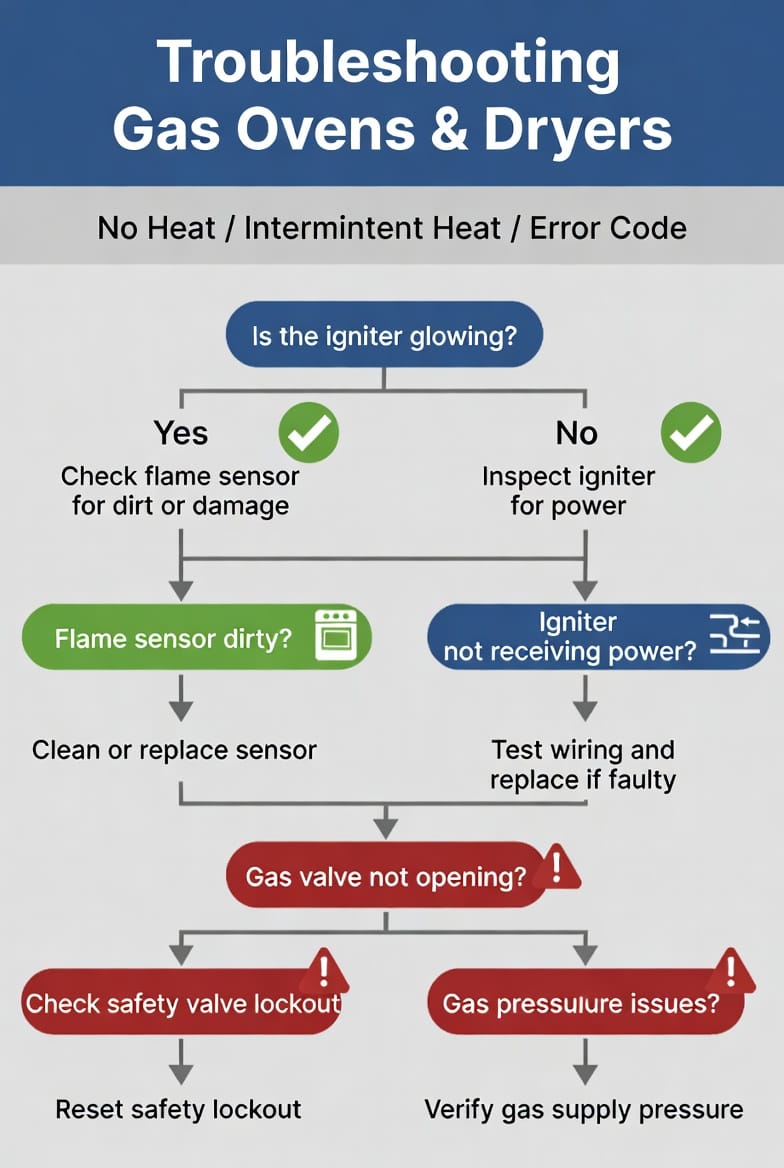
While full repairs require certification, basic troubleshooting helps identify whether the issue is simple or complex.
- Verify power and gas supply — ensure breaker is on, gas valve handle is open.
- Observe operation — note if igniter glows/sparks, if gas odor appears briefly, how quickly lockout happens.
- Check for error codes — consult your model’s manual for meanings.
- Inspect visible components — look for obvious damage to igniter or sensor rod.
- Attempt reset — power cycle the appliance multiple times.
If the problem persists, professional diagnosis is crucial.
Advanced Considerations for Technicians
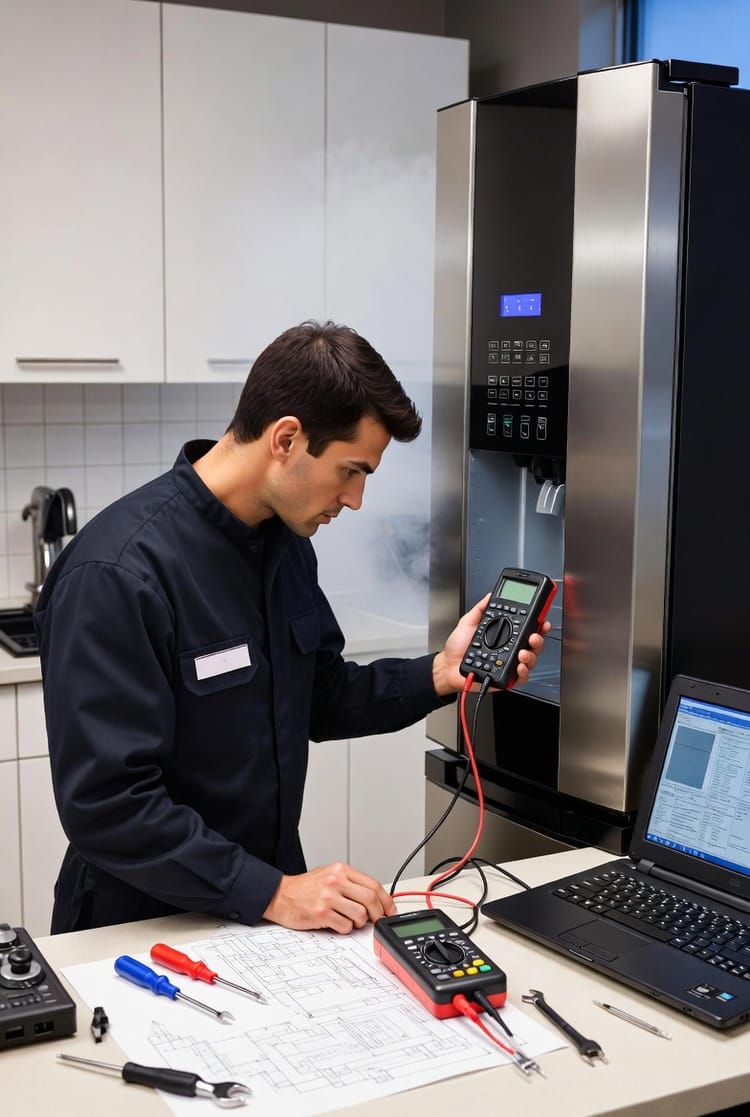
Experienced techs rely on:
- Micro-amp meter testing (flame sensor should read steady 1.5+ μA minimum in most systems).
- Voltage checks at gas valve terminals during sequence.
- Manifold pressure verification with manometer.
- Continuity and resistance tests on igniters and safety circuits.
Always confirm proper grounding — many intermittent issues stem from weak appliance grounds.
When to Call the Professionals
Gas appliance repairs involve combustible fuel under pressure. Mishandling can lead to carbon monoxide risks, fires, or explosions. Certified technicians carry the tools, training, and liability coverage needed for safe resolution.
Our team specializes in precise diagnosis of ignition, flame sensor, and safety valve faults in ovens, ranges, and dryers.
This detailed guide equips you with knowledge while reinforcing the importance of professional intervention for gas-related concerns. Stay safe and warm!
Get Reliable Gas Appliance Heat Back – Call Our Certified Team