The Family Program: Healing Relationships and Building a Support Network Within the Treatment Process
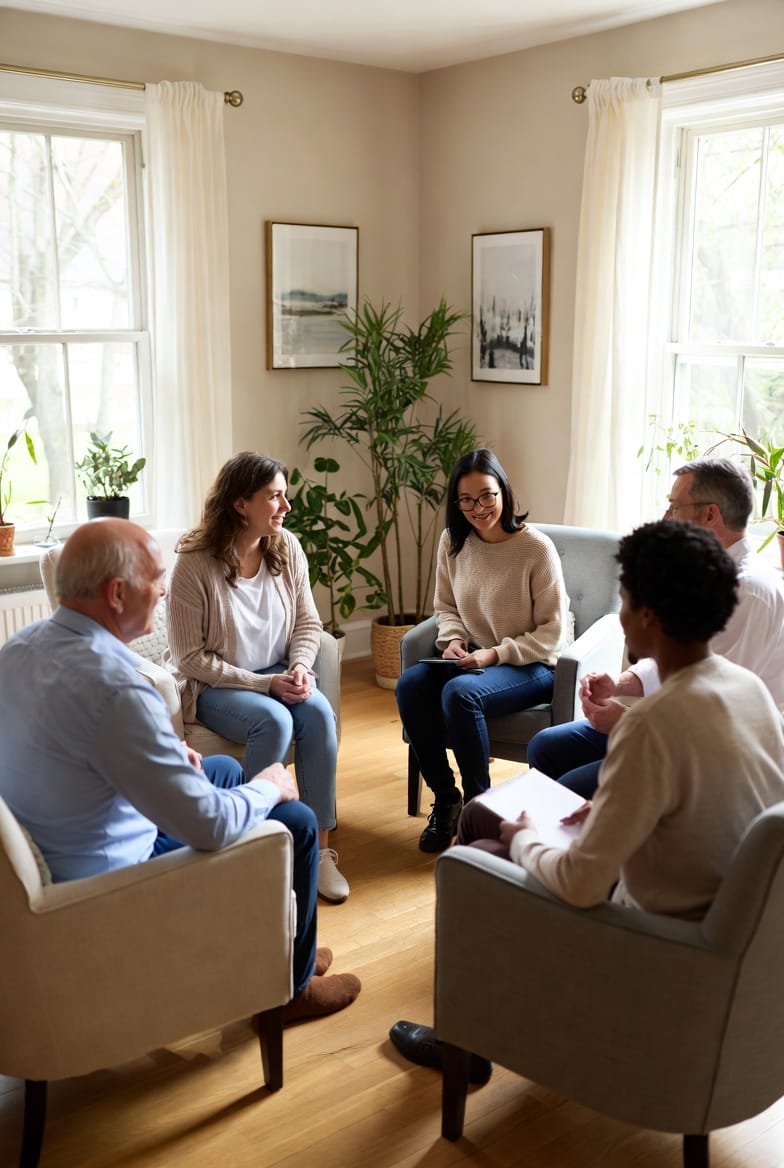
Addiction does not exist in isolation. It ripples through entire families, straining relationships, eroding trust, and creating patterns of behavior that can persist long after active substance use ends. At our treatment center, we recognize that true, sustainable recovery requires more than individual effort—it demands the active participation and healing of the entire family system.
Rebuild Trust & Strengthen Recovery – Call Today
That’s why our Family Program stands as a cornerstone of the treatment process. Designed with evidence-based practices and delivered by experienced clinicians, this structured program empowers loved ones to understand addiction, break harmful cycles, and become active partners in long-term sobriety.
Why Family Involvement Matters in Addiction Recovery
Research consistently shows that individuals whose families engage in education and therapy during treatment experience higher rates of sustained abstinence, fewer relapses, and improved overall family functioning. When families are equipped with the right tools, they shift from enabling or conflict to genuine support.
The Family Program addresses the root dynamics that often accompany addiction:
- Unresolved codependency patterns
- Misunderstandings about the disease model of addiction
- Damaged communication habits
- Fractured trust and emotional safety
By tackling these areas head-on, families not only support their loved one’s recovery—they heal themselves.
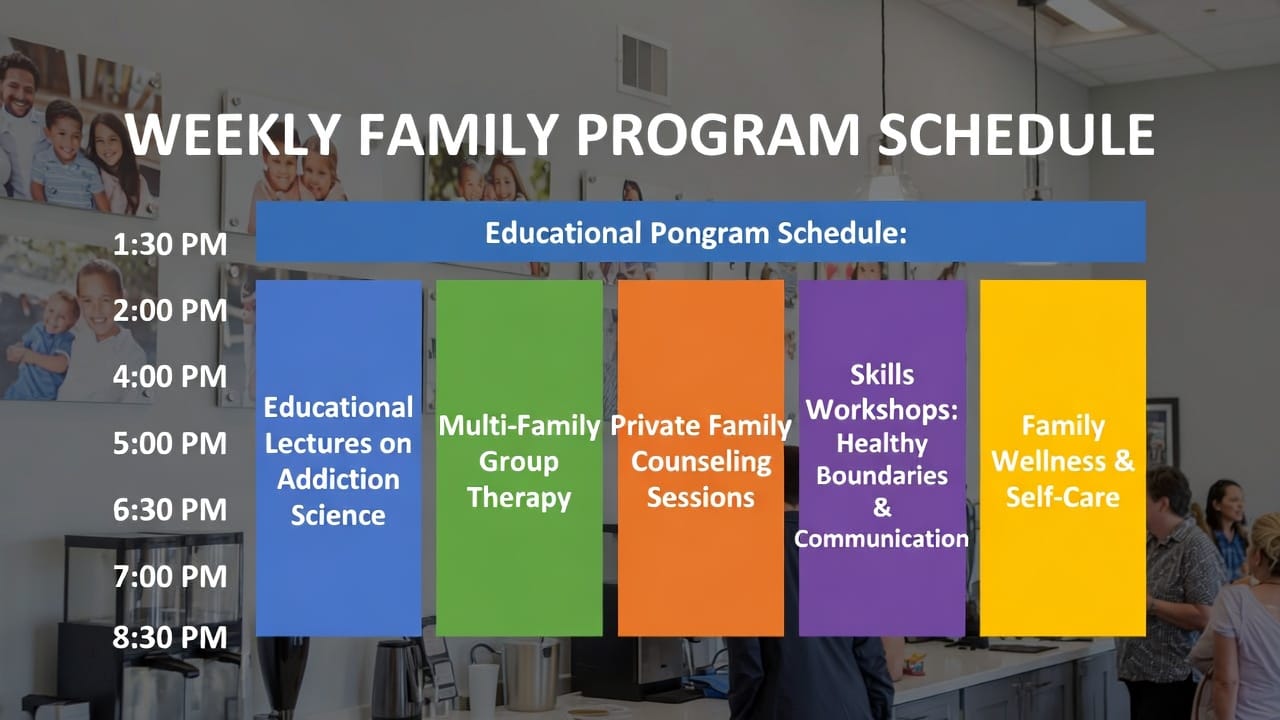
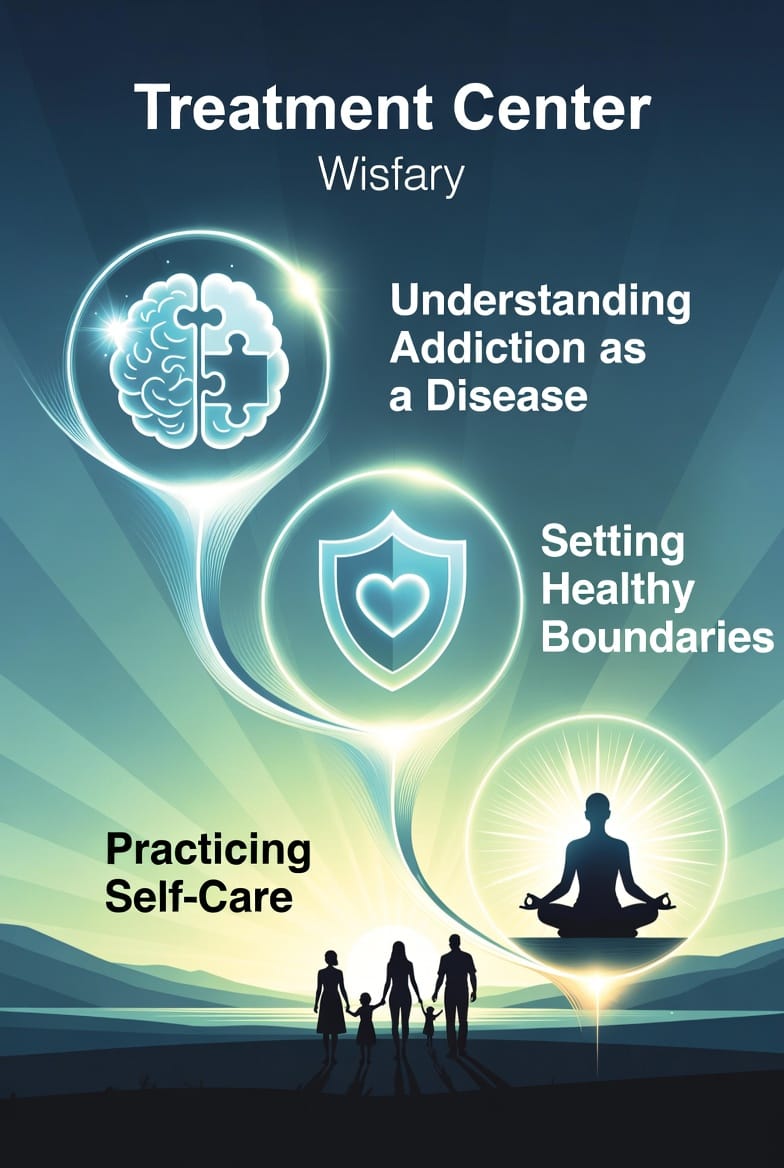
Understanding Addiction as a Disease
One of the most transformative moments for many families occurs when they learn that addiction is a chronic brain disease—not a moral failing, lack of willpower, or simple bad behavior.
In our educational sessions, families explore:
- How prolonged substance use alters brain chemistry and reward pathways
- The role of genetics, trauma, and environment in vulnerability
- Why willpower alone is rarely sufficient for lasting change
This shift in perspective reduces blame and shame. Parents stop asking “Why did you do this to us?” and begin asking “How can we help you heal?” Siblings move from resentment to empathy. Spouses start seeing their partner as someone battling illness rather than choosing chaos.
Breaking the Cycle of Codependency
Codependency often develops quietly in families affected by addiction. Loved ones may:
- Sacrifice their own needs to “protect” the person using
- Lie or cover up consequences to avoid conflict
- Feel responsible for controlling or fixing the addiction
Our program gently but firmly helps families identify these patterns. Through guided discussions and experiential exercises, participants learn to:
- Recognize enabling behaviors and their unintended consequences
- Practice detachment with love
- Prioritize their own emotional and physical well-being
Releasing the need to control outcomes allows genuine support to emerge—support that empowers rather than rescues.
Rebuilding Communication and Trust
Years of addiction often leave communication fractured. Words become weapons, silence becomes safety, and honesty feels risky.
Our Family Program dedicates significant time to evidence-based communication training, including:
- “I” statements to express feelings without blame
- Active listening techniques that validate emotions
- Conflict resolution skills grounded in respect and curiosity
Equally important is the careful, structured process of trust repair. We guide families through:
- Honest sharing of impact and hurt
- Acknowledgment of past pain without defensiveness
- Small, consistent actions that demonstrate reliability
These steps do not erase history, but they create a new foundation—one strong enough to support recovery.
The Lasting Benefits of Family Healing
When families fully participate in the program, remarkable changes occur:
- Reduced family conflict and emotional volatility
- Stronger boundaries that protect everyone’s well-being
- Improved emotional regulation for both the individual in recovery and loved ones
- A shared language and toolkit for navigating future challenges
- Renewed hope and connection within the family unit
Most importantly, the individual in recovery no longer feels alone in the fight. They return home to a support network that understands, encourages, and holds them accountable in healthy ways.
Who Should Participate?
Our Family Program welcomes:
- Parents and step-parents
- Spouses and partners
- Adult children and siblings
- Extended family members who play a significant role
Participation is flexible—some families attend weekly, others join virtually when distance or scheduling demands it. We meet families where they are.
Take the Next Step Toward Family Healing
Recovery is not a solitary journey. When families heal together, everyone emerges stronger, more connected, and better equipped for the future.
Healing is a family journey. Learn about our inclusive, compassionate Family Programs and how they can support your loved one’s recovery—and your own.
Empower Your Loved One's Recovery – Call for Family Program Info