The Ductwork Diagnostic: How Leaky or Poorly Designed Ducts Sabotage Your HVAC System's Efficiency
Your HVAC system works hard to maintain comfortable temperatures year-round, but inefficient ductwork can undermine even the most advanced equipment. The distribution network—those hidden ducts carrying conditioned air throughout your home—often holds the key to why your energy bills climb and comfort levels fluctuate. Leaky ducts or poorly designed systems waste 20-30% or more of the air your system produces, forcing your furnace or air conditioner to run longer and harder.
Stop Wasting 20-30% of Your HVAC Energy – Call Now
In this comprehensive guide, we explore the critical role of ductwork, how to identify problems, the science behind proper design (including Manual D standards), and proven solutions like duct sealing and insulation. Addressing these issues delivers measurable improvements—often 20% or greater gains in overall system performance and significant savings on utility costs.
Understanding Your HVAC Distribution Network
The duct system serves as the circulatory system of your HVAC setup. It transports heated or cooled air from the central unit to every room via supply ducts and returns stale air back for reconditioning. When this network functions optimally, air flows efficiently with minimal resistance or loss.
Unfortunately, many homes—especially older ones or those with DIY modifications—suffer from:
- Leaks at joints, seams, or connections
- Undersized or oversized duct sections causing imbalance
- Poor layout leading to high static pressure
- Inadequate insulation in unconditioned spaces like attics or crawlspaces
These flaws don't just reduce comfort; they directly impact energy efficiency, equipment longevity, and indoor air quality.
Common Signs of Duct Leaks and Design Flaws
Spotting duct issues early prevents bigger problems. Watch for these warning signs:
- Higher-than-expected energy bills despite moderate weather
- Uneven temperatures across rooms (some too hot, others too cold)
- Excessive dust buildup around vents or on furniture
- Whistling or whooshing sounds from vents when the system runs
- Musty odors or allergy symptoms worsening indoors
- HVAC unit cycling more frequently than usual
If your system struggles to maintain set temperatures or your utility statements show unexplained spikes, leaky ducts are a prime suspect. Studies from organizations like the U.S. Department of Energy indicate that typical homes lose up to 30% of conditioned air through leaks before it ever reaches living spaces.
The Critical Role of Proper Duct Sizing: Manual D Explained
Many assume bigger ducts mean better airflow, but that's a common misconception. Oversized ducts reduce air velocity, leading to poor distribution and stratification. Undersized ducts create excessive resistance, increasing static pressure and straining your blower motor.
Professional designers follow ACCA Manual D—the industry-standard protocol for residential duct design. This calculation accounts for:
- Home layout and room-by-room load requirements
- Friction rates and equivalent lengths
- Available static pressure from the equipment
- Airflow volumes needed for each zone
A Manual D-compliant system ensures balanced airflow, reduced noise, and maximum efficiency. Without it, even a high-SEER unit underperforms because conditioned air never reaches its destination effectively.
How Leaky Ducts Sabotage Efficiency
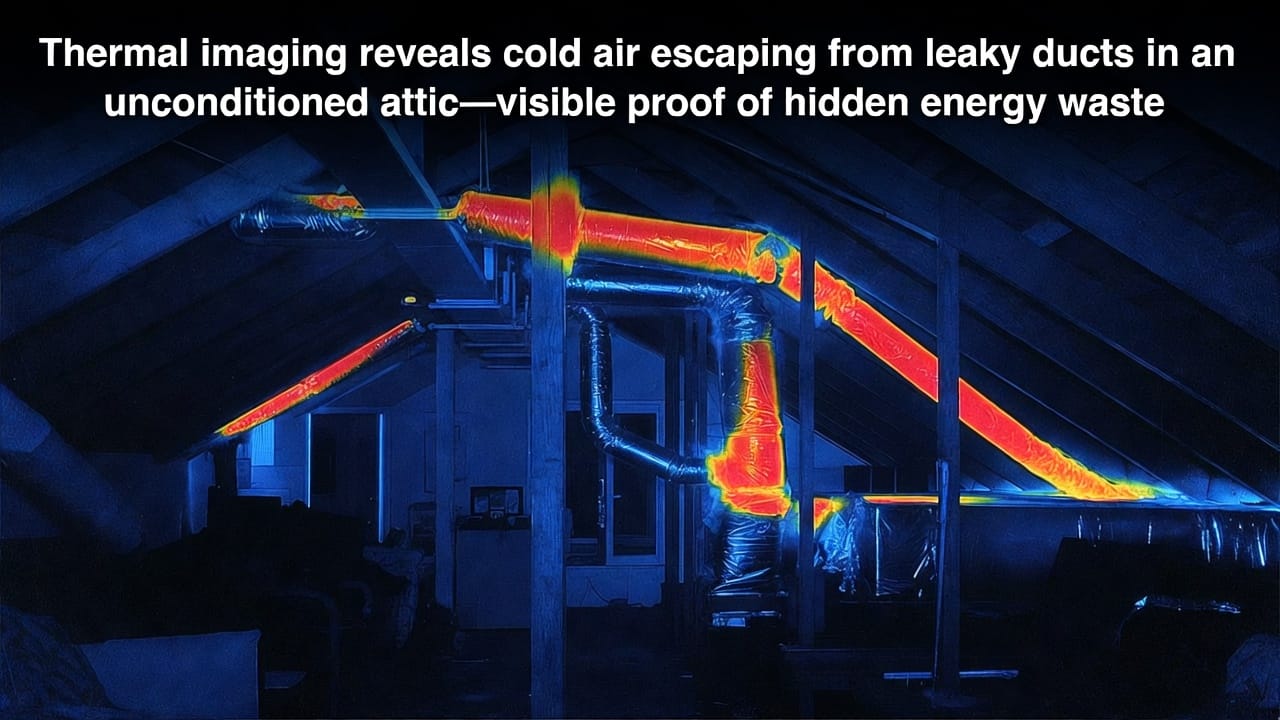
Duct leaks create a double penalty. Supply-side leaks push expensive conditioned air into attics, crawlspaces, or walls—wasted energy. Return-side leaks pull in unconditioned, dusty, or humid air, forcing the system to work harder to compensate.
In unconditioned attics (common in many regions), leaks exacerbate issues:
- Summer heat infiltrates cooled air
- Winter cold steals heat from warm air
- Overall system efficiency drops dramatically
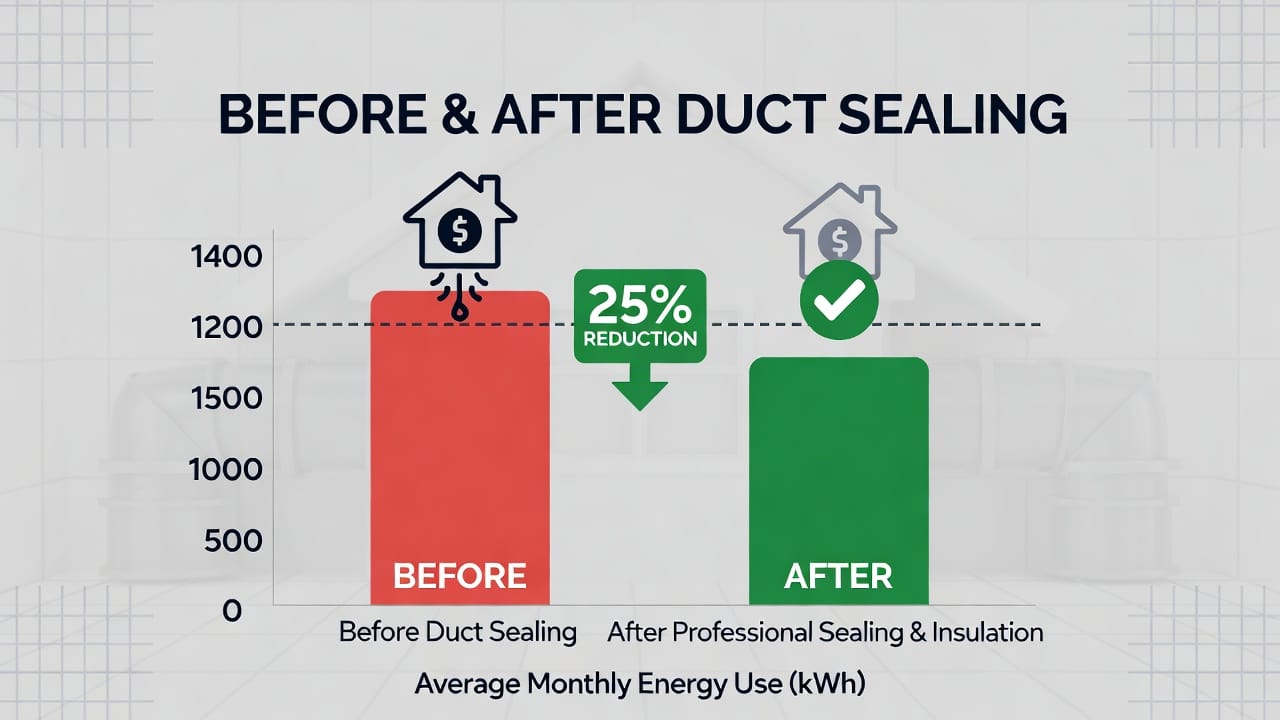
Real-world testing shows sealing these leaks often yields 20-30% improvements in delivered airflow and corresponding reductions in energy use.
Benefits of Professional Duct Sealing and Insulation
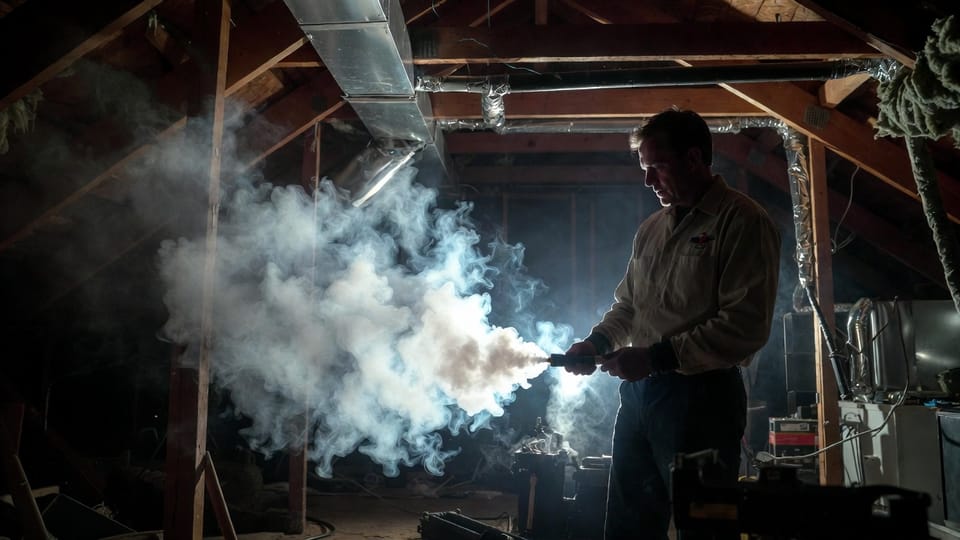
Duct sealing uses specialized mastic, aerosol-based sealants, or tapes rated for HVAC applications to close gaps permanently. Insulation (typically R-6 to R-8 flexible wrap or rigid board) minimizes heat transfer in unconditioned areas.
Key advantages include:
- Improved comfort through balanced room temperatures
- Lower utility bills—often 10-25% savings on heating/cooling
- Extended equipment life by reducing runtime and strain
- Better indoor air quality by minimizing pollutant infiltration
- Enhanced system capacity—up to 20% more effective cooling/heating delivery
In many cases, homeowners recoup investment costs within 2-4 years through energy savings alone. When combined with Manual D redesign (if needed), results compound for optimal performance.
Real Results: Measuring the Impact
Professional evaluations use tools like blower door tests, duct blasters, and thermal cameras to quantify leaks and inefficiencies. After sealing and insulating:
- Airflow delivery increases significantly
- Static pressure normalizes
- Energy consumption drops measurably
These visual metrics reassure homeowners that improvements are tangible and verifiable.
Taking Control of Your Home's Comfort and Efficiency
Your HVAC system represents a major investment in home comfort. Don't let hidden duct problems sabotage its potential. Leaky or poorly designed ductwork quietly drains resources while compromising performance.
The good news? Solutions are straightforward, effective, and backed by decades of industry standards.
Our experienced technicians will perform a thorough diagnostic, identify leaks and design issues, and recommend tailored fixes to restore peak efficiency. Invest in your system's distribution network—your wallet and comfort will thank you.
Boost Efficiency 20%+ with Duct Sealing – Call Today