The Draft Dilemma: How Advanced HVAC Systems Eliminate Cold Spots and Air Stratification
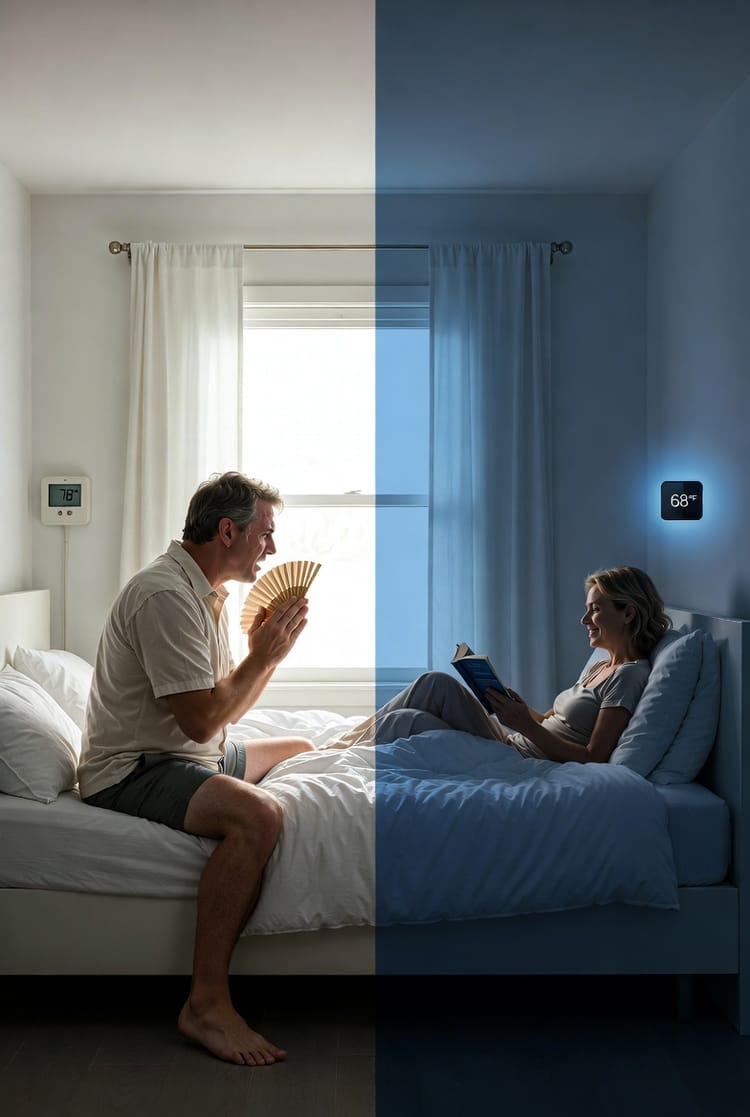
Have you ever walked into a room feeling a chill near the floor while the ceiling feels warmer? This common issue, known as air stratification, can turn your home into an uncomfortable patchwork of temperatures. But fear not—advanced HVAC systems are engineered to tackle this head-on, ensuring uniform comfort throughout your living spaces. In this comprehensive guide, we'll explore the science behind these innovations and how they banish cold spots for good.
Banish Drafts & Stratification – Get Your Free Consultation
As a leader in comfort engineering, we understand the frustration of uneven heating or cooling. Traditional systems often fall short, but modern solutions like variable-speed blowers and strategically placed vents revolutionize indoor climates. By delving into the principles of air mixing and circulation, you'll see why upgrading your HVAC is a smart investment for year-round consistency.
Understanding Air Stratification: The Root of the Problem
Air stratification occurs when warmer air rises and cooler air sinks, creating layers of varying temperatures in a room. This natural phenomenon, driven by buoyancy and density differences, is exacerbated in homes with inadequate HVAC designs. Without proper intervention, you might experience cold spots near windows, doors, or floors, leading to discomfort and higher energy bills.
Why does this happen? In basic systems, air is pushed out at a constant speed, often failing to mix thoroughly. Factors like poor insulation, large room sizes, or single-level venting contribute to this dilemma. But here's the reassuring part: advanced HVAC technology addresses these issues scientifically, promoting even distribution from floor to ceiling.
- Buoyancy Effects: Warm air is less dense, so it naturally ascends, leaving cooler layers below.
- Inadequate Circulation: Fixed-speed blowers create short bursts of air that don't penetrate all areas.
- Environmental Influences: Drafts from leaks or poor window seals amplify stratification.
By recognizing these causes, homeowners can appreciate how targeted engineering solutions restore balance.
The Science of Air Mixing in Modern HVAC
At the heart of eliminating air stratification is the science of air mixing. This involves blending conditioned air with room air to achieve homogeneity. Advanced HVAC systems use fluid dynamics principles to ensure thorough circulation, preventing temperature gradients.
Think of air as a fluid in motion. Effective mixing requires turbulence—controlled chaos that disrupts stagnant layers. Modern systems incorporate diffusers and grilles designed to create eddies, where air swirls and integrates. This isn't random; it's calculated through computational fluid dynamics (CFD) modeling during system design.
Moreover, thermodynamics plays a key role. Heat transfer via convection ensures that warmed or cooled air reaches every corner. With precise control, these systems maintain a delta-T (temperature difference) of less than 2°F between floor and ceiling, far superior to older models.
The Role of Variable-Speed Blowers
One standout feature in advanced HVAC systems is the variable-speed blower. Unlike traditional single-speed units that blast air at full force or not at all, these blowers adjust their speed dynamically based on real-time needs.
How does this combat cold spots? By running at lower speeds for longer periods, they provide gentle, continuous airflow. This promotes better air mixing without creating drafts, ensuring consistent temperatures.
- Energy Efficiency: Variable speeds reduce energy consumption by up to 40%, as they only use what's necessary.
- Quiet Operation: Lower speeds mean less noise, enhancing overall home comfort.
- Adaptive Response: Integrated sensors detect temperature variations and ramp up or down accordingly.
Authoritatively speaking, installing a system with a variable-speed blower is like giving your home a smart brain for climate control. It's reassuring to know that such technology adapts to your lifestyle, whether you're hosting a gathering or enjoying a quiet evening.
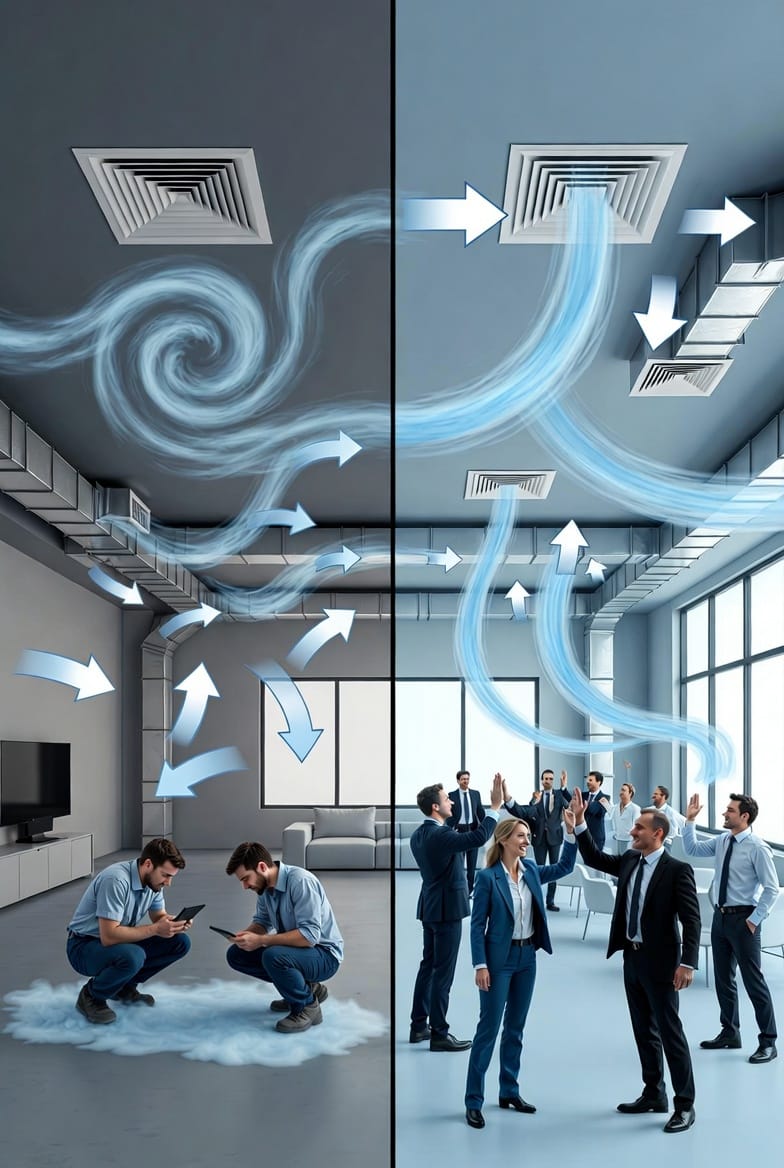
Strategically Placed Supply and Return Vents
Placement is everything in HVAC design. Strategically placed supply and return vents are crucial for eliminating air stratification. Supply vents deliver conditioned air, while return vents pull in room air for reconditioning. In advanced systems, these are positioned to create a balanced loop.
For instance, placing return vents near the floor captures cooler air, while ceiling-level supplies distribute warmth evenly. This counters natural stratification by forcing vertical mixing.
- Multi-Zone Optimization: In larger homes, zoning allows independent control, targeting specific areas prone to cold spots.
- High and Low Placement: Combining floor-level supplies with ceiling returns enhances cross-flow.
- Custom Engineering: Professionals use airflow simulations to determine ideal locations, avoiding dead zones.
This approach isn't just theoretical—it's proven in real-world applications, where homes see dramatic improvements in comfort levels.
Engineering Consistent Temperature from Floor to Ceiling
Modern HVAC systems are built with precision to maintain consistent temperature vertically. Through integrated controls and smart thermostats, they monitor and adjust in real time.
Sensors placed at multiple heights feed data to the system, triggering blower speed changes or damper adjustments. This ensures no layer of air remains untouched, banishing cold spots effectively.
Additionally, features like electronic air cleaners and humidifiers integrate seamlessly, further stabilizing the environment. The result? A home where every inch feels just right, from the basement to the attic.
Benefits Beyond Comfort: Health and Efficiency
Upgrading to an advanced HVAC system offers more than eliminating drafts—it's about holistic well-being. Even air distribution reduces allergens and moisture buildup, promoting healthier indoor air quality.
Efficiency-wise, these systems lower utility costs by optimizing runtime. With ENERGY STAR-rated components, you can expect savings of 20-30% annually.
- Improved Sleep: Consistent temperatures aid restful nights without waking to chills.
- Property Value Boost: Modern systems appeal to buyers, enhancing resale potential.
- Sustainability: Reduced energy use means a smaller carbon footprint.
Rest assured, investing in such technology is a forward-thinking choice for long-term benefits.
Case Studies: Real Homes Transformed
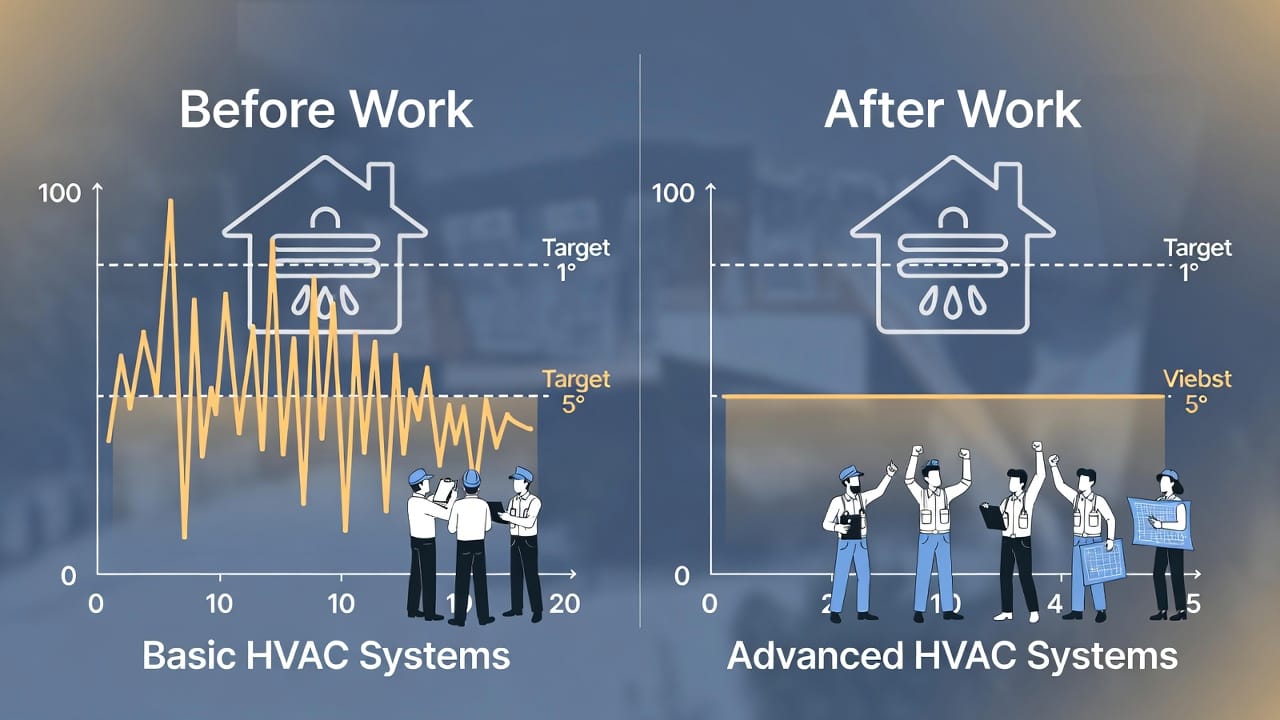
Consider a typical suburban home plagued by air stratification in winter. With a basic system, the family bundled up downstairs while upstairs sweltered. After installing an advanced HVAC with variable-speed blowers and optimized vents, temperatures stabilized within 1°F floor-to-ceiling.
Another example: A multi-story office converted to residential use. Strategic vent placement and zoning eliminated cold spots in high-ceiling areas, turning drafts into delights.
These stories underscore the transformative power of engineering.
Choosing the Right System for Your Home
Selecting an advanced HVAC system involves assessing your space's needs. Factors like square footage, insulation quality, and climate zone guide the choice.
Consult experts for a load calculation to ensure proper sizing. Look for systems with high SEER ratings for cooling and AFUE for heating efficiency.
- Professional Installation: Ensures vents and blowers are placed optimally.
- Maintenance Plans: Regular tune-ups keep performance peak.
- Smart Integrations: App controls for remote adjustments.
With the right setup, uniform comfort becomes your new normal.
Myths Debunked: Addressing Common Concerns
Myth: Advanced systems are too expensive. Reality: Long-term savings offset initial costs.
Myth: They require major renovations. Reality: Many upgrades fit existing ductwork with minimal disruption.
Myth: Variable speeds are unnecessary. Reality: They provide superior air mixing and efficiency.
Armed with facts, you can confidently upgrade.
Future Trends in HVAC Technology
Looking ahead, HVAC innovations include AI-driven predictive maintenance and geothermal integrations for even better efficiency. These advancements promise to further minimize air stratification.
Stay ahead by partnering with forward-thinking providers.
Advanced HVAC That Ends the Draft Dilemma – Contact Us Today