The Dehumidifier Fleet: How Industrial-Grade Units Remove Hundreds of Gallons of Water from Your Home
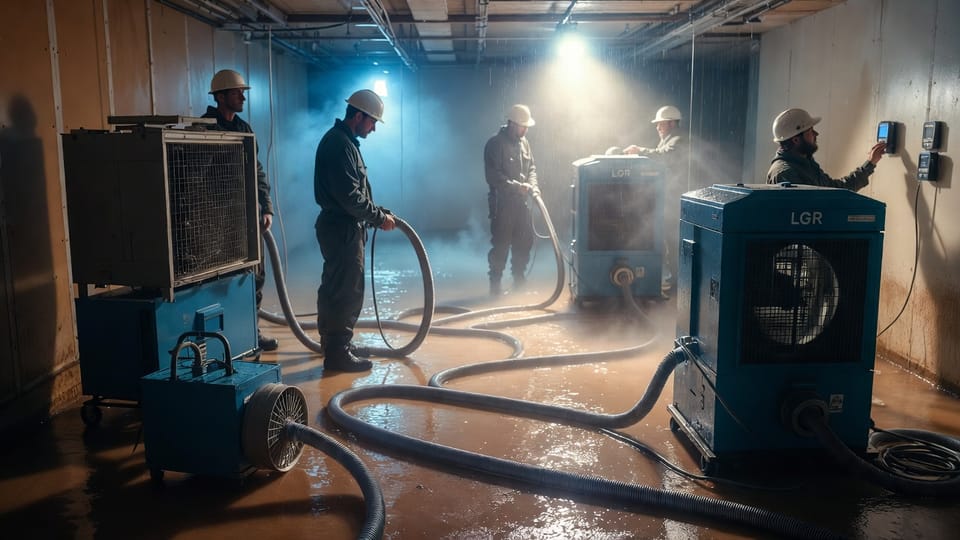
When disaster strikes and water invades your home, time becomes your most valuable asset. Water damage doesn’t wait — it seeps into walls, saturates flooring, and creates the perfect environment for mold and structural decay. Fortunately, professional restorers don’t rely on ordinary household tools. They deploy an entire dehumidifier fleet of industrial-grade machines capable of removing hundreds of gallons of water in days, not weeks.
Call Now for Rapid Water Damage Drying
These aren’t the small units you buy at the hardware store. Industrial LGR dehumidifiers and desiccant dehumidifiers are engineered for one purpose: aggressive, scientific structural drying. In this article, we’ll take you inside the powerful equipment that turns catastrophic flooding into a controlled, successful restoration.
Rest assured — with the right technology and experienced technicians, even the most severe water damage can be reversed quickly and completely.
The Hidden Danger of Trapped Moisture
Water doesn’t just sit on surfaces. It migrates deep into porous materials — drywall, wood framing, concrete slabs, and insulation. Left untreated, trapped moisture leads to secondary damage: warping, buckling, mold growth within 24–48 hours, and compromised structural integrity.
Professional restorers know that simply removing visible water is only the beginning. The real work happens at the molecular level — pulling hidden moisture from deep within materials before it causes permanent harm.
This is where the dehumidifier fleet becomes the hero of every successful water damage restoration project.
Refrigerant Dehumidifiers: The Workhorses of Modern Restoration
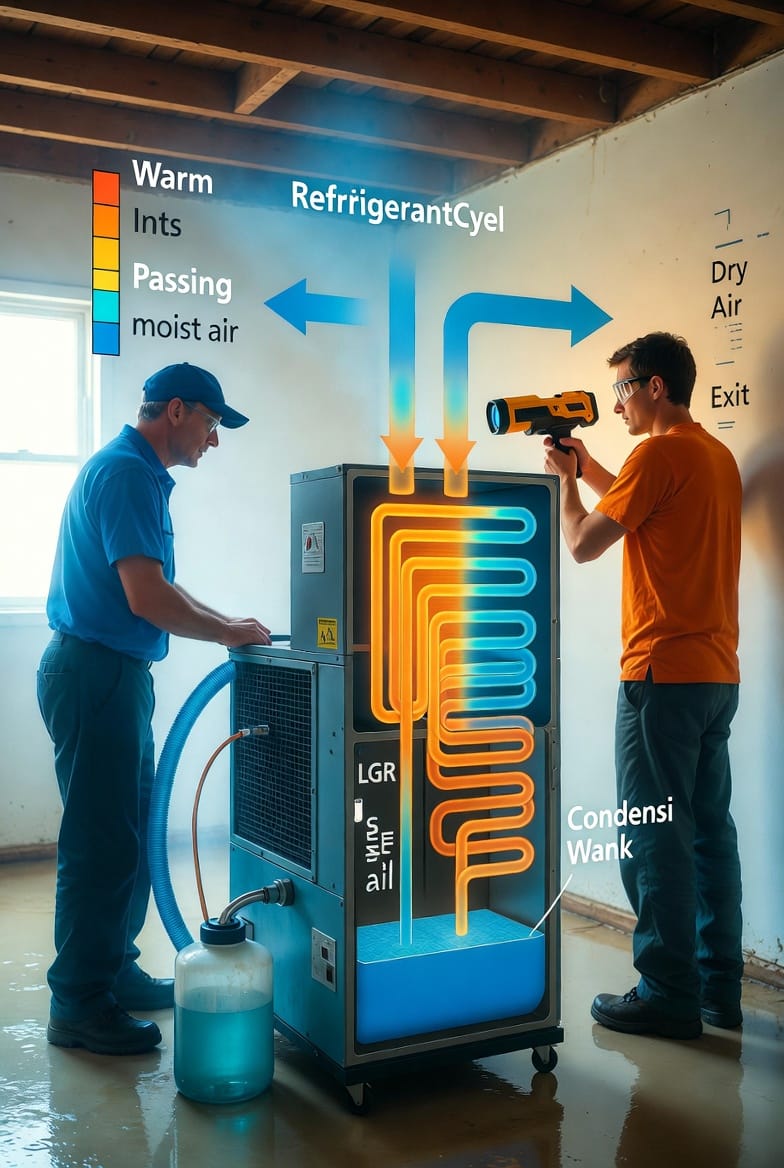
The majority of residential water damage jobs rely on Low Grain Refrigerant (LGR) dehumidifiers. These industrial machines represent a massive leap beyond consumer models.
How LGR units work:
- They pull in moist air across super-cooled evaporator coils.
- Moisture condenses into liquid water that drains or is pumped away.
- The air is then reheated and blown back into the space as drier air.
What makes industrial LGR dehumidifiers exceptional is their ability to continue removing moisture even when the air is already quite dry — down to 34–40 grains per pound (GPP). Standard residential units struggle below 55–60 GPP and essentially stop working effectively.
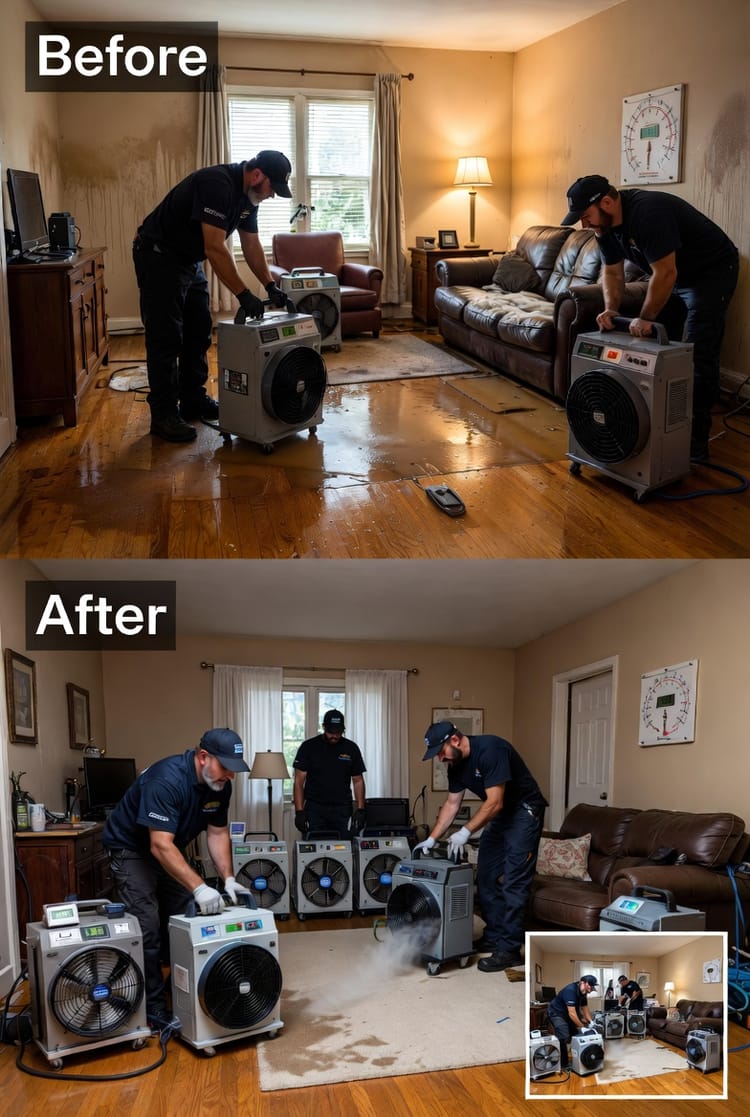
A single large LGR unit can remove 170–300 pints of water per day (that’s 21–37 gallons). When a professional team deploys six, eight, or even twelve of these machines in a flooded home, the numbers become staggering — hundreds of gallons extracted in the first 48–72 hours.
Key advantages of industrial LGR dehumidifiers:
- Operate effectively in cooler temperatures common in basements
- Extremely high water removal capacity
- Built for 24/7 continuous operation
- Integrated pumps to automatically discharge water
- Durable, commercial-grade construction
Desiccant Dehumidifiers: When Conditions Demand Extreme Performance
For certain challenging environments — very cold spaces, high-humidity climates, or materials that release moisture slowly — restorers bring in desiccant dehumidifiers.
Unlike refrigerant units, desiccant machines don’t cool the air. Instead, they use a rotating wheel coated with desiccant material (usually silica gel) that literally absorbs moisture from the air like a sponge.
The process:
- Moist air passes through the desiccant wheel.
- Moisture is chemically bound to the desiccant.
- A separate heated air stream regenerates the wheel, driving moisture out as vapor that is vented outside.
Desiccant units excel at achieving extremely low humidity levels — sometimes below 20 GPP — making them perfect for drying dense materials like hardwood floors or thick concrete slabs.
While they use more energy, their unmatched performance in difficult conditions makes them an essential part of the professional dehumidifier fleet.
How Industrial Units Pull Moisture from Structural Materials
Here’s what separates professional drying from amateur attempts: psychrometric science.
Industrial dehumidifiers don’t just dry the air — they create a powerful vapor pressure differential that forces trapped moisture out of walls, floors, and ceilings.
The science in action:
- Wet materials have high vapor pressure.
- The dehumidifier fleet lowers the vapor pressure of the surrounding air dramatically.
- Moisture naturally migrates from the material into the drier air.
- Continuous airflow from air movers accelerates this evaporation.
Technicians often combine dehumidifiers with directed heat and negative air pressure to speed the process even further. In a typical 2,000-square-foot home with significant water damage, the team might remove 400–800 gallons of water during the entire drying phase.
Calculating the Perfect Dehumidifier Fleet
Experienced restorers don’t guess how many units to deploy. They calculate with precision.
Key factors technicians evaluate:
- Class of water damage (how much water was involved)
- Category of contamination (clean, gray, or black water)
- Cubic volume of the affected area
- Type of materials (drywall dries faster than hardwood)
- Initial and target humidity levels
- Temperature and dew point
Using psychrometric charts and specialized software, they determine the exact pints-per-day capacity needed to achieve drying goals within the critical 72-hour window.
A single miscalculation can mean the difference between a successful restoration and costly reconstruction.
Why Consumer Units Simply Can’t Compare
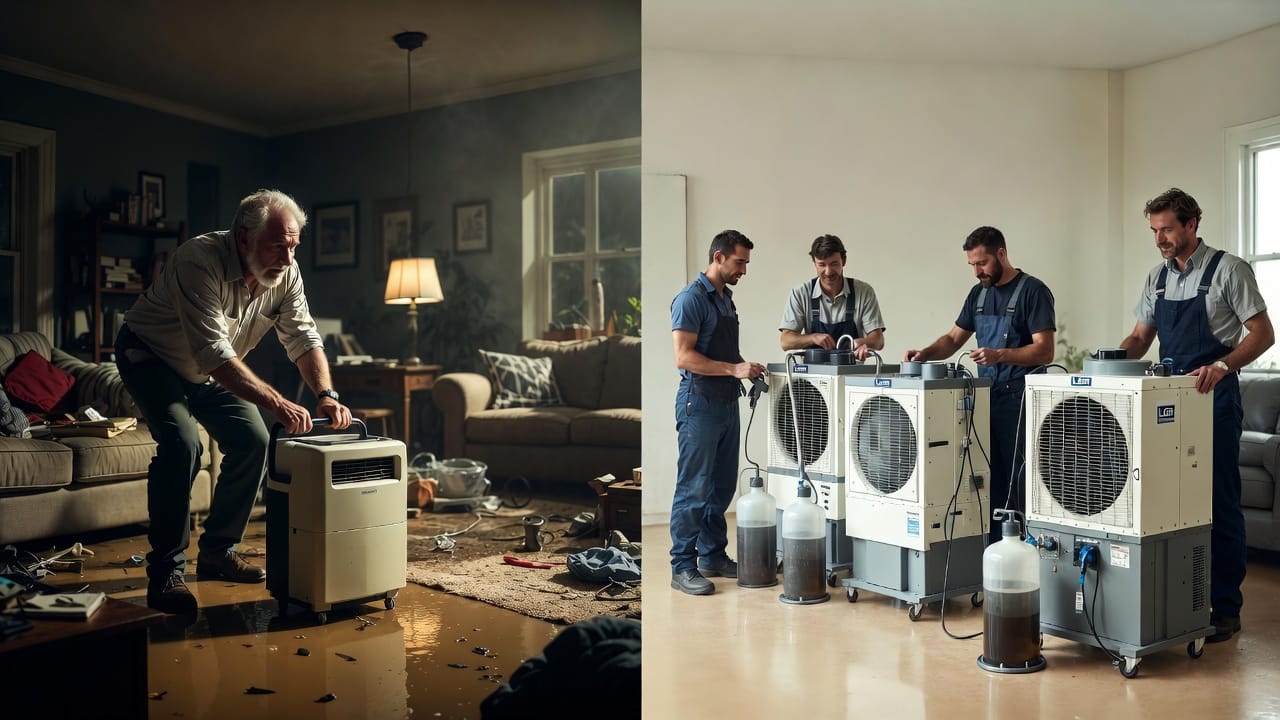
A typical home dehumidifier removes 30–70 pints per day under ideal conditions — and far less in real-world water damage scenarios.
Industrial LGR units remove 3–10 times more water, operate continuously without shutting off, and maintain performance in the exact conditions found in flooded homes.
The numbers don’t lie:
When your home has thousands of gallons of water to remove, the difference between these machines isn’t just performance — it’s the difference between saving your home and losing it.
The Complete Professional Drying Process
A successful structural drying project follows a proven sequence:
- Water extraction — removing all standing water
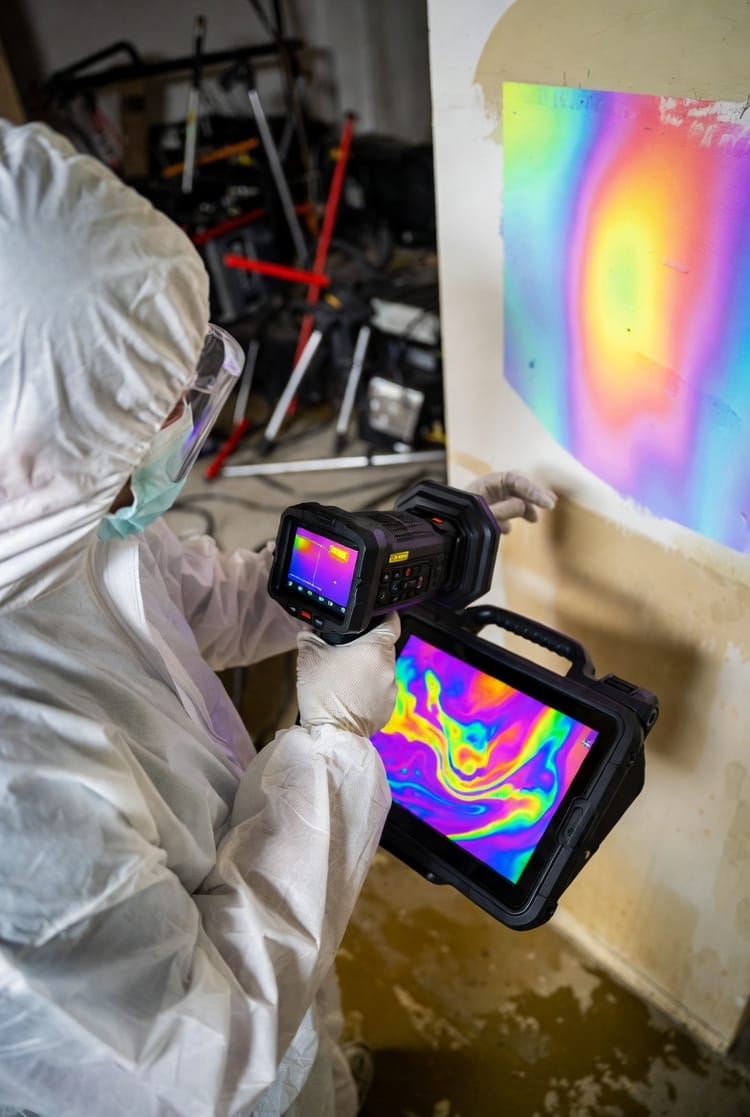
- Inspection & monitoring — using moisture meters and thermal imaging
- Strategic equipment placement — creating drying chambers
- Continuous operation of the dehumidifier fleet and air movers
- Daily monitoring and adjustment of equipment
- Final verification that materials have reached normal moisture content
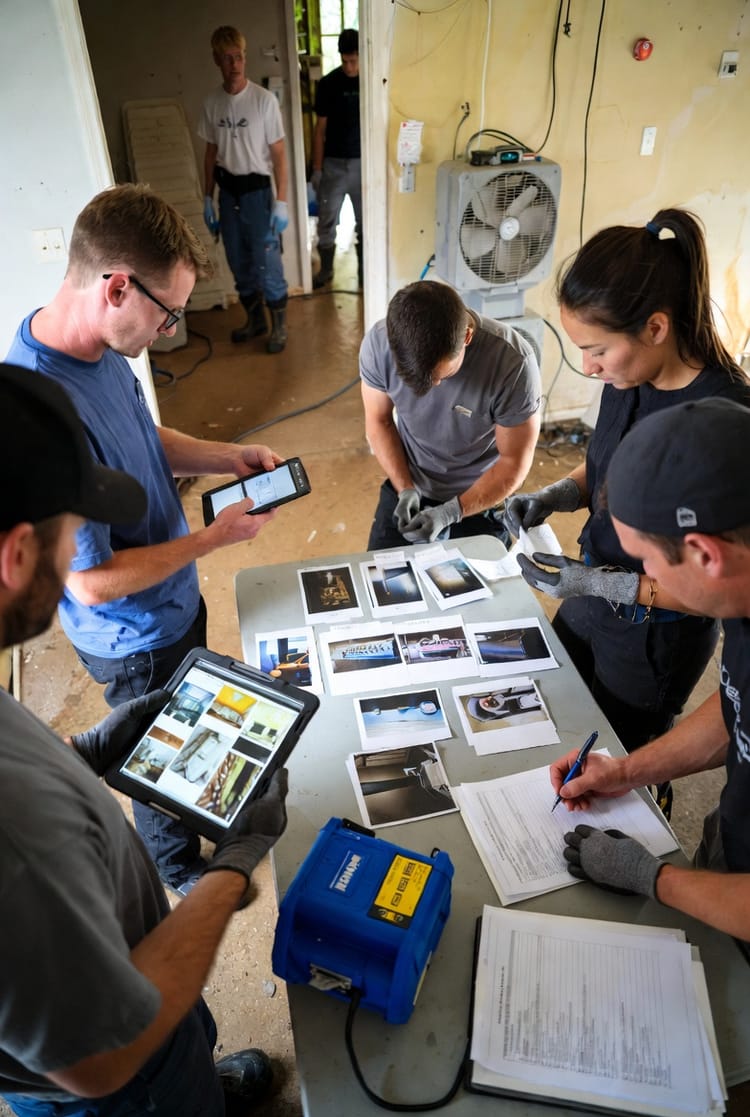
Throughout this process, technicians document everything for insurance purposes, ensuring transparency and accountability.
Protecting Your Home and Your Peace of Mind
When professionals handle water damage with industrial equipment, the results speak for themselves. Homes are returned to pre-loss condition faster. Mold risk is virtually eliminated. Structural materials are preserved rather than replaced.
You don’t have to face water damage alone.
The right team with the right dehumidifier fleet can save your home, your belongings, and your sanity.
Industrial power for residential disasters.
Our technicians arrive with the full industrial arsenal ready to protect what matters most — your home and your family.
Save Your Home from Water Damage – Call Immediately