The Curbless Shower Conversion: Designing a Sleek, Accessible, and Leak-Free Wet Room
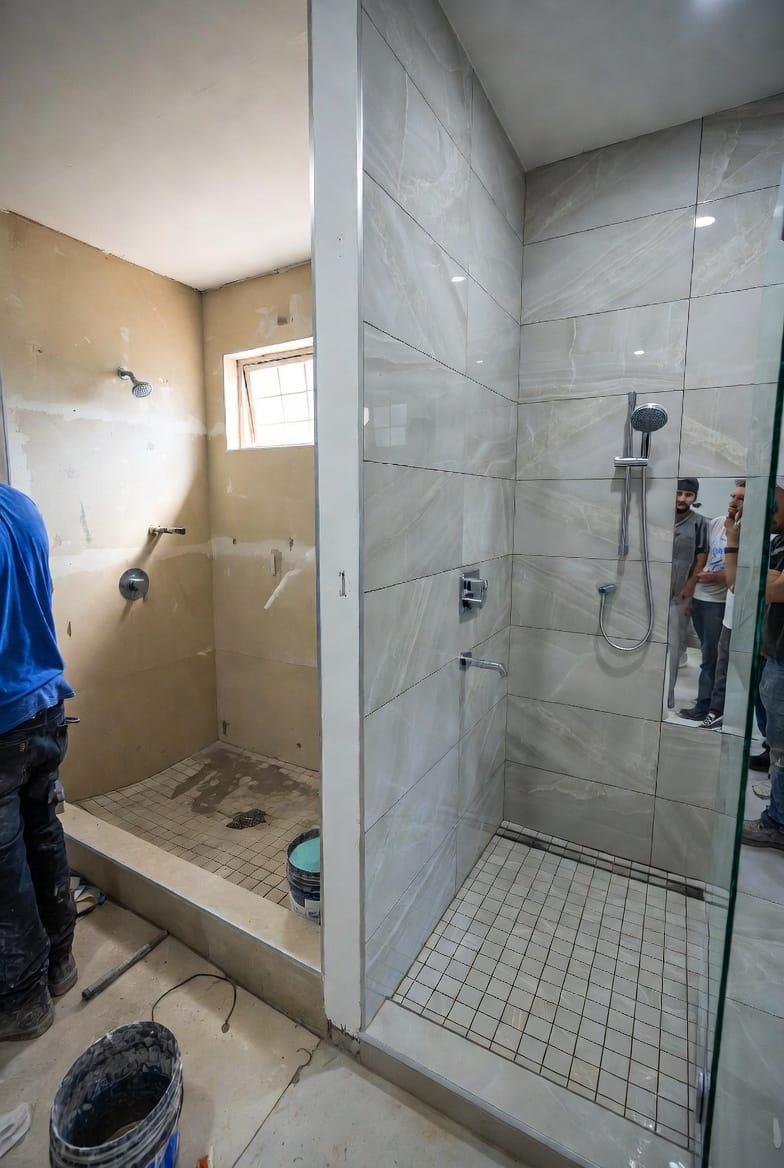
In today's modern bathrooms, the curbless shower stands out as a pinnacle of design innovation, blending functionality with aesthetic appeal. This zero-threshold approach eliminates the traditional curb, creating a seamless transition that enhances accessibility and transforms your space into a true wet room. Whether you're planning a full bathroom remodel or seeking to improve safety for aging in place, understanding the intricacies of a curbless shower conversion is essential. In this comprehensive guide, we'll explore the benefits, complexities, and key technical elements to ensure your project results in a leak-free, spa-like sanctuary.
Transform Your Bathroom into a Leak-Free Wet Room – Call Experts
Understanding the Curbless Shower: Benefits and Appeal
A curbless shower, also known as a zero-threshold or barrier-free shower, removes the raised edge typically found in standard enclosures. This design choice offers numerous advantages that go beyond mere style.
- Enhanced Accessibility: Ideal for individuals with mobility challenges, seniors, or anyone prioritizing universal design. The flat entry reduces trip hazards and allows for easy wheelchair access, promoting independence and safety.
- Sleek Aesthetic: By extending floor tiles continuously from the bathroom into the shower area, you achieve a spacious, open feel. This creates an illusion of a larger room, perfect for small bathrooms or luxurious master suites.
- Improved Hygiene and Maintenance: Without curbs to trap water or grime, cleaning becomes effortless. Water flows naturally to the drain, minimizing mold growth and simplifying upkeep.
- Increased Home Value: In a market where accessible bathrooms are in high demand, a well-executed curbless conversion can boost your property's appeal to buyers seeking modern, inclusive features.
While these benefits are compelling, achieving them requires meticulous planning. Rushing into a curbless install without addressing structural demands can lead to costly leaks or uneven flooring. Rest assured, with professional guidance, your wet room will be both beautiful and durable.
The Complexity of Curbless Shower Design
Converting to a curbless shower isn't a simple swap—it's a sophisticated remodel that involves reengineering your bathroom's substructure. Unlike traditional showers with contained curbs, a zero-threshold system demands precise water management to prevent leaks and ensure proper drainage.
Key complexities include:
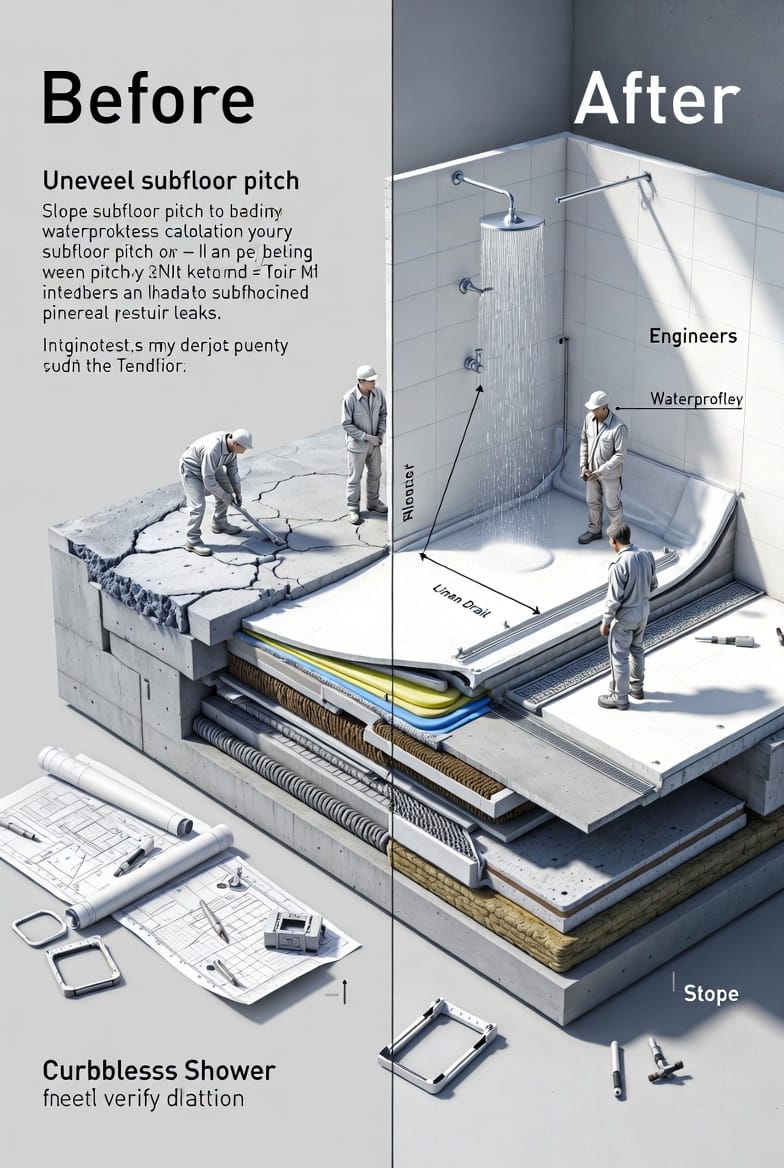
- Structural Adjustments: Often, the existing floor joists must be modified or reinforced to accommodate the necessary slope. This might involve lowering the subfloor in the shower area to create a recessed pan.
- Waterproofing Challenges: Water isn't confined, so the entire wet room floor must be treated as a potential splash zone. This requires advanced materials and techniques to safeguard against moisture damage.
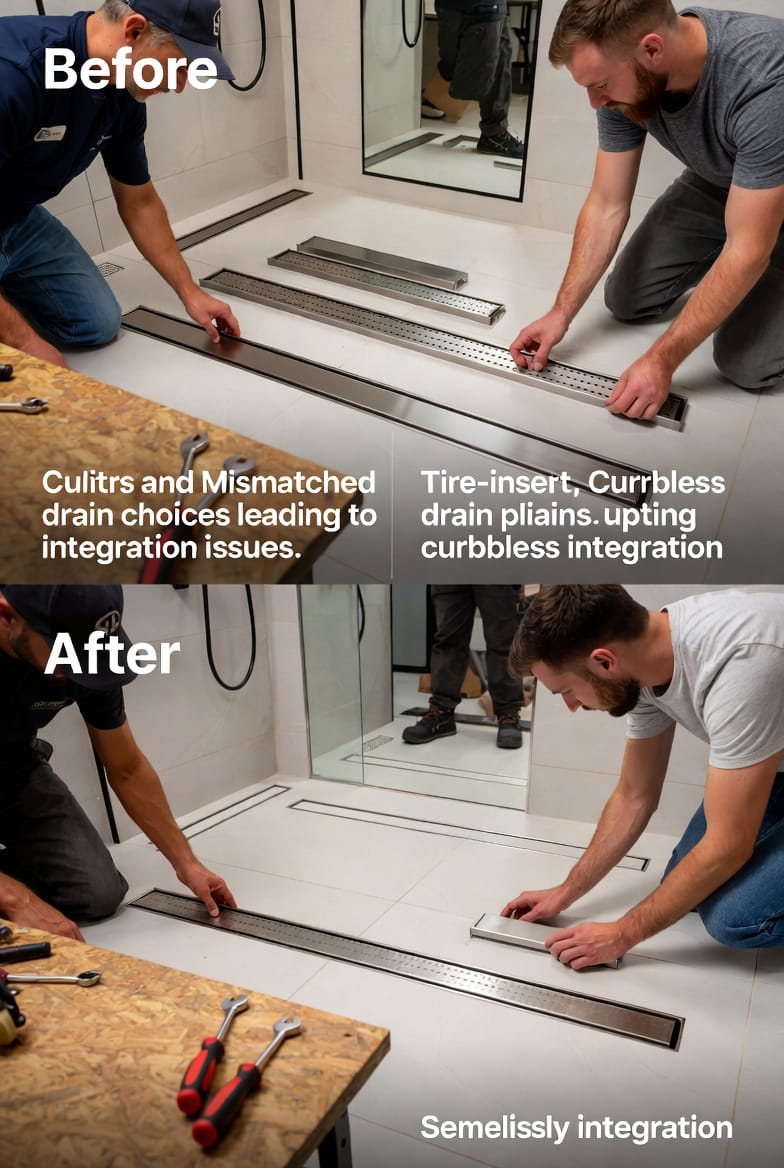
- Drain Integration: Traditional center drains won't suffice; linear systems are essential for efficient water evacuation across a flat plane.
- Code Compliance: Local building codes often mandate specific slopes and waterproofing standards to ensure safety and prevent water intrusion into adjacent areas.
Despite these hurdles, the end result—a seamless, elegant space—is well worth the investment. Our experts at Bathroom Remodeling Services (tel:8553213081) have successfully navigated these complexities for countless clients, delivering flawless outcomes every time.
Critical Slope-to-Drain Calculations
One of the most vital aspects of a curbless shower is the slope-to-drain ratio, which ensures water flows efficiently without pooling. A improper pitch can lead to standing water, slippery surfaces, or even structural damage over time.
To calculate the ideal slope:
- Standard Guideline: Aim for a minimum slope of 1/4 inch per foot toward the drain. For a 4-foot shower depth, this means a 1-inch drop from the farthest point.
- Factors Influencing Slope: Consider floor material friction—slick tiles may require a steeper pitch (up to 1/2 inch per foot) to prevent slips. Also, account for the drain's capacity; oversized drains handle higher volumes but need precise placement.
- Mathematical Precision: Use the formula: Slope = Rise / Run. For example, if your shower is 60 inches wide, a 1/4-inch-per-foot slope equates to a 1.25-inch total drop (60/12 * 0.25).
- Testing Methods: During installation, perform flood tests to verify no low spots. Adjust the mortar bed as needed for uniform drainage.
By adhering to these calculations, you avoid common pitfalls like water migration outside the shower zone. It's reassuring to know that with accurate measurements, your wet room will function flawlessly for years.
Linear Drain Systems: The Heart of Efficiency
At the core of any successful curbless shower is a linear drain system, which spans the width of the shower for optimal water collection. Unlike point drains, linear options provide a sleek, unobtrusive look while handling high-flow scenarios.
- Types of Linear Drains: Choose from tile-insert models that blend seamlessly with flooring, or visible stainless-steel grates for a modern edge. Wedge-wire designs offer narrow profiles for minimalist aesthetics.
- Installation Best Practices: Position the drain at the shower's lowest point, typically along the back wall or entry. Ensure it's level with the floor plane to maintain the zero-threshold.
- Capacity Considerations: Select drains rated for at least 5 gallons per minute (GPM) to match your showerhead's output. For rainfall systems, opt for higher-capacity models to prevent overflow.
- Integration with Flooring: The drain flange must bond perfectly with waterproofing layers. Use compatible adhesives to avoid gaps that could lead to leaks.
Linear drains not only enhance functionality but also contribute to the wet room's luxurious vibe. With options from brands like Schluter or Infinity Drain, you can customize to fit your design vision.
Waterproofing Membranes: Extending Protection Beyond the Shower
Waterproofing is non-negotiable in a curbless setup, where water can spread freely. Waterproofing membranes must cover not just the shower pan but extend several feet into the surrounding floor and up the walls.
- Material Options: Sheet membranes like Kerdi or RedGard provide robust barriers. Liquid-applied versions offer flexibility for irregular shapes.
- Application Layers: Start with a pre-sloped mortar bed, then apply the membrane, ensuring overlaps and seals at seams. Top with a final screed for tile adhesion.
- Extension Requirements: Membranes should reach at least 3-6 feet beyond the shower spray zone to catch splashes. Wall coverage up to 6-8 feet prevents vertical moisture wicking.
- Common Risks and Mitigations: Poor seams can cause failures—always use manufacturer-approved tapes. Test for leaks post-installation to catch issues early.
This comprehensive approach guarantees a leak-free wet room, protecting your home's structure and providing peace of mind.
Creating a Spacious, Accessible Aesthetic
The true magic of a curbless shower lies in its ability to craft a spacious, accessible aesthetic. By eliminating barriers, the design fosters an open, inviting atmosphere reminiscent of high-end spas.
- Tile Choices: Opt for large-format tiles to minimize grout lines, enhancing the seamless look. Non-slip surfaces ensure safety without compromising style.
- Lighting and Fixtures: Incorporate recessed LEDs for ambient glow, and wall-mounted showerheads to keep the floor clear.
- Storage Solutions: Built-in niches and benches add functionality while maintaining clean lines.
- Color and Texture: Neutral palettes expand visual space, while textured accents provide grip and interest.
This aesthetic not only delights the senses but also supports long-term livability, making your bathroom a haven for all.
Final Considerations for Your Curbless Conversion
Before embarking on your project, consult professionals to assess your space's feasibility. Budget for potential plumbing reroutes and material upgrades—expect costs from $5,000 to $15,000 depending on scope.
In summary, a curbless shower conversion demands expertise but rewards with unparalleled elegance and utility. Achieve a seamless, spa-like flow.
Prevent Leaks & Gain Accessibility – Schedule Your Curbless Remode