The Control Board: The Appliance's Computer and Why Its Failure Often Means a Costly Repair
Modern appliances have become remarkably intelligent. Behind the sleek touch panels and quiet operation lies a small but powerful component that acts as the true brain of the machine — the electronic control board. When this critical part fails, homeowners often face sticker shock and the difficult decision of whether to repair or replace the entire appliance. Understanding what a control board does, why it fails, and how professionals diagnose and fix it can save you hundreds — sometimes thousands — of dollars while extending the life of your trusted washer, dryer, refrigerator, or dishwasher.
Diagnose the Control Board Before Replacing – Call Experts
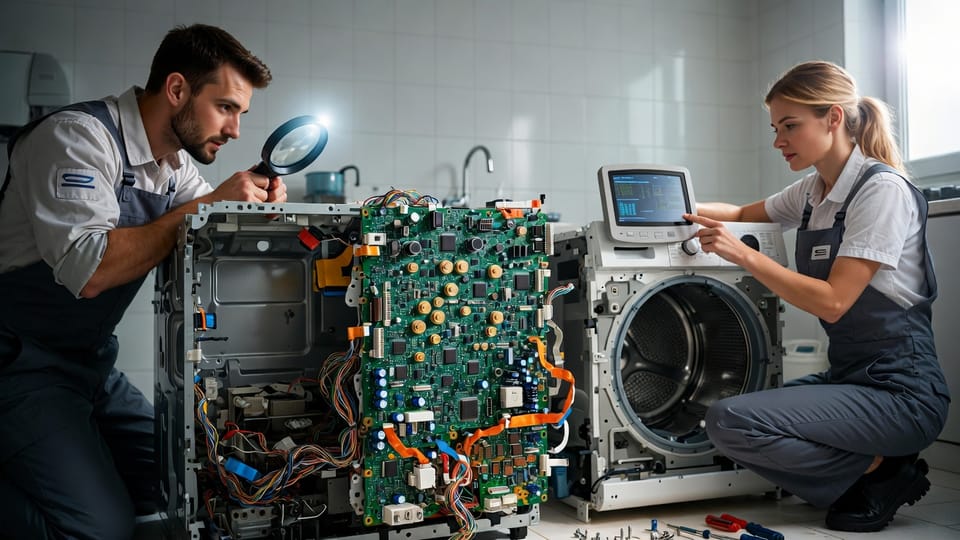
At its core, the control board is a sophisticated printed circuit board packed with microprocessors, memory chips, relays, sensors interfaces, and power regulators. It functions exactly like the motherboard and CPU in your desktop computer, only engineered for the harsh environment of heat, vibration, and moisture inside household appliances. This single component receives input from every button you press, every sensor that monitors temperature or water level, and then sends precise commands to motors, valves, heaters, and displays. Without it, even the most expensive appliance is just an expensive box of metal and plastic.
Why is this small board so expensive to replace? Because it is custom-designed for each model and brand. Manufacturers embed proprietary software, safety algorithms, and exact voltage matching that cannot be swapped from another unit. A single failed control board can easily represent 40 to 60 percent of the original purchase price of the appliance — a reality that surprises many homeowners who expect a “simple” fix.
What Exactly Does the Control Board Control?
Think of the control board as the orchestra conductor. It coordinates dozens of separate systems simultaneously:
- User interface — interprets every touch, dial turn, or voice command
- Safety sensors — door locks, water-level floats, temperature probes, pressure switches
- Power management — distributes and regulates voltage to prevent damage
- Actuators — motors that spin drums, pumps that drain water, valves that fill tubs, heating elements that dry clothes
In a typical front-load washing machine, for example, the board must precisely time the spin cycle, monitor for unbalanced loads, adjust water temperature within two degrees, and shut everything down instantly if the door is opened mid-cycle. One tiny miscalculation and the entire cycle fails.
This level of integration delivers the convenience we love, but it also creates a single point of failure. When the control board stops working correctly, symptoms appear across multiple unrelated functions — exactly the clue that points to the brain rather than individual parts.

Common Reasons Control Boards Fail
Despite their advanced design, control boards are surprisingly vulnerable. The four leading causes of failure are well-documented in the repair industry:
- Power surges and voltage spikes — Even a brief surge from lightning or a failing transformer can fry delicate microchips and capacitors in milliseconds.
- Moisture and condensation — A single slow leak or high-humidity environment allows corrosion to eat through copper traces and solder joints.
- Component aging — Electrolytic capacitors dry out after 7–12 years, causing erratic behavior long before the rest of the appliance wears out.
- Manufacturing stress — Heat cycling, vibration from unbalanced loads, and constant on/off power cycles gradually weaken connections.
Power surges remain the most preventable yet most common culprit. A whole-house surge protector or even a high-quality appliance-specific protector can dramatically reduce risk. Yet many homeowners only learn this lesson after the damage is done.
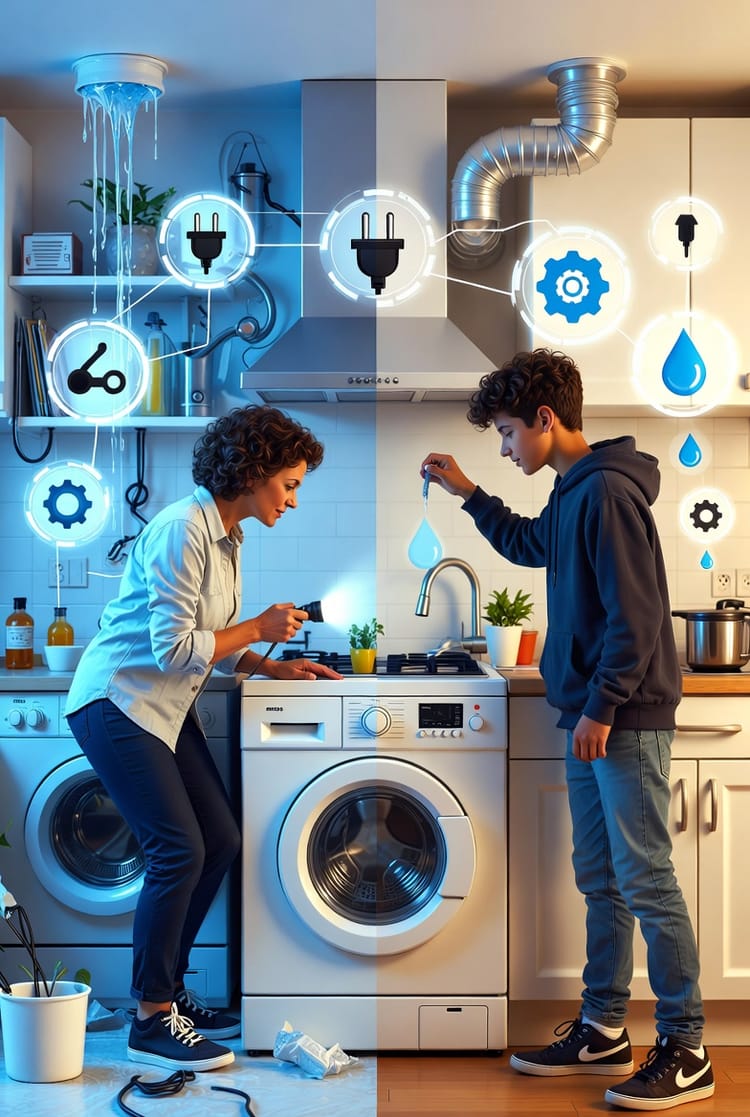
Moisture damage often starts invisibly. A worn door boot seal on a washer drips tiny amounts of water onto the board mounted at the bottom rear. Over months, corrosion spreads like a silent cancer until the board simply stops responding.
Recognizing the Warning Signs Early
Control board failure rarely happens without notice. The most reliable indicators include:
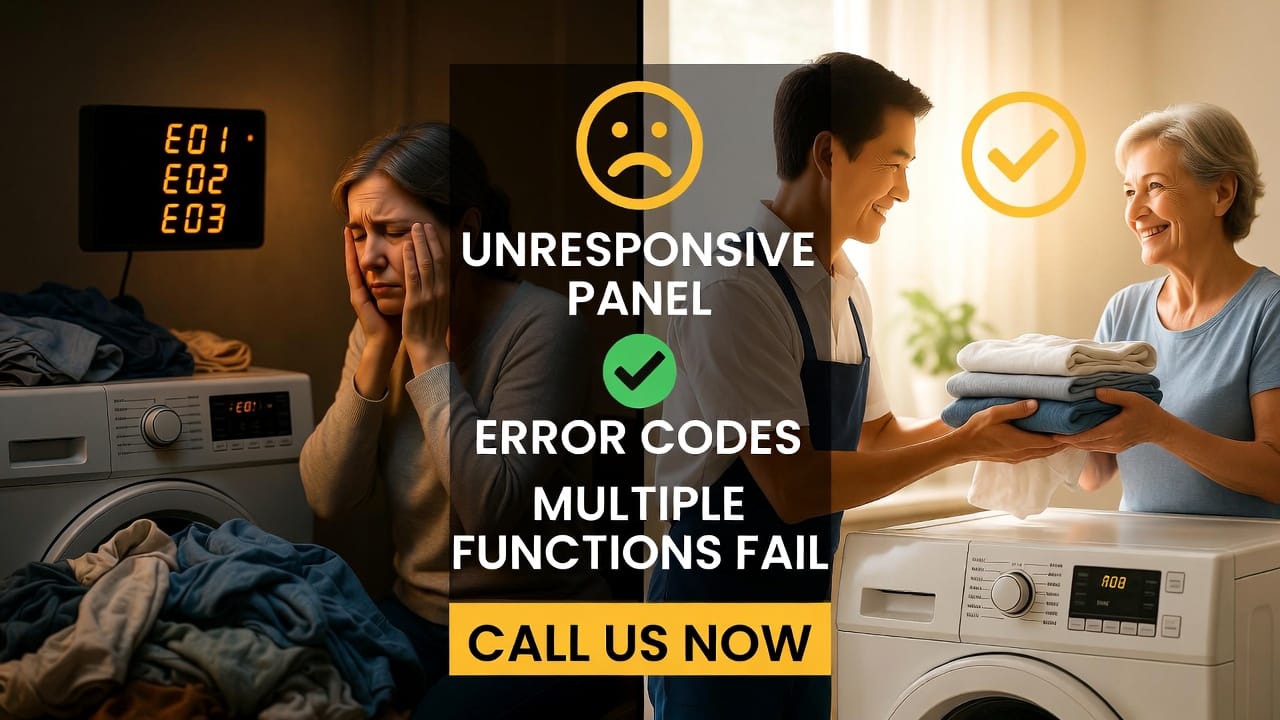
- Unresponsive or erratic touch panels — Buttons that light up but do nothing, or random beeping
- Multiple unrelated error codes — E1, F3, E5, and 5d all appearing on the same machine
- Intermittent operation — Machine starts normally one day, then refuses to spin or fill the next
- Partial function loss — Washer fills but won’t agitate; dryer tumbles but never heats
- Complete power failure with no lights — Yet the outlet and circuit breaker test fine
When you notice multiple systems failing simultaneously, resist the temptation to replace individual parts first. That approach often leads to wasted money and repeated service calls. The control board is frequently the common denominator.
The Diagnosis Challenge: Why It’s Not a Simple Swap
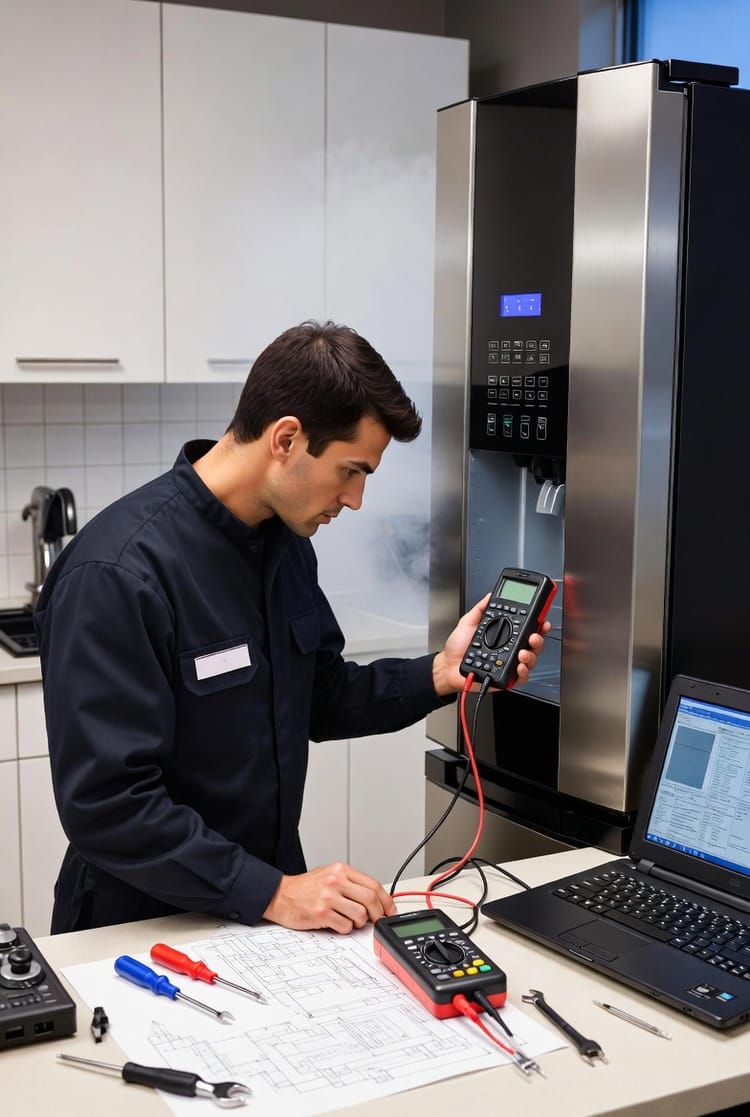
Unlike a broken belt or clogged filter, you cannot look at a control board and immediately see the problem. Modern boards use surface-mount technology with components smaller than a grain of rice. Proper diagnosis requires:
- Specialized diagnostic software or manufacturer scan tools
- Precise voltage and continuity testing at dozens of test points
- Knowledge of model-specific error code charts and wiring schematics
- Experience distinguishing board failure from failed sensors that mimic board issues
This is why attempting DIY replacement often leads to new problems. Installing the wrong revision of a board, forgetting to transfer the memory chip, or damaging ribbon cables during removal can turn a $350 repair into a $900 headache.
Professional technicians train specifically on electronic diagnostics. They use oscilloscopes, thermal cameras, and years of pattern recognition to identify the true root cause quickly and confidently.
Why Replacement Often Feels So Expensive
Let’s break down the numbers honestly. A typical washing machine control board part costs between $180 and $450 depending on brand and model. Add certified technician labor (usually 1.5–2.5 hours at $85–$125 per hour), diagnostic fee, and any required programming or calibration, and the total repair easily reaches $450–$850.
Compare that to the price of a new mid-range washer at $900–$1,400. On paper the numbers look close. Yet repairing preserves your existing machine’s cabinet, drum, motor, and suspension — components that often have many years of life remaining. You also avoid the hidden costs of disposal, delivery, installation, and water-hose reconfiguration.
When the appliance is less than eight years old and mechanically sound, control board replacement is almost always the smarter financial choice.
Real-World Repair Success Stories
Consider the Smith family in suburban Atlanta. Their 6-year-old front-load washer suddenly displayed “Sud” and “F0” errors, then refused to spin. After three different parts were replaced by another company, the machine still failed. A certified electronic diagnosis revealed a corroded trace on the main control board caused by a tiny leak in the drain pump seal. The board was replaced, the leak fixed, and the washer has run perfectly for 22 months since — saving the family over $1,200 compared to buying new.
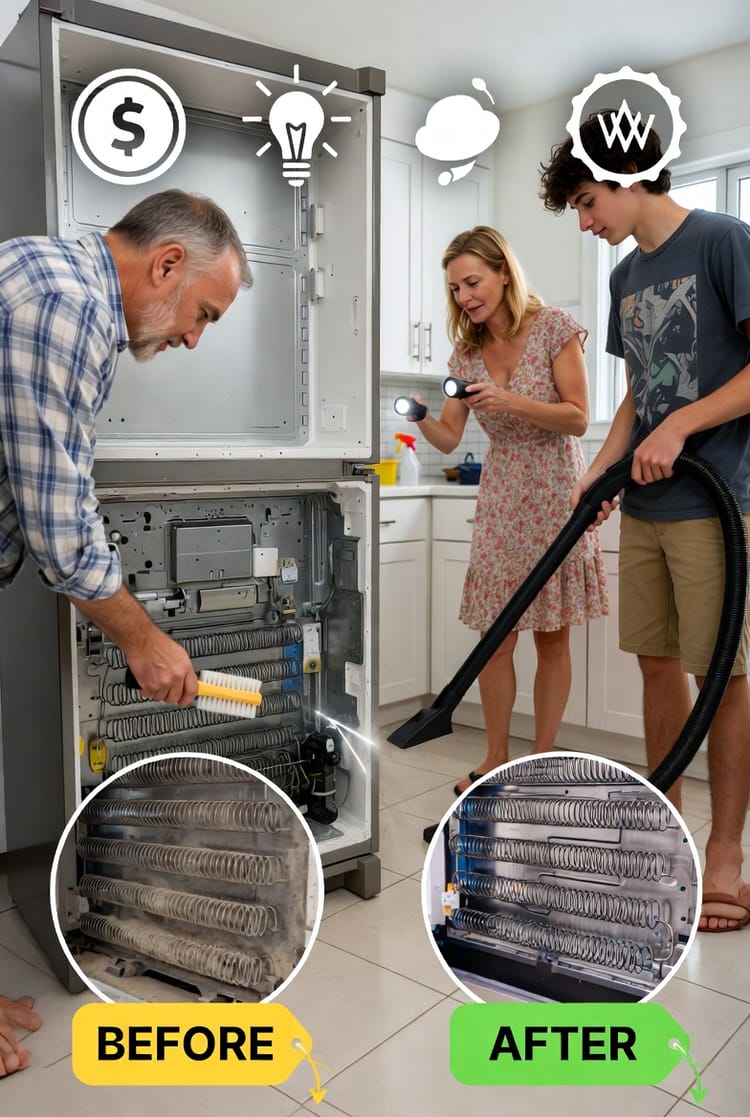
Another common case involves refrigerators. The defrost control board fails silently, causing ice buildup and warm temperatures. Homeowners often assume the compressor is dying and start pricing new units at $1,800+. A 45-minute electronic diagnosis and $320 board replacement restores full performance and keeps food safe.
These stories repeat daily across the country. The pattern is consistent: multiple symptoms, previous failed repairs, then one accurate control board diagnosis that solves everything.
Protecting Your Appliance’s Brain: Prevention That Works
You cannot make control boards immortal, but you can dramatically extend their life:
- Install a quality surge protector rated for appliances
- Keep the area around the machine dry and well-ventilated
- Schedule annual professional maintenance to catch small leaks early
- Avoid overloading washers or dryers — excessive vibration stresses electronics
- Use manufacturer-recommended detergents to reduce suds and residue buildup
Simple habits like these can add years to both the board and the entire appliance.
When to Call the Experts
If your appliance shows any of the symptoms described above, do not continue running diagnostic cycles or replacing random parts. Each attempt risks further electrical damage. Instead, contact a technician trained specifically in electronic control board diagnosis and repair.
The right professional will arrive with the correct schematics, genuine parts, and the experience to confirm the diagnosis before opening your wallet. They understand that your appliance is more than metal — it is an investment in daily convenience.
Final Thoughts: Diagnose the Brain Before Declaring the Body Dead
The control board may be hidden, but its importance cannot be overstated. When modern appliances stop working properly, the problem is far more often electronic than mechanical. Taking the time to obtain an accurate professional diagnosis protects your investment and prevents unnecessary replacement.
For expert electronic diagnosis, precise repair, and genuine factory parts that restore your appliance to full performance. One phone call can mean the difference between a costly new purchase and many more years of reliable service from the appliance you already own.
Stop Costly Guesswork: Professional Control Board Repair – Call Now