The Construction Debris Sorting: Separating Materials to Save on Disposal Costs
In the world of construction, managing debris isn't just about cleanup—it's a strategic opportunity to cut costs and boost efficiency. As a seasoned expert in dumpster rental and waste management, I've seen firsthand how smart sorting practices can turn what seems like an overwhelming expense into a manageable, even profitable, process. Whether you're a contractor handling a large-scale renovation or a homeowner tackling a DIY project, understanding construction debris sorting is key to minimizing disposal costs. In this comprehensive guide, we'll dive into the hows and whys of separating materials like clean wood, metal, concrete, and drywall. Rest assured, with the right approach, you can navigate these challenges confidently and come out ahead.
Turn Waste into Savings – Rent the Right Dumpster Now
Why Sorting Construction Debris Matters
Construction projects generate a staggering amount of waste—think demolished walls, leftover scraps, and site rubble. Without proper management, this debris can quickly inflate your budget through high tipping fees at landfills or recycling facilities. Tipping fees are charges based on the weight or volume of waste disposed, and they vary dramatically depending on the material type. By separating materials, you avoid the pitfalls of mixed loads, which often incur premium rates due to the extra processing required.
Consider this: landfills and transfer stations categorize waste to promote recycling and reduce environmental impact. When you deliver unsorted debris, facilities must handle the separation themselves, passing those costs back to you. On the flip side, delivering pre-sorted loads qualifies you for lower fees and potential rebates. For instance, clean wood might be diverted to mulching programs, while metal could be sold for scrap value, turning waste into revenue.
This isn't just theory—it's a proven strategy. According to industry reports, projects that implement debris sorting can reduce disposal expenses by up to 50%. It's reassuring to know that with a bit of planning, you're not only saving money but also contributing to sustainable practices that benefit everyone.
Understanding Material Types and Their Disposal Costs
To sort effectively, you need to know your materials. Let's break down the most common ones in construction debris and how separation impacts costs. Each material has unique properties, recycling potential, and associated fees, making segregation a smart financial move.
- Clean Wood: This includes untreated lumber, plywood, and pallets free from paint, adhesives, or chemicals. Unsorted wood often ends up in mixed loads with high fees (around $100–$150 per ton in many areas). Sorted clean wood, however, can be recycled into biomass fuel or mulch, with tipping fees as low as $20–$50 per ton. Plus, some facilities offer free drop-offs for clean loads.
- Metal: Ferrous (like steel rebar) and non-ferrous (like copper wiring or aluminum siding) metals are goldmines in debris management. Mixed in with other waste, they increase overall fees, but separated, they can be sold to scrap yards for $50–$200 per ton, depending on market prices. This not only offsets costs but can generate profit—I've advised clients who've turned scrap metal into thousands in returns.
- Concrete: Rubble from foundations, sidewalks, or driveways is heavy but recyclable. When clean and separated, it's crushed into aggregate for new projects, with low tipping fees ($10–$30 per ton). Mixed with contaminants like wood or plastic, fees jump to $80–$120 per ton due to sorting labor.
- Drywall (Gypsum Board): Often from interior demolitions, clean drywall can be recycled into new boards or soil amendments. Fees for separated loads are minimal ($20–$40 per ton), but contaminated or mixed drywall incurs higher charges because of potential mold or asbestos risks.
By categorizing these, you leverage different tipping fee structures. Landfills use tiers: low for recyclables like concrete, medium for mixed clean debris, and high for contaminated or hazardous waste. Sorting ensures your load falls into the cheapest category possible.
Step-by-Step Guide to Sorting Debris on Site
Implementing sorting doesn't require fancy equipment—just organization and foresight. Here's a practical, step-by-step approach to get you started, ensuring a smooth process from demolition to disposal.
- Plan Ahead: Before breaking ground, assess your project. Identify expected materials and estimate volumes. Rent multiple dumpsters labeled for specific types (e.g., one for wood, one for metal) from a reliable provider. This prevents cross-contamination and streamlines loading.
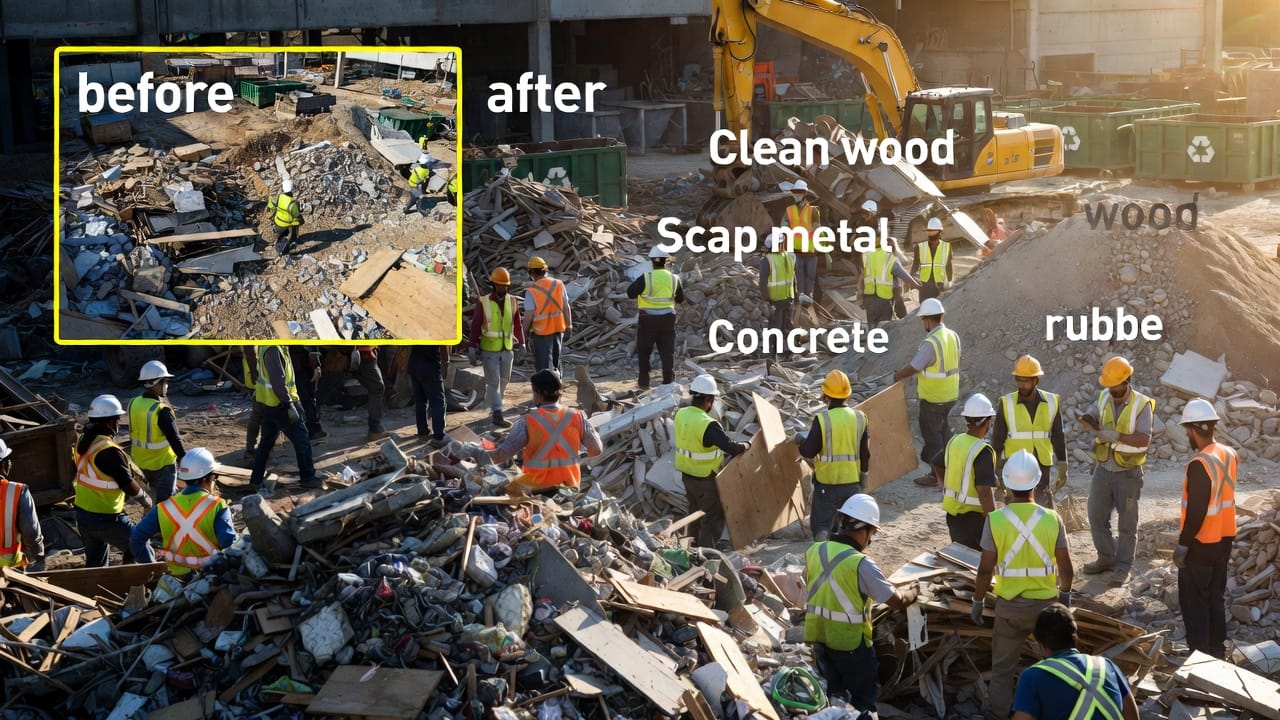
- Designate Sorting Zones: Create clear areas on your job site for each material. Use signage, barriers, or color-coded bins to guide your team. For larger sites, assign a "sorting supervisor" to oversee compliance.
- Train Your Team: Educate workers on identification—clean vs. contaminated wood, ferrous vs. non-ferrous metal. Quick training sessions can prevent mistakes that lead to higher fees.
- Sort as You Go: During demolition, separate materials immediately. For example, strip metal fixtures before tossing drywall. This "sort-at-source" method is efficient and reduces handling time.
- Monitor and Adjust: Regularly check piles for purity. If contamination occurs, address it promptly to avoid fee penalties.
Following these steps, you'll find the process becomes second nature, leading to consistent savings.
Real-World Examples of Cost Savings
Let's put this into perspective with tangible scenarios. Imagine a mid-sized home renovation generating 10 tons of debris. If dumped as mixed waste, at $100 per ton, that's $1,000 in fees. But by sorting:
- 3 tons of concrete at $20/ton: $60
- 2 tons of metal sold for $100/ton scrap: +$200 revenue
- 3 tons of clean wood at $30/ton: $90
- 2 tons of drywall at $40/ton: $80
Total cost: $230, plus $200 back—net $30! That's a 97% savings.
In commercial projects, the stakes are higher. A client I worked with on a office building demo sorted 50 tons, saving over $4,000 by separating metals for scrap and concrete for recycling. They even qualified for green building credits, enhancing their reputation.
These examples show that separating materials isn't optional—it's essential for budget control. Risks like unexpected fees from contaminated loads are mitigated through diligence, and the rewards are substantial.
Common Challenges and How to Overcome Them
No strategy is without hurdles, but forewarned is forearmed. Here are frequent issues in debris sorting and authoritative solutions.
- Contamination Risks: Paint or chemicals on wood can classify it as hazardous, spiking fees. Solution: Inspect materials during sorting; use gloves and masks for safety. If unsure, consult experts.
- Space Constraints: Tight urban sites limit sorting areas. Solution: Opt for roll-off dumpsters with dividers or schedule frequent pickups to keep space clear.
- Time Pressures: Sorting seems time-consuming. Solution: It actually saves time by reducing trips to disposal sites. Start small and scale up.
- Regulatory Variations: Fees differ by location—check local rules. Solution: Partner with a knowledgeable dumpster rental service for guidance.
By addressing these proactively, you maintain control and avoid costly surprises.
Environmental and Long-Term Benefits
Beyond immediate savings, sorting promotes sustainability. Recycled concrete reduces mining needs, while scrap metal conserves energy (recycling aluminum saves 95% compared to new production). This aligns with growing regulations favoring green practices, potentially qualifying you for incentives.
Long-term, consistent sorting builds efficiency habits, lowering overall project costs and enhancing your professional edge. It's reassuring that what benefits your wallet also supports the planet.
Maximizing Scrap Value from Metals
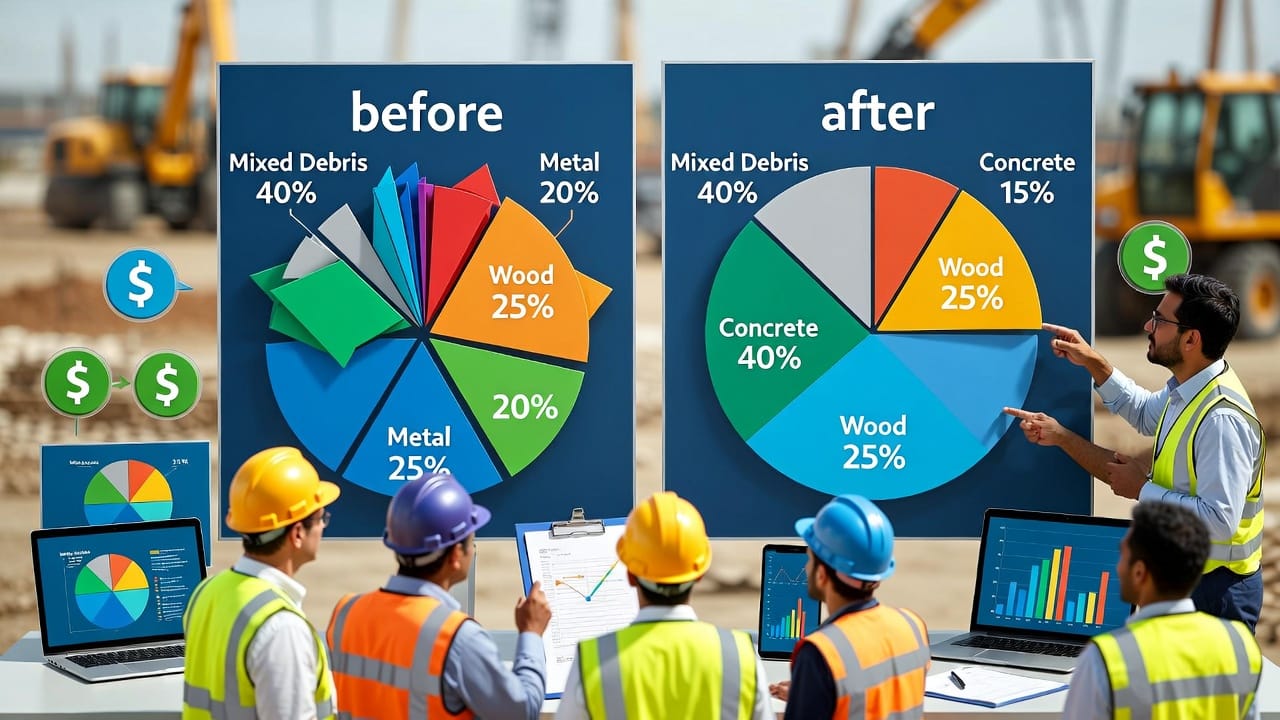
Diving deeper into metals, their scrap potential is a game-changer. Identify valuables like copper (up to $3/lb) or brass fittings. Clean separation maximizes payout—remove insulation from wires, sort by type.
Track market prices via apps or local yards. One tip: Accumulate enough for bulk sales to negotiate better rates. This transforms debris from liability to asset.
Tools and Resources for Effective Sorting
Equip yourself with tarps for ground protection, magnets for metal detection, and labeled bins. For larger jobs, consider debris chutes or conveyor systems.
Resources like EPA guidelines or local waste authorities provide free sorting templates. And remember, expert advice is a call away.
In conclusion, mastering construction debris sorting empowers you to control costs, enhance efficiency, and contribute positively.
Construction Debris Sorted Right – Call for Pro Guidance
