The Concrete Coloring Methods: Integral Color vs. Color Hardener vs. Acid Stain for Lasting Beauty
When it comes to enhancing the aesthetic appeal of concrete surfaces, choosing the right coloring method can make all the difference. Whether you're planning a new patio, driveway, or interior floor, options like integral color, color hardener, and acid stain offer unique ways to achieve lasting beauty. In this comprehensive guide, we'll explore these methods in depth, comparing their applications, costs, durability, and visual effects. As a trusted expert in concrete solutions, rest assured that selecting the ideal technique will elevate your project while ensuring long-term satisfaction.
Choose Your Perfect Concrete Color Method – Call Today
Understanding Concrete Coloring Basics
Concrete doesn't have to be dull and gray. With advancements in coloring technologies, you can infuse vibrancy and character into your surfaces. Each method—integral color, color hardener, and acid stain—interacts differently with the concrete, providing distinct advantages for various projects. Let's break them down to help you make an informed decision.
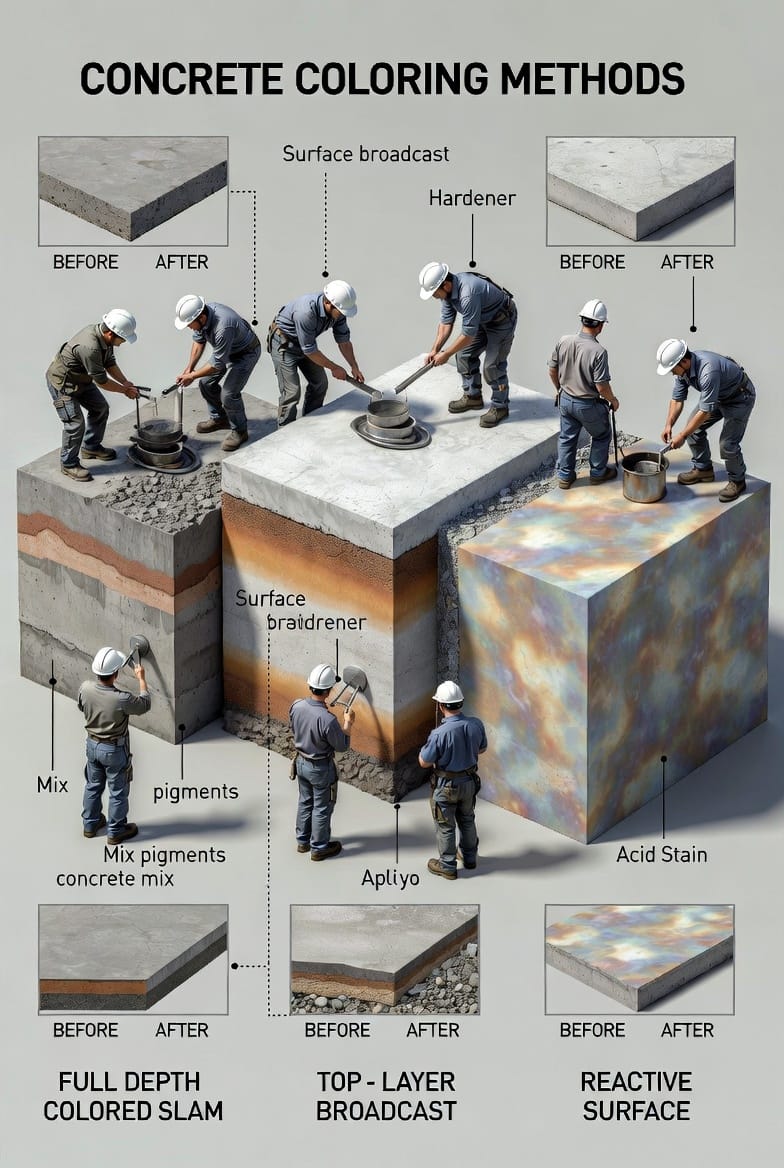
- Integral Color: This involves mixing pigments directly into the concrete batch before pouring. The result? Uniform color throughout the entire slab.
- Color Hardener: A dry-shake material broadcast onto the surface during finishing, it strengthens and colors the top layer.
- Acid Stain: A reactive solution that penetrates the surface, creating a chemical bond for translucent, variegated effects.
These techniques not only boost visual appeal but also cater to functional needs like durability in high-traffic areas or cost-effectiveness for large-scale installations.
Integral Color: The All-Through Solution
Integral color is a go-to choice for projects requiring consistent, fade-resistant hues from top to bottom. By adding iron oxide pigments or liquid colorants to the concrete mix at the batch plant or job site, the color becomes an inherent part of the material. This method is ideal for new pours, ensuring that even if the surface wears over time, the color remains intact.
Key Benefits and Visual Effects
The aesthetic outcome is subtle and natural, mimicking stone or earth tones without overwhelming patterns. For residential driveways or pool decks, integral color provides a seamless look that blends with landscapes. Visually, it's uniform—no mottling or variations unless intentionally designed.
- Durability: High resistance to UV fading and abrasion since color permeates the slab. Expect 20-30 years of vibrancy with proper sealing.
- Cost: Moderate, ranging from $2-$5 per square foot, including materials and labor. It's economical for large areas as it integrates into the pouring process.
- Best For: Outdoor spaces like patios or sidewalks where weathering is a concern.
In practice, integral color shines in scenarios where longevity matters most. Imagine a bustling commercial plaza floor that maintains its earthy red tone despite daily foot traffic— that's the reliability you get.
Color Hardener: Surface Strength and Style
Shifting to color hardener, this method focuses on the top layer for enhanced toughness and color. Applied as a powder during the concrete's finishing stage, it's broadcast and troweled in, creating a dense, colored surface about 1/8-inch thick. It's particularly favored for areas needing extra reinforcement.
Advantages in Durability and Application
Color hardener not only adds pigment but also increases surface hardness by up to 50%, making it perfect for high-wear environments. The visual effects are bold and customizable, with options for stamped patterns that resemble brick or tile.
- Durability: Exceptional in resisting chips, scratches, and heavy use. Sealed properly, it can last 15-25 years.
- Cost: Slightly higher at $3-$6 per square foot, due to the additional broadcasting step, but it saves on long-term maintenance.
- Best For: Industrial floors, garage surfaces, or decorative stamped concrete where impact resistance is key.
Acid Stain: The Artistic Chemical Reaction
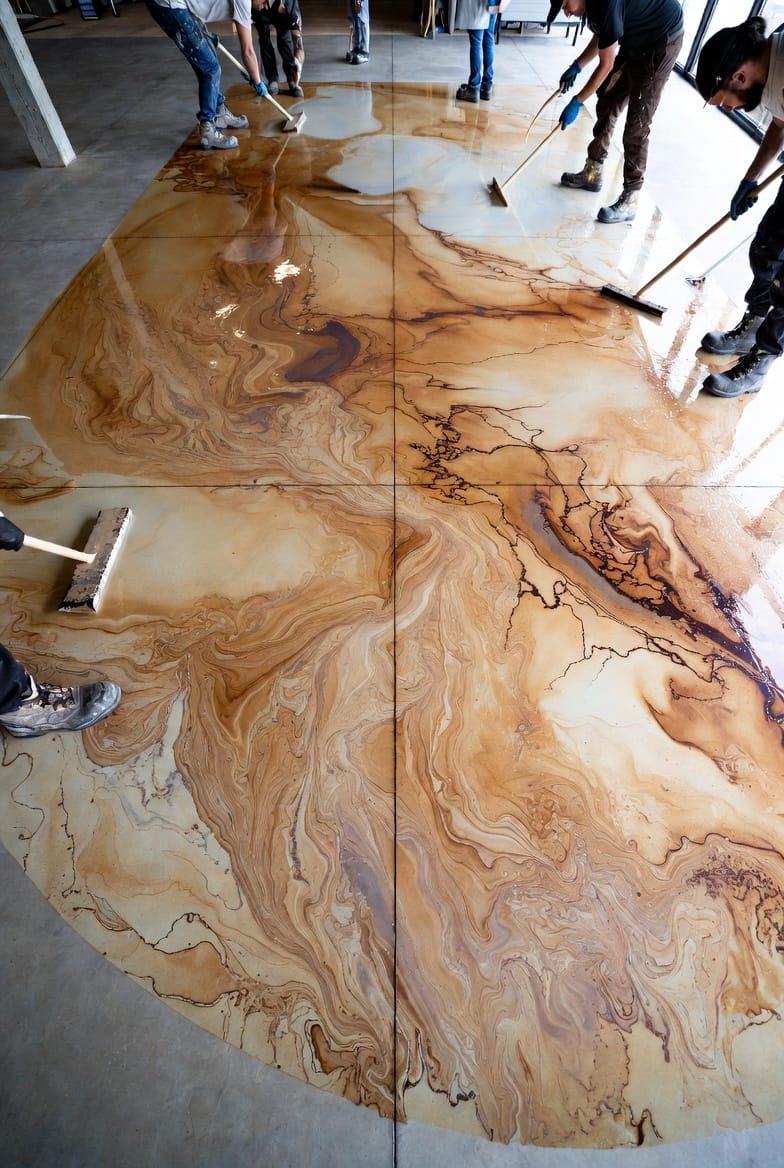
Acid stain stands out for its organic, unpredictable beauty. Composed of hydrochloric acid, water, and metallic salts, it reacts chemically with the concrete's minerals to produce translucent colors that penetrate 1/16-inch deep. This isn't a paint or coating; it's a permanent bond that highlights the material's natural variations.
Visual Effects and Unique Appeal
The results are marbled and mottled, evoking aged leather or natural stone. Tones range from earthy browns to vibrant blues, with each application yielding slight differences for a one-of-a-kind finish. It's excellent for artistic expressions in homes or retail spaces.
- Durability: Good for indoor use, lasting 10-20 years with sealers. It's less ideal for outdoors due to potential fading from sun exposure.
- Cost: Affordable at $2-$4 per square foot, making it accessible for retrofits without major demolition.
- Best For: Existing slabs like basement floors or countertops where a vintage, patina look is desired.
Acid staining excels in revitalizing old concrete, turning worn surfaces into elegant features. It's reassuring to know that this method enhances without overpowering the base material.
Comparing the Methods: Cost, Durability, and Visuals
To choose wisely, let's compare these methods head-to-head across key factors. This analysis ensures your project aligns with both budget and vision.
Cost Breakdown
- Integral Color: $2-$5/sq ft – Integrated into mixing, minimal extra labor.
- Color Hardener: $3-$6/sq ft – Additional application step increases cost slightly.
- Acid Stain: $2-$4/sq ft – Economical for staining existing surfaces, but prep work like cleaning adds variability.
Overall, acid stain often wins for budget-conscious retrofits, while integral color suits new constructions economically.
Durability Assessment
Durability hinges on environment and maintenance:
- Integral Color: Tops for longevity in exposed areas; color doesn't chip away.
- Color Hardener: Best for abrasion resistance; ideal for vehicular traffic.
- Acid Stain: Strong indoors but requires UV-protective sealers outdoors to prevent fading.
With regular sealing—every 2-5 years—all methods deliver lasting performance, reassuring homeowners and businesses alike.
Visual Effects for Different Projects
Visuals vary by method and project type:
- For new residential pours like driveways: Integral color offers clean, consistent tones.
- In high-traffic commercial spaces: Color hardener provides bold, textured durability.
- For interior retrofits such as living rooms: Acid stain creates artistic, variegated depth.
Project-Specific Recommendations
Tailoring the method to your needs ensures optimal results. Here's a quick guide:
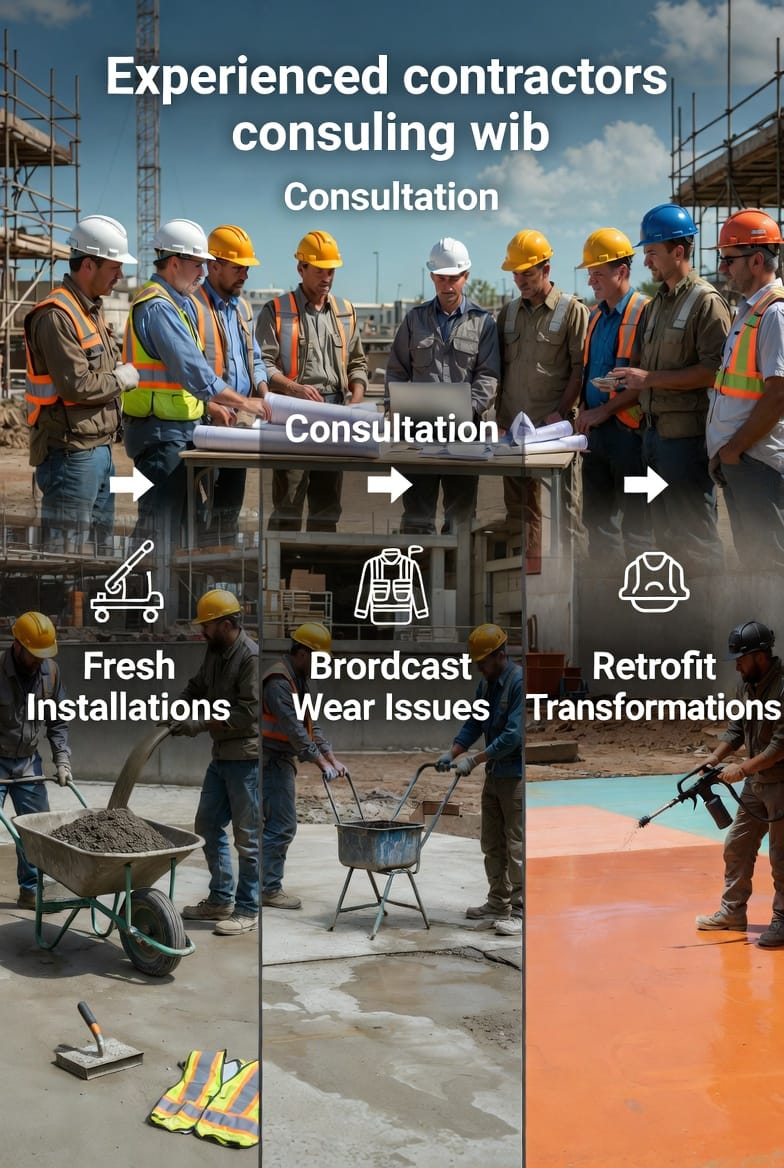
- New Construction: Opt for integral color to embed hue from the start, avoiding future touch-ups.
- High-Traffic Zones: Choose color hardener for its reinforcing properties, perfect for garages or walkways.
- Existing Surfaces: Acid stain revives old concrete economically, adding character without replacement.
For mixed-use projects, combining methods—like integral base with stain accents—can yield hybrid beauty.
Maintenance Tips for Enduring Results
No matter the method, maintenance is key to lasting beauty. Seal all colored concrete to protect against stains and weathering. Clean with mild detergents, avoid harsh chemicals, and reseal periodically. This proactive approach keeps your investment looking fresh.
Environmental and Safety Considerations
Rest assured, modern coloring agents are eco-friendly, with low-VOC options available. Professional application minimizes risks, ensuring safe, compliant results for your space.
Conclusion: Crafting Your Concrete Vision
Selecting between integral color, color hardener, and acid stain boils down to your project's demands for aesthetics, durability, and budget. Each method offers lasting beauty that transforms ordinary concrete into extraordinary features. Whether seeking uniform depth, surface strength, or artistic flair, there's a solution tailored to you.
Achieve Stunning, Durable Concrete Beauty – Call Now