The Compressor's Cycle: Understanding Inverter, Scroll, and Reciprocating Technologies for Ultimate Efficiency
In the world of HVAC systems, the compressor stands as the beating heart, driving the cooling process that keeps our homes and businesses comfortable. Whether you're upgrading your air conditioning unit or troubleshooting efficiency issues, understanding compressor technologies is essential for achieving ultimate efficiency. This article demystifies inverter-driven compressors, scroll compressors, and reciprocating compressors, comparing their operations, benefits, and drawbacks. With a focus on noise reduction, energy savings, and longevity, we'll guide you through these options in a reassuring, expert manner. Rest assured, selecting the right compressor can transform your cooling experience into one that's quiet, reliable, and cost-effective.
Get Quiet, Efficient Comfort – Schedule Your Consultation
The Role of Compressors in HVAC Systems
At its core, an HVAC compressor compresses refrigerant gas, raising its pressure and temperature to facilitate heat exchange. This cycle – compression, condensation, expansion, and evaporation – is what makes air conditioning possible. But not all compressors are created equal. Traditional models cycle on and off, while modern ones adjust dynamically. By exploring inverter, scroll, and reciprocating types, you'll see how advancements lead to better performance.
- Efficiency Gains: Modern compressors minimize energy waste by matching output to demand.
- Noise Reduction: Smoother operations mean quieter homes.
- Longevity Boost: Fewer mechanical stresses extend system life.
Choosing wisely ensures your system runs optimally, saving on utility bills and repairs.
Demystifying Inverter-Driven Compressors
Inverter-driven compressors represent the pinnacle of modern HVAC technology, offering precise control over cooling output. Unlike fixed-speed units, inverters use electronic circuitry to vary the motor speed, adjusting refrigerant flow in real-time. This variable-speed operation maintains consistent temperatures without the constant on-off cycling that plagues older systems.
How does it work? The inverter converts AC power to DC, then back to variable-frequency AC, allowing the compressor to ramp up or down as needed. On a mild day, it might run at 30% capacity; during a heatwave, it surges to 100%. This adaptability results in up to 40% energy savings compared to traditional models, according to industry standards like SEER (Seasonal Energy Efficiency Ratio).
Key advantages include:
- Precise Temperature Control: Eliminates hot and cold spots for ultimate comfort.
- Lower Operating Costs: Reduced energy use translates to smaller bills.
- Extended Lifespan: Less wear from fewer starts and stops.
However, initial costs are higher, and they require compatible systems. If you're in a variable climate, an inverter is a smart, future-proof choice.
The Smooth Operation of Scroll Compressors
Scroll compressors excel in reliability and quiet performance, making them a favorite in residential and light commercial HVAC applications. Their design features two spiral-shaped scrolls: one fixed and one orbiting. As the orbiting scroll moves, it traps and compresses refrigerant in progressively smaller pockets, expelling it at high pressure.
This continuous motion contrasts with piston-based systems, resulting in fewer moving parts – often just two main components. The outcome? Smoother operation with minimal vibration. Scroll units typically achieve SEER ratings of 14-20, balancing efficiency and affordability.
Benefits at a glance:
- Quiet Performance: Noise levels as low as 50-60 dB, ideal for noise-sensitive environments.
- Durability: With 70% fewer parts than reciprocating models, they last longer with proper maintenance.
- Compact Design: Easier installation in tight spaces.
Drawbacks? They're less effective in extreme cold, but for most users, the seamless efficiency outweighs this.
Exploring Reciprocating Compressors: The Classic Workhorse
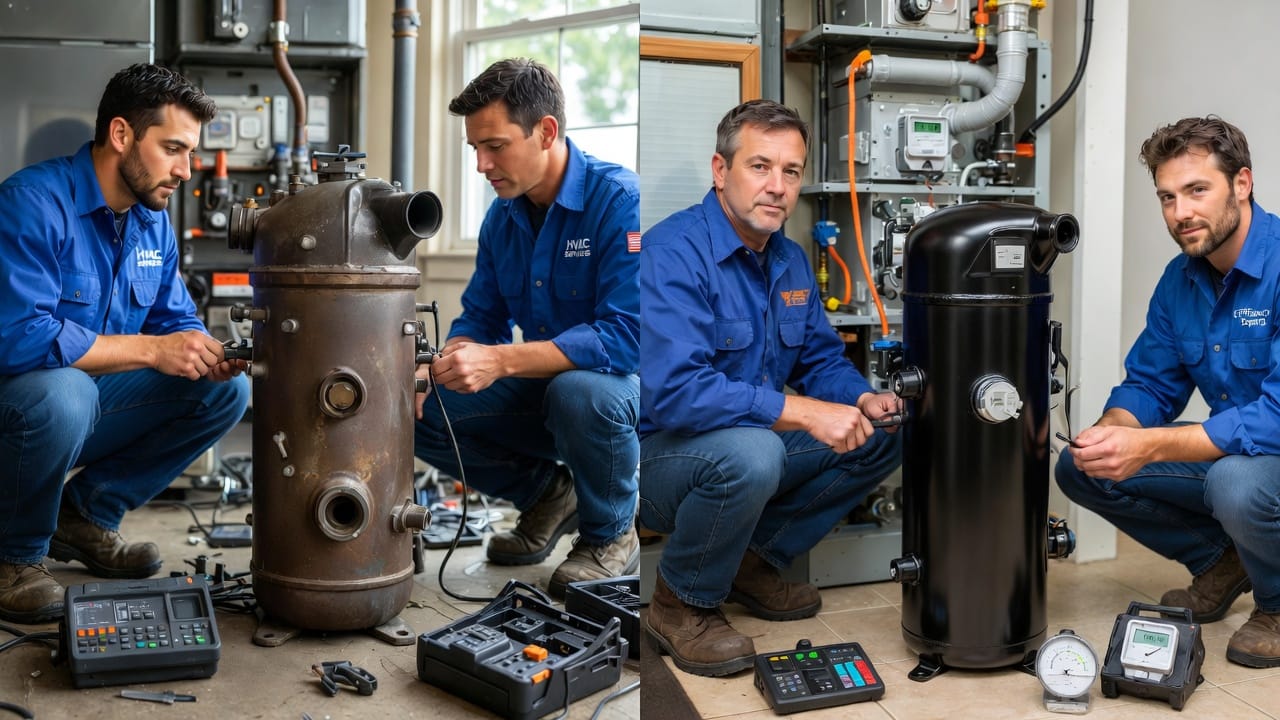
Reciprocating compressors, often called piston compressors, are the veterans of HVAC systems. They operate like a car engine: pistons driven by a crankshaft compress refrigerant in cylinders. When cooling is needed, the motor engages, pushing pistons up and down to build pressure.
These units are single-stage or two-stage, cycling fully on or off. While reliable, this binary operation leads to temperature fluctuations and higher energy use. Common in older systems, they offer SEER ratings around 10-14, suitable for budget-conscious setups.
Pros include:
- Affordability: Lower upfront costs make them accessible.
- Robustness: Proven in harsh conditions, with easy part availability.
- Simplicity: Straightforward design for quick repairs.
Cons? They're noisier (65-75 dB) and less efficient due to frequent cycling, which stresses components and shortens life to 10-15 years versus 20+ for modern alternatives.
Comparing Noise Levels Across Technologies
Noise is a critical factor in HVAC comfort. Reciprocating compressors generate the most sound from piston movement, often disrupting peace. Scroll compressors muffle this with their spiral action, providing a hum rather than a rumble. Inverter-driven models shine here, as variable speeds avoid the loud startups of on-off cycles.
In practical terms:
- Reciprocating: Suitable for garages or industrial settings where noise isn't an issue.
- Scroll: Perfect for bedrooms and offices.
- Inverter: Ideal for whole-home systems demanding silence.
Rest assured, advancements have made even budget options quieter than ever.
Efficiency Showdown: SEER and Energy Use
Efficiency is where inverter technology dominates. By modulating speed, inverters maintain steady operation, slashing energy spikes. Scroll compressors follow closely, with efficient compression reducing waste. Reciprocating types lag, as full-power cycles consume more over time.
Consider a hot summer day: A reciprocating unit might run at 100% for hours, while an inverter adjusts to 50-70%, saving significantly. Studies show inverters can achieve SEER 25+, scrolls up to 20, and reciprocating around 13.
To optimize:
- Pair with smart thermostats for inverters.
- Regular maintenance boosts all types' efficiency.
- Insulate your home to reduce load.
Longevity and Maintenance Considerations
Longevity ties directly to design. Reciprocating compressors endure 10-15 years with care but suffer from wear on pistons. Scrolls last 15-20 years thanks to fewer parts. Inverters push beyond 20 years, as gentle operation minimizes stress.
Maintenance tips:
- Annual Inspections: Check refrigerant levels and clean coils.
- Filter Changes: Prevent clogs that force harder work.
- Professional Tune-Ups: Ensure optimal performance.
With proactive care, any compressor can deliver reliable service.
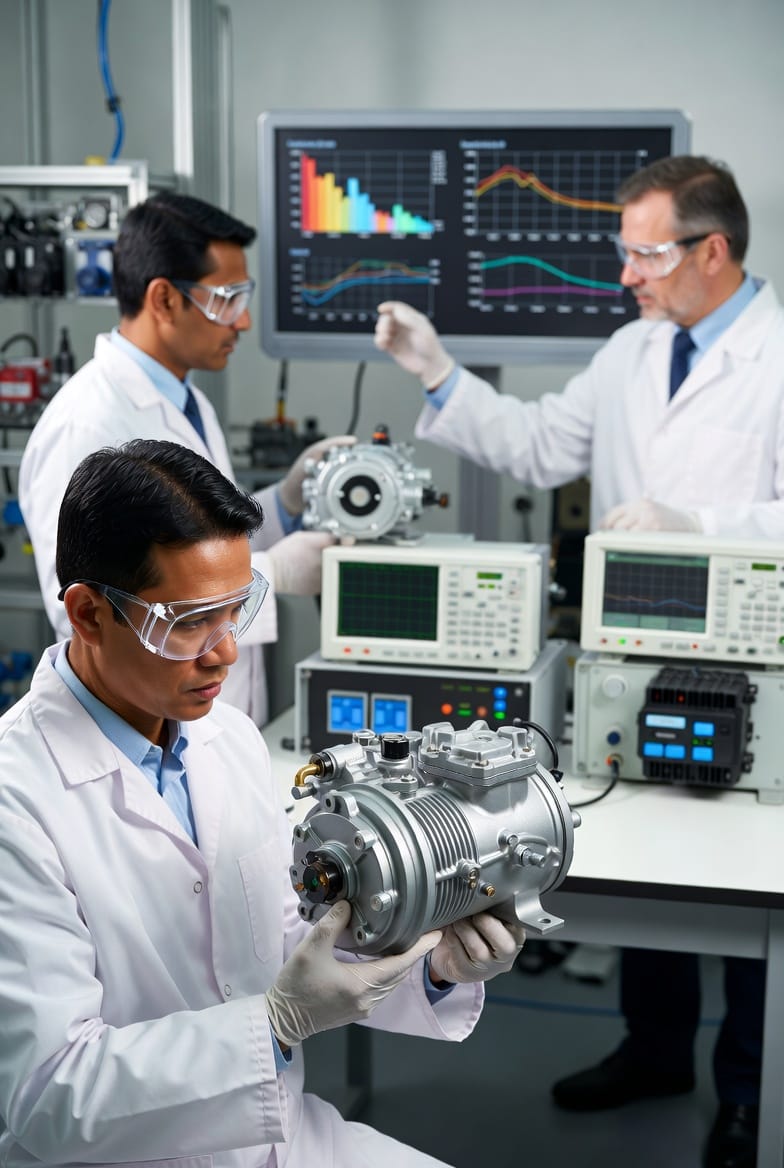
Applications: Matching Technology to Needs
Selecting a compressor depends on your setup. Reciprocating suits basic, low-use scenarios like window units. Scroll excels in mid-range homes and small businesses. Inverter-driven is best for high-demand, energy-conscious environments, like large residences or eco-friendly buildings.
Factors to weigh:
- Climate: Variable speeds for fluctuating temps.
- Budget: Balance upfront vs. long-term savings.
- Space: Compact scrolls for tight installs.
Consult experts to tailor the choice.
Future Trends in Compressor Technology
Looking ahead, HVAC innovations include smarter inverters with AI integration for predictive maintenance and even greener refrigerants. Hybrid systems blending scroll and inverter tech promise ultimate efficiency. As regulations push for higher SEER, expect reciprocating models to phase out in favor of sustainable options.
Stay ahead by upgrading now – it's an investment in comfort and the planet.
Transform Your Comfort with Modern Compressors – Call Now