The Coil Conundrum: How Evaporator and Condenser Coil Design Dictates HVAC Efficiency and Longevity
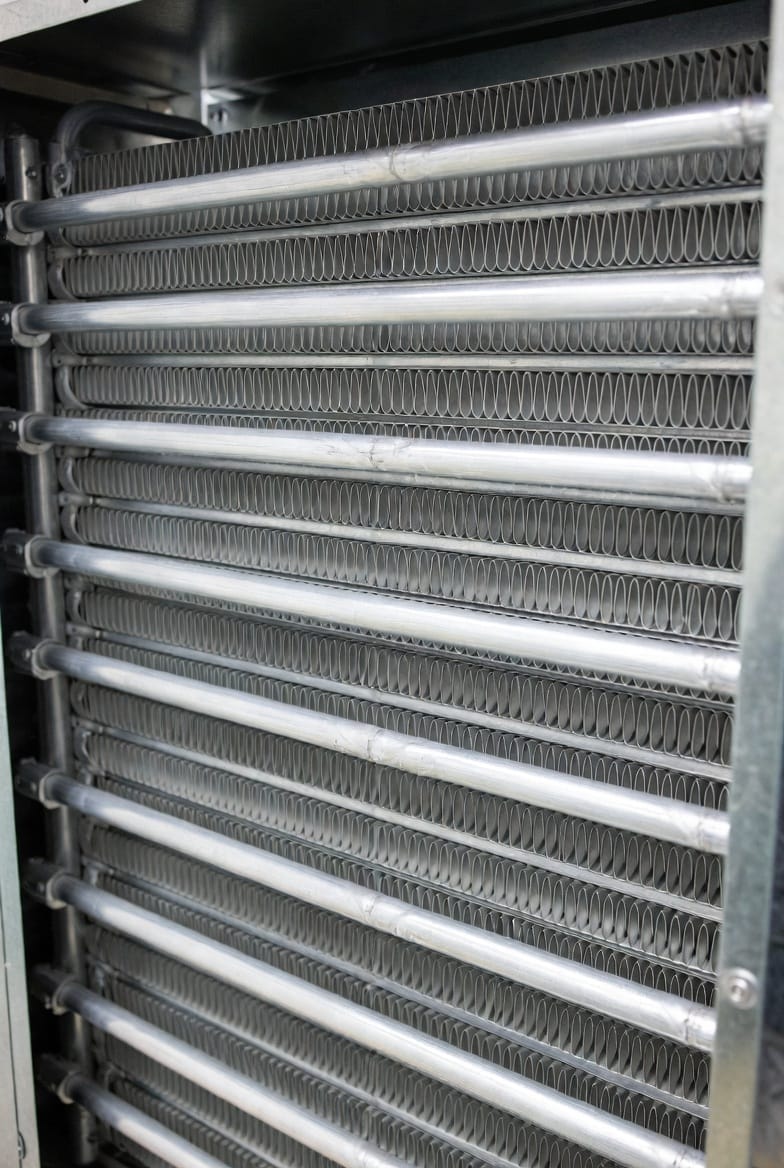
In the world of HVAC systems, the unsung heroes are the evaporator and condenser coils. These components are pivotal in the heat exchange process, directly influencing your system's efficiency, energy consumption, and overall longevity. Whether you're a homeowner seeking to optimize comfort or a facility manager aiming for cost savings, understanding coil design can empower you to make informed decisions. Rest assured, with the right knowledge and maintenance, your HVAC can perform at its peak for years to come.
Stop Corrosion & Frost Damage – Get Professional Help Now
This deep-dive explores the science behind these coils, from material choices like copper versus aluminum to innovative fin designs such as corrugated and spine fins. We'll also delve into the critical role of coil cleanliness and how advanced technologies enhance BTU transfer while combating corrosion and frost buildup. By the end, you'll appreciate why coils are the heart of your system and how to keep them thriving.
The Fundamentals of Heat Exchange in HVAC Coils
At its core, an HVAC system relies on the principles of thermodynamics to transfer heat. The evaporator coil, located indoors, absorbs heat from the air, cooling it as refrigerant evaporates. Conversely, the condenser coil, outdoors, releases that heat as the refrigerant condenses back to liquid form. This cycle, driven by compressor action and refrigerant flow, is what keeps your space comfortable.
Efficiency here is measured in SEER (Seasonal Energy Efficiency Ratio) or EER (Energy Efficiency Ratio), where higher ratings mean better performance. But what dictates these metrics? It's the coil's ability to maximize surface area for heat transfer while minimizing resistance to airflow. Poor design can lead to increased energy bills and premature system failure, but advanced coils mitigate these risks effectively.
- Key Factors Influencing Efficiency: Surface area, material conductivity, and airflow dynamics.
- Longevity Considerations: Resistance to environmental stressors like moisture and pollutants.
Understanding these basics sets the stage for appreciating material innovations.
Materials Matter: Copper vs. Aluminum in Coil Construction
When it comes to coil materials, the debate between copper and aluminum is longstanding, each offering unique advantages in heat conductivity, durability, and cost-effectiveness.
Copper coils have been a staple due to their superior thermal conductivity—about 60% higher than aluminum. This means faster heat transfer, leading to quicker cooling cycles and potentially lower energy use. Copper's natural resistance to corrosion in acidic environments makes it ideal for evaporator coils, where condensate can be slightly acidic. However, in coastal areas with salty air, copper may oxidize faster, though protective coatings often address this.
On the flip side, aluminum coils are lighter and more affordable, reducing manufacturing and installation costs. While their conductivity is lower, modern designs compensate with enhanced fin structures. Aluminum excels in condenser coils exposed to outdoor elements, as it's less prone to galvanic corrosion when paired with other metals. Yet, without proper treatments, aluminum can suffer from formicary corrosion—tiny pinhole leaks caused by indoor pollutants.
Comparing the Two Materials
- Heat Transfer Efficiency: Copper edges out with a conductivity of 401 W/m·K versus aluminum's 237 W/m·K, but aluminum's malleability allows for thinner, more intricate designs.
- Corrosion Resistance: Copper resists microbial growth better, reducing biofilm risks, while aluminum benefits from anodizing or epoxy coatings for longevity.
- Cost and Weight: Aluminum is 30-50% cheaper and lighter, easing transport and reducing structural strain on HVAC units.
- Environmental Impact: Both are recyclable, but aluminum's lower mining energy footprint makes it more eco-friendly.
In modern systems, hybrid approaches—like aluminum fins on copper tubes—combine the best of both worlds, ensuring optimal BTU transfer without compromising durability. Rest easy knowing that reputable manufacturers test these materials rigorously for real-world performance.
Fin Design Innovations: Enhancing Airflow and Heat Transfer
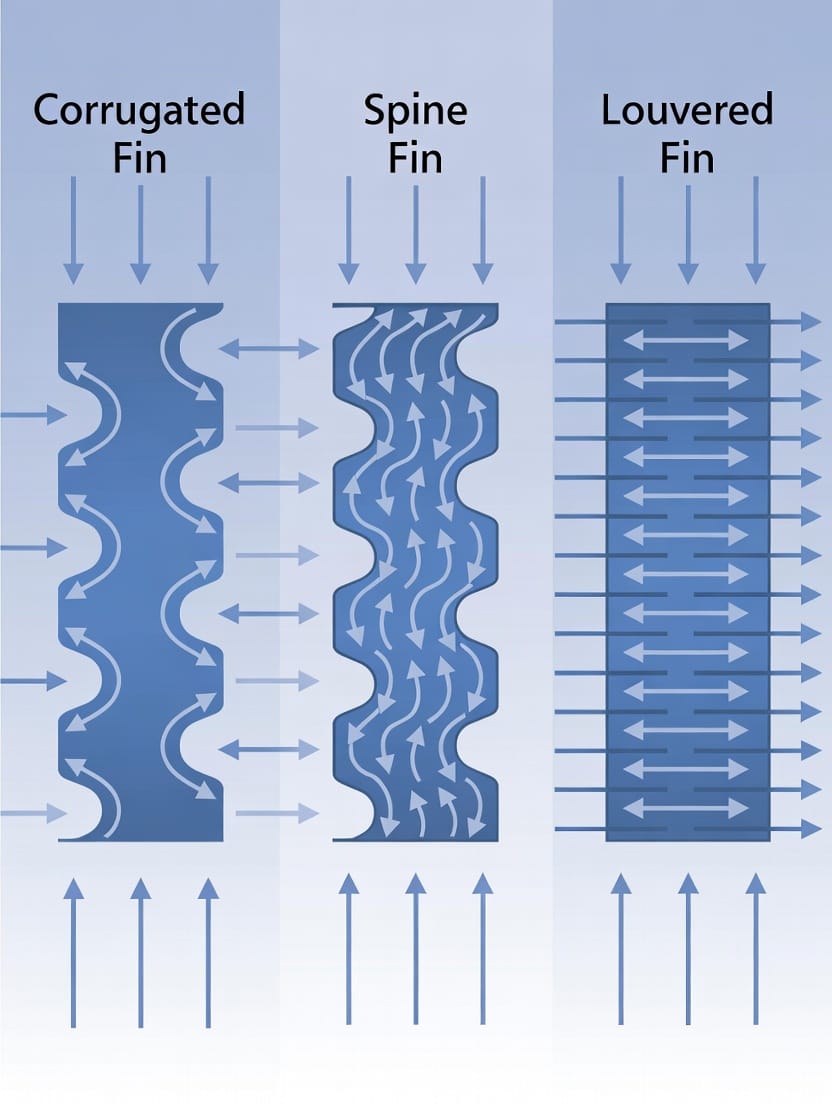
Fins are the extended surfaces attached to coil tubes, amplifying the area for heat exchange. Their design profoundly affects airflow patterns, turbulence, and overall system efficiency. Let's examine popular types: corrugated fins, spine fins, and emerging variants.
Corrugated fins, with their wavy pattern, create turbulence that disrupts the boundary layer of air, promoting better convective heat transfer. This design is common in evaporator coils, where it helps dehumidify air by encouraging moisture condensation. Studies show corrugated fins can boost efficiency by up to 15% compared to flat fins, as the waves increase surface area without significantly impeding airflow.
Spine fins, resembling porcupine quills, offer even more surface area per unit volume. Patented by brands like Trane, these fins wrap around tubes in a helical pattern, maximizing contact and minimizing pressure drop. They're particularly effective in condenser coils, where high outdoor airspeeds can be harnessed for superior heat rejection. The spine structure also resists frost accumulation by allowing ice to form without fully blocking airflow.
Other designs, like louvered fins, incorporate slits that direct air more efficiently, reducing wake regions and enhancing Nusselt numbers—a measure of convective heat transfer. In computational fluid dynamics (CFD) simulations, louvered fins show 20-30% improvements in heat transfer coefficients.
Benefits of Advanced Fin Designs
- Improved BTU Transfer: By optimizing the fin pitch (spacing) and depth, these designs ensure maximal energy exchange per cubic foot of coil.
- Reduced Energy Consumption: Lower fan speeds suffice, cutting operational costs.
- Frost Resistance: Angled fins promote even defrost cycles, preventing uneven ice buildup that could strain the system.
With these innovations, modern HVAC systems achieve SEER ratings over 20, far surpassing older models. You can trust that investing in such technology pays dividends in comfort and savings.
The Impact of Coil Cleanliness on Performance and Longevity
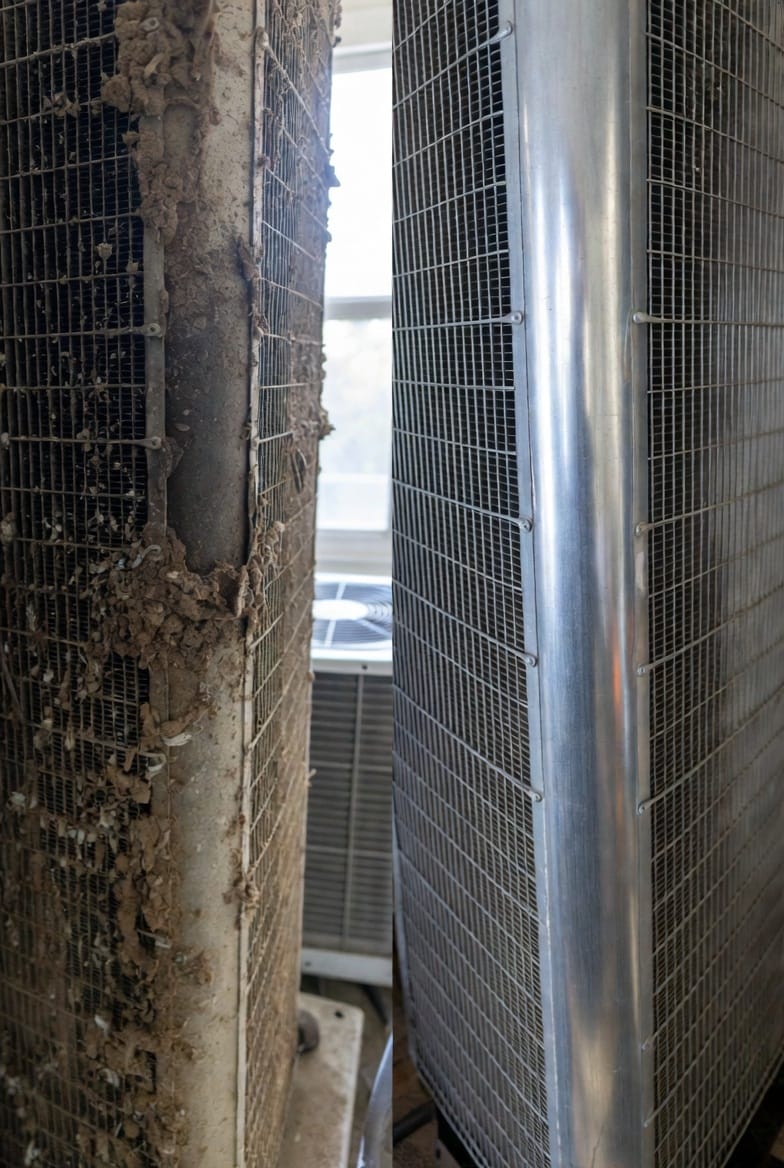
No matter how advanced the design, coil cleanliness is paramount. Dirt, dust, and debris accumulate over time, insulating the surfaces and hindering heat transfer. A mere 0.042-inch layer of dirt can reduce efficiency by 21%, per ASHRAE studies, leading to higher energy use and compressor strain.
For evaporator coils, indoor pollutants like pet dander and cooking residues form a sticky film, promoting mold growth and reducing air quality. Neglected coils can cause system icing, where restricted airflow leads to frost that blocks the coil entirely, triggering shutdowns.
Condenser coils face outdoor challenges: pollen, leaves, and exhaust fumes. Clogged fins increase head pressure, forcing the compressor to work harder and risking overheating. In extreme cases, this shortens component life by 50%.
Maintenance Strategies for Optimal Cleanliness
- Regular Inspections: Check coils biannually for buildup; use UV lights in air handlers to inhibit microbial growth.
- Professional Cleaning: Employ foam cleaners or low-pressure washes to remove debris without damaging fins.
- Preventive Measures: Install high-MERV filters and ensure proper drainage to minimize moisture-related issues.
- DIY Tips: Gently vacuum accessible areas, but leave deep cleans to experts to avoid bending fins.
By maintaining cleanliness, you not only boost efficiency but also extend system life, avoiding costly repairs. It's a straightforward step with profound benefits.
Advanced Coil Technologies: Maximizing Efficiency and Resilience
Today's HVAC innovations go beyond basics, incorporating advanced coil technologies to tackle persistent challenges like corrosion and frost.
Microchannel coils, made entirely of aluminum with flat tubes and brazed fins, offer compact designs with 40% more heat transfer area. Their all-aluminum construction eliminates galvanic corrosion, making them ideal for harsh environments. These coils excel in BTU transfer, often achieving higher efficiencies in smaller footprints, perfect for modern, space-constrained units.
Protective coatings are another game-changer. Epoxy or polyurethane layers shield against corrosive agents like salt or chemicals, extending life in industrial or coastal settings. Hydrophilic coatings on evaporator coils reduce water droplet adhesion, improving drainage and resisting frost.
For frost-prone climates, enhanced defrost controls paired with variable fin spacing prevent ice bridging. Technologies like electrostatic deposition apply uniform coatings that repel dirt, maintaining cleanliness longer.
Real-World Advantages
- Corrosion Resistance: Coated coils last 5-10 years longer in aggressive environments.
- Frost Mitigation: Smart sensors detect ice early, initiating efficient defrosts without energy waste.
- BTU Optimization: Advanced designs push heat transfer rates beyond 500 BTU/ft², supporting ultra-efficient systems.
These technologies ensure your HVAC remains reliable, even in demanding conditions.
Integrating Coil Design for Overall System Harmony
To truly appreciate coil impact, consider their integration with other components. Matched evaporator and condenser coils ensure balanced refrigerant flow, preventing issues like liquid slugging or vapor lock. Variable-speed compressors pair beautifully with advanced fins, modulating output for precise efficiency.
In smart homes, IoT-enabled coils monitor performance in real-time, alerting to cleanliness needs. This holistic approach maximizes longevity, with systems lasting 15-20 years under proper care.
Upgrade to Advanced Coil Performance – Get Your Free Consultation