The Belt-Drive vs. Chain-Drive Opener: Comparing Noise, Performance, and Lifespan for Your Garage
Choosing the right garage door opener can transform your daily routine, making entry and exit seamless while enhancing home security and convenience. As a homeowner, you're likely weighing options like belt-drive versus chain-drive openers, especially if noise, performance, and longevity are top priorities. Rest assured, both types are reliable and widely used, but understanding their differences will help you select the one that best fits your lifestyle and home setup. In this comprehensive guide, we'll compare these two popular mechanisms, touching on maintenance needs, suitability for different garage types, and even a nod to screw-drive openers for broader context. By the end, you'll feel confident in your decision—whether you prioritize whisper-quiet operation or robust power on a budget.
Heavy Door? Budget Focus? Get the Right Opener – Call Today
Understanding Garage Door Opener Types
Garage door openers have evolved significantly since their inception in the mid-20th century, but the core drive systems remain foundational. The drive mechanism is what powers the door's movement, and it directly impacts everything from daily usability to long-term durability.
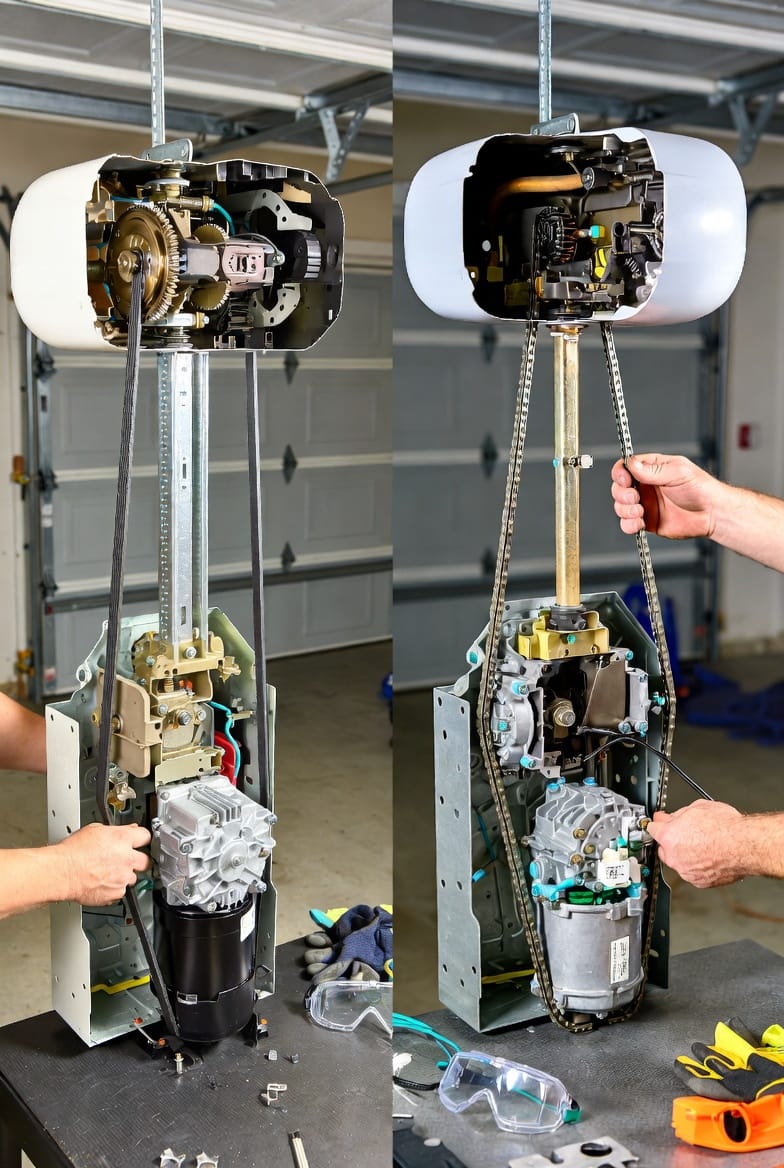
- Chain-Drive Openers: These use a metal chain looped around gears to pull or push the trolley that moves the door. They're the traditional choice, known for their strength and affordability.
- Belt-Drive Openers: Similar in function but with a rubber or reinforced belt instead of a chain, offering a smoother glide.
- Screw-Drive Openers: A less common alternative using a threaded steel rod, which we'll reference for noise comparisons.
Each type suits different needs, but let's dive deeper into the key comparisons to help you decide.
Noise Levels: Prioritizing Peace and Quiet
One of the most noticeable differences between belt-drive and chain-drive garage door openers is noise output. If your garage is attached to your home—especially with bedrooms or living spaces above or adjacent—noise can be a deal-breaker. Belt-drive openers excel here, operating with minimal vibration and sound thanks to the flexible rubber belt that absorbs shocks.
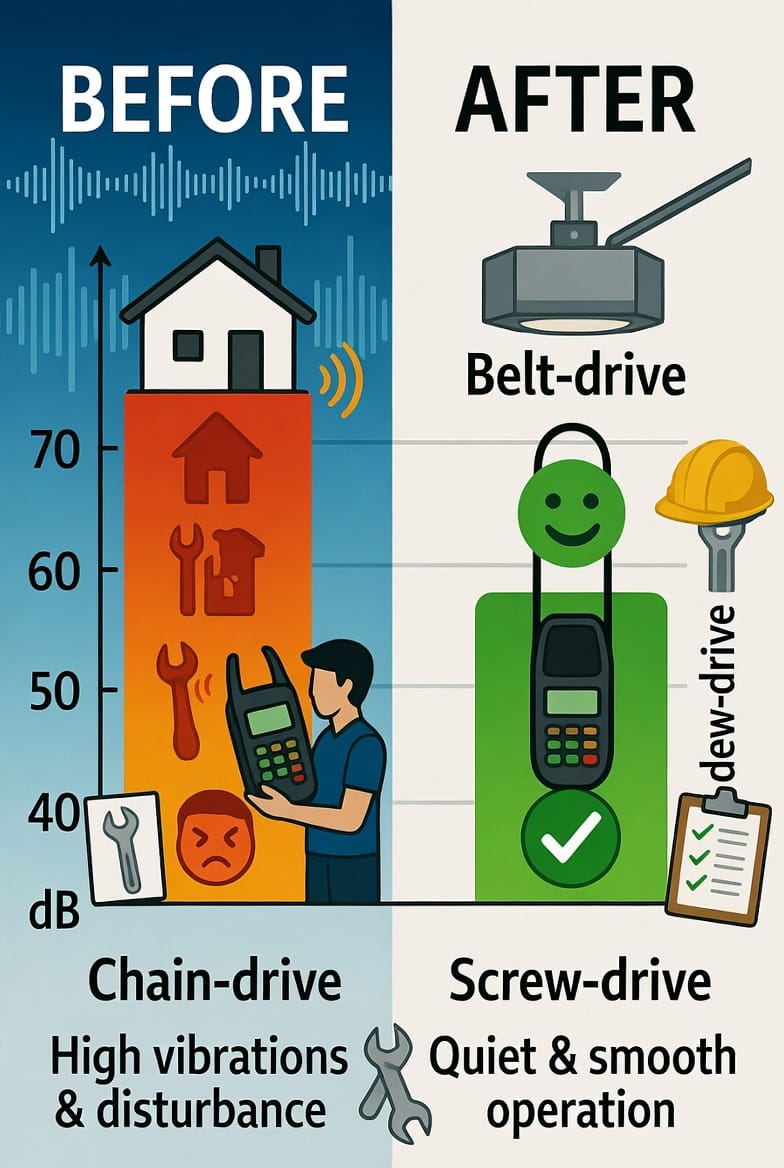
In contrast, chain-drive openers produce a rattling sound from the metal chain moving over sprockets, which can echo through walls. This isn't always disruptive, but in quiet neighborhoods or homes with light sleepers, it might be. Industry tests show chain-drives averaging 70-80 decibels during operation, comparable to a vacuum cleaner, while belt-drives hover around 50-60 decibels, akin to normal conversation.
Screw-drive models fall in between, often at 60-70 decibels, but they can squeak without proper lubrication. Rest assured, modern advancements like insulated doors and vibration isolators can mitigate noise in any system, but the inherent design of belt-drives makes them the quietest out of the box.
To illustrate, consider real-world scenarios: A family with young children might opt for a belt-drive to avoid waking the household during early morning departures. On the other hand, if your garage is detached, the extra noise from a chain-drive might not matter as much.
Expanding on this, maintenance plays a role in noise control. Neglected chain-drives can become louder over time due to loose links or lack of oil, whereas belt-drives require less intervention. If you're concerned about sound, look for models with DC motors, which are quieter than AC versions across all drive types.
Performance: Power, Speed, and Reliability
When it comes to performance, both belt-drive and chain-drive openers deliver, but they shine in different areas. Chain-drive openers are powerhouse performers, ideal for heavy or oversized doors, such as those on two-car garages or commercial-style setups. Their metal construction handles torque exceptionally well, lifting doors weighing up to 500 pounds or more without strain.
Belt-drives, while slightly less robust in raw power, offer superior smoothness and speed. The belt's flexibility reduces jerking motions, leading to a more refined open/close cycle—often at rates of 7-10 inches per second. This can be a boon for busy households where quick access is key.
In terms of reliability, chain-drives have proven track records in harsh conditions, like extreme temperatures or high-usage environments. They're less prone to stretching or breaking under stress, making them suitable for workshops or detached garages where durability trumps finesse.
Belt-drives, however, incorporate reinforced materials like steel or fiberglass within the rubber, boosting their strength without sacrificing quiet operation. Modern belt-drives can match chain-drives in lifting capacity, especially with higher horsepower ratings (e.g., ¾ HP models).
Factors influencing performance include:
- Door Weight and Balance: Ensure your door is properly sprung; imbalanced doors strain any opener.
- Motor Type: DC motors in both systems provide variable speed and soft starts/stops.
- Smart Features: Many models now integrate with apps for remote monitoring, enhancing overall performance.
Ultimately, if performance means raw strength for you, chain-drive wins; for refined efficiency, belt-drive takes the lead. Both are engineered for daily use, with failure rates under 5% in the first five years when installed correctly.
Lifespan: Investing in Long-Term Durability
Lifespan is a critical consideration, as replacing a garage door opener involves time, cost, and potential downtime. On average, chain-drive openers last 10-15 years with regular maintenance, thanks to their sturdy metal components. However, exposure to dust, moisture, or infrequent lubrication can shorten this to 8-12 years.
Belt-drive openers often outlast them, clocking in at 15-20 years or more. The belt's resistance to wear and tear—free from rust or corrosion—contributes to this edge. High-quality belts are designed not to stretch significantly, maintaining tension over time.
Screw-drives typically match chain-drives in longevity (10-15 years) but can suffer from thread wear in very cold climates.
To maximize lifespan:
- Annual Inspections: Check for wear on chains, belts, or screws.
- Environmental Protection: Use weatherproof covers in detached garages.
- Quality Brands: Opt for reputable manufacturers like LiftMaster or Chamberlain, known for durable parts.
Rest assured, with proper care, either type can serve reliably for over a decade. Budget-conscious homeowners might prefer chain-drives for their lower upfront cost, amortizing well over time, while those seeking longevity may invest in belt-drives.
Maintenance: Keeping Your Opener in Top Shape
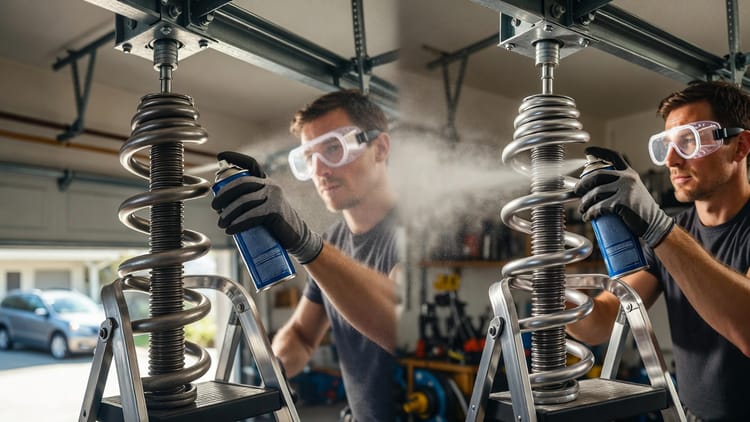
Maintenance is where chain-drive openers demand more attention. The chain requires periodic lubrication (every 6-12 months) to prevent rust and reduce friction. Loose chains can be tightened, but ignoring this leads to premature wear.
Belt-drive openers are low-maintenance stars, needing only occasional tension checks and cleaning. Belts don't rust, and their enclosed design shields them from debris.
For both:
- Safety Reversals: Test monthly to ensure sensors work.
- Battery Backups: Replace every 3-5 years for uninterrupted operation during outages.
- Professional Tune-Ups: Schedule biennially for thorough assessments.
In workshops or high-dust areas, chain-drives might need more frequent care, but they're forgiving for DIY enthusiasts. Belt-drives appeal to those wanting a "set it and forget it" solution.
Suitability: Matching the Opener to Your Home and Lifestyle
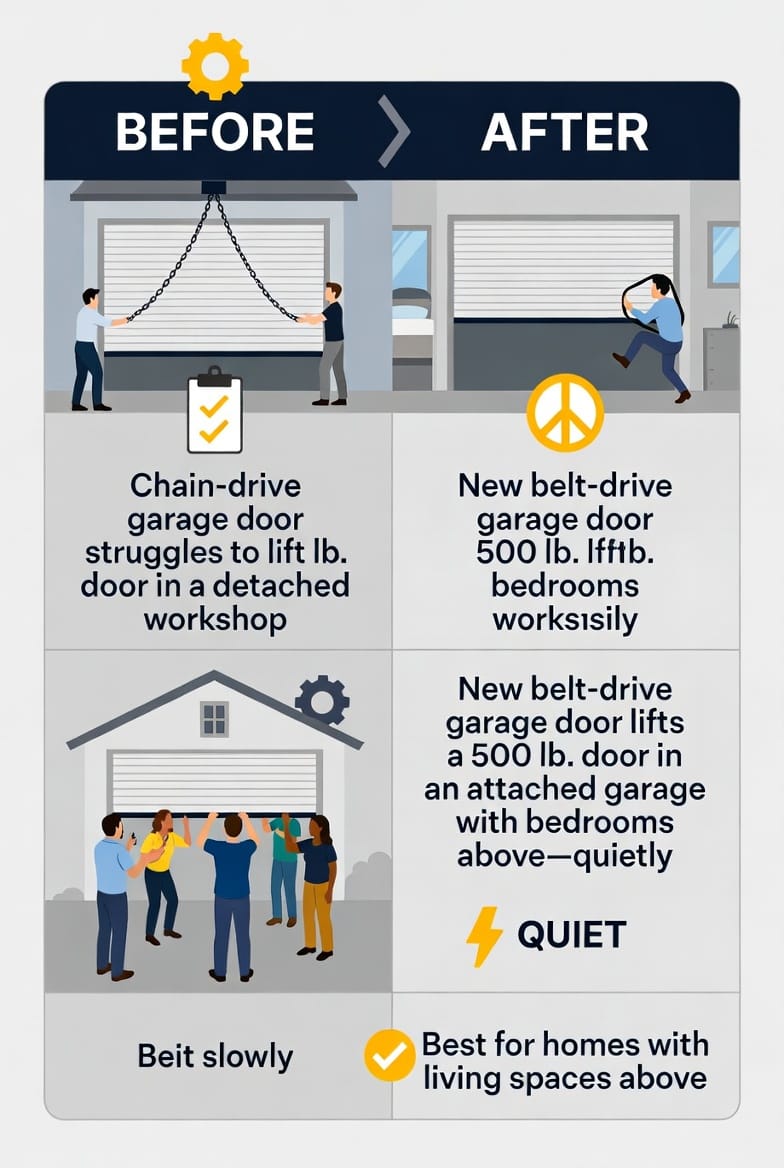
Suitability boils down to your garage's location and usage. For attached garages, especially with living spaces nearby, belt-drive openers are ideal. Their quiet operation prevents disturbances, making them perfect for homes with upstairs bedrooms or home offices.
Chain-drive openers thrive in detached workshops or garages with heavy, insulated doors. Their power handles demanding tasks, like frequent openings for tools or vehicles, and they're economical for budget-focused setups.
Consider these scenarios:
- Urban Homes: Belt-drive for noise control in close-quarters neighborhoods.
- Rural or Workshop Settings: Chain-drive for toughness against elements.
- Climate Factors: Belt-drives perform better in extreme cold, as chains can contract.
Hybrid needs? Some models offer convertible drives, but sticking to one type ensures optimal performance. Consult a professional to assess your door's specifics—rest assured, a proper match will enhance safety and convenience.
Making the Right Choice for Your Garage
In summary, belt-drive openers offer superior quietness and smoothness, with longer lifespans and less maintenance, suiting attached homes. Chain-drive openers provide power and value, ideal for heavy-duty or budget-conscious applications in detached spaces. Both are safe, efficient choices—evaluate your priorities on noise, performance, and longevity.
Stop the Noise & Boost Reliability – Call for Recommendations