The Bearing Failure: Diagnosing the Telltale Sounds of Worn Drum Bearings in Washers and Dryers
Front-load washers and dryers deliver superior cleaning and drying performance but rely on precision components like drum bearings to operate smoothly. When these critical parts wear out, they produce distinctive progressive sounds that homeowners can learn to recognize. Bearing failure is one of the most common major repairs in modern laundry appliances. Catching the issue early prevents catastrophic damage to the drum, tub, and spider assembly, saving you from expensive replacements.
Get Your Laundry Running Quiet Again – Call Today!
In this comprehensive guide, we explain how to identify the telltale sounds of worn drum bearings—from a subtle hum to a loud roar or grinding noise. We'll cover why timely replacement is essential, common causes, home diagnosis techniques, and when to call professionals for reliable service.
Understanding Drum Bearings and Their Critical Role
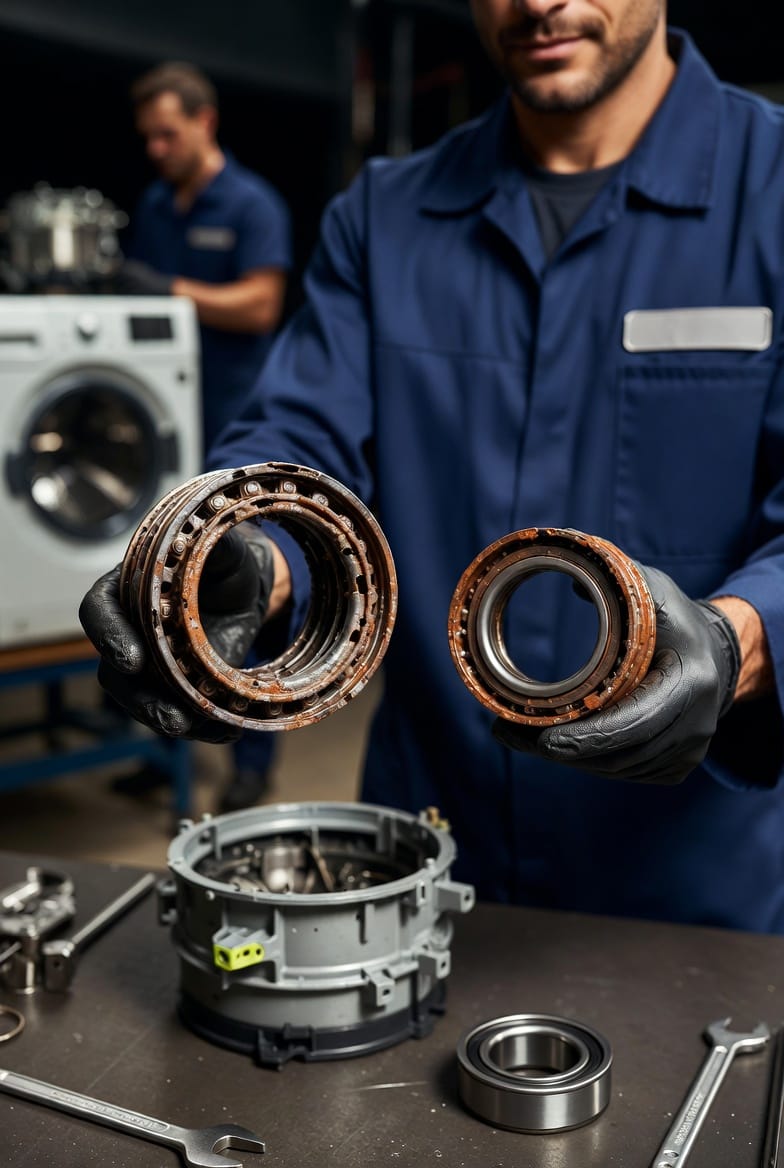
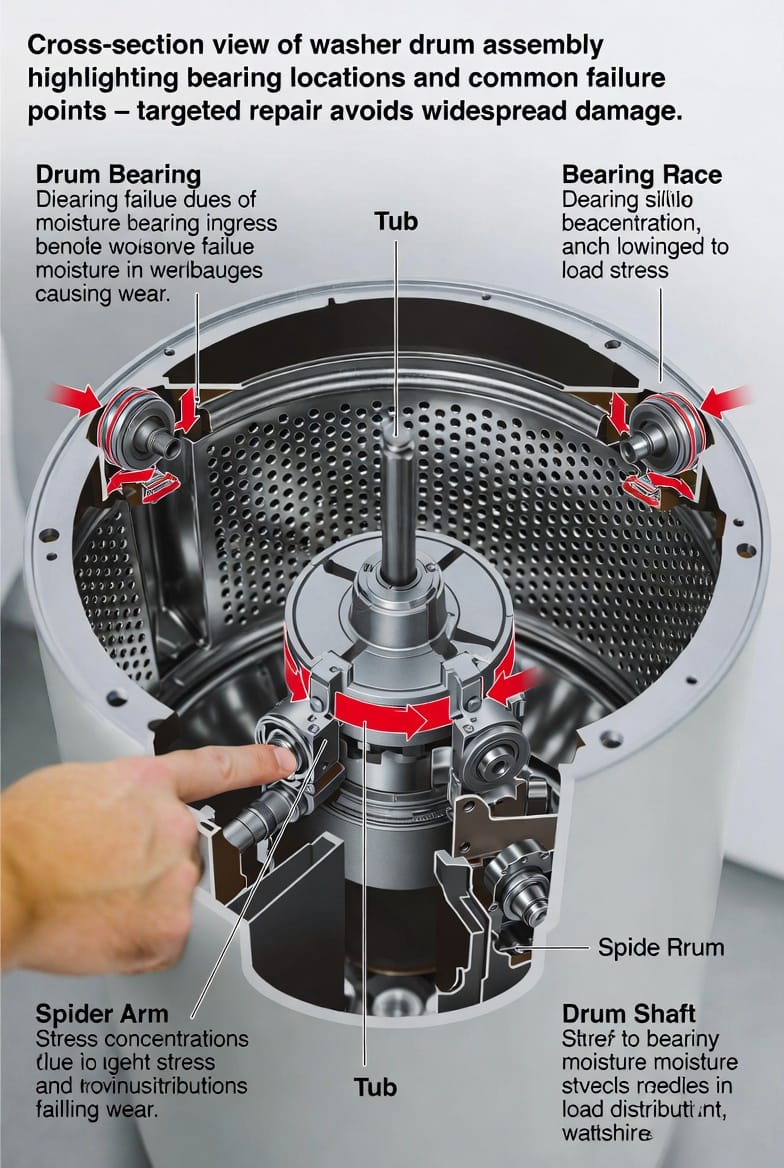
Drum bearings support the rotating drum in front-load washers and dryers, allowing it to spin at high speeds while maintaining perfect alignment. These heavy-duty ball or roller bearings endure constant stress from unbalanced loads, moisture exposure, and thousands of cycles.
Over time, seals degrade, allowing water and detergent residue to penetrate. This contamination accelerates wear on the bearing surfaces and races. In dryers, high heat and lint contribute to similar deterioration. When bearings begin to fail, friction increases, leading to vibration and audible noise that worsens progressively.
Early replacement typically costs far less than repairing collateral damage. Homeowners who act promptly often restore their appliance to like-new performance with minimal disruption.
Recognizing the Progressive Sounds of Bearing Failure
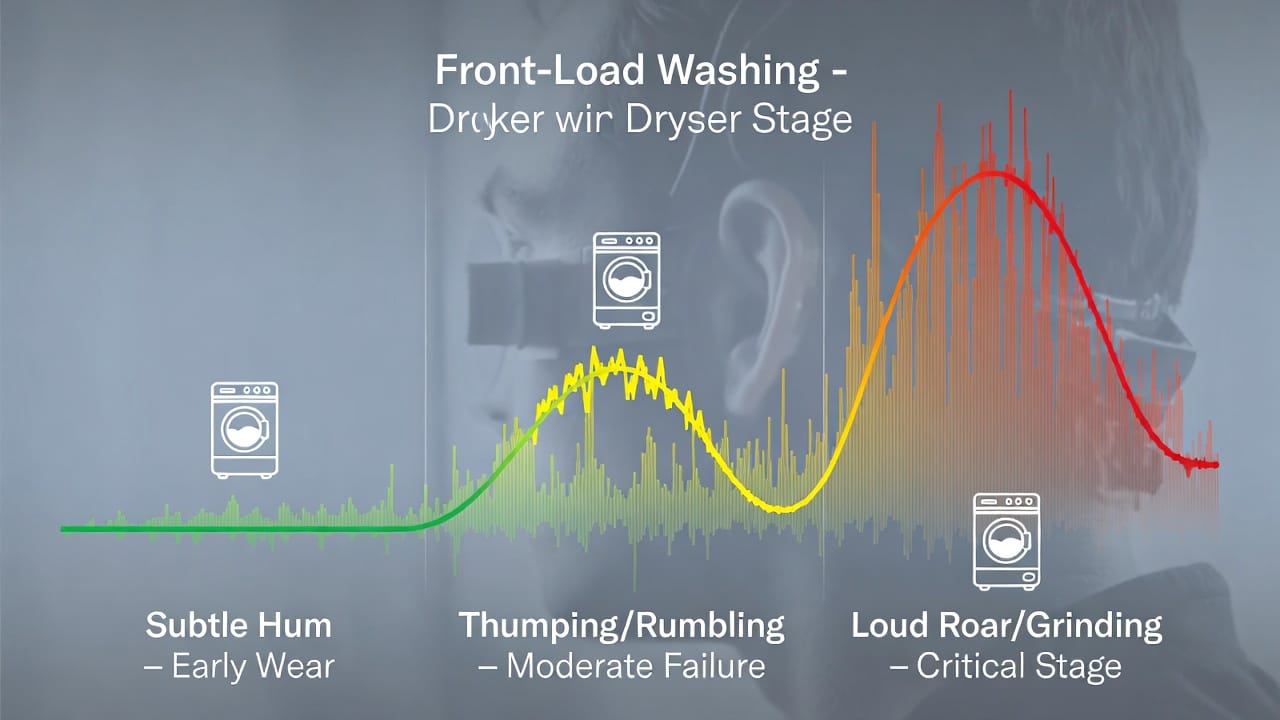
The sounds of worn drum bearings evolve gradually, giving you time to intervene. Learning this progression helps distinguish normal operation from developing problems.
- Subtle Hum (Early Stage): A faint, low-frequency humming during the spin cycle, barely noticeable at first. It may appear only under heavy loads.
- Increasing Volume and Vibration: The hum grows louder and more consistent, accompanied by slight machine vibration or walking.
- Thumping or Rumbling: Irregular thumping sounds emerge as the drum wobbles slightly on failing bearings.
- Loud Roar or Grinding (Advanced Failure): A pronounced roaring, grinding, or metallic scraping noise that intensifies with speed. The machine may shake violently.
Bold warning: Ignoring these sounds risks drum misalignment, scoring of the tub, bent spider arms, and complete drum failure. A grinding noise often indicates metal-on-metal contact, signaling imminent breakdown.
Why Replacing Bearings Early Prevents Catastrophic Damage
Worn drum bearings create excessive play in the drum assembly. This misalignment causes the drum to contact the tub or outer components, leading to:
- Permanent scoring of the stainless steel tub
- Bent or cracked spider arm supporting the drum
- Damaged drive motor or belt from excessive strain
- Water leaks from compromised seals
Repairing these secondary issues can cost 2–3 times more than bearing replacement alone. In severe cases, the entire drum and tub assembly must be replaced—an expense often exceeding the value of older appliances.
Acting at the first signs of noise typically limits the repair to bearings, seals, and possibly the spider. Professional service ensures precise installation and alignment, restoring quiet, efficient operation.
Common Causes of Drum Bearing Failure
Several factors accelerate bearing failure in front-load washers and dryers:
- Overloading the machine beyond recommended capacity
- Frequent unbalanced loads from bulky items like comforters
- Normal wear after 8–12 years of heavy use
- Moisture ingress due to worn door boots or failed seals
- Improper installation or leveling causing chronic vibration
- High-spin-speed models experiencing greater stress
Dryers face additional challenges from heat cycling and lint buildup that can affect bearing lubrication.
Safe Home Diagnosis Techniques
You can safely assess potential bearing failure without disassembly:
- Run an empty spin cycle and listen near the machine
- Place a hand on the top or front panel to detect unusual vibration
- Check for excessive drum play by gently rocking the drum when empty
- Note if noises occur only during high-speed spin phases
Important safety note: Never reach inside a running machine. If grinding noises are present, discontinue use immediately to avoid further damage.
The Professional Repair Process
When you call qualified technicians, expect a systematic approach:
- Thorough diagnostic testing to confirm drum bearings as the source
- Complete disassembly of the front panel, tub, and drum
- Careful extraction of failed bearings and races
- Inspection and replacement of related seals and components
- Precise reinstallation, alignment, and testing
Modern bearing kits include upgraded seals for better longevity. Most repairs are completed in one visit, returning your appliance to reliable service quickly.
Prevention Strategies for Long-Term Reliability
Extend bearing life with these practices:
- Avoid overloading and distribute laundry evenly
- Use high-efficiency (HE) detergent to minimize residue
- Clean the door gasket regularly to maintain seals
- Ensure the appliance is perfectly level
- Schedule periodic professional maintenance inspections
- Consider reducing spin speeds for delicate or bulky loads
Routine care dramatically reduces the likelihood of premature bearing failure.
Listen to Your Appliances
Your washer or dryer communicates its health through sound and performance. Recognizing the progression from a subtle hum to a loud roar or grinding noise in drum bearings empowers you to act decisively. Early intervention protects your investment and prevents catastrophic damage to the drum and tub.
For expert bearing diagnosis and repair in front-load washers and dryers, trust experienced professionals who complete the job correctly the first time.
Prevent Catastrophic Drum Damage – Call Expert Help Now