The Ant Colony Conquest: Decoding Social Insect Strategies to Break Their Invasion Cycle
Ant invasions in homes and gardens often feel like an unstoppable force, but understanding their behavioral ecology reveals vulnerabilities you can exploit for effective control. As a leading voice in pest management, we're here to assure you that with the right knowledge, you can outsmart these social insects rather than just reacting to their trails. This article dives deep into the world of common household ants, focusing on their intricate social structures, communication methods, foraging behaviors, and colony expansion tactics. We'll explore how targeted baiting strategies leverage these traits to eliminate the entire colony, breaking the cycle of reinvasion. By the end, you'll see why a strategic approach trumps temporary fixes, empowering you to protect your space confidently.
Stop Ant Trails for Good – Schedule Your Strategic Treatment Today
The Foundation of Ant Societies: Understanding the Caste System
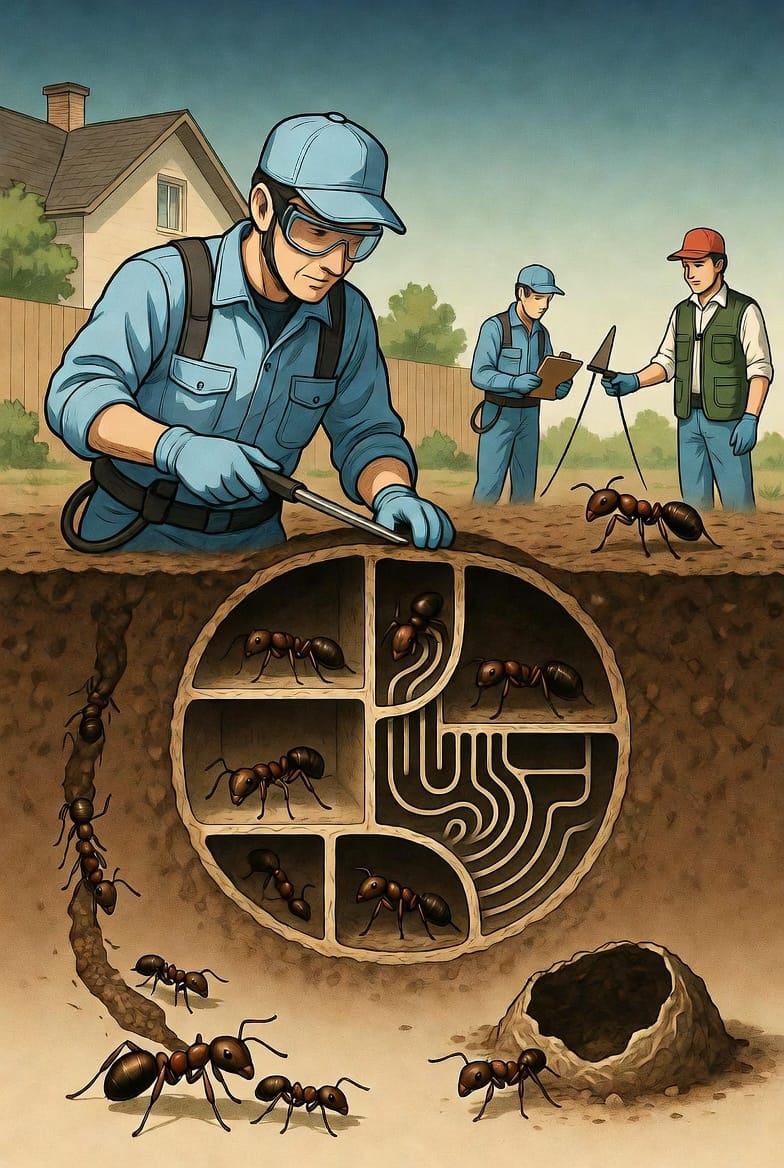
At the heart of every ant colony lies a highly organized caste system, a evolutionary marvel that ensures survival and efficiency. Unlike solitary insects, ants operate as a superorganism, where each individual plays a specialized role. This division of labor is key to their success—and also their Achilles' heel when it comes to pest control.
Common household ants, such as the Argentine ant (Linepithema humile) or the carpenter ant (Camponotus spp.), feature three primary castes:
- Queens: The reproductive powerhouse, often winged in their youth before establishing a nest. A single queen can lay thousands of eggs daily, sustaining colony growth. In mature colonies, multiple queens may coexist, accelerating expansion.
- Workers: The all-female workforce, sterile and divided into sub-castes like majors (soldiers) for defense and minors for foraging and brood care. These ants handle everything from nest maintenance to food gathering, making up 90-95% of the population.
- Males: Short-lived drones whose sole purpose is mating. They die soon after, leaving no lasting impact on daily operations.
This system evolved over millions of years through natural selection, favoring colonies that allocate resources efficiently. For instance, in behavioral ecology terms, the caste ratios adjust based on environmental cues—more soldiers during threats, more foragers in food-scarce times. Homeowners often mistake visible workers for the problem's core, but targeting the queen and brood is essential for eradication. Rest assured, professional strategies account for this, ensuring no resurgence.
Behavioral studies, like those on pheromone-regulated caste development, show how larvae are fed differently to determine their fate. Royal jelly-like substances promote queen growth, while standard diets yield workers. This plasticity allows ants to adapt quickly, but it also means disrupting the queen halts the pipeline of new members.
Chemical Conversations: How Ants Communicate Via Pheromone Trails
Ants don't rely on verbal cues or visual signals; their world is dominated by chemical communication, particularly through pheromone trails. These volatile compounds, secreted from glands like the Dufour's or mandibular, act as invisible highways guiding colony behavior.
When a forager discovers food—say, a crumb in your kitchen—it deposits alarm or recruitment pheromones along its path back to the nest. Other workers detect these via antennal chemoreceptors, following the trail with remarkable precision. This creates a positive feedback loop: stronger trails attract more ants, optimizing resource exploitation.
Key aspects of pheromone use include:
- Trail Pheromones: Long-lasting signals for food routes, evaporating slowly to maintain direction.
- Alarm Pheromones: Short-lived bursts that rally defenders against threats, like a disturbed nest.
- Recognition Pheromones: Cuticular hydrocarbons that identify colony members, preventing infiltration by rivals.
In ecological terms, this system exemplifies kin selection, where selfless acts benefit genetically related kin. However, it poses risks for humans: trails can lead to rapid infestations, contaminating food and spreading bacteria. The good news? These trails are exploitable. By mimicking or interfering with pheromones, we can redirect ants toward baits, turning their strength into a weakness. Our authoritative approach emphasizes monitoring these signals for precise intervention, reducing unnecessary chemical use.
Research in ant ecology highlights species-specific variations. For example, Argentine ants use a blend of iridomyrmecin and dolichodial, creating supercolonies that span miles. Disrupting these mega-networks requires understanding their volatility—trails fade in hours without reinforcement, allowing strategic breaks.
The Foraging Frontier: How Ants Locate and Exploit Food Sources
Foraging is the lifeline of an ant colony, driven by a blend of exploration and exploitation strategies honed by evolution. Workers venture out in tandem running or mass recruitment, balancing risk and reward to sustain the nest.
Initial scouts roam randomly, using landmarks and the sun's position for navigation—a behavior known as path integration. Upon finding food, they lay pheromone trails, recruiting others. This escalates to trunk trails for high-value sources, with ants carrying loads up to 50 times their weight.
Factors influencing foraging success:
- Environmental Cues: Temperature, humidity, and light affect activity peaks; most household ants forage at dawn or dusk.
- Resource Assessment: Ants evaluate food quality via taste receptors, prioritizing sugars and proteins for brood nutrition.
- Competition Dynamics: In multi-species areas, dominant ants like fire ants displace others through aggressive pheromones.
From a behavioral ecology perspective, this is optimal foraging theory in action: ants minimize energy expenditure while maximizing intake. Risks include pesticide exposure or predation, but colonies mitigate this by sending disposable foragers first. For homeowners, this means visible ants are just the tip— the real threat is the hidden nest supporting them.
Fortunately, exploiting foraging patterns is straightforward with expertise. By placing baits along trails, we ensure uptake without alerting the colony, leading to systemic elimination. This method is safer and more effective than sprays, which only kill surface workers and scatter survivors.
Expansion Tactics: Establishing Satellite Colonies and Supercolonies
Ant colonies don't stay put; they expand through satellite colonies, budding off from the main nest to colonize new areas. This strategy reduces overcrowding and spreads risk, but it complicates control efforts.
Budding occurs when a queen and workers detach, often triggered by resource abundance or disturbance. Satellite nests connect via trails, forming polydomous (multi-nest) systems. In invasive species like Argentine ants, this escalates to supercolonies—vast networks lacking territorial aggression, covering entire regions.
Ecological drivers include:
- Genetic Factors: Unicoloniality arises from reduced recognition diversity, allowing peaceful mergers.
- Habitat Suitability: Moist, sheltered spots like wall voids or mulch beds favor new establishments.
- Human Influence: Transport via potted plants or goods accelerates spread, turning local pests into widespread issues.
Behavioral studies reveal how pheromones maintain cohesion across satellites, with workers exchanging food and brood. This trophallaxis (mouth-to-mouth sharing) spreads nutrients—and toxins if baits are involved. The risk? Untreated satellites reinvade cleared areas. But with thorough mapping, professionals can target all nodes, preventing rebound.
Exploiting Social Structures: Targeted Baiting Strategies for Total Elimination
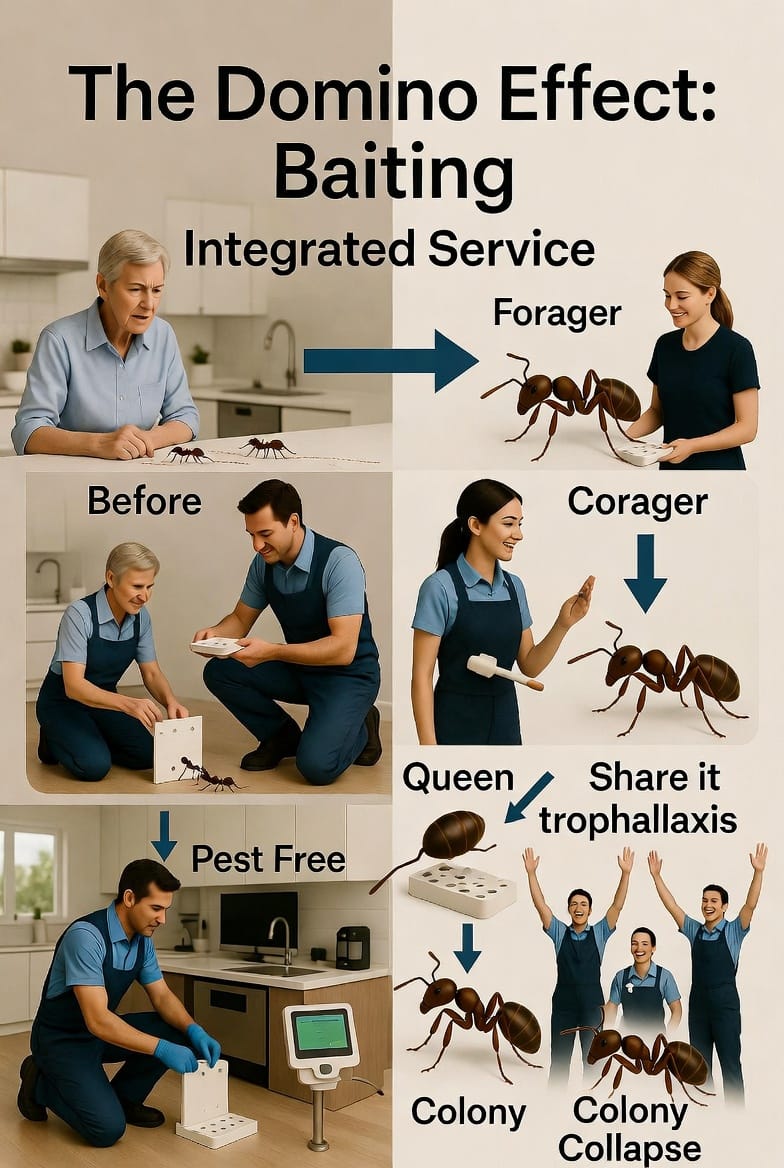
Now, let's turn knowledge into action. Targeted baiting exploits ants' social behaviors to deliver slow-acting toxins throughout the colony, eliminating not just foragers but the queen and brood.
Unlike contact sprays that kill on sight and cause budding, baits use attractive formulations (sugars, proteins) laced with insecticides like fipronil or boric acid. Foragers carry them back, sharing via trophallaxis—a chain reaction dubbed the "domino effect."
Step-by-step strategy:
- Identify Species: Match baits to preferences—sweet for Argentine ants, greasy for carpenter ants.
- Place Strategically: Along trails, near entry points, avoiding direct sun or moisture for longevity.
- Monitor Uptake: Check consumption over days; adjust if needed to ensure distribution.
- Avoid Interference: No cleaning or spraying nearby, as this disrupts trails and reduces efficacy.
In behavioral ecology, this mirrors biological control, using the ants' eusociality against them. Risks of improper use include resistance buildup, but rotating active ingredients prevents this. Authoritatively, we recommend professional application for complex infestations, ensuring eco-friendly options minimize environmental impact.
Case studies show 95% success rates with integrated baiting, far surpassing DIY methods. By focusing on the caste system and communication, baits reach hidden satellites, breaking the invasion cycle permanently.
Breaking the Cycle: Long-Term Prevention and Ecological Insights
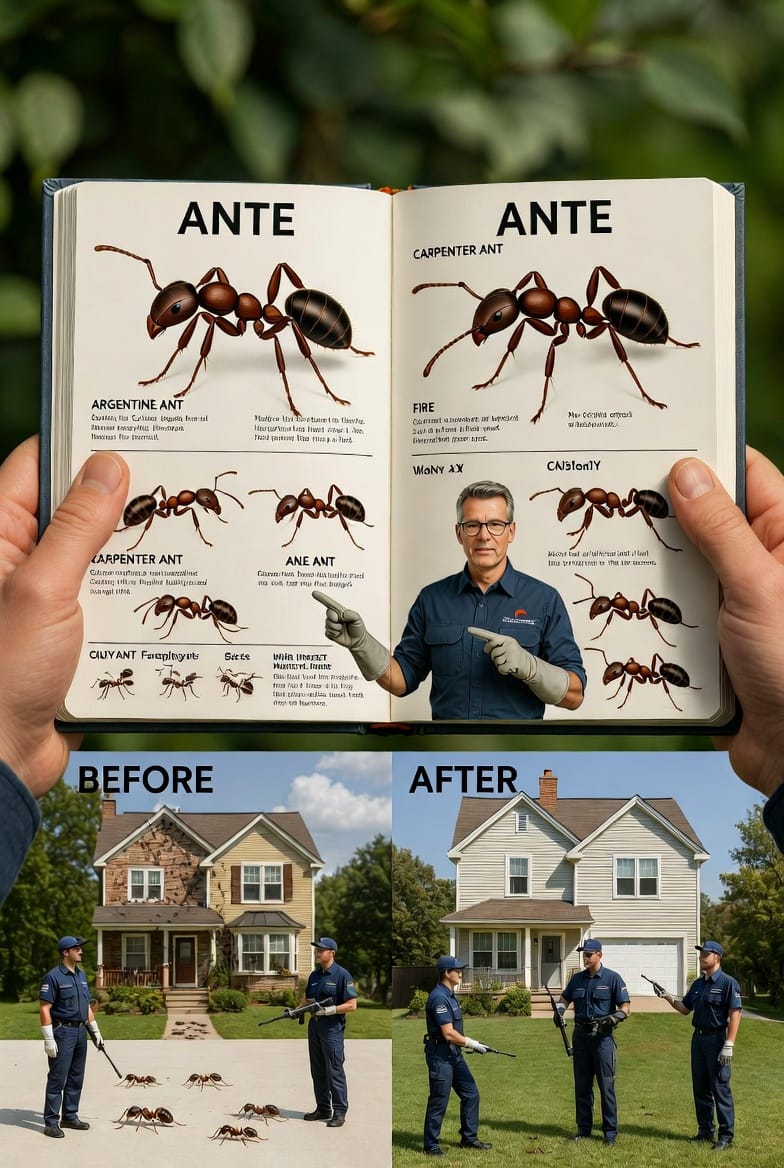
Preventing reinvasion requires addressing root causes. Seal entry points, eliminate moisture, and maintain cleanliness to deter scouts. Ecologically, ants play roles in soil aeration and decomposition, so control should be judicious.
Integrate natural repellents like diatomaceous earth alongside baits for a holistic approach. Regular inspections catch early signs, leveraging behavioral patterns for proactive defense.
In conclusion, decoding ant strategies empowers you to conquer invasions intelligently. Remember, it's about the colony, not the individual.
Reclaim Your Space from Ant Conquests – Call for Smart Control